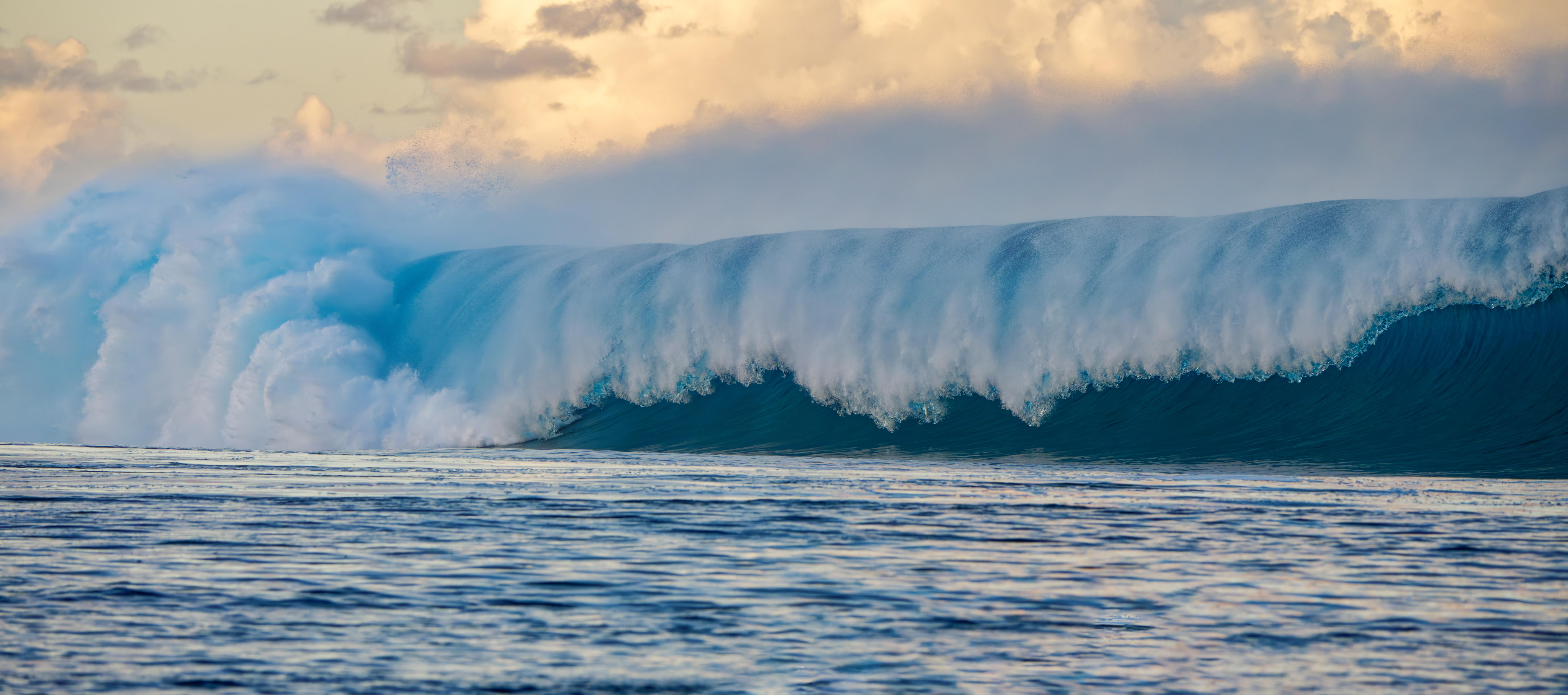
The Teahupoʻo wave breaks unbroken across the shallow reef of Passe Havae

Iles du Vent (Windward Islands), PF · A single page, deeply

Teahupoʻo

A Tahitian fishing village at the end of a one-lane road, and the most concentrated wave anyone has ridden.

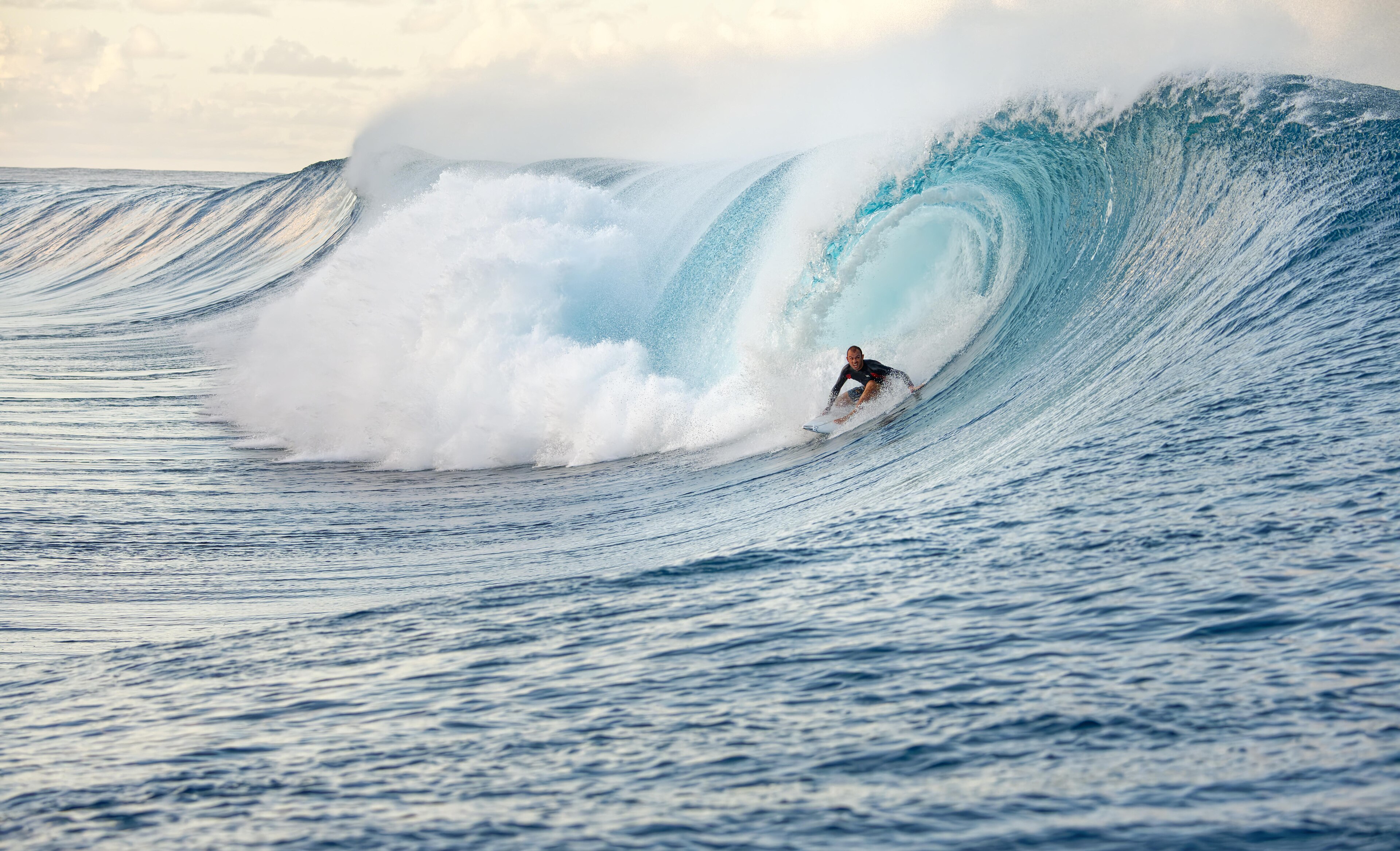
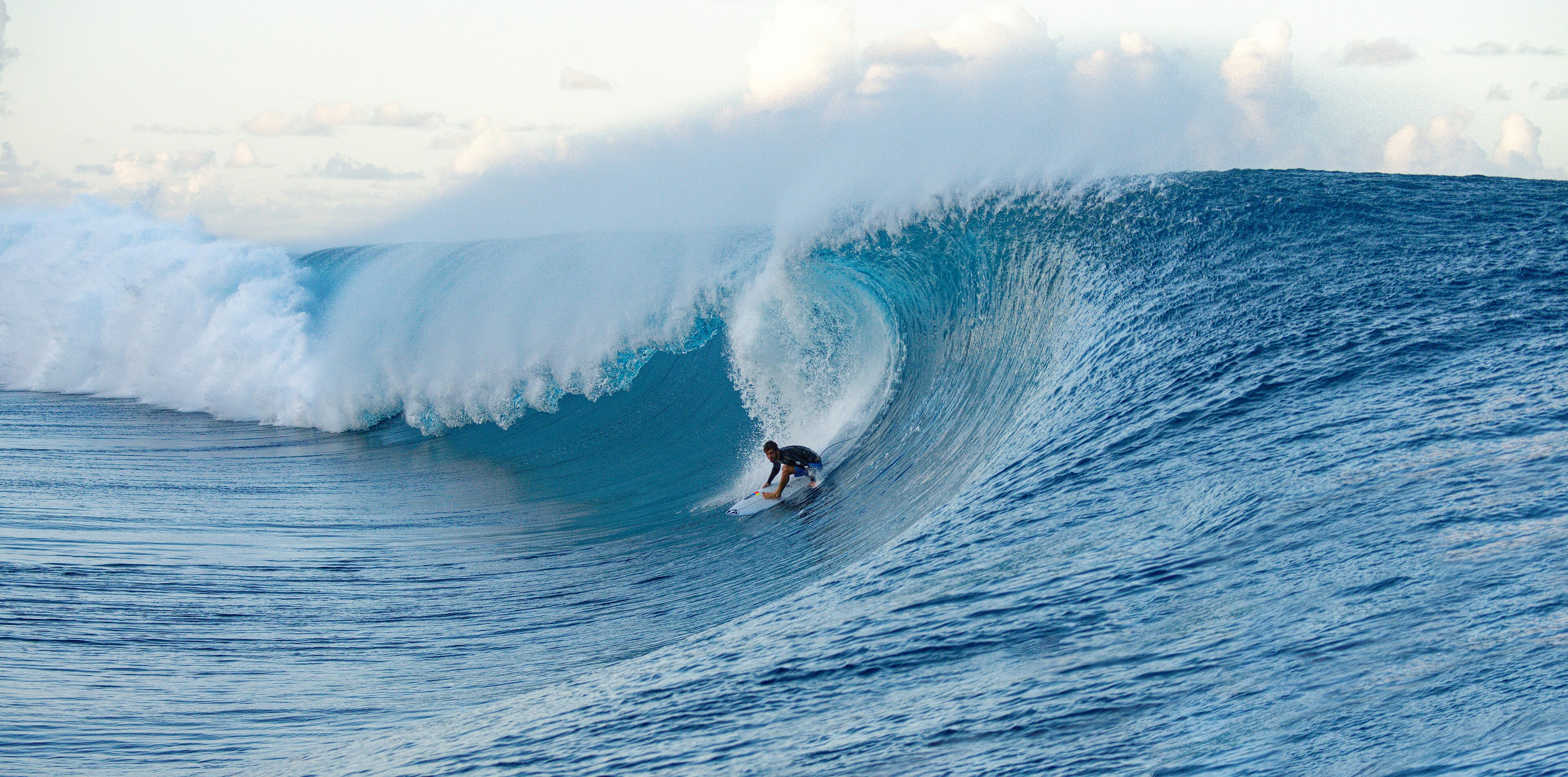
The Teahupoʻo wave breaks unbroken across the shallow reef of Passe Havae · Olivier Dugornay / Ifremer
If you have two minutes

When should I go?

May–September for the Southern Hemisphere swell window — the Tahiti Pro is in May, the Olympics ran late July to early August. April and October are shoulder months with smaller, more variable swells. November–April is the wet season; the wave runs but is far less consistent. If you come for the wave, plan for May or August.

See the year

Where on the arc?

Stay in Teahupoʻo village or in nearby Vairao (the commune seat, 12 km away — more services). The wave breaks ~800 m offshore at Passe Havae; you cannot see it from shore without binoculars. You go to it by boat. Most pensions are on the lagoon side of the road; book a taxi-boat captain for channel access.

The Zones

How much time?

Three nights minimum if you've come for the wave — the Tahitian swell pattern requires forecast flexibility, and a single morning of channel viewing is what most visitors get. Five nights gives you margin for one big swell day plus village/Fenua ʻAihere exploration. A day trip from Papeete is technically possible (90-minute drive each way) but doesn't make sense for the wave.

Itineraries
01 · The Story

Teahupoʻo

A single page — written so a local nods.

Teahupoʻo is a fishing village at the end of a one-lane road on the Taiarapu peninsula, the small southeastern lobe of Tahiti. The village has 1,455 residents, a Catholic chapel, a single grocery store, and a working pier. The wave that made the village's name a noun in surfing breaks roughly half a mile offshore, over a coral pass called Passe Havae. You cannot see it from the village without a boat. You can sometimes hear it.

The wave is not the largest in the world. Nazaré is taller; Cortes Bank is heavier in the abstract. What Teahupoʻo is, instead, is the most concentrated, most physically wrong-looking wave anyone has ever managed to ride. The seafloor goes from a thousand feet of open Pacific to about six feet of coral over the span of a few hundred yards, and there is no continental shelf to absorb the swell first. When a south-hemisphere groundswell arrives, the wave doesn't shoal — it folds. The crest stays above sea level while the trough scoops out below it, and the surfer rides what amounts to a square cylinder of water with a coral floor 51 centimeters under the lip's impact zone.

The Tahitian word *teahupoʻo* breaks into three roots: *te* (the), *ahu* (a heap, a mound, an altar), and *poʻo* (head). Most translations land somewhere between "the pile of heads" and "the wall of skulls." The folk etymology that surf media tells — that the name commemorates an ancient battle in which a king's heads-of-enemies were stacked at this spot, or that a son avenged his father by eating his killer's brain here — should be heard the way folk etymologies usually should: as oral tradition that has now become inseparable from the wave's mythology, regardless of whether it's literally true.

The modern surf history of Passe Havae starts in 1985, when a Tahitian named Thierry Vernaudon paddled out with a few friends. The first contest came in 1997. Brice Taerea, a Tahitian local, died there in 2000 — the only confirmed surfing fatality at the wave to date. Laird Hamilton's 17 August 2000 "Millennium Wave," shot by photographer Tim McKenna, was the moment the wave became globally legible. Kelly Slater has won the Tahiti Pro five times. Vahine Fierro became the first Tahitian to win the women's event in 2024. Kauli Vaast, born in Vairao, won the Olympic gold medal at Passe Havae on 5 August 2024.

The Olympic Games is also the reason the wave is now framed differently than it used to be. The fight over a permanent aluminum judges' tower built on the reef itself — which would have required dredging, foundation drilling, and the displacement of a documented 1,003 coral colonies in the construction footprint — was the first time the international surf media had to grapple with the question of who gets to decide what happens at this place. The local association *Vai Ara o Teahupoʻo*, led by Cindy Otcenasek, and the petition campaign led by local surfer Matahi Drollet, did not stop the tower. They did force a 25 percent reduction in its footprint, a public reckoning with the coral cost of a four-day television event, and a precedent that will outlast the Games themselves.

This page is structured around two ideas. First, the bathymetry — the specific, freakish geometry that produces this wave and no other. Second, the village — the community, the politics, the indigenous Tahitian context that the surf-media framing has historically erased. If you read only one section, read the second.

· The Bathymetry

The wave that folds instead of shoaling

Open Pacific drops to a thousand feet within a third of a mile of shore. The reef shelf rises 150 ft to 30 ft on roughly a 1:1 vertical-to-horizontal slope. By the time the wave breaks, water depth at the lip impact zone is 51 cm. There is no continental shelf to absorb the swell first. The wave doesn't shoal — it folds.

Teahupoʻo is not the largest wave anyone surfs. Nazaré is taller; Cortes Bank moves more water in the abstract; Maverickssits over a deeper bottom and is more forgiving when things go wrong. What Teahupoʻo is, instead, is the most concentrated wave on earth — the most physically wrong-looking thing anyone has ridden — and it owes that to a single piece of geometry.

The wave breaks at Passe Havae, a freshwater-cut channel through the barrier reef approximately 800 m offshore from the village. The pass was carved over millennia by streams draining the ~4,000-ft volcanic ridge of Tahiti Iti. The pass itself is calm — that is the channel, where photographer boats sit. The wave breaks on the south wall of the pass, on the inside reef, which is what the swell encounters after running unobstructed across nearly the entire Pacific.

The first thing that's strange is the open-ocean approach. The seafloor drops to more than 1,000 ft within a third of a mile of shore and to more than a mile deep within three miles offshore. There is no continental shelf to slow a swell down. The wave arrives at the reef with all of its open-ocean speed and energy intact; nothing has had a chance to shoal it gradually.

The second thing is the reef-shelf gradient. When the swell finally does feel bottom — about half a mile from shore — the rise is steep: from roughly 150 ft of depth to about 30 ft, on close to a 1:1 vertical-to-horizontal slope. At the takeoff zone, water is in the 10 m range over a flatter "stand-up" shelf. The wave then breaks over a final reef rise where the trough can be less than 2 m of water under a 15 m face. Reef depth at the lip impact zone on the inside reef has been measured at as little as 51 cm — twenty inches.

The third thing — the one you can see — is what those numbers do to the wave's shape. A normal wave shoals: as it feels bottom, the trough slows faster than the crest, the crest steepens, and the wave eventually pitches into a triangular peak before breaking. Teahupoʻo doesn't have time. The depth changes faster than the wave can shoal. So the wave stays linear: too much water remains in the crest, the trough scoops out below sea level, and the wave produces the famous below-sea-level square-lip cylinder rather than a triangular peak. Riding it is — literally — riding a wall of water that is partly underneath where the ocean's surface used to be.

The swell that lights it up comes from the southern hemisphere — the Roaring Forties storm tracks south of New Zealand and across the Southern Ocean. Long-period groundswells fan north into French Polynesia and arrive at Passe Havae from the south-southwest. The optimal local wind is a light easterly trade — cross- offshore on the wave's left, holding the lip up and clean. The big-wave window runs April through October, with the heaviest swells typically in May, August, and September. The Tahiti Pro is held in May; the 2024 Olympics ran the last week of July through the first week of August, near the historical peak.

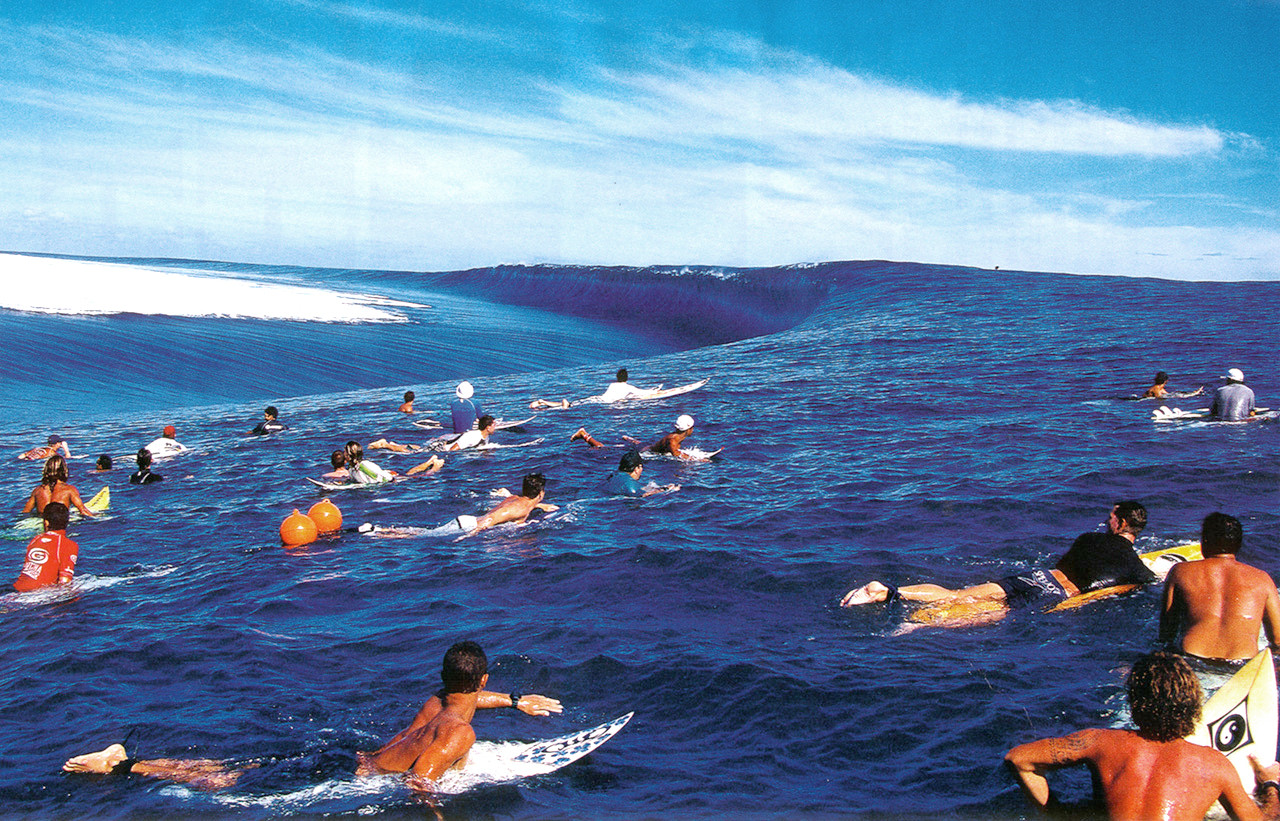
What is not strange about Teahupoʻo is the channel, which is deep and predictable and which is why the wave has stayed photographable. Surfers paddle out down the channel; safety jet skis stage in the channel; spectator taxi-boats sit in the channel watching the lefthander peel toward shore. The channel is what makes the wave a sport rather than just a hazard. The wave is the show; the channel is the theater.

· The Zones

4 stations along the arc

Locals sort themselves by zone. The distinctions are real, and useful.

Leme(north)Fort(south)VILLAGEPASS_HAVAEMARINAFENUA_AIHERE
VILLAGE

Teahupoʻo village (PK 0)

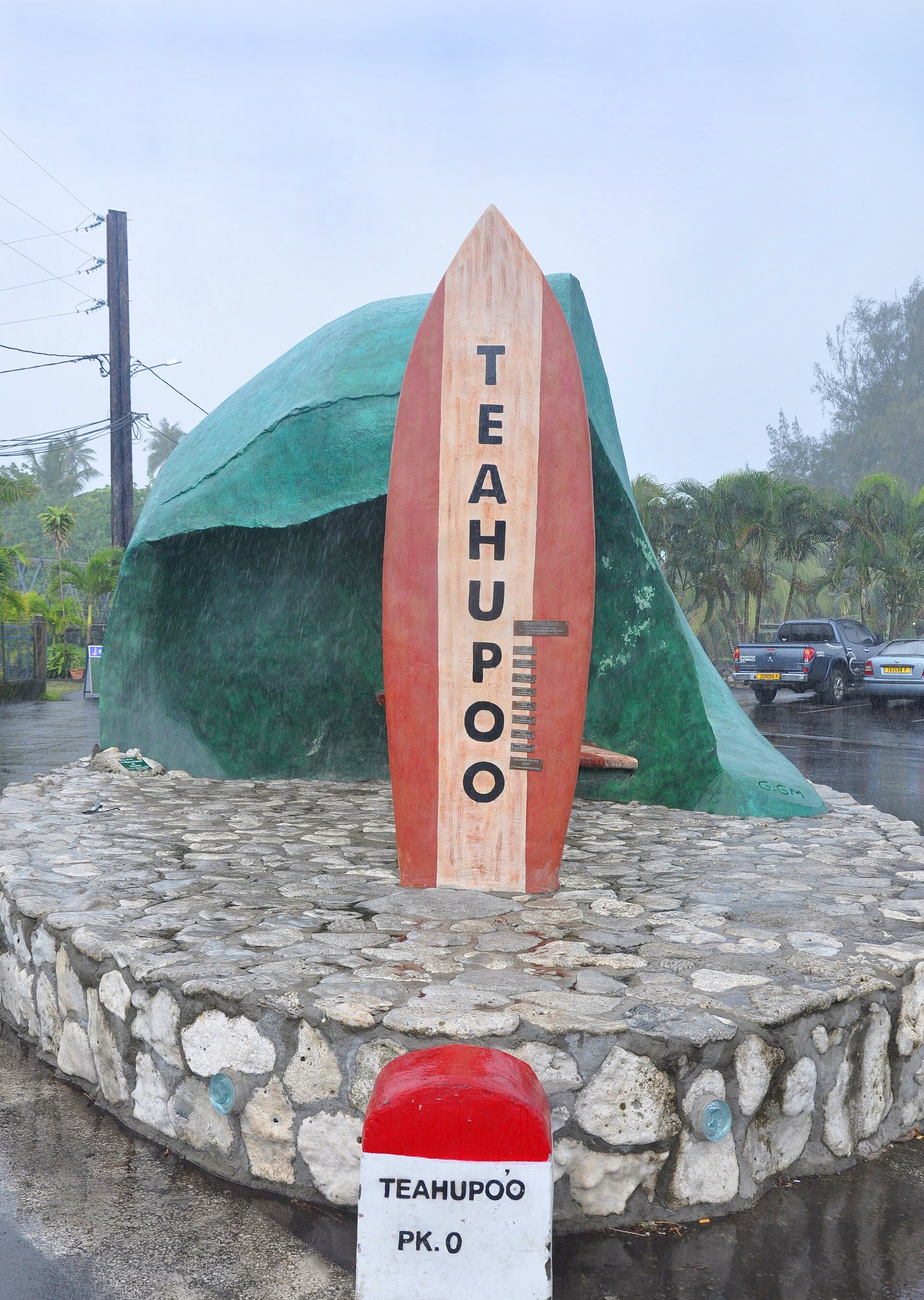
The fishing village at the literal end of the road. One main street, one grocery store (Snack Mahanai), one Catholic chapel, the public pier, the small marina, and the PK 0 marker. Year-round population ~1,455. Most pensions are family-owned and on the lagoon side of the road.

Best for: Walking the road from PK 0 to the pier. Watching the fishermen unload at midday. The chapel is open. The marina is the staging point for taxi-boat trips out to the wave.

There are no traffic lights on the entire peninsula past Vairao. Drivers stop for pedestrians; tip the local taxi-boat captains; buy lunch from the village snacks rather than packing it in.

PASS_HAVAE

Passe Havae — the wave

The reef pass where the wave breaks. Approximately 800 m offshore from the village, west-southwest. The pass itself is a freshwater-cut channel through the barrier reef, eroded over millennia by streams from the ~4,000-ft Tahiti Iti ridge. To the surfer's right, the deep channel runs alongside the reef shelf and stays unbroken; to the surfer's left, the wave folds onto the inside reef where water depth at the lip impact zone can be as little as 51 cm.

Best for: Watching from a taxi-boat in the channel. Photography from the channel-shoulder position is the canonical Teahupoʻo angle.

Do NOT swim or snorkel in the impact zone, even on a flat day; reef cuts here are deep and the medical facility is in Vairao. The channel itself is calm but is a working corridor for safety boats and surf photographers — small recreational craft are expected to stay clear of paddle-out lanes during contest windows.

MARINA

Public marina & boat launch

The municipal small-boat marina at the village, base of operations for the local taxi-boat operators (Tahiti Surfari, Teahupoo Adventures, and several smaller family-run charters). Pre-dawn launch traffic is the heartbeat of every swell day. The marina also serves the ʻāʻai fishing fleet — small outboards working the reef and the deeper banks beyond.

Best for: Booking a channel viewing trip. Most operators take cash; some take cards. Best to book a day in advance during contest windows.

Operators are local and family-run. Tip in cash. Do not negotiate aggressively — the rates posted are already accommodation-friendly for visitors and most of the income stays in the village.

FENUA_AIHERE

Fenua ʻAihere — the road's-end wilderness

Beyond the PK 0 marker, the south coast of Tahiti Iti continues as the *Fenua ʻAihere* — "the wild land" — accessible only on foot or by boat. A roughly 20 km stretch of undeveloped coast with two small black-sand coves, freshwater streams running off the Tahiti Iti ridge, a lighthouse at Pari, and the only land approach to the cliff-foot caves at Te Pari. Multi-day hikes through here are a recognized adventure-tourism category and require local guides.

Best for: Multi-day guided hike along the south coast (typically 3 days, with a return by boat to Tautira on the north coast). Day-trip kayak access from the marina to the first cove (~5 km).

Do not attempt without a local guide — there is no mobile signal, no marked trail past the first kilometer, and the rock at the cliff bases is consistently slick. Multi-day hikes book through Vairao-based outfitters.

· A Day Here

The rhythm of the place

Show up to the right part of the day and it's another thing entirely.

Dawn

05:30 – 07:00

Pre-light at Teahupoʻo is the trade wind quiet. The PK 0 sign at the road's end is reflective in the headlights of one or two pickup trucks; the boat-launch ramp at the small marina has its first pre-dawn visitors — taxi-boat captains running pre-flight checks before the morning lineup heads out. The grocery store opens at 5:30. By the time the sun comes over the Tahiti Iti ridgeline behind the village, the channel is already populated: photographer boats taking position, two or three competitive surfers paddling into a still-glassy lineup. If there's swell, the sound carries — a deep thump every 12 to 15 seconds that you don't hear so much as feel in your sternum from a kilometer inland.

Midday

11:00 – 15:00

Midday in the village is the slowest hour of the day. School-aged kids cross the one main road on bikes; the ʻāʻai market sells the morning's tuna and parrotfish; the small Catholic chapel on the lagoon side is quiet. At the surf, midday is when the trade wind picks up and the wave becomes harder to ride cleanly — most surf sessions are over by noon. The boats come back in to the marina; the photographers transfer their cards to laptops in the shade of the stilts under their accommodation. If there's no swell, midday in the channel is a turquoise mirror you can see thirty feet down through. The reef shelf is visible. From above, it looks gentle.

Golden Hour

17:00 – 19:00

Late afternoon on a no-swell day is the village's social hour: the lagoon-side seawall fills with families; teenagers fish from the rocks at the road's end; the small soccer pitch behind the marina hosts an informal game. On a swell day, the late afternoon belongs to the second-tier surfers — the locals and the visiting B-list who didn't get the morning slot — paddling the smaller, cleaner sets while the trade wind drops. The light at the channel just before the sun drops behind the Pacific horizon is the photograph everyone's tried to take. The wave silhouettes against the sky; the lip throws gold; the safety jet skis trace white wakes through the lagoon's blue.

Night

20:00 – late

After dark Teahupoʻo is rural Polynesia. There is no nightlife the way Papeete has nightlife. There is one small bar that's open on weekends; there are families on the front porches; there's the deep, constant sound of the reef break that you can hear from anywhere in the village if the swell is up. The Milky Way at this latitude, this far from any city light, is fully visible — the southern arms of it overhead, with the Magellanic Clouds low to the south. Most surfers are asleep by 9 p.m.; the village is asleep by 10. The PK 0 sign at the end of the road, lit by the truck-stop floodlight, is the closest thing this place has to a 24-hour landmark.

· History

Arc of the century

Turning points, in order.

  1. 1769

    Joseph Banks documents Polynesian wave-riding in Tahiti

    Aboard HMS *Endeavour* on James Cook's first voyage, naturalist Joseph Banks records the first Western description of Tahitian wave-riding — canoes ridden stern-first into the surf at Matavai Bay (the north shore of Tahiti Nui, ~70 km from Teahupoʻo). This entry is the earliest documented evidence of Polynesian heʻe nalu in any written language. It does not describe Passe Havae specifically, but establishes that wave-riding was an active Tahitian cultural practice at the time of European contact.

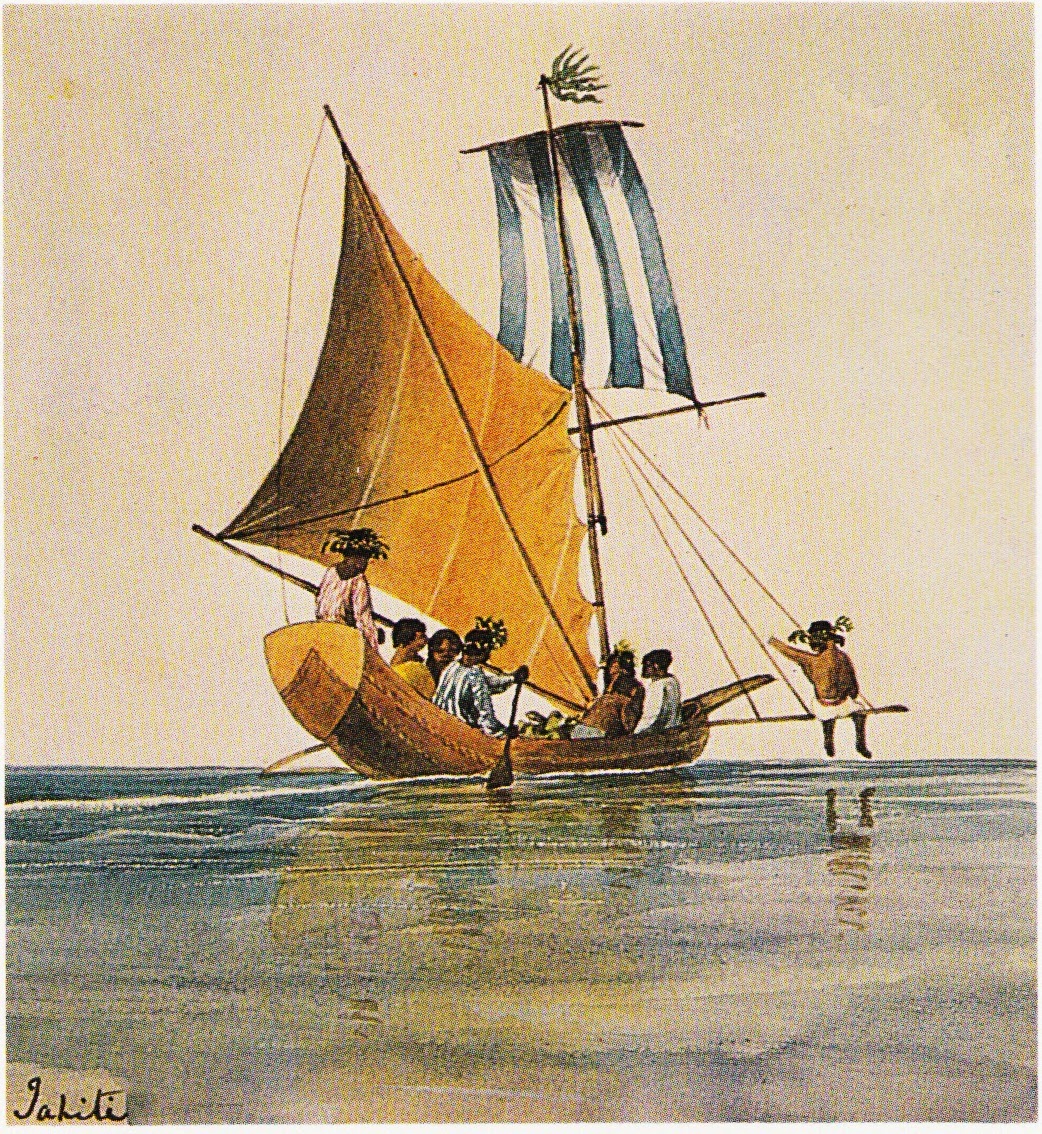
    Tahitian sailing canoes, painted by British naval officer Henry Byam Martin in the 1840s

    Tahitian sailing canoes, painted by British naval officer Henry Byam Martin in the 1840s · Public domain

    Wikipedia →
  2. 1985

    Thierry Vernaudon and friends surf Passe Havae for the first time

    A small group of Tahitian surfers led by Thierry Vernaudon paddle out to the wave at Passe Havae and ride it in modest size. This is the first documented surfing of the modern Teahupoʻo break. Hawaiian bodyboarders Mike Stewart and Ben Severson follow the next year, helping seed the spot's underground reputation in the international surf community.

    The Tahiti Iti coast near Teahupoʻo (2019)

    The Tahiti Iti coast near Teahupoʻo (2019) · CC BY 2.0

    Wikipedia →
  3. 1997

    First WQS event held at Teahupoʻo

    A four-star WQS qualifier is held at the wave. The swell is modest; the contest is more notable as a logistical proof-of-concept than as a competitive event. It establishes the wooden judges' tower the WSL would use for the next 27 years.

  4. 1998

    Gotcha Tahiti Pro — first contest in full-size conditions

    The Gotcha Tahiti Pro hits the wave at full size. Footage and stills from the event circulate globally; this is the moment Teahupoʻo enters mainstream surf consciousness. The wave goes from underground reputation to international destination over a single contest window.

  5. 1999

    First Championship Tour event — Mark Occhilupo wins

    The Billabong Pro Tahiti debuts on the WCT (now WSL CT). Australian Mark Occhilupo wins, becoming the first World Tour champion at Teahupoʻo. The wave is now a fixture on the year's surf calendar.

  6. 2000

    Brice Taerea dies after wipeout

    27 April 2000: Tahitian surfer Brice Taerea, caught inside on a 12-foot set, attempts to duck-dive a wave and is thrown over the falls onto the reef. He breaks two cervical vertebrae and severs his spinal cord. He is recovered alive but does not regain consciousness in hospital. He is the only confirmed surfing fatality at Teahupoʻo to date. The Gotcha Tahiti Pro is held one week later in his memory.

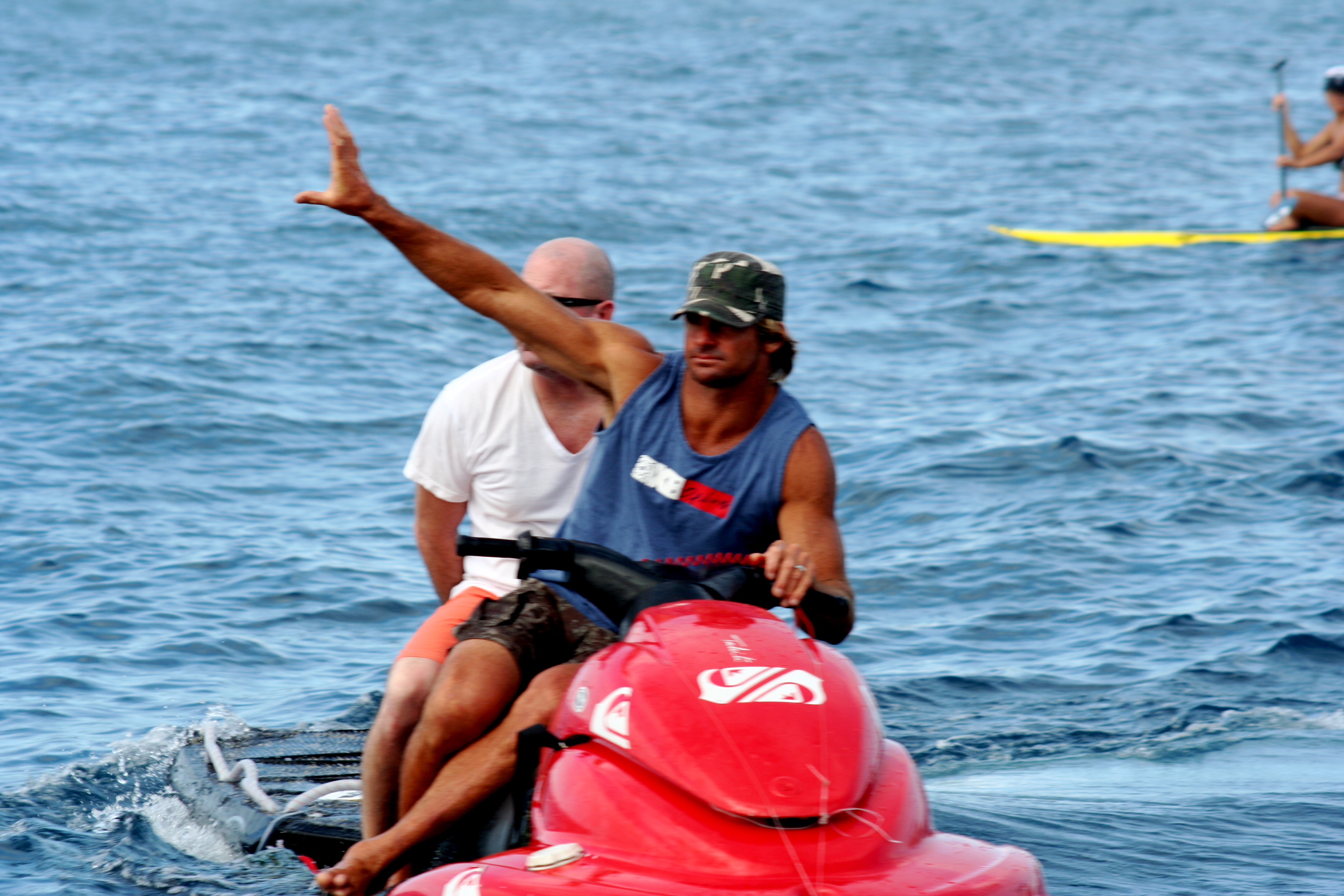
    Laird Hamilton at Teahupoʻo — the wave that put this reef on the global surfing map

    Laird Hamilton at Teahupoʻo — the wave that put this reef on the global surfing map · CC BY 2.0

  7. 2000

    Laird Hamilton's "Millennium Wave" — 17 August

    On a heavy August swell, Laird Hamilton tows in to a Teahupoʻo wave that photographer Tim McKenna captures at 11:38 a.m. local. Hamilton rides on his backside, deep in the cylinder. The image becomes the magazine and editorial centerpiece of the year and resets the international perception of what is rideable at this wave. McKenna's stills, taken from a water-level position in the channel, are still the standard for what the wave looks like at full size.

    Laird Hamilton at Teahupoʻo — the wave that put this reef on the global surfing map

    Laird Hamilton at Teahupoʻo — the wave that put this reef on the global surfing map · CC BY 2.0

  8. 2010

    Andy Irons wins the Billabong Pro — three months before his death

    Andy Irons wins the 2010 Billabong Pro Tahiti, his second Teahupoʻo title. He dies three months later (2 November 2010) in a Dallas hotel room, age 32. The Tahiti win is one of the last great competitive performances of his career and is remembered as a Teahupoʻo result more than a season result.

  9. 2011

    Code Red — 27 August

    An exceptional southern-hemisphere swell hits the wave at sizes large enough that the contest is put on hold and a Code Red advisory is issued, clearing the water of all but the most experienced. The day produces some of the largest and most heavily-broadcast Teahupoʻo footage on record, including segments that anchor Taylor Steele's documentary *This Time Tomorrow*.

  10. 2022

    First WSL Championship Tour women's event

    The Outerknown Tahiti Pro becomes the first WCT women's event held at Teahupoʻo. The decision ends a 25-year run in which only men competed at the wave at the top professional level. The event format mirrors the men's contest, including same-day window logistics and judging tower placement.

  11. 2023

    Olympic tower barge breaks coral — construction paused

    A barge mobilizing equipment for the new permanent aluminum Olympic judges' tower snags and breaks a section of coral at the construction site. Paris 2024 suspends work pending review. The MEGA Lab — a Hawaii-based marine science nonprofit working with the University of Hawaiʻi and the local association *Vai Ara o Teahupoʻo* — uses 3D photogrammetry to baseline the affected reef and identifies 1,003 coral colonies across 20 species in the proposed tower footprint. Their assessment warns dredging and construction could affect up to 2,500 square meters of reef and result in at least $1.3 million USD in direct ecosystem damage.

    Wikipedia →
  12. 2023

    ISA proposes scrapping the tower — French Polynesia rejects

    On 19 December 2023, the International Surfing Association (then led by Fernando Aguerre) publicly proposes cancelling the tower entirely and judging the event remotely from land, water, and drone cameras. The proposal is rejected by the French Polynesian government, which argues a permanent tower is needed for legacy use after the Games. The decision sets the stage for the eventual smaller-but-still-built compromise.

  13. 2024

    Vahine Fierro wins the SHISEIDO Tahiti Pro — first Tahitian women's champion

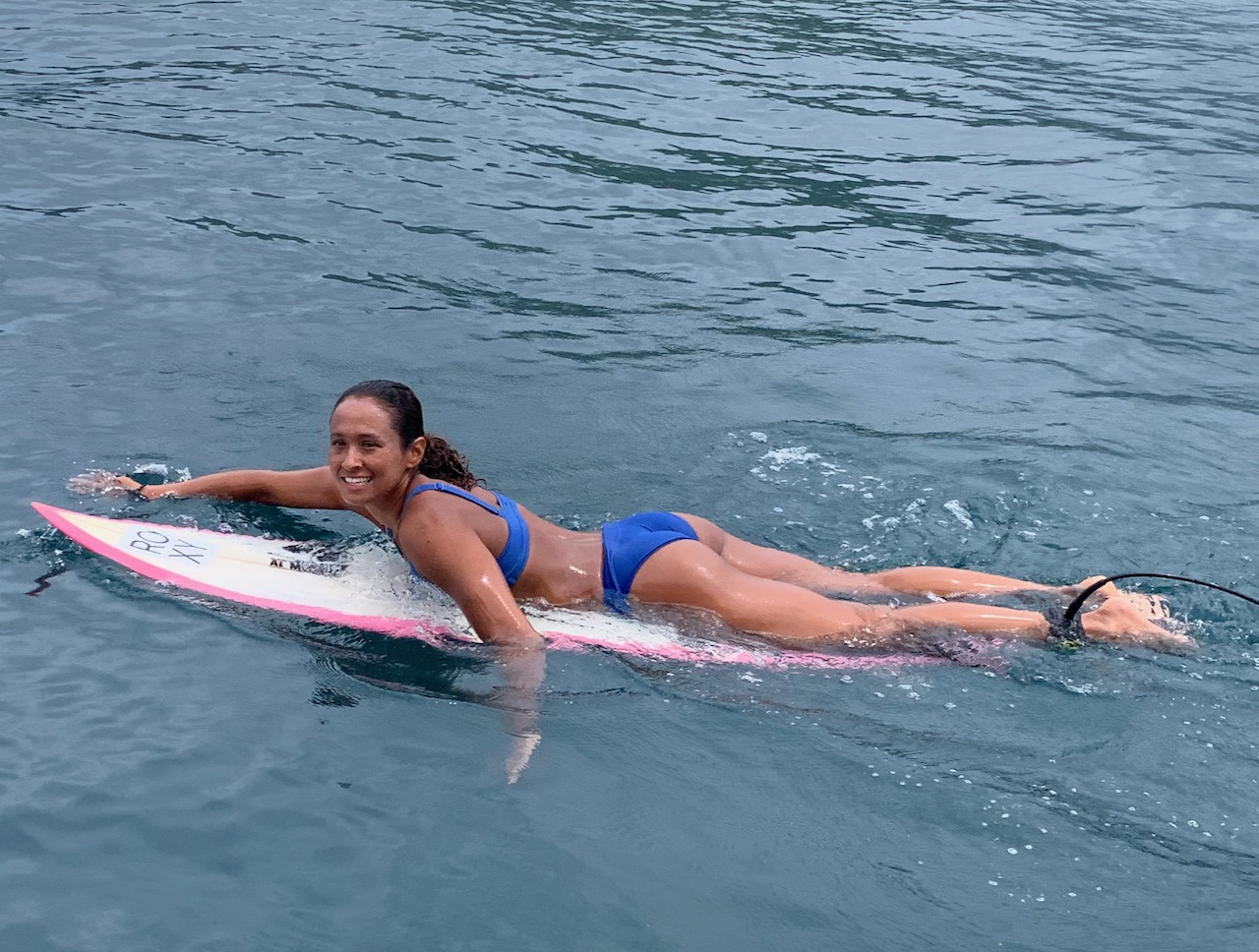
    Competing as a wildcard for the third time, Tahitian-raised surfer Vahine Fierro wins the women's Tahiti Pro in 6-10 ft conditions. She is the first Tahitian (and the first wildcard) to win the women's event at her home break. She defeats Tatiana Weston-Webb in the semifinal even after Weston-Webb scores a perfect 10. Fierro was born in Huahine; her family relocated to Teahupoʻo so she and her sisters could pursue competitive surfing.

    Vahine Fierro at Teahupoʻo, January 2024 — months before her Tahiti Pro win

    Vahine Fierro at Teahupoʻo, January 2024 — months before her Tahiti Pro win · CC0

    Wikipedia →
  14. 2024

    Kauli Vaast wins Olympic gold for France — 5 August

    Kauli Vaast, born in Vairao on 26 February 2002, wins the Olympic gold medal at his home break with a final score of 17.67. He defeats Australia's Jack Robinson (silver, 7.83). Vaast started surfing at age 4 and is widely nicknamed "the King of Teahupoʻo." Caroline Marks of the United States wins the women's gold the same week. The gold medal is the first French men's surfing gold in Olympic history.

    Vahine Fierro at Teahupoʻo, January 2024 — months before her Tahiti Pro win

    Vahine Fierro at Teahupoʻo, January 2024 — months before her Tahiti Pro win · CC0

    Wikipedia →
· The Tower Fight

What the Olympics did, and didn't do, to the reef

Paris 2024 wanted a three-story aluminum judges' tower drilled into the coral. The MEGA Lab catalogued 1,003 coral colonies in the construction footprint. Vai Ara o Teahupoʻo and the Drollet petition (200,000+ signatures, Kelly Slater's endorsement) didn't stop the tower. They forced it 25 percent smaller. The compromise that got built is the unsatisfying middle answer most international sporting controversies end up at.

For 27 years, the contest at Teahupoʻo had been judged from a wooden tower roughly 150 m² in footprint, anchored to the reef on temporary fixings. The tower came down after each event window and went back up the next year. It was not pretty; it was not permanent; nobody from the village had a strong opinion about it because there was nothing to have a strong opinion about.

Paris 2024's original proposal was different. A new three-story aluminum tower, ~322 m² footprint, with full air-conditioning, indoor toilets, and capacity for roughly 40 judges and broadcast personnel. Cost estimated at €4.6 m (~$5 m USD). It would require fresh foundations drilled into the reef and a barge-served construction window. Critically: it was designed to be permanent — not for the Games alone, but for every Tahiti Pro that followed. The tower was framed by Paris 2024 and the French Polynesian government as "Olympic legacy infrastructure."

The first organized opposition came from Vai Ara o Teahupoʻo, a community association based in the village. Its president, Cindy Otcenasek, became the principal local voice in French and Tahitian-language coverage. The association did not oppose the Olympics being held at Teahupoʻo. It opposed the specific proposal to drill new foundations into a reef that had hosted the WSL contest for decades on temporary wood.

The international amplifier came from Matahi Drollet, a top local Teahupoʻo surfer who launched a Change.org petition and a parallel social-media campaign. The petitions, taken together, gathered more than 200,000 signatures, and Drollet's specific petition was reported at ~98,000. Kelly Slater — five-time Tahiti Pro champion, the most-published surfer in Teahupoʻo's modern history — publicly endorsed the campaign in late 2023. On 10 November 2023, a march in Papeete brought the dispute onto national French television.

The science came from the MEGA Lab. A Hawaii-based marine science nonprofit, working with the University of Hawaiʻi and Vai Ara o Teahupoʻo, used 3D photogrammetry to baseline the reef inside the proposed tower footprint. They identified 1,003 coral colonies across 20 species in the ~322 m² site. They warned dredging and construction could affect up to 2,500 m² of reef — beyond the tower footprint itself, accounting for anchor swing, barge passage, and sediment plumes — and result in at least $1.3 million USD in direct ecosystem damage. The MEGA Lab study was published in the journal *Remote Sensing*. Their pre-Games baseline was set up specifically to enable a post-Games comparison.

The first physical incident came in December 2023. A barge mobilizing equipment for the new tower snagged and broke a section of coral at the construction site. Photographs of the damaged colonies circulated within hours. Paris 2024 paused construction. The pause was brief.

On 19 December 2023, the International Surfing Association — then led by Fernando Aguerre — publicly proposed scrapping the new tower entirely and judging the event remotely from a combination of land cameras, water cameras, and drones. The ISA argued that the WSL had judged Tahiti Pros for years without a permanent structure and that 2024 could be done the same way. The French Polynesian government rejected the proposal, citing legacy infrastructure as a precondition for hosting. The ISA proposal died.

What got built was the compromise. A smaller, lighter aluminum tower with a footprint reduced by ~25 percent — back to roughly the original wooden tower's 150 m² footprint. Capacity 25-30 people. Foundations were shallower than the original aluminum design but still drilled into the reef. The tower is collapsible and is intended for re-use at future Tahiti Pros, which means the "permanent" framing held even after the design shrank.

The Games went ahead in their original window: 27 July to 5 August 2024. Kauli Vaast — a 22-year-old surfer born in Vairao, the commune seat ten kilometers from Teahupoʻo — won gold for France with a final-round 17.67. Caroline Marks won the women's gold for the United States. On the medal podium, Vaast spoke about Teahupoʻo as his home break. The world audience was 11.6 million for the men's final.

The post-Games picture is incomplete. The MEGA Lab baseline was designed for a head-to-head with what comes after; that follow-up reassessment is in progress as of early 2026. The comprehensive published damage-vs-baseline report has not yet appeared in the literature. Anecdotal observations from Vai Ara o Teahupoʻo members report visible damage at the foundation drill points and around the construction-period barge tracks — but the scientific quantification is the document that will matter for the precedent the case sets.

Why it matters. The international press cycle on the tower fight framed it as an environmental story — a reef vs. a contest. It was that, but it was also something larger. It was the first time the IOC, an international sport federation, a national government, and an indigenous community at a contested sport-tourism site had to argue, in public, in real time, about who gets to decide what counts as legacy. The compromise that got built is the precedent. The 25 percent reduction is the lever. The MEGA Lab's coming reassessment is the next move.
· The Calendar

A year in local time

Not a generic 'best time to visit' — what actually happens across the year.

15°20°25°30°JanFebMarAprMayJunJulAugSepOctNovDec31°20°
Air high
Air low
Water
Rain (mm)

Tahiti Pro / SHISEIDO Tahiti Pro

Annual, May (variable swell window)thousands

WSL Championship Tour event at Teahupoʻo. Held in a 10-day swell window each southern-hemisphere autumn. Both men's and women's CT events have run here since 2022; men's since 1999. Free to watch from shore; channel viewing requires a taxi-boat charter.

Big-wave swell window

April–October (Southern Hemisphere winter)

Teahupoʻo's primary swell season is the Southern Hemisphere winter, when storms in the Roaring Forties south of New Zealand and across the Southern Ocean send long-period groundswells north into French Polynesia. The wave can break at heights from 6 ft (small/contestable) to 25+ ft (Code Red advisories). Smaller swells run year-round but are far less consistent outside this window.

Heiva i Tahiti — village delegation

July (annual)

The Heiva i Tahiti is the major annual Polynesian cultural festival held in Papeete each July, with traditional dance, song, sport (vaʻa canoe racing, javelin, stone-lifting), and regional pageantry. Taiarapu-Ouest commune (which includes Teahupoʻo) sends a delegation. The Heiva is not held in Teahupoʻo itself, but it is the cultural rhythm of the year for many local families.

Monthly climate from Météo-France Tahiti / Faaʻa station, 30-year normals. Wave data from Service Hydrographique et Océanographique de la Marine (SHOM); NOAA Pacific Reanalysis.

· The Water

What the ocean does here

Upwelling, surf season, water quality — what matters for a visitor paying attention.

First, the wave. See the Bathymetry section above for the physics. Teahupoʻo breaks at Passe Havae, ~800 m offshore from the village, over a near-vertical reef shelf with a 51 cm-deep lip impact zone on the inside. It is the most concentrated rideable wave on Earth.

Second, the lagoon. Inside the barrier reef, the Teahupoʻo lagoon is calm, shallow, warm, and rich. Coral is healthy in most sections (the construction-period damage is at Passe Havae specifically, not throughout the lagoon). Reef-fish populations are intact. Most pensions can direct visitors to safe snorkeling spots within the lagoon.

Third, temperature. Year-round tropical. Water runs 26 °C in August (the coolest month) to 29 °C in February-March. Even in the depth of the Southern winter, the water is warmer than most California summers. Board shorts and rash guards are the year-round standard; wetsuits are unusual.

Fourth, tides. Diurnal range under a meter. Tahiti's tides are minor by global standards; the wave is not strongly tide-dependent.

Fifth, the wildlife. South Pacific coral-triangle ecosystem — roughly 200 reef-fish species in the Teahupoʻo lagoon alone. Humpback whales pass offshore from August to October on their southward migration; humpback-watching boat trips are available from Vairao and Papeete. Bottlenose and spinner dolphins are routinely sighted. Sea turtles (green, hawksbill) are present in the lagoon. Coral colonies in the construction footprint at Passe Havae: 1,003 catalogued by the MEGA Lab in 2024.

Sixth, storms. French Polynesia is south of the main South Pacific cyclone track but does occasionally get hit. Cyclone Oli (February 2010) caused significant infrastructure damage on Tahiti Iti. Cyclone Veena (1983) and Cyclone Pat (2010) are also in living memory. Cyclone risk is highest November-April.

At a glance
Water temp coolest
26 °C (Aug)
Water temp warmest
29 °C (Feb)
Tide range
<1 m diurnal
Big-wave season
Apr–Oct
Reef depth at lip impact
51 cm
Coral species in tower footprint
20
Confirmed surf fatalities
1 (Taerea, 2000)
· The Rivalry

How it compares

Same coast, different beaches. The distinctions are real.

Teahupoʻo

The most concentrated wave — reef pass, Tahiti, Polynesian village

Signature wave:
Below-sea-level cylinder over 51 cm of coral
Season:
Apr–Oct (Southern Hemisphere swell)
Water temp:
26–29 °C — tropical year-round
Cultural anchor:
Tahitian heʻe nalu lineage + 2024 Olympics
Best for:
Watching the heaviest sub-25-foot wave on Earth from a taxi-boat
Pipeline / North Shore

Hawaii's reef-break canon — barrels, Triple Crown, longer history

Signature wave:
Reef-break barrel, max 8–10 m
Season:
Nov–Feb (Northern Hemisphere)
Water temp:
24–25 °C — tropical
Cultural anchor:
Duke Kahanamoku lineage, Triple Crown
Best for:
Longer holiday, smaller-scale professional surfing
Nazaré

The biggest waves on earth — Portugal, canyon physics, cold water

Signature wave:
Canyon-focused Atlantic swell, 20–28 m peak
Season:
Oct–Feb (Northern winter)
Water temp:
14–19 °C — Atlantic cold
Cultural anchor:
Portuguese fishing village + sete-saias women
Best for:
Watching the tallest rideable waves; village charm
· Where to Stay

The location decision

Which end of the beach drives 70% of your stay.

Teahupoʻo village

On the road right at PK 0. Half a dozen family-run pensions, walking distance to the marina and Snack Mahanai. Quietest accommodations in the area; closest to the channel taxi-boats. Limited English in some pensions — French gets you through.

Mid
Pension Bonjouir (lagoon side, 12 rooms, breakfast incl.)
Mid
Vanira Lodge (boutique, garden setting)
Budget
Various small family pensions; Airbnb on the road

Vairao (commune seat)

Twelve kilometers up the road, inland from the village. Larger Tahitian town with the post office, pharmacy, supermarket, and the small Tahiti Iti airport. More accommodation options. 15-minute drive to Teahupoʻo's marina.

Mid
Vahaiarii guesthouse, family pensions on the lagoon
Budget
Local pensions and short-term rentals

Papeete + day-trip

If you want hotel infrastructure, restaurant variety, or a base for exploring multiple parts of Tahiti, Papeete is 90 min away on the north coast of Tahiti Nui. Day-trip works for casual channel viewing; doesn't work if you're tracking a swell forecast.

Luxury
InterContinental Tahiti Resort, Hilton Tahiti, Le Tahiti by Pearl Resorts
Mid
Tahiti Pearl Beach Resort, Manava Suite Resort
Budget
Mahana Lodge Hostel, various central guesthouses

Hotel names are widely-documented representative options at each tier, not ads.

· Eat & Drink

What to order, where to sit

At the kiosks, at the bar, at the table. All verified.

Poisson cru à la tahitienne

Tahitian raw fish — typically yellowfin tuna — cured briefly in lime juice and tossed with coconut milk, cucumber, tomato, and onion. The dish is served everywhere on the peninsula and is the closest thing French Polynesia has to a national dish. At Teahupoʻo specifically, the fish is often caught the same morning by ʻāʻai fishermen working the reef pass; the freshness is the difference between this version and the airport-restaurant version in Papeete.

Snack Mahanai (village), Vahaiarii (Vairao), and most family-run pensions in Taiarapu-Ouest. Best at lunch.

Mahi-mahi grillé

Grilled mahi-mahi (dorade coryphène) is the second pillar of Tahitian coastal cooking. Usually served with steamed taro or breadfruit and a coconut-cream sauce. Mahi season runs roughly October to April, overlapping the southern-hemisphere off-season for surf, which is why most surf-tourism trip reports lean on poisson cru rather than mahi.

Most pensions and the Pension Bonjouir overlooking the lagoon. Reservations sometimes required.

Fei (red banana)

Fei is a starchy red banana cultivated in the Society Islands for centuries, eaten roasted or boiled, never raw. It is heavier and starchier than commercial bananas and has a savory, almost potato-like character. You will see it served as a side dish in pensions; it is harder to find in Papeete restaurants but normal on the peninsula.

Pension Bonjouir, family-run accommodations, occasionally the Vairao market.

Hinano

Tahiti's local lager, brewed in Papeete by Brasserie de Tahiti since 1955. The naming and label art (a Tahitian woman with a flower behind her ear, originally from a 1950s painting by Paul Jacoulet) is iconic across French Polynesia. Most surf trip footage of post-session beers at Teahupoʻo features Hinano green-bottle 50 cl bottles. Approximately 5 percent ABV.

Every shop and bar in Taiarapu-Ouest. Cold from the snack at the road's end is the canonical post-surf version.

· In the Culture

Teahupoʻo in the global imagination

Decades of magazine covers, a Hollywood film cycle, a 200,000-signature petition, and an Olympic Games. The wave's cultural footprint is now larger than the village's population by four orders of magnitude.

· Before You Go

The practical stack

Airports, money, language, visa, itineraries. The things a generic AI gets wrong.

Getting here

PPT (Faaʻa Intl Airport, Papeete)
70 km from Teahupoʻo. Direct flights from LAX, SFO, AKL, NRT, CDG (via French Bee). The only international entry point for Tahiti.
By car
Rental car at PPT, then ~90 min drive south on the south-coast road through Taravao to Teahupoʻo. The road is paved, single-lane each way for most of the route, and ends at the PK 0 sign in the village.
No public transit
Le Truck buses serve Papeete and a few suburbs but do not run reliably to Tahiti Iti. Taxi from Papeete to Teahupoʻo runs ~12,000 XPF (~$110 USD) one-way.

On the ground

Payments
CFP franc (XPF). Major cards work in Papeete and at larger pensions; cash strongly preferred for taxi-boats, the snack, and family-run accommodations. ATM in Vairao; nearest in Papeete otherwise.
Language
French is the dominant language; Tahitian (Reo Mā'ohi) is co-official and widely spoken in the village. English is common in surf-tourism contexts but not assumed elsewhere. Basic French goes a long way.
Channel boats
Booking a taxi-boat for channel viewing should be done a day or two ahead during contest windows; otherwise same-day at the marina is fine. Rates ~5,000–10,000 XPF (~$45–90 USD) for a 2-4 hour trip.
Mobile signal
Vini coverage in the village; weak past PK 0 into the Fenua ʻAihere. International roaming works on most carriers but is expensive.

Entry

French citizens
ID card; no visa.
EU citizens
Schengen / EU passport rules apply; 90-day visa-free.
US / UK / Australia / Canada / Japan
ETIAS / visa-free for tourism up to 90 days. Passport valid 6 months beyond departure.
French Polynesia specifics
French Polynesia is a French overseas collectivity; Schengen rules apply but the territory issues its own customs forms. Quarantine on agricultural products is strict.

How long do you need

Day trip from Papeete
Possible but pointless for the wave — by the time you arrive the morning swell window has passed.
3 nights
Minimum if the wave is the goal. Budget two of the three days for swell flexibility.
5 nights
Comfortable. Two big-wave-window days, one Fenua ʻAihere day, two village/recovery days.
Tahiti Pro week (May)
Book months ahead. Pensions sell out a year in advance for the contest window.
· Safety

What the caveats actually mean

Real risks, lived reality.

What locals actually do

Teahupoʻo is a safe rural village. Violent crime is essentially absent; petty theft from rental cars left unattended at the marina happens occasionally — don't leave anything visible. The road from Papeete is in good condition but is single-lane and winds; drive defensively, especially at night.

Tropical disease risk is low but not zero. Dengue and chikungunya occur intermittently in French Polynesia; standard mosquito precautions (DEET-based repellent in the evening, long sleeves at dusk). No malaria. Reef cuts get infected fast in tropical water — antibiotics in your travel kit are a reasonable precaution if you plan to be in the water.

The Olympic tower is the most-photographed civic landmark in the village now, but it is not a tourist attraction. It sits on the reef alongside the wave's takeoff zone and is restricted-access during contest periods.

In the water

Do NOT swim or snorkel near Passe Havae, even on a flat day. The reef shelf is shallow, the coral edges are sharp, and the rip currents on the inside reef are extreme. Reef cuts here are deep and the nearest serious medical care is in Vairao (15 min) or Papeete (90 min). The wave is a watch-from-a-boat wave for everyone except expert big-wave surfers.

The lagoon inside the reef is calm, warm, and snorkelable in places — most pensions can direct you to the safe sections. Visibility is excellent; coral and reef-fish populations are healthy. This is the swimmer's option here.

Sharks: blacktip and whitetip reef sharks are present in the lagoon and channel; both are non-aggressive and routinely encountered without incident. Tiger sharks are present in the deeper water beyond the reef but are not a threat to channel observers or lagoon swimmers. No confirmed shark attacks in the modern Teahupoʻo record.

The single confirmed surfing fatality at the wave is Brice Taerea (27 April 2000) — duck-dove a 12-ft set, broken cervical vertebrae from impact with the reef. Twenty-five years; one death. The wave is dangerous in the way only an elite few will ever experience.

Boat safety: taxi-boat operators are licensed and the channel itself is calm. Wear the life vest if offered; it is not optional during contest-window restrictions.

· The View Back

The beach as seen

A few specific vantage points define how this beach is photographed.

Aerial view: the swell rears as it hits Teahupoʻo's coral shelf
The Teahupoʻo wave from above — the swell rears as it hits the reef shelf. Olivier Dugornay / Ifremer. Olivier Dugornay / Ifremer. CC BY 4.0.
Looking down the line at the heaviest wave in surfing
Looking down the line at the heaviest wave in surfing. Olivier Dugornay / Ifremer. CC BY 4.0.
The Teahupoʻo break, viewed from the channel
The break, viewed from the channel — the canonical Teahupoʻo angle. Lookitt. CC BY-SA 4.0.
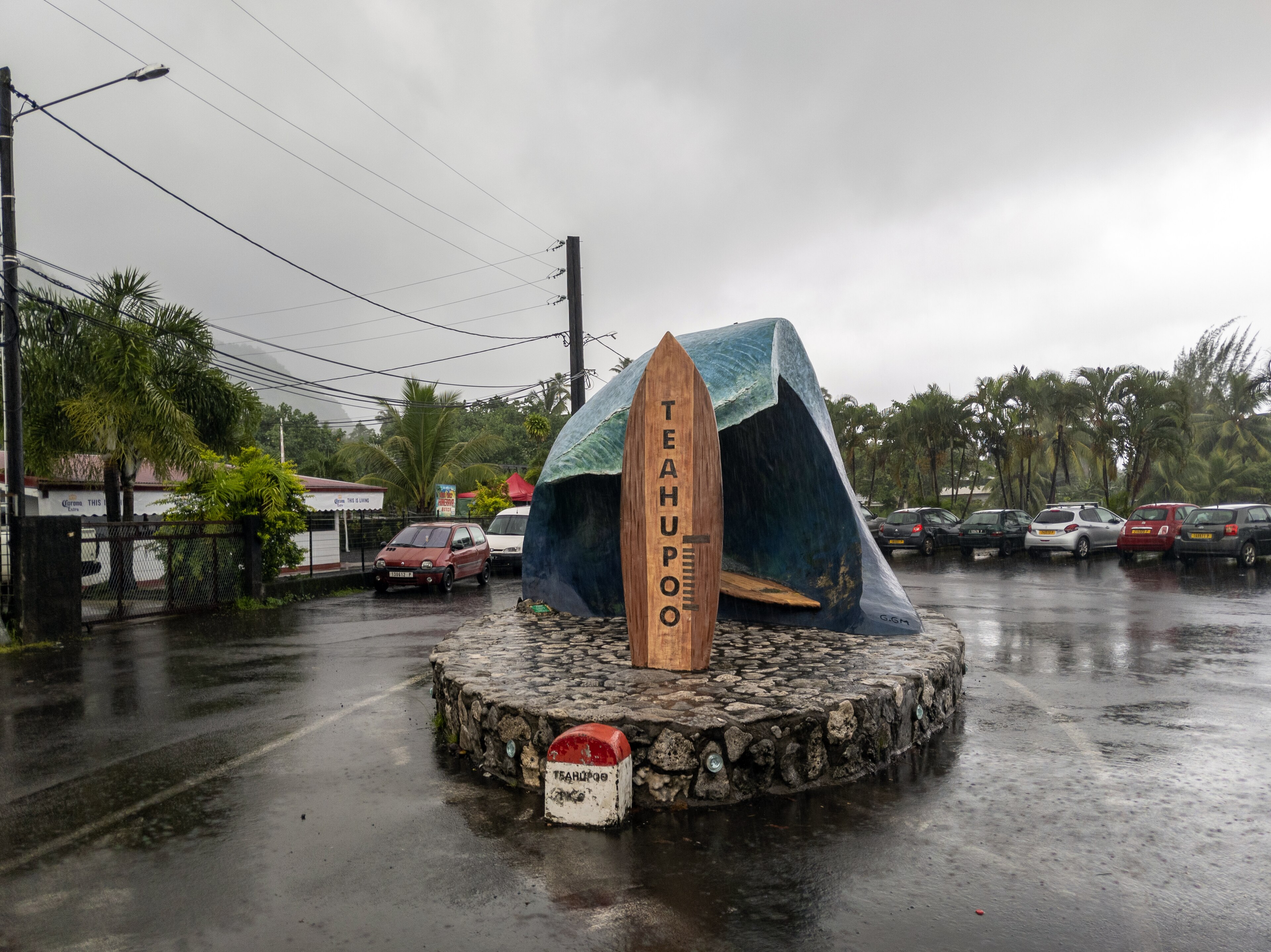
The PK marker at Teahupoʻo — literally where the road ends on Tahiti Iti
PK 0 — literally where the road ends on Tahiti Iti. Saga70. CC BY-SA 4.0.
Lagoon and mountains at Teahupoʻo — the Tahiti Iti ridge above the village
The lagoon and the Tahiti Iti ridge above the village. Matthew Dillon (Flickr). CC BY 2.0.
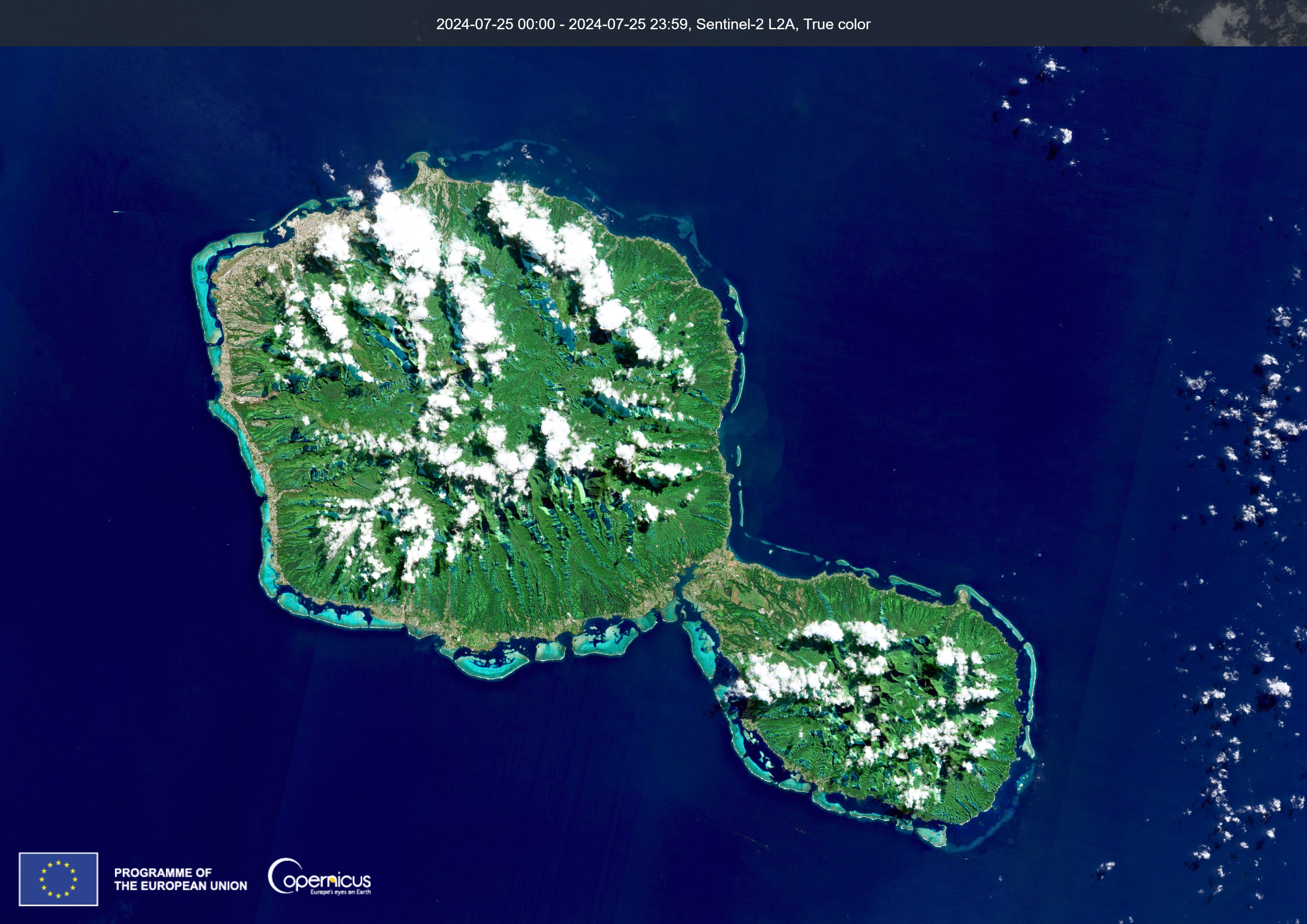
Tahiti from orbit — the round Tahiti Nui and the smaller Tahiti Iti to the southeast, captured days before the 2024 Olympics
Tahiti from orbit — Tahiti Nui (round) and Tahiti Iti (the smaller southeast lobe), captured days before the 2024 Olympics. Copernicus Sentinel. Contains modified Copernicus Sentinel data 2024. Copernicus terms (free use with attribution).
Vahine Fierro at Teahupoʻo, January 2024 — months before her Tahiti Pro win
Vahine Fierro at Teahupoʻo, January 2024 — months before her Tahiti Pro win. Saga70. CC0.
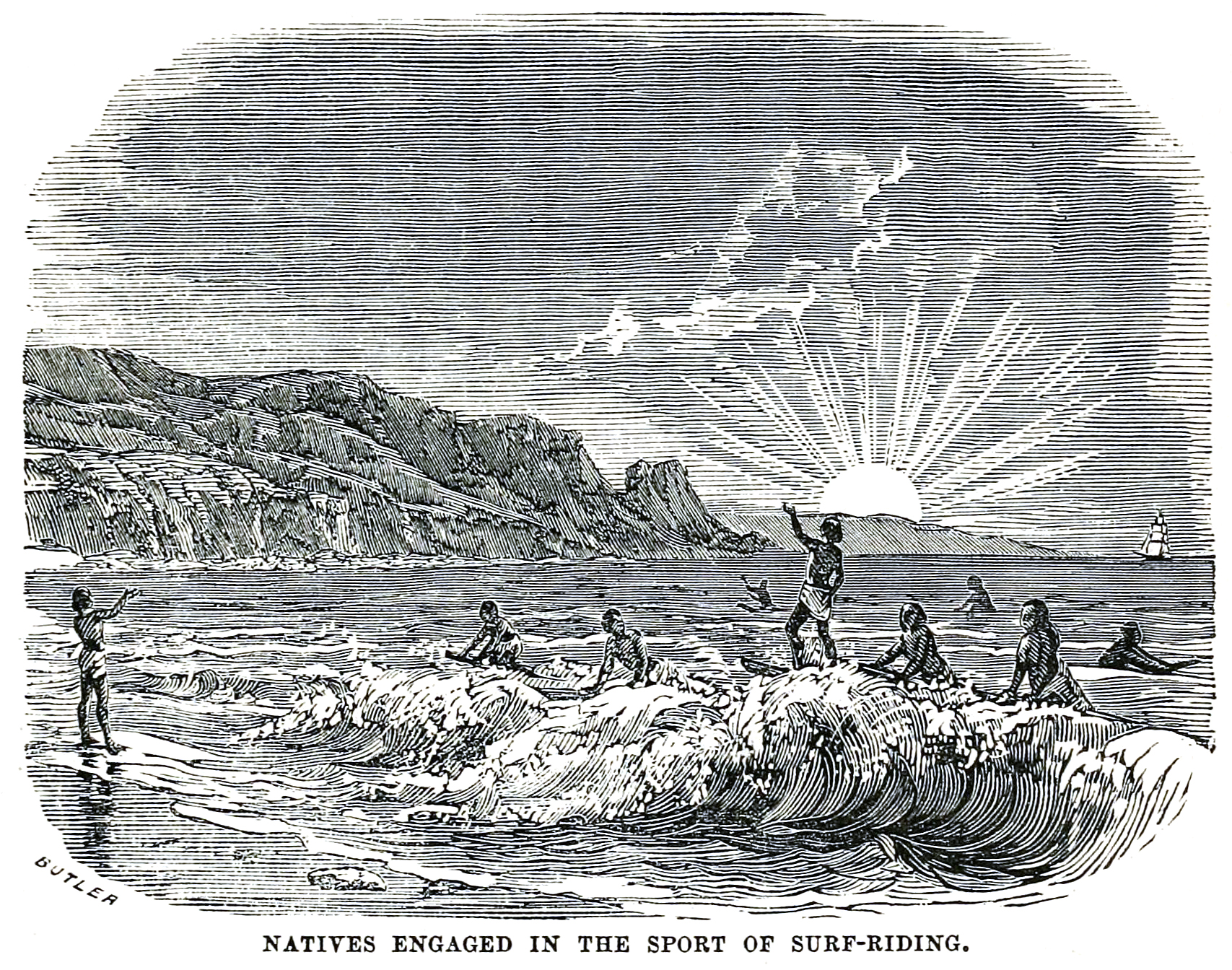
"Surf-riding" — the earliest published illustration of Native Hawaiian heʻe nalu, 1858. Tahiti is the elder cousin of this tradition.
"Surf-riding" — the earliest published illustration of Native Hawaiian heʻe nalu, 1858. Tahiti is the elder cousin of this tradition. Hutchings' California Magazine. Public domain (US, pre-1929).
Tahitian sailing canoes, painted by British naval officer Henry Byam Martin in the 1840s
Tahitian sailing canoes, painted by British naval officer Henry Byam Martin in the 1840s — Polynesian seamanship contemporaneous with the wave-riding tradition Cook's crew first witnessed. Henry Byam Martin (1846–47). Public domain.
· Honest Context

The village beneath the brand

The honest context. Teahupoʻo is not a beach you visit. It is a village that became a brand. The road ends here; the surf media starts here. For the four days every August when the WSL or the Olympics are in town, the channel fills with motor yachts, the sky fills with helicopters, and a place with one grocery store hosts roughly its own population again in television crews and surfers' families.

The rest of the year, Teahupoʻo is a fishing village whose residents — the *ʻāʻai* fishermen, the small farms inland, the families who have been on this peninsula for generations — drive an hour and a half to Papeete for any errand more complex than groceries. The wave they share with the world breaks just past the reef, but the wave's economic value flows mostly to people who are not from here.

The 2024 Olympics judges' tower fight was, at one level, about coral. At another level it was about who gets to decide what counts as a "legacy." The tower's defenders — Paris 2024, the French Polynesian government, the WSL — said a permanent structure was needed to host future Tahiti Pros. *Vai Ara o Teahupoʻo* and the Drollet petition (200,000+ signatures, including Kelly Slater's endorsement) pointed out that the wooden tower the WSL had used since 1997 had hosted every previous Tahiti Pro just fine. The compromise that got built — 25 percent smaller footprint than the original aluminum proposal, but still drilled into the reef — is the unsatisfying middle answer most international sporting controversies end up at: a real concession, not a reversal.

If you come here to watch the wave, the small things matter. Taxi-boat operators are local. Tip in cash. Don't crowd the channel during the morning surf window. The post-Olympics MEGA Lab reef reassessment is ongoing as of early 2026; the comprehensive damage-vs-baseline report has not been published. The community story is still being written.

· Data & Provenance

Where this page comes from

Geography, facilities

OpenStreetMap (ODbL) for geometry and facility tags within 500 m of the beach centroid. GeoNames for city/airport distances.

Climate & ocean

WorldClim v2.1 monthly normals and Open-Meteo Marine API. UV index excluded pending forecast-API follow-up.

Tides

Service Hydrographique et Océanographique de la Marine (SHOM); NOAA tide stations Papeete (1611005). Ranges are typical spring/neap; local conditions vary.

Species

iNaturalist observations, radius-filtered.

History & culture

Every factual claim on this page is linked to its source. Wikipedia articles cited inline per event. When we could not verify a specific claim, we said so.

Photography

Wikimedia Commons, each image carries its own license. Attribution visible on every image.

Named businesses

Each restaurant, hotel, museum verified against its own website or Wikipedia entry.

Voice

Written to pass the village test — the people who actually live here at the end of the road. The Teahupoʻo community has been increasingly vocal about wanting outside attention to be respectful, accurate, and accountable. Corrections welcome, especially on Tahitian-language framings, the post-Games reef-damage assessment as it appears, and the local voices we have flagged as still missing from the record.

Last updated 2026-04-30.