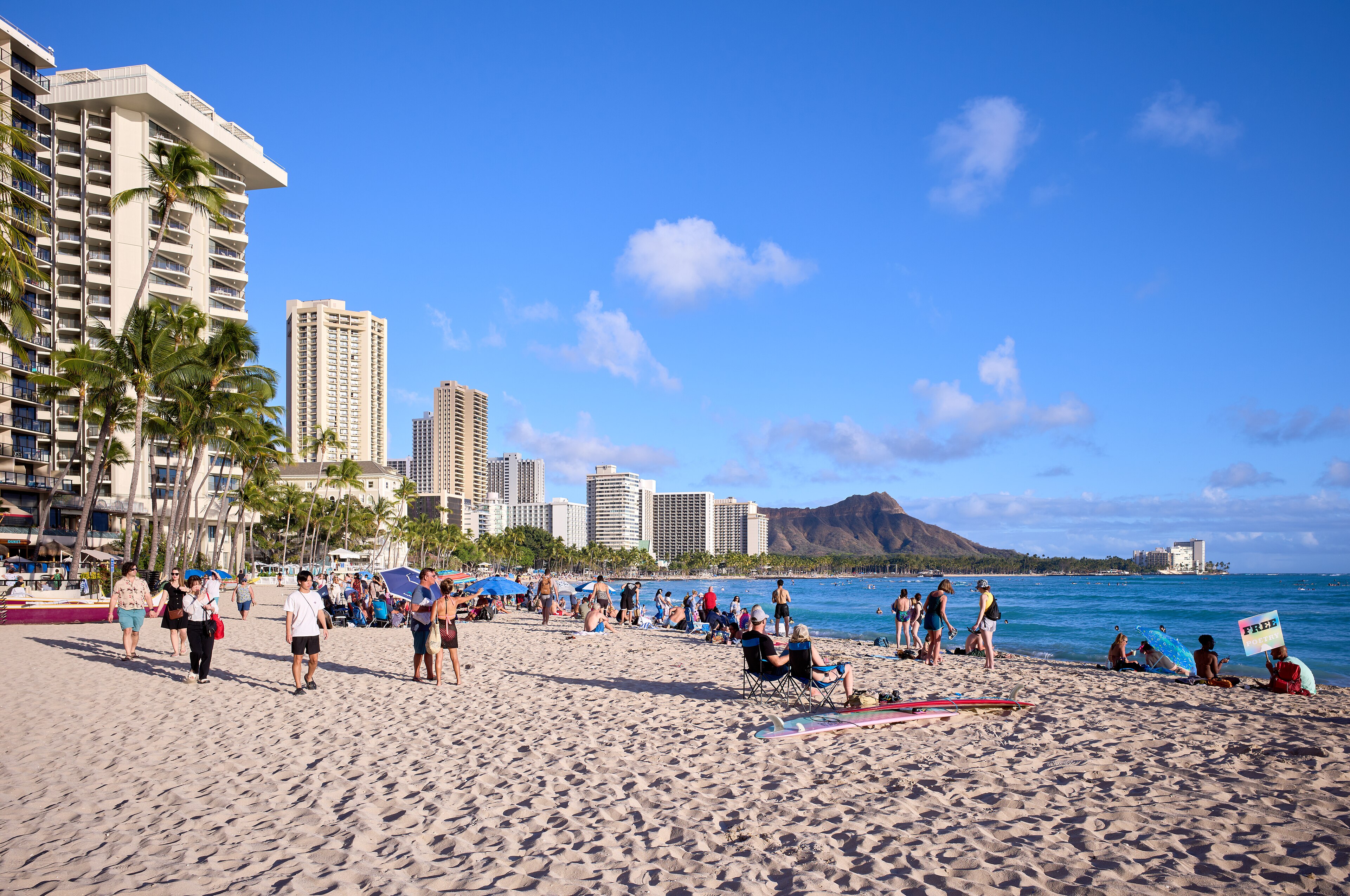
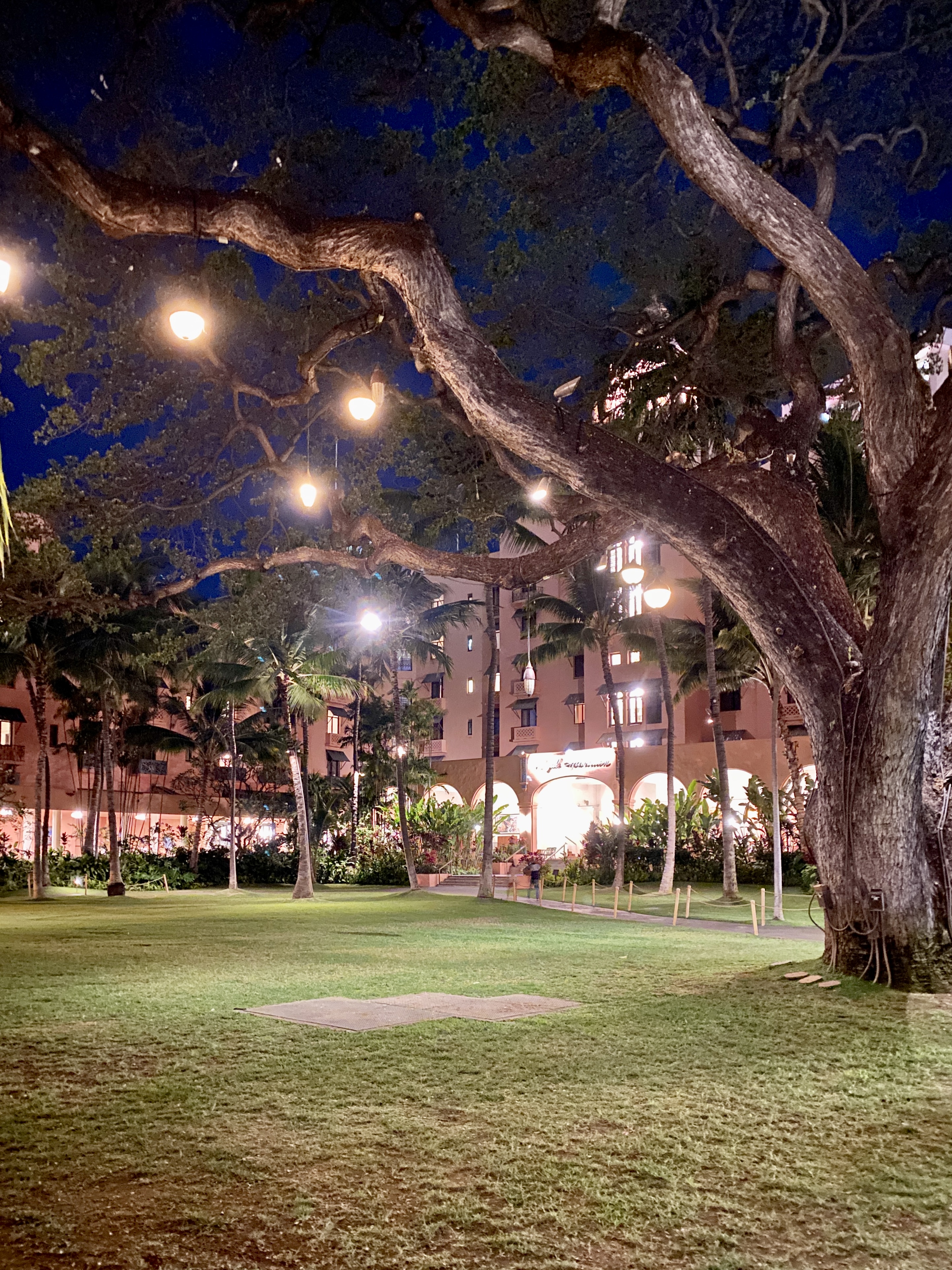
Waikīkī is two miles of Pacific sand on the leeward shore of Oʻahu, anchored at the eastern end by the volcanic crater of Diamond Head and at the western end by the 1928 canal that drained the wetlands that used to be here. The Hawaiian word means "spouting water" — a reference to the springs and streams that once fed this stretch of coast, now buried under what became the template for every tropical beach destination on Earth.
The land on which Waikīkī sits was a royal estate of the Hawaiian Kingdom, a sovereign nation-state with treaties with the United States, Britain, France, and Japan. That kingdom was overthrown in January 1893 by a committee of American businessmen backed by U.S. Marines. The islands were annexed in 1898 without a treaty. The Royal Hawaiian Hotel, which opened on this sand in 1927 and gave the neighborhood its pink-stucco identity, sits on former Crown Lands.
The sport that made Waikīkī globally famous is older than the kingdom that the United States dismantled. Heʻe nalu — surfing — was practiced by Hawaiian royalty on the breaks offshore of this beach for centuries before the first Westerner arrived. Duke Paoa Kahanamoku, Hawaiian, Olympic gold in 1912 and 1920, taught the rest of the world what the Ali'i had been doing here for a thousand years. He did so while his country was under foreign occupation.
Waikīkī today is a beach of layers that do not always talk to each other. Two million visitors a year. Thirty thousand hotel rooms in two kilometers. A surfing tradition that predates recorded history. A statue of Duke on Kalākaua Avenue with fresh leis every morning. The canoes still launching off Kūhiō Beach at dawn.
· The Overthrow · 1893
What Waikīkī was before it was Waikīkī
Every postcard of this beach is an inheritance of a specific political event. The event has a date, a set of names, a legal record, and a formal U.S. Congressional apology. None of that is ancient history; the apology was signed in 1993.
A recognized nation-state
The Hawaiian Kingdom — founded by Kamehameha I in 1795 when he unified the islands after the Battle of Nuʻuanu fought in the valley directly behind this beach — was a sovereign nation-state with formal international standing. It had signed treaties with the United States (1849), Britain (1851), France (1857), Germany, Belgium, Denmark, Italy, Japan, and a dozen other powers. Its monarchs sent ambassadors to European courts. Its currency was issued on the gold standard. Its constitution was English-language bilingual with Hawaiian. By the 1880s it was a member of the Universal Postal Union.
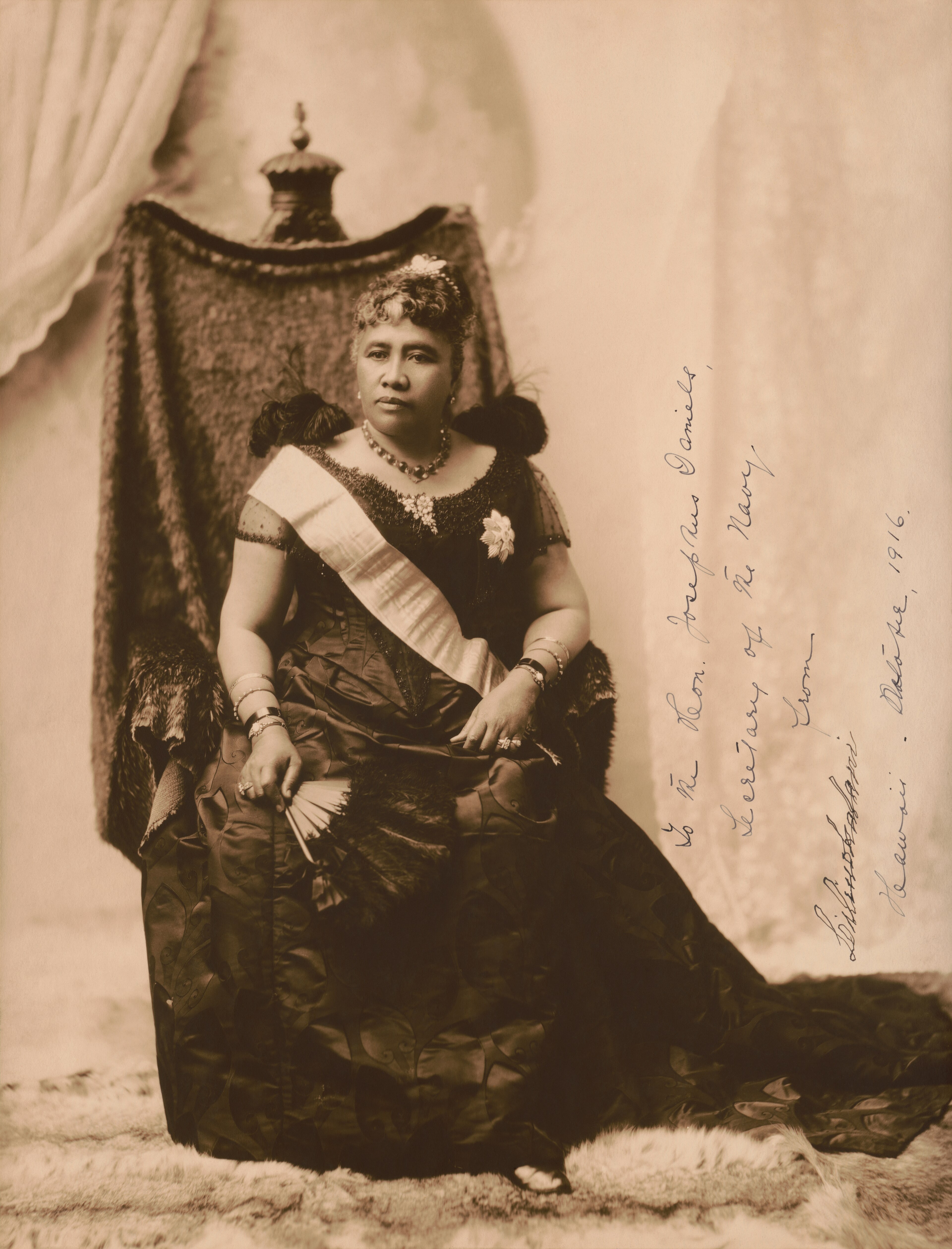
By the time Queen Liliʻuokalani ascended the throne in January 1891, American and European planter families — descended largely from the Protestant missionary settlers of the 1820s — controlled most of the sugar and pineapple industry. Her attempt in early 1893 to promulgate a new constitution restoring voting rights to Native Hawaiians that had been stripped by the earlier Bayonet Constitution of 1887 was the proximate trigger for what happened next.
On 17 January 1893, a group of thirteen American and European businessmen, calling themselves the Committee of Safety, declared the Hawaiian monarchy abolished. They were backed by 162 U.S. Marines from the USS Boston, landed that day at Honolulu Harbour under the orders of U.S. Minister John L. Stevens. The Marines deployed at strategic positions around the palace and the government buildings — a display of force rather than engagement; they did not fire.
The queen, advised that armed resistance would lead to the deaths of her people, yielded her authority in a formal written protest addressed to the United States government. She expected that the U.S., upon investigation, would restore her kingdom. President Grover Cleveland did investigate — commissioning the Blount Report, which concluded that the overthrow was illegal and called it "an act of war committed with the participation of a diplomatic representative of the United States and without authority of Congress." Cleveland urged restoration. The Senate refused.
Five years later, in July 1898, and after Cleveland had left office, Congress annexed Hawaiʻi via a joint resolution — the Newlands Resolution — which bypassed the treaty process that had failed. The Kuʻe Petitions, signed by 21,269 Native Hawaiians (more than half the indigenous population of the kingdom) explicitly protesting annexation, were delivered to the U.S. Senate. They are preserved in the U.S. National Archives. Annexation passed anyway.
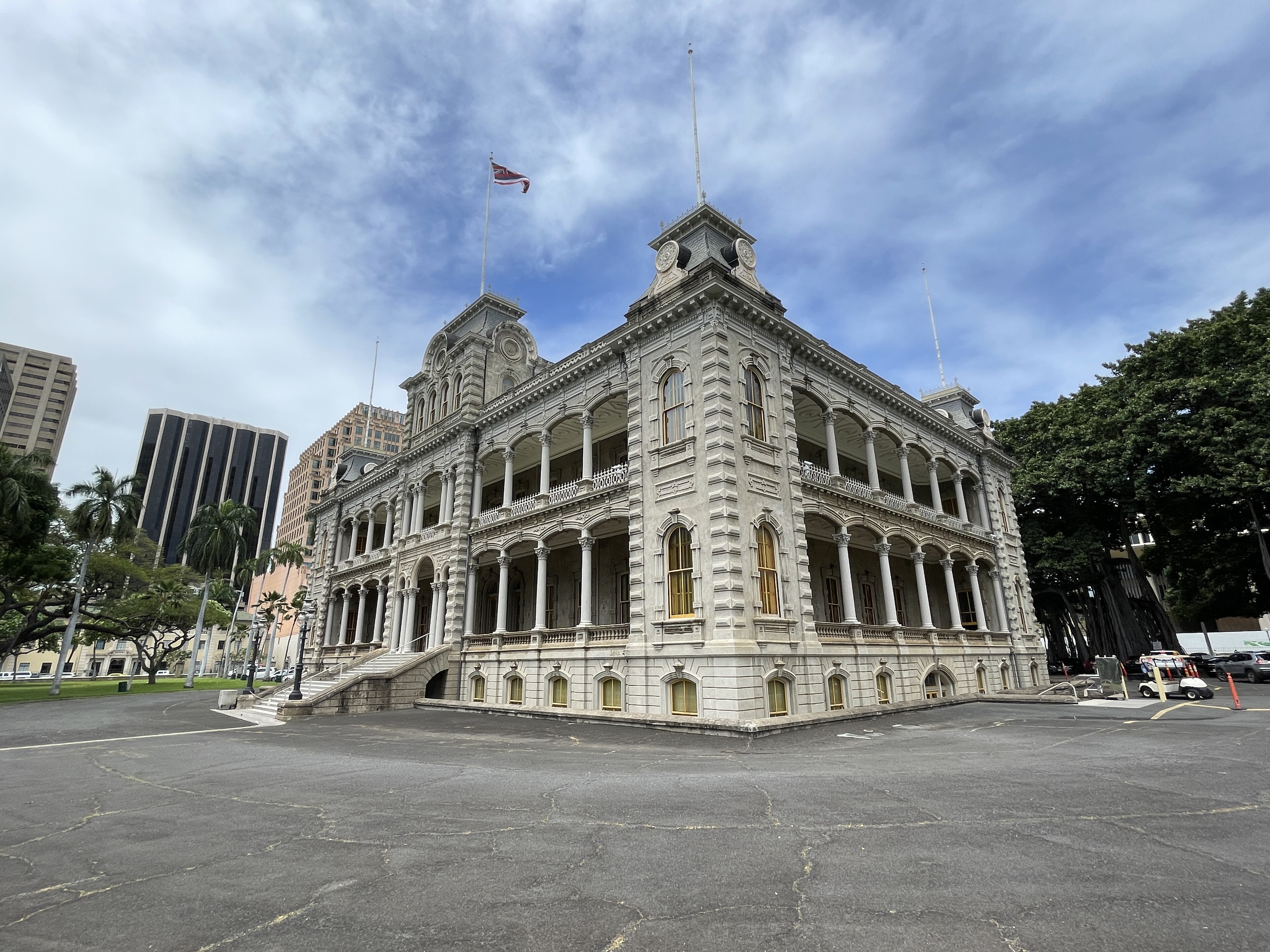
ʻIolani Palace — the only royal palace on U.S. soil. The queen was imprisoned here under house arrest from January 1895, following a failed counter-revolution, for eight months. The palace is two miles inland from the sand of Waikīkī.· Steven Pavlov
The apology
On 23 November 1993, the 100th anniversary of the overthrow, President Clinton signed Public Law 103-150: the Apology Resolution. Congress formally apologized for "the overthrow of the Kingdom of Hawaiʻi on January 17, 1893" and acknowledged that Native Hawaiians "never directly relinquished their claims to their inherent sovereignty as a people over their national lands." The resolution has no binding legal force. It is a statement of historical fact.
What this means for the Waikīkī a visitor experiences: the beach in front of the Royal Hawaiian Hotel and the Moana Surfrider sits on former Crown Lands — the trust holding established for the maintenance of the Hawaiian monarchy and the support of the Hawaiian people. After the overthrow, those lands passed to the Republic of Hawaiʻi (1894), then to the United States at annexation (1898), then to the State of Hawaiʻi at statehood (1959). They remain contested. The Hawaiian homestead waiting list — for a program created in 1920 to return a portion of these lands to Native Hawaiian families — is decades long. More on that in the Mālama Hawaiʻi → spoke.
· Duke · 1912
How a Hawaiian Olympian taught the planet to surf
Duke Paoa Kahanamoku was born three years before his country was overthrown. By the time he was twenty-two he had won Olympic gold in Stockholm and made his hometown beach into the most-watched stretch of sand on Earth. The sport he exported had been practiced on this exact water for a thousand years.
What surfing was before 1820
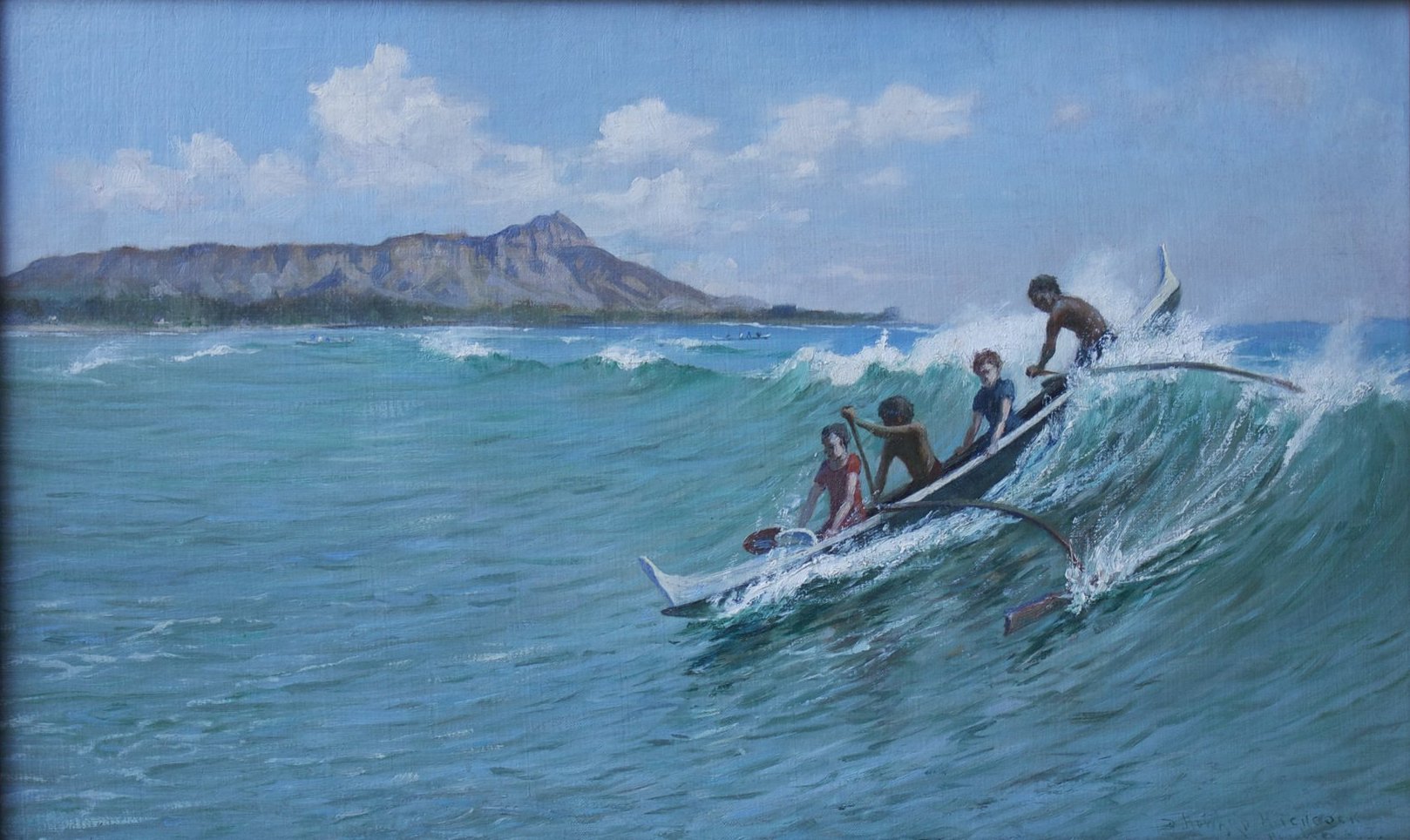
In the Hawaiian islands before sustained Western contact, heʻe nalu — "wave sliding" — was the most important athletic and spiritual practice of the Aliʻi, the chiefly class. The best breaks were reserved for nobility; commoners surfed on less-prized waves. Oral tradition records specific chiefs by specific wave at Waikīkī — Kalanikūpule on one break, Kamehameha I on another. The boards were koa wood, sometimes fifteen feet long, individually shaped by the rider and ceremonially blessed. Surfing was indistinguishable from religious practice; it was a way of maintaining relationship with the ocean gods.
ca. 1890. D. Howard Hitchcock — 'Canoe Surfing, Waikiki.' The practice of riding outrigger canoes down the same waves modern surfers ride today is continuous from pre-contact through to the beach boys era into the current canoe clubs working this water.· D. Howard Hitchcock
The near-extinction
American Protestant missionaries began arriving in Hawaiʻi in 1820. Their view of surfing — naked bodies, men and women together in the water, connected to an Indigenous religious framework they sought to replace — was that it should be discouraged. Simultaneously, introduced diseases collapsed the Hawaiian population: from roughly 400,000 at the time of Cook's arrival in 1778 to under 40,000 by the 1890s — a ninety percent loss in a century. A small-population culture cannot maintain an extensive cultural practice. By 1890 surfing was not extinct but it was close. There were fewer than a hundred active surfers in the islands.
Duke
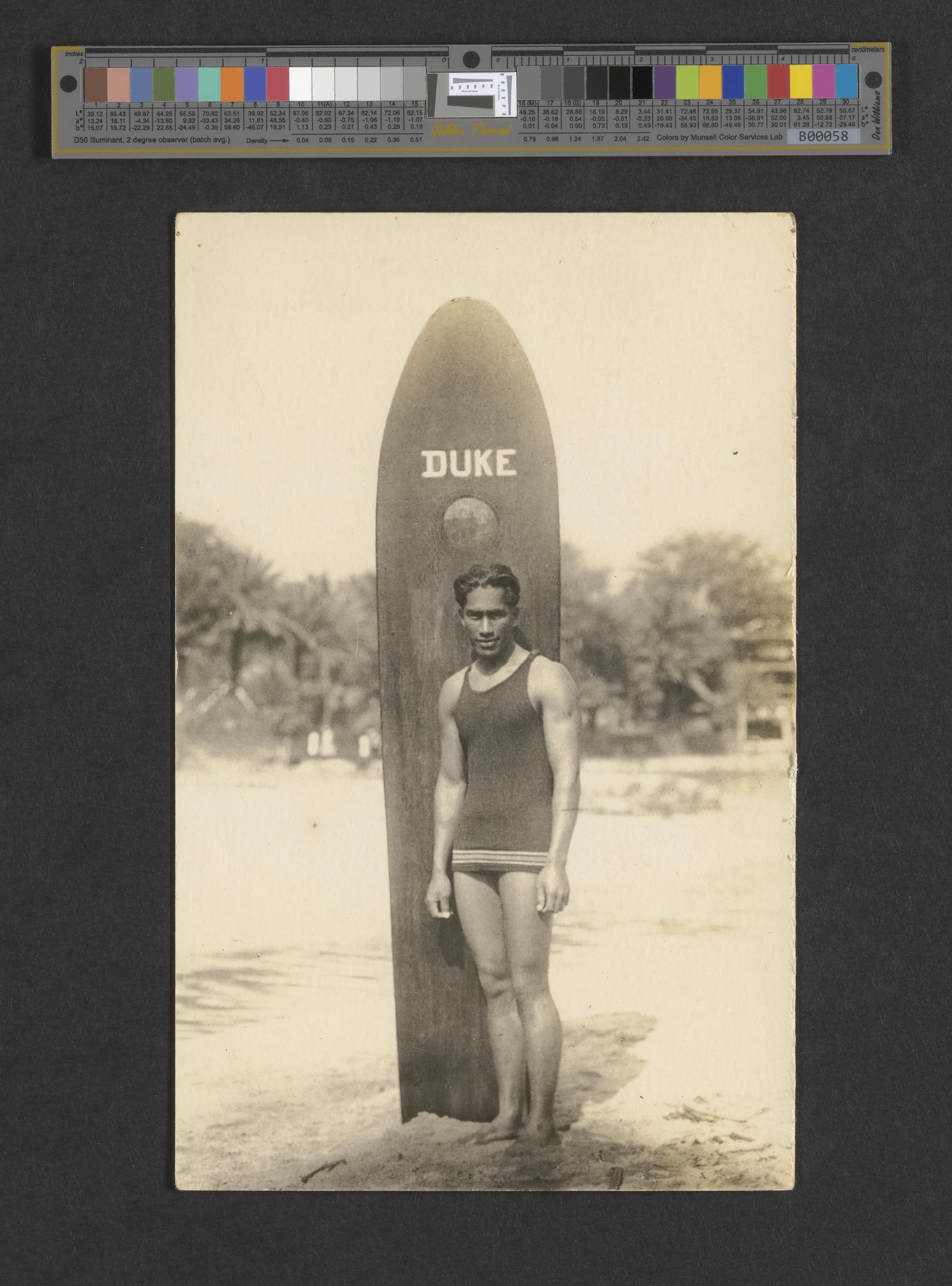
Duke Paoa Kahanamoku was born on 24 August 1890 — three years before the overthrow — to a Native Hawaiian family living in the Kakaʻako neighborhood of Honolulu. His father was named for Prince Duke of Edinburgh, who had visited the islands in 1869; the name passed to the son. He grew up swimming and surfing at Waikīkī. By his late teens he was known among the local Hawaiian and haole watermen as extraordinary in the water.
ca. 1920. Duke Kahanamoku with his koa-wood surfboard. His favored board measured approximately 16 feet and was shaped for the long, sloping Waikīkī waves he had ridden since childhood.· Unknown (archival)
At the 1912 Stockholm Olympics, Duke won gold in the 100-meter freestyle, setting a world record. He won gold again in the same event at Antwerp in 1920, along with silver in the 4×200m relay and a third medal in 1924 at Paris. He was, in the 1910s and 20s, the most famous Hawaiian in the world — and one of the few Indigenous athletes of his generation to achieve global fame.
The Olympic platform was the vehicle for something else. Duke used his swimming tours to put on surfing demonstrations. On 24 December 1914 at Freshwater Beach, Sydney, he performed the first-ever surfing demonstration witnessed by an Australian audience — a ride that is now commemorated with a statue on that beach and treated as the birth of Australian surfing. He did the same in Southern California (Corona del Mar, Newport, Balboa) through the 1910s and 20s. Every modern Australian surf club and every modern California surfing tradition descends, directly, from these demonstrations.
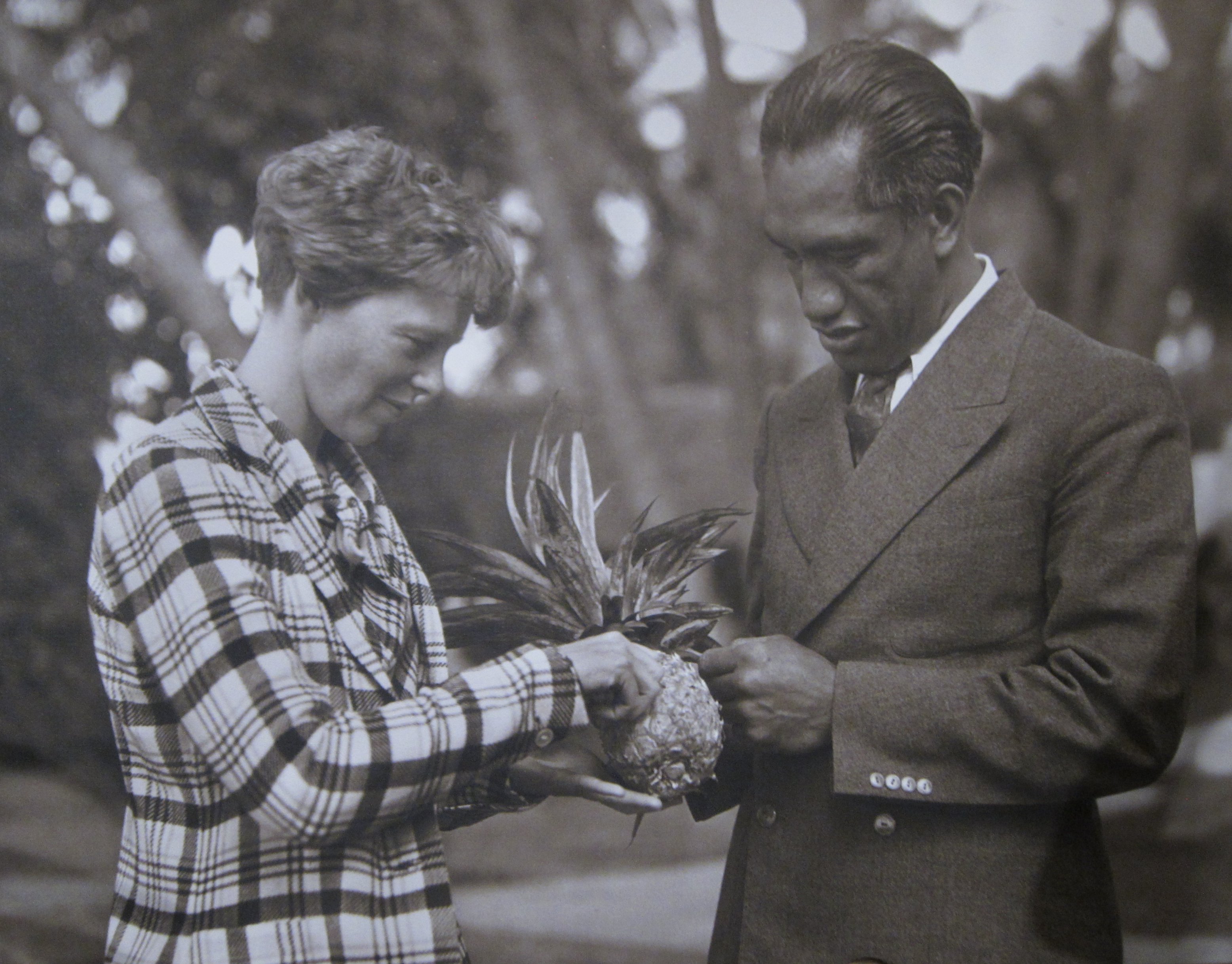
ca. 1935. Amelia Earhart and Duke Kahanamoku in Hawaiʻi. In the 1930s Duke had become the official greeter of visiting dignitaries and celebrities — a role he performed until his death in 1968. He is probably the most-photographed Hawaiian of the 20th century.· Unknown (archival)
The beach boys of Waikīkī
Duke was the face. The transmission mechanism was a community of Hawaiian watermen — the beach boys of Waikīkī — who worked the hotels (the Moana from 1901, the Outrigger Canoe Club from 1908, the Royal Hawaiian from 1927) as surf instructors, lifeguards, canoe captains, and general ambassadors of the Hawaiian ocean to the arriving tourists. The names — Panama Dave, Steamboat Mokuahi, Tom Blake, Rabbit Kekai, Blue Makua, Sally Hale — are remembered locally in ways that rarely translate outside Hawaiʻi. What they did was teach several decades of foreign visitors how to surf and how to paddle a Hawaiian outrigger. They are the reason the template of "tropical beach plus local instructor" exists globally in the form it does.
The Outrigger Canoe Club, founded in 1908 on the sand between the Moana Hotel and the Royal Hawaiian, was explicit about its purpose: "the reviving of the ancient Hawaiian sports." It is still operating on the same beach. Its members still surf and paddle the same breaks. The beach boys tradition continues today, in the form of the canoe captains working Kūhiō Beach each dawn, the surf-school instructors on the Gray's Beach sand, and the organized catamaran sails launching from the Royal Hawaiian stretch each afternoon.
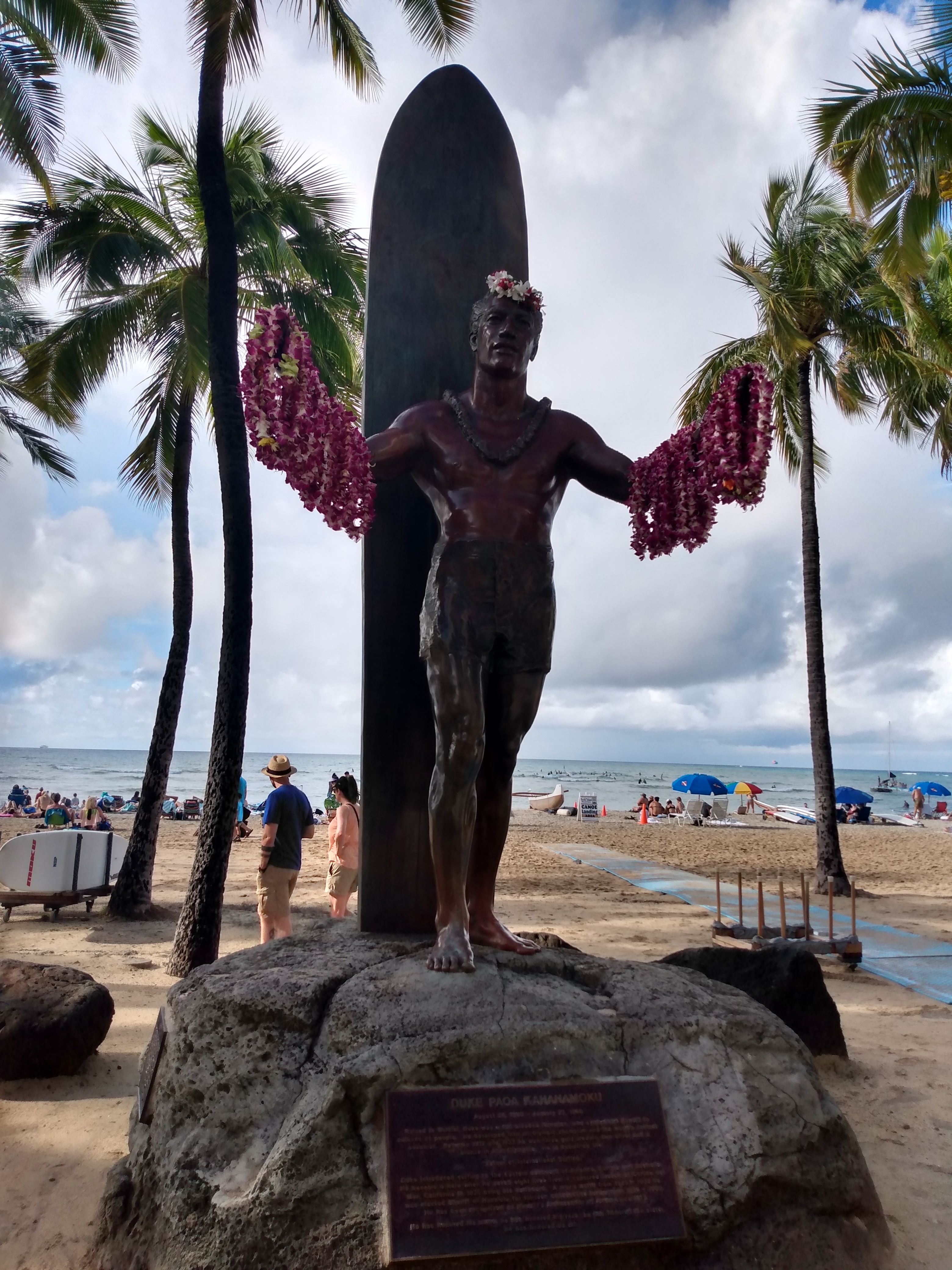
The bronze statue of Duke Kahanamoku on Kalākaua Avenue, installed 2002. Every morning the statue receives fresh leis — the flowers are replaced silently, by unnamed Honoluluans, before the first tourists arrive.· DestinationFearFan
Duke died in 1968 at age 77. His ashes were scattered in the Pacific off Waikīkī by his friends and the beach boys. The statue on Kalākaua Avenue was installed in 2002. It depicts him arms-outstretched in front of a longboard — a welcoming gesture, the posture of aloha — and it is, arguably, the most photographed single object in Hawaiʻi. The leis that appear on it are not maintained by the hotel, or the city, or Parks and Recreation. They are replaced every morning by the people who live here, out of gratitude for what a Hawaiian man from this beach did for Hawaiʻi's place in the world.
· Six Beaches, One Name
What the map calls Waikīkī is actually six beaches
From the Ala Wai canal at the ʻEwa end to the Kapiʻolani park under Diamond Head is two miles. The beach is continuous. The experience of each stretch is not.
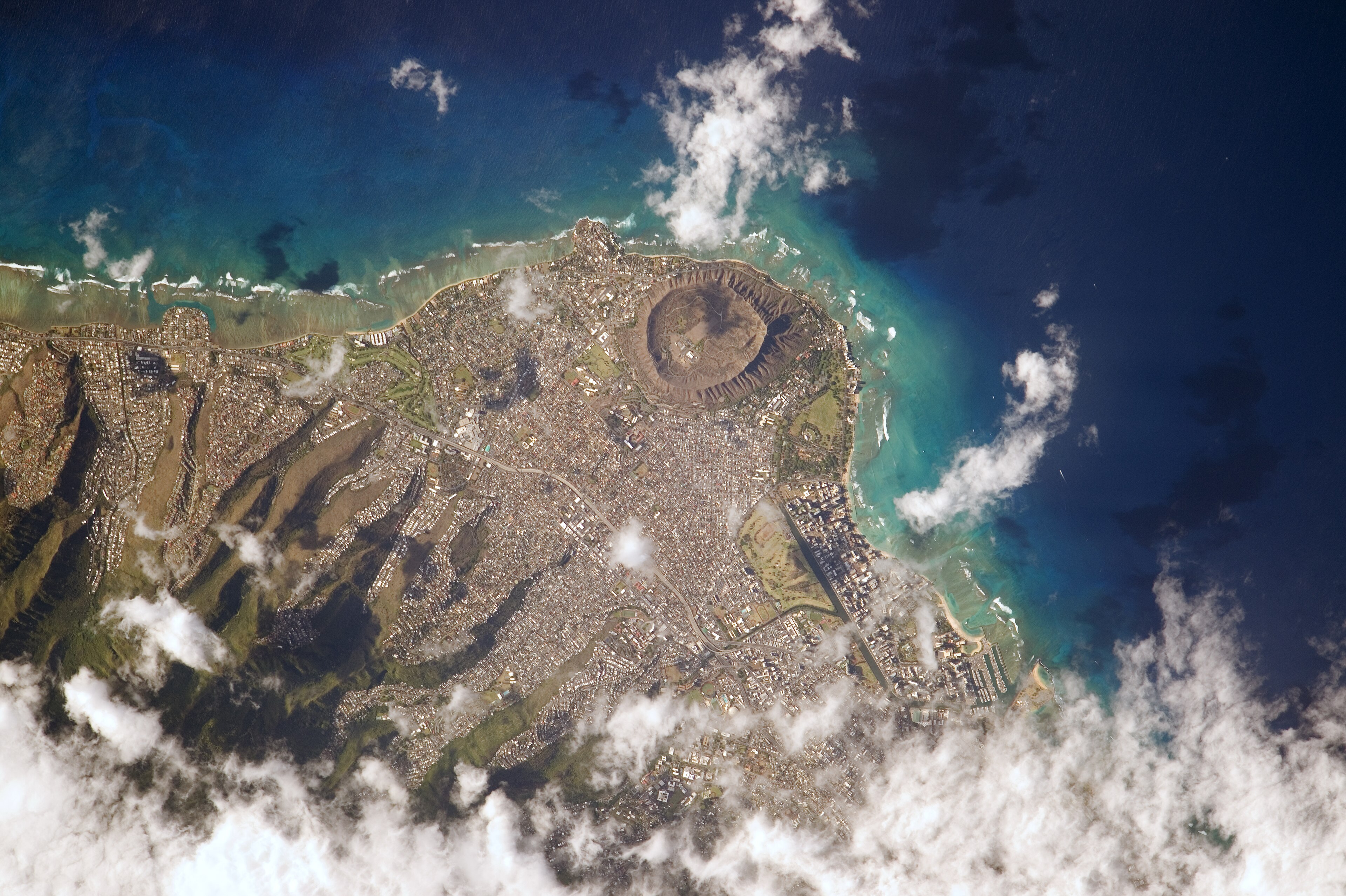
Waikīkī and Honolulu seen from the International Space Station, photographed by astronaut Scott Kelly. Diamond Head's crater is the round feature at right; the Ala Wai Canal cuts diagonally across the frame below the strip of beach.· NASA / Scott Kelly
KAPI
Kapiʻolani Beach Park
The eastern (Diamond Head) end. Largest park on Waikīkī; shaded by ironwoods. Surfer's Beach and Queen's Surf Beach are here. Queen's Surf is Waikīkī's gay beach, documented since the 1970s.
Best for
Families, picnics, less-crowded swimming, sunset photos of Diamond Head
KUHIO
Kūhiō Beach
The engineered swimming lagoon — two rectangular enclosures formed by the Waikīkī Wall (built 1930) that calm the surf for swimmers. The Hula Mound here hosts free Hawaiian cultural performances. Families with small children end up here.
Best for
Safe swimming for kids, free hula at sunset, cheapest beachfront access
Local note
The Wall is low enough to walk on; locals fish off it at night.
ROYAL
Royal Hawaiian / Sheraton Beach
The pink-umbrella stretch in front of the Royal Hawaiian and Sheraton Waikīkī. The most-photographed part of the beach. Beach boys here still run the outrigger-canoe rides to the surf breaks.
Best for
The classic postcard photo, catamaran launches, the Mai Tai Bar directly behind
GRAY
Gray's Beach / Halekulani
In front of the Halekulani. Narrow at high tide — sometimes disappears entirely. House Without a Key on the Halekulani's lanai is directly behind, under a 100-year-old kiawe tree. Quieter than Royal stretch.
Best for
Sunset cocktail with Hawaiian music, quieter mornings
Local note
Beach width varies significantly with seasonal sand shifts.
FORT
Fort DeRussy Beach
Military-adjacent beach (Fort DeRussy is a U.S. Army R&R station). Wide, family-friendly, less commercialized. Largest remaining green space on the beachfront.
Best for
Wide sand, open grass for picnics, free parking at the Hale Koa
DUKE
Duke Kahanamoku Beach
The western (ʻEwa) end, in front of the Hilton Hawaiian Village. A man-made lagoon protects the swimming area. Friday-night fireworks launch from here (since 1988). The Rainbow Tower is the backdrop.
Best for
Calmest water, Friday fireworks, shorter walk to the Ala Wai Boat Harbor
· A Day Here
What it actually feels like, hour by hour
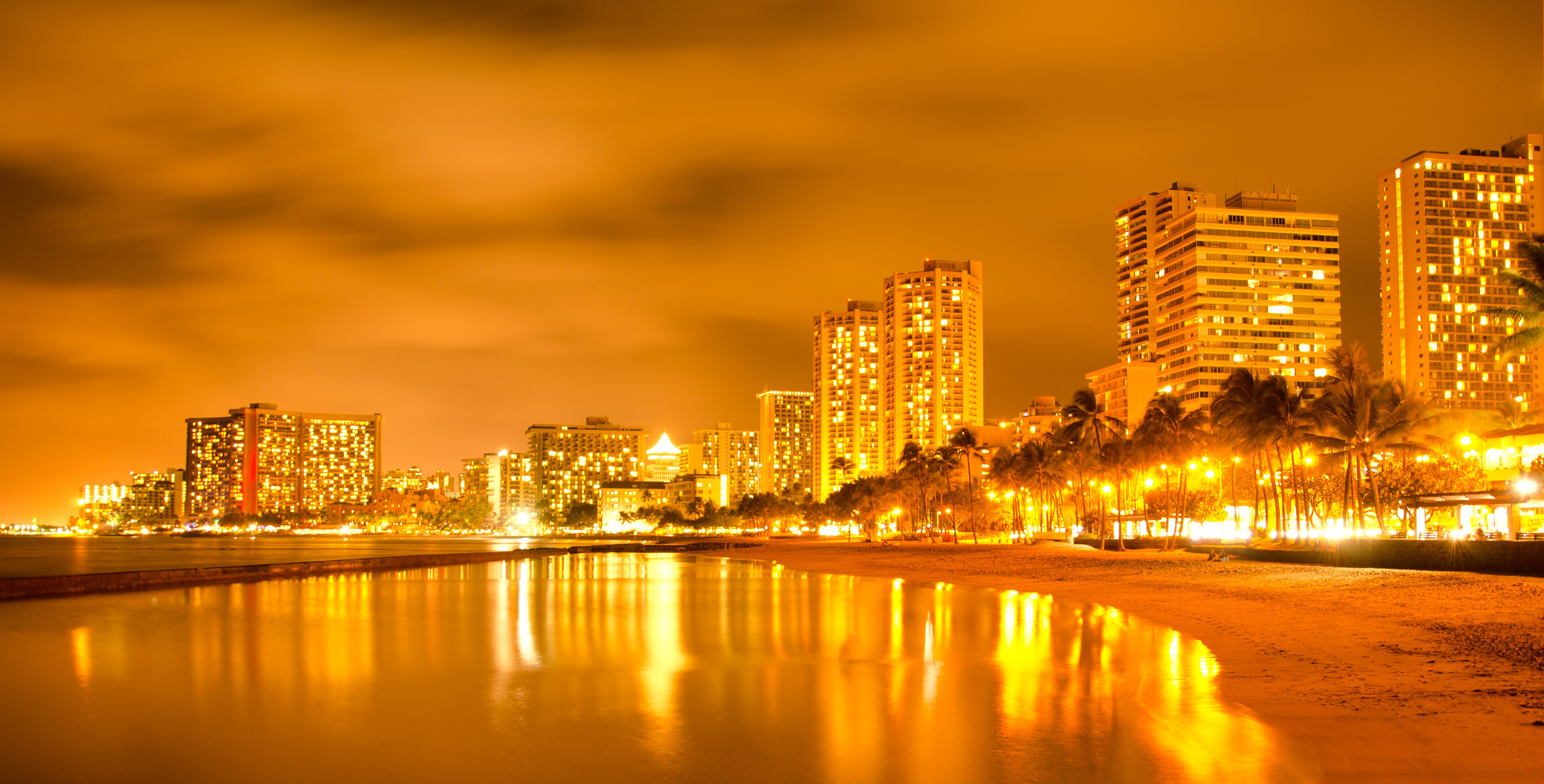
Waikīkī at night, 10-second exposure — photograph by davidpinter. The Hilton Hawaiian Village Friday fireworks light the western end of the bay; Diamond Head is visible on the horizon to the east.· davidpinter
Dawn
The sky over Diamond Head lightens before the sun clears the crater. Outrigger canoes are being pulled down from racks at Kūhiō Beach; the beach boys who work the morning lessons are already at the water's edge. Surfers paddle out past the reef to Queens, to Canoes, to Publics — the names of the surf spots that define the bay's geography in a way a non-surfer will never notice. Manu-o-Kū — the white terns — circle low over the sand on their way out to feed. The Royal Hawaiian's pink facade reflects the first light. Runners pass along Kalākaua Avenue, the joggers outnumbering the tourists for exactly one hour.
Midday
By eleven the beach is full. The Royal Hawaiian's pink beach umbrellas are deployed. The canoe shuttles to Diamond Head begin — four dollars per person, captain-and-six, beach boys guiding newcomers. The sand is packed. Shave ice lines form at Waiola. Spam musubi is on every snack bar. Along the concrete Wall at Kūhiō Beach, kids jump off into the engineered lagoons where the water is calm. The air is 29°C, the water 26°C, the trades steady at 15 knots. The bronze Duke Kahanamoku statue on Kalākaua is garlanded with fresh leis that get replaced silently every morning. Somebody is always taking a photograph of it.
Golden
The setting sun moves behind the Ala Wai Boat Harbor; the light on Diamond Head turns amber. Catamarans launch from Gray's Beach for the sunset sail. The Hula Mound at Kūhiō lights up its torches and the evening Hawaiian music begins — slack-key guitar, sometimes a chant, always free. House Without a Key at the Halekulani starts its service under the century-old kiawe tree; hotel guests and locals-in-the-know share the lanai seats. The ocean goes pink, then lavender, then navy in the span of twenty minutes.
Night
The Friday fireworks from the Hilton Hawaiian Village light up the western end of the bay — a tradition since 1988. Duke's Waikīkī is loud downstairs; RumFire at the Sheraton is busier. Further inland on Kūhiō Avenue, the neighborhood's nightlife is a mix of tiki bars that understand the cliché is their job and music venues where local Hawaiian groups play until 2 a.m. The beach itself empties by eleven; the lifeguards go home; the sand belongs to a handful of runners and to the monk seals that occasionally haul out at Sans Souci Beach at the eastern end. At 2 a.m. the terns come back to roost in the ironwoods.
· The Beach Boys
The institution that carries the tradition — still daily, on this sand
In every surf-tourism beach around the world there is a local waterman who teaches foreigners. The pattern was invented here, by specific Hawaiian men, for specific reasons, in a specific decade of the 20th century. The work is still being done on the same beach.
The beach boys of Waikīkī were a loose occupational community of Hawaiian watermen who worked the shoreline between the Moana Hotel and the Royal Hawaiian from approximately 1910 onward. They were surf instructors, canoe captains, catamaran crews, lifeguards, hula musicians, and occasionally — through their introductions and informal adoption — Hawaiian cultural ambassadors for the foreign visitors who had begun arriving on Matson steamships from San Francisco.
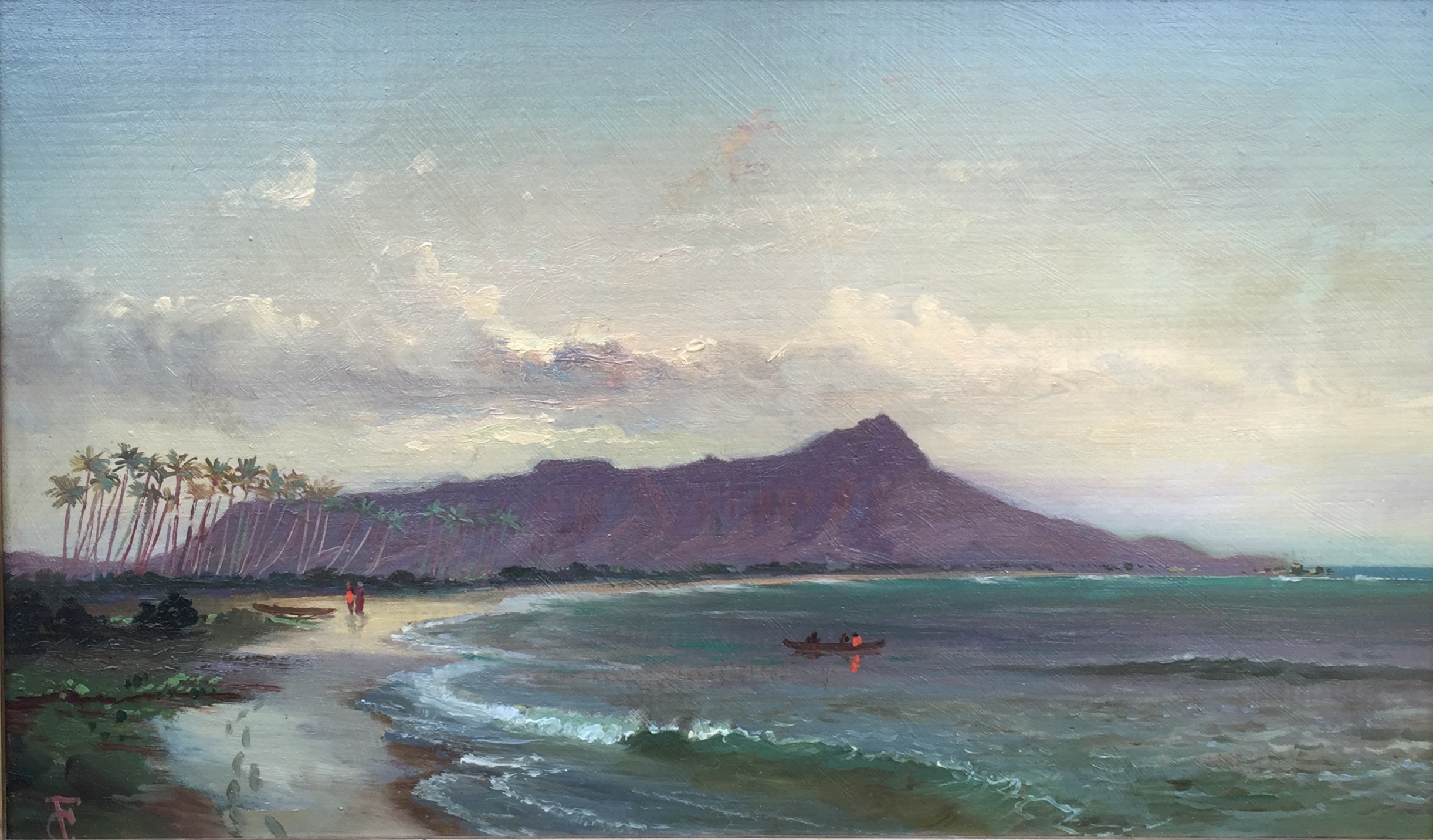
ca. 1895. Charles Furneaux — 'Diamond Head, Waikiki Beach, and Helumoa.' Helumoa was the coconut grove royal compound on what is now the Royal Hawaiian Hotel site. The compound was in continuous royal use from the time of Kamehameha I until the overthrow.· Charles Furneaux
The occupation is older than the hotels that formalized it. It grows out of the koʻa — a pre-contact Hawaiian custom in which a family or community claimed responsibility for a specific stretch of reef and the fishing and surfing rights on it. When Westerners began arriving in the 19th century, the watermen of that particular stretch were already the people who knew the reefs, the currents, the breaks, and the dangers. The beach boys of Waikīkī in 1920 were the descendants of the koʻa-holders of 1820.
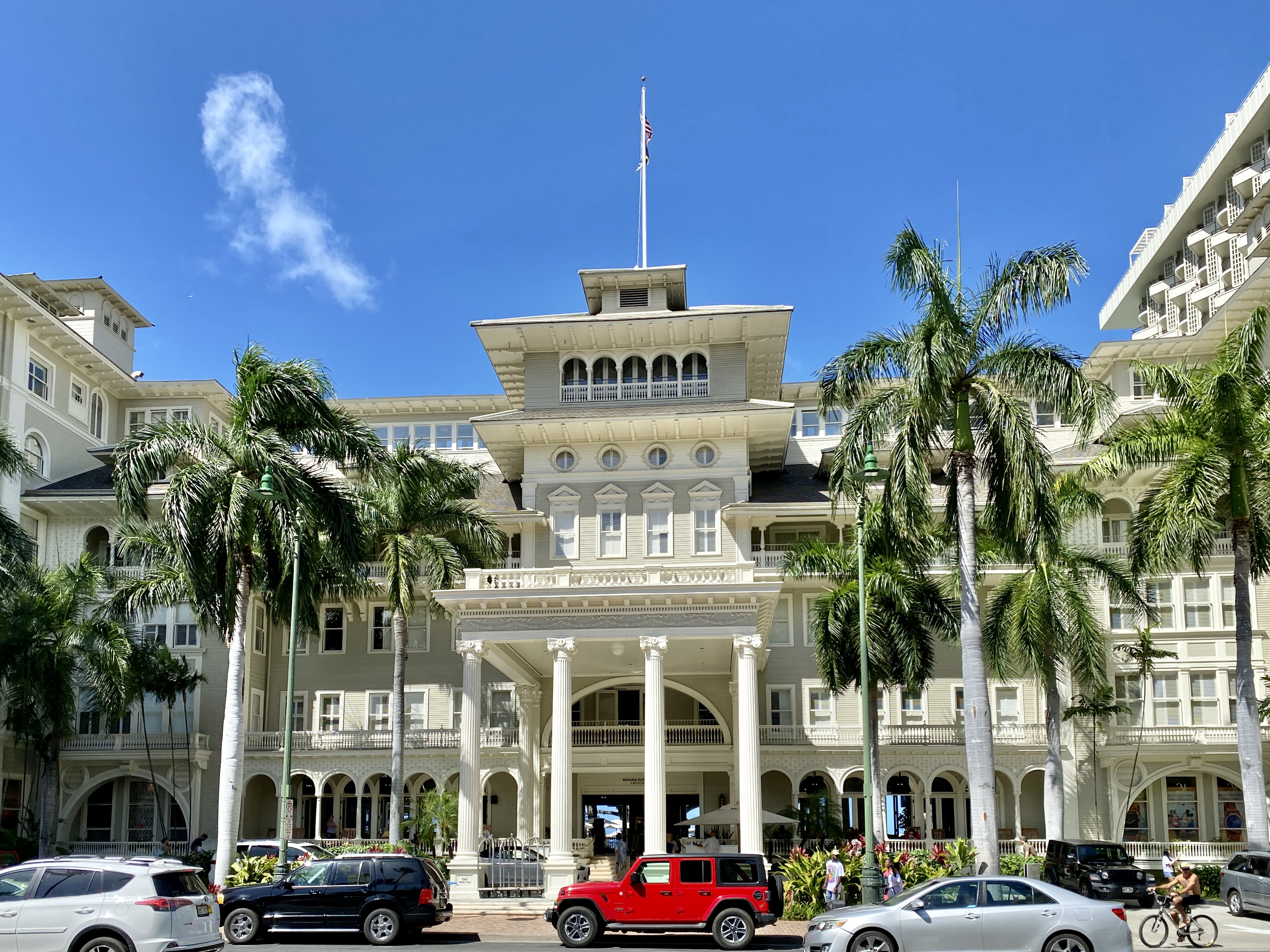
The Moana Hotel, opened 1901 — the first major tourist hotel on Waikīkī. Beaux-Arts architecture; still operating as the Moana Surfrider. The banyan tree on its courtyard (planted 1904) has hosted broadcasts of the 'Hawaii Calls' radio show since 1935.· w_lemay
The institution
The Outrigger Canoe Club, founded 1908 by journalist Alexander Hume Ford together with a group of Hawaiian and haole watermen, was the formalization. Its founding documents list "the reviving of the ancient Hawaiian sports" as its explicit purpose. Duke Kahanamoku was an early member. It is still a private club — membership is difficult — and its clubhouse still sits on the sand at Waikīkī between the Halekulani and the Royal Hawaiian. Its annual canoe regatta on the Fourth of July has been run every year since 1908.
The equivalent institution for non-members is the Hawaiian Canoe Association, which runs regattas across the summer months at Waikīkī, Keʻehi, and other Oʻahu beaches. The six-person outrigger canoe is the oldest continuously-used Hawaiian technology on this stretch of water. The canoes you see being pulled down the sand at Kūhiō Beach at dawn are a direct lineal practice with the canoes Kamehameha I beached here in 1795.
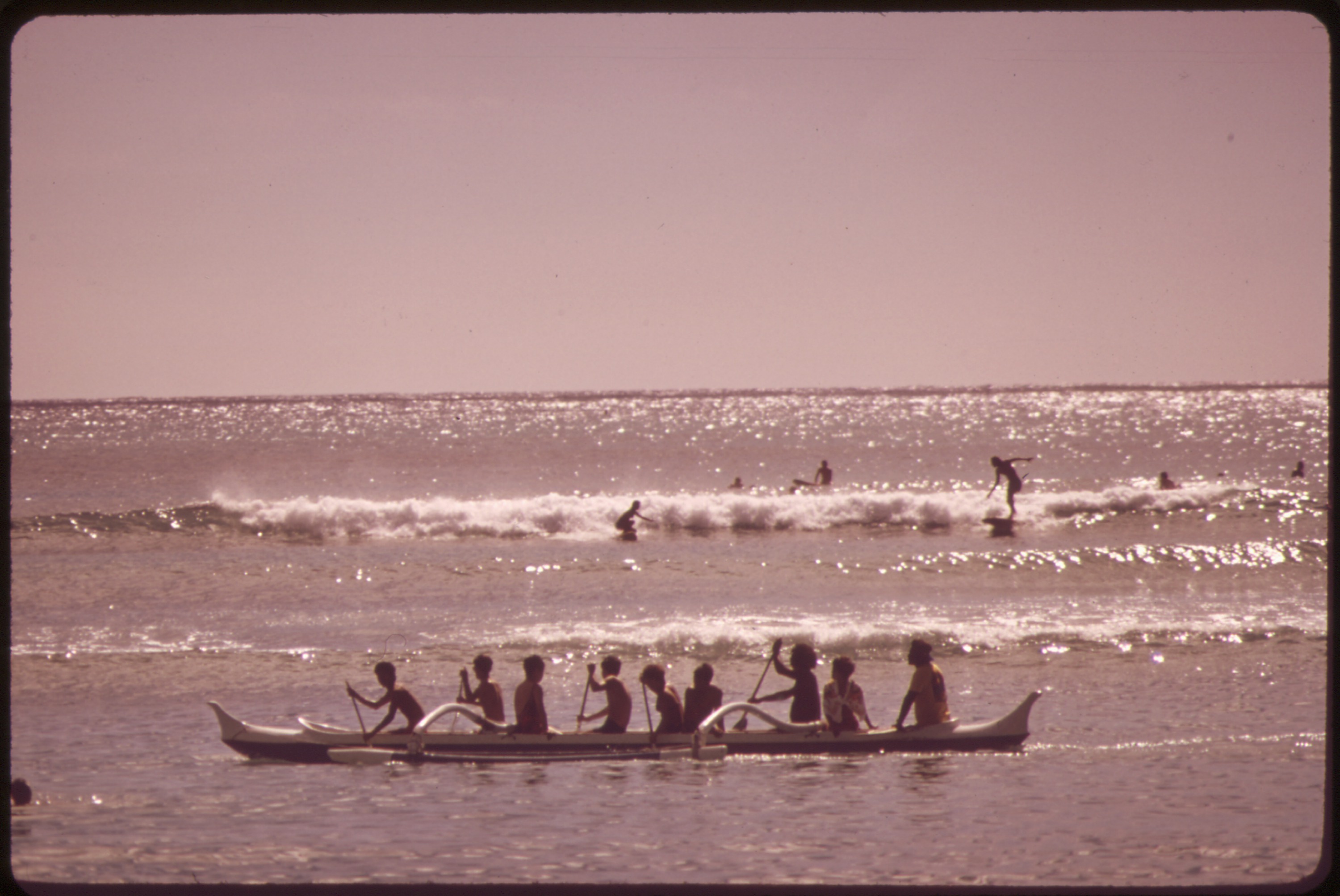
Outrigger canoes and surfers at Waikīkī Beach — photograph by Charles O'Rear for the National Archives. The canoe-surf shuttles still run daily: six paddlers, one captain at the helm, one wave caught, a two-minute ride back to shore. Four dollars per rider in 2026.· Charles O'Rear (NARA)
Who is still doing this work
In 2026, the canoe clubs that run daily operations on Waikīkī are the Outrigger Canoe Club (private), the Hui Nalu Canoe Club (founded 1908 as the "Hawaiian" counter-club to the more haole-heavy Outrigger), and the Waikīkī Beach Services concessions that lease space in front of the major hotels. The surf schools — dozens of them — are concentrated around Gray's Beach and the Royal Hawaiian stretch, operating informally on the beach and formally through hotel partnerships. Many of the instructors are Native Hawaiian; some are Hawaiian cultural practitioners who also teach hula and ʻōlelo Hawaiʻi (the Hawaiian language). The work is real work. It is also, for many of them, an inheritance.
· History
Seven dates that made Waikīkī Waikīkī
Every other event in this beach's recorded history is a subdivision of one of these seven.
1795 · political
Battle of Nuʻuanu
Kamehameha I defeats the forces of Kalanikūpule and unifies Oʻahu. Waikīkī at this point is Kalanikūpule's royal seat and a major agricultural area watered by springs and fishponds.
A group of American and European businessmen backed by U.S. Marines from the USS Boston depose Queen Liliʻuokalani. Hawaiian sovereignty scholars and the 1993 U.S. Congressional Apology Resolution characterize this as an illegal overthrow.
The first major tourist hotel on Waikīkī, a Beaux-Arts building on Kalākaua Avenue. Its opening marks the transition of Waikīkī from royal estate to tourist destination. The Moana Surfrider (as it is now known, owned by Marriott) is still operating in the original building.
Duke Paoa Kahanamoku, born and raised at Waikīkī, wins the 100-meter freestyle at the Stockholm Olympics, setting a world record. He becomes the first global Hawaiian celebrity and will use his fame to reintroduce surfing to Australia (1914 at Sydney's Freshwater Beach) and to Southern California.
The 'Pink Palace of the Pacific' — Spanish-Moorish pink stucco on Kalākaua Avenue — opens on former Crown Lands. Matson Navigation Company built it to serve its steamship route from San Francisco. The hotel defines Waikīkī's postcard image for the rest of the century.
Hawaiʻi is admitted to the Union as the 50th state. The statehood vote was conducted in a format that Hawaiian sovereignty activists and UN decolonization scholars have criticized for offering only statehood or territorial status — not independence.
On the 100th anniversary of the 1893 overthrow, Public Law 103-150 is signed by President Clinton. Congress formally apologizes for the overthrow of the Hawaiian Kingdom and acknowledges that Native Hawaiians 'never directly relinquished their claims to their inherent sovereignty as a people over their national lands.'
Three cultural objects that built and rebuilt the image of Waikīkī
Blue Hawaii (1961) and Hawaii Five-O (1968) — the Hollywood era
The Hollywood version of Waikīkī was largely constructed between 1961 and 1980. Elvis Presley's Blue Hawaii, filmed at Waikīkī and Hanauma Bay in spring 1961, was the second-highest-grossing film of that year; it presented Hawaiʻi to the post-war American middle class as a destination that was genuinely foreign-feeling but still domestically accessible (flights from Los Angeles had become affordable through the late 1950s as Pan Am jet service expanded). The film doubled tourism to Hawaiʻi within five years of its release. Seven years later, Jack Lord's silhouette against the Ilikai penthouse in the opening credits of Hawaii Five-O became Waikīkī's global television image for the next twelve years of the show's run — shifting American television's idea of "the tropics" from backlot sets to real Hawaiian locations. Every U.S. city with local-news travel segments in the 1970s assumed its audience knew the Ilikai penthouse by sight.
The Hawaiian Renaissance (1970s–present) — cultural revival
In the 1970s a generation of Native Hawaiian musicians, scholars, and activists launched what is now called the Hawaiian Renaissance. The revival had multiple strands: Hōkūleʻa, the double-hulled traditional voyaging canoe, was built and launched in 1975, and sailed from Hawaiʻi to Tahiti by traditional non-instrument navigation in 1976 — proving that pre-contact Polynesian wayfinding had been astronomical, reliable, and reproducible. The Merrie Monarch Festival, founded 1963 in Hilo and named for King David Kalākaua, became the annual championship of Hawaiian hula and the institutional backbone of hula's survival. The Hawaiian language, once on the edge of extinction (fluent speakers numbered only a few thousand by the 1970s), was re-established in the Pūnana Leo language immersion schools from 1983 onward. These movements did not begin at Waikīkī. They happen at Waikīkī now — the sunset hula performances at the Kūhiō Beach Hula Mound, the slack-key guitar evenings at House Without a Key, the Merrie Monarch week broadcasts visible in every hotel room — because Waikīkī is where the tourism traffic is and because making the culture visible to visitors is part of the project.
The Duke statue (2002) — the ongoing quiet pilgrimage
The bronze Duke Kahanamoku statue on Kalākaua Avenue at Kūhiō Beach was installed in 2002, thirty-four years after Duke's death. It receives fresh leis every morning. The leis are not a Parks-and-Recreation program or a hotel concession. They are brought by individual Honoluluans — sometimes before dawn, often before first light, always silently — and placed without ceremony around the statue's neck and on the longboard behind it. By 9 a.m. the statue is fully garlanded; by noon, with the sun on it, the flowers have begun to wilt; by dusk, the previous day's leis have been taken away and the cycle begins again. It is arguably the most-photographed single object in Hawaiʻi, and it is also, quietly, a modern Hawaiian ritual. The statue is not a tourist object; the flowers are not performed for visitors. The statue is a Hawaiian man on a Hawaiian beach, and Hawaiians bring him flowers.
The courtyard of the Royal Hawaiian, the 'Pink Palace of the Pacific' — opened 1927 on former Crown Lands. Spanish-Moorish architecture by Warren and Wetmore (also responsible for Grand Central Terminal and the Helmsley Building in New York). The postcard image of Waikīkī for most of the 20th century originates with this building's exterior.· w_lemay
· Mālama Hawaiʻi
What the postcard doesn't show
Mālama — to care for, to protect, to serve. A Hawaiian principle with legal and ceremonial weight, not a slogan. The beach you are visiting sits on land that was taken. How you visit it matters.
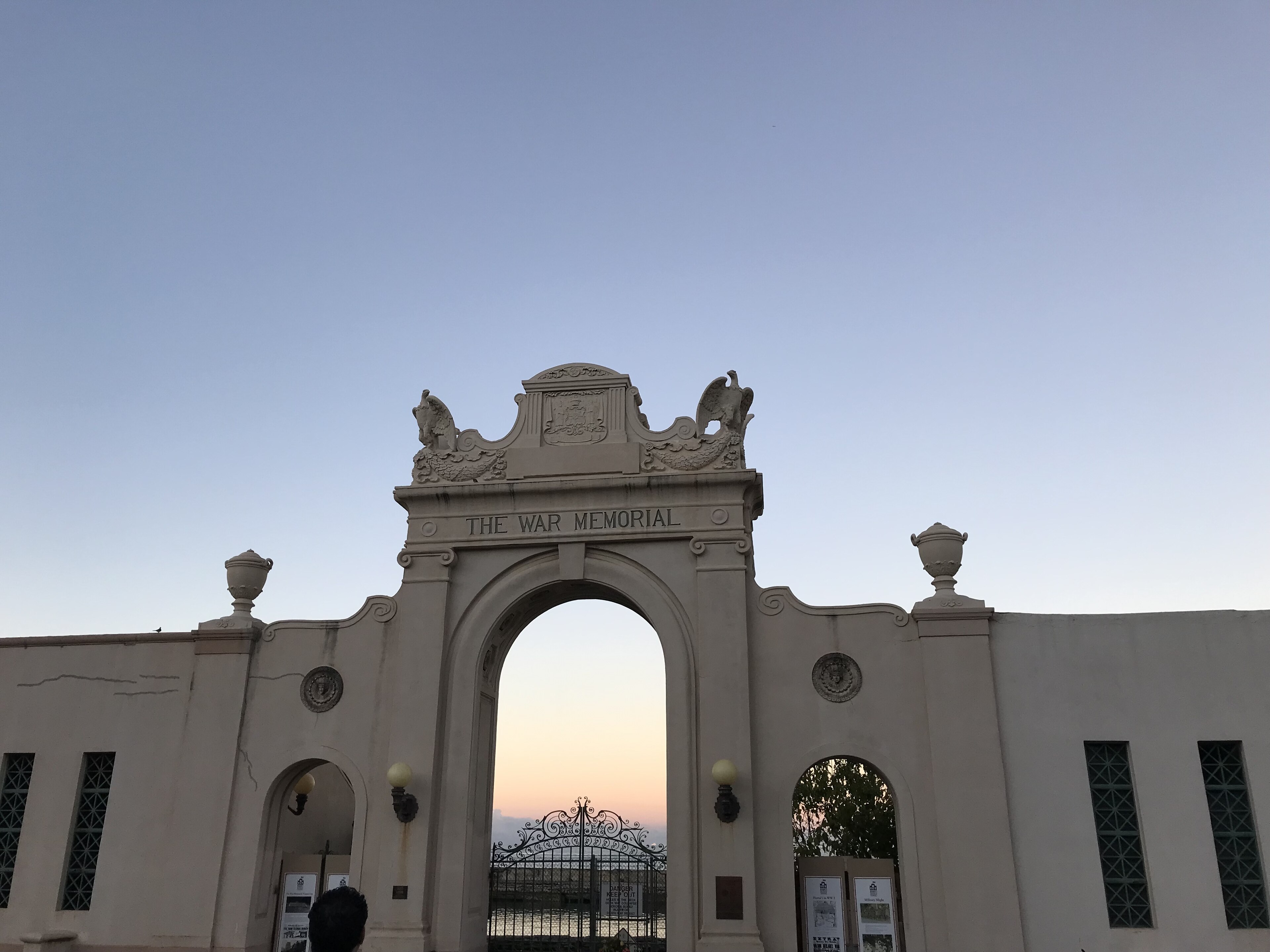
The Waikīkī War Memorial Natatorium at sunrise — a Beaux-Arts saltwater pool built in 1927 to honor Hawaiians who served in WWI, including Duke Kahanamoku. Closed since 1979 for structural reasons. Hawaiʻi's most beautiful ruin; a proposed restoration has been discussed for forty years without resolution. The state of the Natatorium is a fair proxy for the state of Hawaiian civic investment.· Flip Flops Hawaii
Waikīkī sits on land that was seized from a sovereign kingdom.
The Hawaiian Kingdom was a recognized nation-state. It had treaties with the United States, Britain, France, Japan, and a dozen other powers. In 1893, a group of American and European businessmen — calling themselves the Committee of Safety — deposed Queen Liliʻuokalani in a coup backed by U.S. Marines from the USS *Boston*. President Grover Cleveland called the overthrow "an act of war, committed with the participation of a diplomatic representative of the United States and without authority of Congress." The queen, rather than resist militarily, yielded her authority to what she believed would be U.S. restoration. It never came.
In 1898, Congress annexed Hawaiʻi by joint resolution — bypassing the treaty process that had failed in the Senate. The Kuʻe Petitions, signed by 21,269 Native Hawaiians (more than half the indigenous population) protesting annexation, are preserved in the National Archives. Congressional apologies were issued only in 1993. The legal status of Hawaiʻi's transition to U.S. territory is contested by Hawaiian sovereignty scholars to this day.
This matters at Waikīkī specifically because much of the shoreline — the Royal Hawaiian Hotel's beachfront, the Kalākaua Avenue frontage — sits on land that was part of the Crown Lands, held in trust for the Hawaiian people. After annexation, these lands passed to the U.S. federal government and eventually to the state of Hawaiʻi. The Office of Hawaiian Affairs and the Department of Hawaiian Home Lands were created in 1959 and 1920 respectively to address this inheritance. They remain chronically underfunded; Hawaiian homestead waiting lists are decades long. Native Hawaiians have the highest rates of homelessness and houselessness in the state their kingdom used to govern.
You can visit Waikīkī and never encounter any of this — the strip is engineered for you not to. But a few pieces sit in plain sight. ʻIolani Palace is a ten-minute drive inland; you can tour the room where Liliʻuokalani was held under house arrest. The Queen Kapiʻolani statue at the eastern end of the beach faces Diamond Head. The Kūhiō Beach Hula Mound has free Hawaiian music and hula performances at sunset several nights a week, hosted by Hawaiian cultural practitioners, not hotel staff. These are not tourist traps. They are the island's own way of keeping the history available to anyone who goes looking.
The ocean belongs to everyone in Hawaiian law — kanawai kai, the law of the sea — and no beachfront resort can privatize the sand. That principle predates the annexation and has outlasted it.
Sea & surf
What the water does
Solid = typical monthly wave height; pale = the bigger days (90th pct). Offshore/regional swell from Open-Meteo Marine (ERA5 Ocean reanalysis, 2023–2024); a sheltered cove may sit calmer than this.
Exposed — real surf, and rip current to respect
Typical wave height
1.33 m
Biggest swell
Feb · 1.56 m
Calmest
Oct · 1.14 m
Typical period
9.7 s (groundswell)
Compare
How it ranks
Peak warmth
Warmer than 75% of beaches in its country
Peak-month high ≈ 30°C
Worldwide
Among the warmest 20% of beaches on Earth
Beach season
Longer beach season than 96% of beaches in its country
12 comfortable months a year
Ranked against every beach in our database — 228,000+ worldwide.
Before you go
Things to know
Surf & rip
Powerful water — strongest around Feb, gentlest in Oct. Mind rip currents; this isn't a wade-in-anywhere beach.
Sharks
No incidents on record in the global shark-attack file.
· On Oʻahu
Five places within an hour
Waikīkī is the visitor's default base. The rest of Oʻahu is why Oʻahu is interesting.
2 miles inland
ʻIolani Palace
The only royal palace on U.S. soil. Built 1882 by King David Kalākaua, occupied by the Hawaiian monarchy until the 1893 overthrow, then used as the capitol of the Territory and State of Hawaiʻi until 1969. You can tour the room where Queen Liliʻuokalani was held under house arrest in 1895. Admission $26.95. Go early in the day; the ground-floor galleries include the original throne room restored to 1893 condition.
Eastern end of Waikīkī
Diamond Head (Lēʻahi)
The 232,000-year-old volcanic tuff crater visible from every Waikīkī postcard. The summit trail is 1.6 miles round trip, switchbacks through a military-era tunnel, and emerges at a 760-foot pillbox observation post with an uninterrupted view back down the beach. Entry $5; reservations required. Go at sunrise; the west-facing summit is warmer in afternoon light but brighter before the trades pick up.
10 miles west
Pearl Harbor / USS Arizona Memorial
The U.S. Navy base attacked by Imperial Japan on 7 December 1941. The USS Arizona Memorial — a white concrete structure built over the sunken battleship in 1962 — is one of the most-visited national monuments in the country. Free; timed-entry tickets required; Bus 20 runs directly from Waikīkī. The Pacific Aviation Museum on Ford Island and the USS Missouri (the battleship on which Japan formally surrendered) are separate admissions.
30 minutes east
Lanikai Beach
On the windward side of Oʻahu — past the Pali. Calm, turquoise, with the Mokulua Islands offshore. Probably the most-photographed beach in Hawaiʻi after Waikīkī itself, and in every respect the opposite: residential neighborhood, street parking only, no hotels, no commerce. Walk at sunrise or after 4 p.m. for light; mid-day the small beach is crowded with the thirty cars that fit on the street.
1 hour north
The North Shore — Pipeline, Waimea, Sunset
The 7-mile stretch of Oʻahu's northern coast that hosts the world's marquee winter big-wave surf events — the Billabong Pipeline Masters, the Eddie Aikau Big Wave Invitational at Waimea Bay — from November through February. Pipeline's wave is one of surfing's iconic barrels; Waimea is where paddle-in big-wave surfing was effectively invented in the 1950s. Worth a day trip even in summer, when the waves are small, for Matsumoto's shave ice in Haleʻiwa, the shrimp trucks at Kahuku, and the raw scale of the coastline.
Written by Erin Rose. Hawaiian orthography — with kahakō (macron) and ʻokina (glottal) — is used throughout. Historical material on the overthrow follows the U.S. Blount Report (1893), the Morgan Report (1894), the Newlands Resolution (1898), and U.S. Public Law 103-150 (the 1993 Apology Resolution). Duke Kahanamoku biographical detail draws on Hall (1994) Memories of Duke and the Bishop Museum archives. Named Hawaiian historical figures follow standard Hawaiian-language spellings. The Hawaiian cultural material is researched; where the page describes living practice (the Merrie Monarch Festival, the Hula Mound performances, the Outrigger Canoe Club's regatta), visitors are encouraged to experience those programs as they are run by Hawaiian cultural practitioners. Corrections welcome, particularly on ʻōlelo Hawaiʻi framing and on named practices. Version v0.9.