Aloha
ah-LOW-hahHello, goodbye, love, breath, presence. The word contains ha (breath) — giving aloha is sharing breath. Don't use it as 'cheers.' Use it to begin and end a real greeting.
· Mālama Hawaiʻi
Mālama — to care for, to protect, to steward. Not a souvenir word. Not a resort slogan. A Hawaiian principle with legal and ceremonial weight. The beach you are visiting sits on land that was taken from a sovereign people. This page is the part you cannot get from a resort concierge.
Mālama is one of the most-used words in contemporary Hawaiian public life. Visitors see it on state agency names ("Mālama Maunakea," "Mālama Hawaiʻi"), on environmental campaigns, on resort pamphlets about "mālama your resort stay" — which is why it is often dismissed as marketing rhetoric. It is not. Mālama is a Hawaiian verb and concept with specific dimensions:
When Hawaiian cultural practitioners, scholars, and sovereignty activists use the word mālama, they mean this set of obligations together. When a visitor "mālama Waikīkī" in the Hawaiian sense — rather than in the resort brochure sense — the visitor is doing specific things: respecting the water, respecting the people who belong here, learning some of their language, understanding how they lost the land, and spending money in ways that benefit Hawaiian rather than mainland owners. This page is an attempt to make that practical.
The main page summarizes the overthrow. This section gives the queen's own words and the two U.S. government reports that established — contemporaneously — that the coup was illegal.
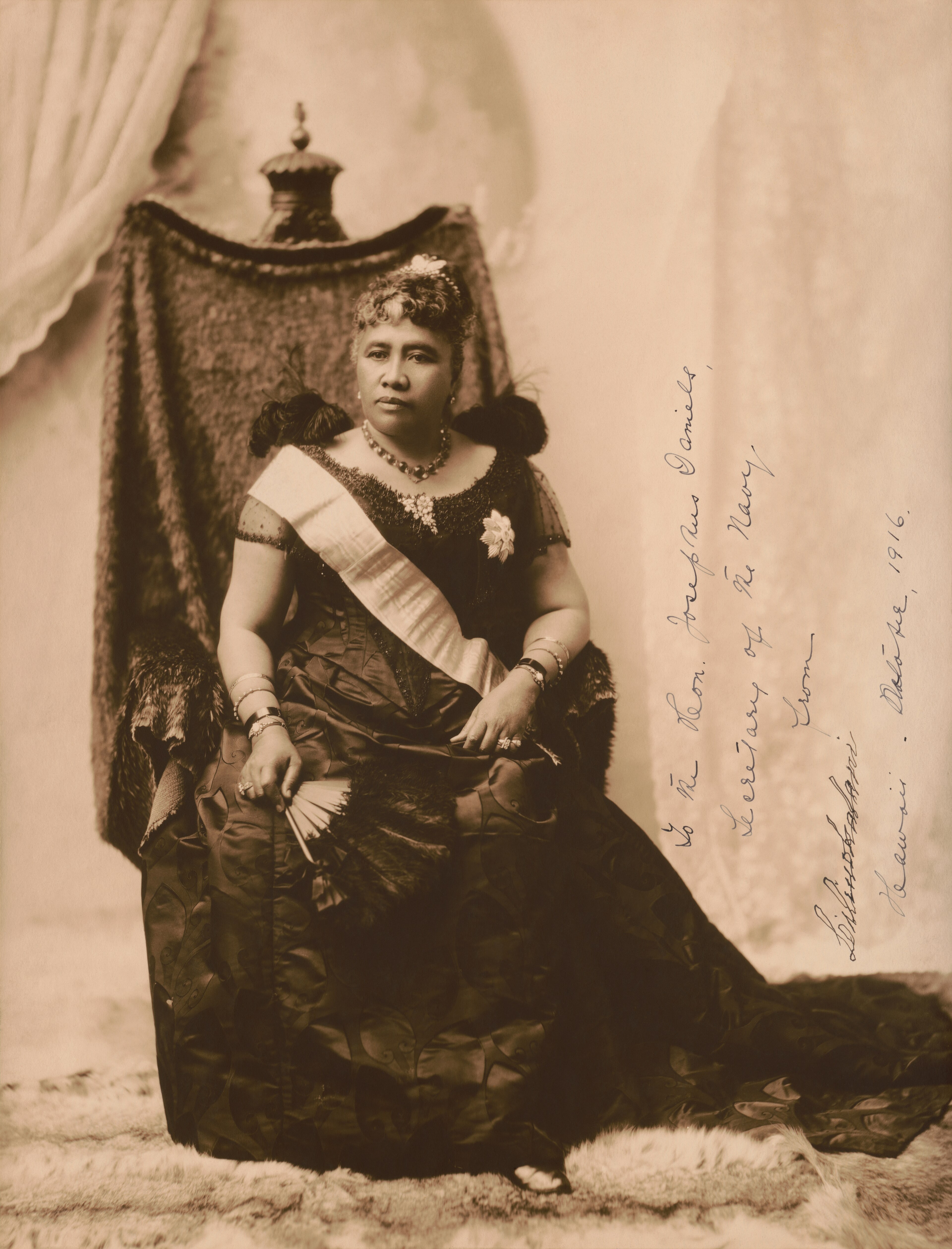
On 17 January 1893, under the guns of the USS Boston, Liliʻuokalani yielded her authority in a written protest addressed not to the Committee of Safety but to the United States government:
"I, Liliʻuokalani, by the grace of God and under the Constitution of the Hawaiian Kingdom Queen, do hereby solemnly protest against any and all acts done against myself and the constitutional government of the Hawaiian Kingdom by certain persons claiming to have established a provisional government of and for this Kingdom.
That I yield to the superior force of the United States of America whose minister plenipotentiary, His Excellency John L. Stevens, has caused United States troops to be landed at Honolulu and declared that he would support the said provisional government.
Now to avoid any collision of armed forces, and perhaps the loss of life, I do this under protest and impelled by said force yield my authority until such time as the Government of the United States shall, upon facts being presented to it, undo the action of its representatives and reinstate me in the authority which I claim as the constitutional sovereign of the Hawaiian Islands."
— Queen Liliʻuokalani, 17 January 1893
The expectation that the United States government would undo the action of its representatives was not naive. Twenty years earlier it would have been the ordinary course of American foreign policy. But the political winds of 1893 ran against her.
Newly-inaugurated President Grover Cleveland dispatched former Congressman James H. Blount to Hawaiʻi as a special commissioner. Blount arrived in March 1893 and conducted extensive interviews across political factions — the provisional government, the deposed Hawaiian royals, American residents, and Native Hawaiian leaders. His report, delivered to Congress in July 1893, concluded that the overthrow had been "an act of war, committed with the participation of a diplomatic representative of the United States and without authority of Congress, with our troops occupying the grounds and dominating the city." Cleveland accepted the Blount Report and called for the restoration of the Queen.
The U.S. Senate refused. The Senate's own investigation — the Morgan Report of February 1894 — reached the opposite conclusion, a result that historians overwhelmingly attribute to Senator Morgan's personal annexationist politics rather than the evidence. The two reports disagreed on central facts. The later Morgan Report was the one the Senate chose to believe. The queen was not restored.
One hundred years to the day after Liliʻuokalani's yielding, President Clinton signed Public Law 103-150 — the Apology Resolution. Signed 23 November 1993. The resolution acknowledged specifically:
The resolution has no binding legal force. It is a statement of historical fact. But it is the most specific acknowledgment the United States has ever made about what happened in Honolulu on 17 January 1893 — and, by extension, about the ground on which the Royal Hawaiian Hotel, the Moana Surfrider, and the rest of Waikīkī's beachfront now stand.
The material consequences of the overthrow are not historical. They are measured every year in the waiting list for Hawaiian homestead, the houselessness statistics of Native Hawaiians, and the share of the state's GDP that comes from an industry built on land that was stolen.
In 1920, twenty-two years after annexation, the U.S. Congress passed the Hawaiian Homes Commission Act — a partial acknowledgment that something was owed to Native Hawaiians for the loss of their kingdom. The Act set aside roughly 200,000 acres of the former Crown and Government lands as Hawaiian Home Lands, to be leased (for $1 a year for 99 years) to Native Hawaiians of at least 50% blood quantum. The law was championed by Prince Jonah Kūhiō Kalanianaʻole, who served as Hawaiʻi's non-voting delegate to Congress from 1903 until his death in 1922.
The Act was, on paper, the largest reparations program in U.S. history for an Indigenous people. In practice it has never been funded adequately. The Department of Hawaiian Home Lands (DHHL) has budgets that have not kept pace with inflation for decades. The infrastructure costs of bringing roads, water, and power to the homestead lots — which must be done before a lease can be awarded — have consistently exceeded available funds. The result is a waiting list.
The Hawaiian homestead waiting list, as of 2024, contains roughly 28,000 names. Average wait time from application to lease award is 30+ years. People die waiting. Many of the applicants on the list are the children and grandchildren of earlier applicants who never received their lease. A class-action lawsuit — Kalima v. State of Hawaiʻi — resulted in a 2020 ruling that the state owed waiting-list beneficiaries over $328 million in damages; payouts are ongoing and inadequate.
Meanwhile, Native Hawaiians have the highest rates of homelessness — the state term is "houselessness" — in the state whose kingdom they used to govern. The ratio of Native Hawaiian to non-Native houselessness on Oʻahu runs roughly 3 to 1. Native Hawaiians are approximately 20% of Hawaiʻi's population and approximately 40% of the state's unsheltered population. Waikīkī sidewalks at 4 a.m., particularly on the Kūhiō Avenue side, make this visible to any visitor who walks them.
The Office of Hawaiian Affairs (OHA), created by the 1978 Hawaiʻi State Constitutional Convention, is a semi-autonomous state agency whose trustees are elected by Native Hawaiians. Its mandate is to "better the conditions of Native Hawaiians." It controls roughly $600 million in trust funds derived from revenues on the former Crown and Government lands (what became known as the "ceded lands" after annexation). OHA is the principal institutional voice of Native Hawaiian interests in contemporary Hawaiʻi politics, though its legitimacy is contested by sovereignty activists who argue that working within the state framework tacitly accepts the overthrow.
Between 2000 and 2010, Senator Daniel Akaka introduced successive versions of the Native Hawaiian Government Reorganization Act, which would have established a federally-recognized Native Hawaiian governing entity — the same legal status as federally-recognized American Indian tribes and Alaska Natives. The bill passed the House in 2000 and 2007 but failed in the Senate each time, typically defeated on filibusters. It was never enacted. The consequence is that Native Hawaiians remain the only major Indigenous group in the United States without federal recognition of a sovereign governing entity.
Aloha ʻĀina — "love of the land" — is the umbrella term for contemporary Native Hawaiian land-rights organizing. Its most visible recent campaigns include the Maunakea protests (2014–2019) against the Thirty Meter Telescope's proposed siting on the Big Island's sacred summit, the continuing effort to return Kahoʻolawe (the island used by the U.S. Navy as a bombing range 1941–1990) to Native Hawaiian control, and ongoing litigation over water rights, shoreline access, and cultural sites. The movement is diverse — there is no single Aloha ʻĀina position — but it is the organized force that Hawaiian public life turns to when sovereign-rights questions enter the policy arena.
Hawaiian — ʻōlelo Hawaiʻi — is one of two official state languages (alongside English). Learning ten words before you arrive is a gesture of respect that locals notice. The language was nearly lost in the 20th century; the ongoing revival is one of the genuinely-successful Indigenous-language movements in the world.
Hello, goodbye, love, breath, presence. The word contains ha (breath) — giving aloha is sharing breath. Don't use it as 'cheers.' Use it to begin and end a real greeting.
Thank you. Said sincerely. 'Mahalo nui loa' — thank you very much — is appropriate for meaningful gestures.
Family, including chosen family and community. Not just blood relation. Used for the social network that mālama extends across.
Help, assistance, cooperative labor. 'Mahalo for your kōkua' is the standard way to thank someone for assistance. Heard on every bus, shuttle, and beach concession.
Toward the mountain / toward the sea. Hawaiian directions are relative to water, not compass points. Hawaiians will give you directions this way.
Finished, done, complete. 'Pau hana' — after work, end of the workday. 'I'm pau with my lunch' — I'm done eating.
Land, but more specifically that which feeds. The land that sustains. 'Aloha ʻĀina' — love of the land, the contemporary sovereignty movement's name.
Forbidden, sacred, set apart. Historically a legal / ceremonial status. Today it often means 'no trespassing' on cultural sites.
Child / elder. Used routinely. 'Kupuna' is honorific — priority seating at every public event.
Until we meet again. The Hawaiian farewell. Meaningful; used when you're leaving and expect to return.
The kahakō (macron, as in Waikīkī's two long īs) marks a vowel that's held longer. The ʻokina (the apostrophe-like glottal stop, as in Hawaiʻi or Liliʻuokalani) marks a consonant pause between vowels. They are letters, not decoration.Hawaiʻi without the ʻokina is, linguistically, a different word. "Liliuokalani" without the ʻokina is not the queen's name. When a visitor's device doesn't support the diacritics, that's a technical limitation — but when a publication or resort chooses not to use them, that's an editorial choice worth noticing.
Most 'mālama the land' resort brochures reduce respect to a sentiment. The below are concrete actions. Do as many of them as you can.
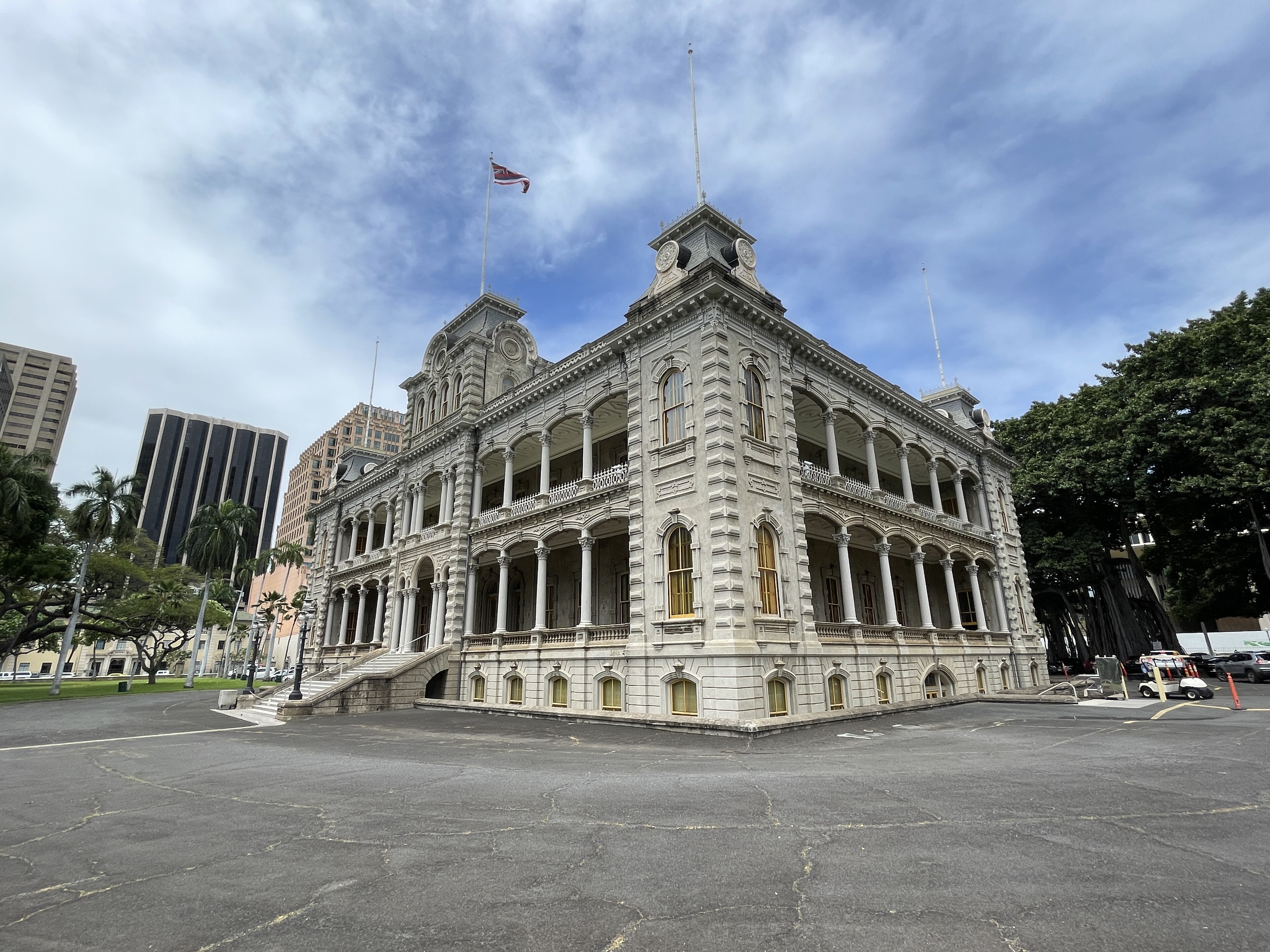
$26.95, 2 miles inland from Waikīkī. The only royal palace on U.S. soil. The tour includes the room where Queen Liliʻuokalani was imprisoned in 1895. Do it early in your trip, not last — the rest of the visit reads differently after.
Tuesdays, Thursdays, Saturdays at 6 p.m. Hosted by Hawaiian cultural practitioners (not resort staff). Free. Leave a tip for the performers.
NAHHA (Native Hawaiian Hospitality Association) maintains a directory at nahha.com. Hawaiian-owned restaurants, lei sellers, surf schools, and guiding services exist; you have to know to look for them.
Say 'mahalo' to your server, 'kōkua' when asking for help, 'aloha' when greeting. Not as performance. As a minimum.
The Hawaiian national museum. Polynesian Hall is the definitive exhibit of pre-contact Pacific culture. $29; 6 miles from Waikīkī. A half-day visit.
If you see a sign saying Kapu — do not cross it. It usually marks a cultural site, burial ground, or access restriction. Serious consequences are legal; informal consequences are cultural.
Beyond the cultural issue: it's a federal and state offense. Lava rocks in particular carry serious kapu (the legend of Pele's curse is a tourism-industry corollary to a real Hawaiian belief about land). Every mail room in Hawaiʻi has boxes of lava rocks sent back by guilty tourists.
Hawaiʻi Act 104 bans the sale of sunscreens containing oxybenzone or octinoxate. Bring zinc or titanium mineral sunscreen. Better: a rash guard.
The cost of living in Hawaiʻi is the highest in the United States; service-industry wages are low. 20% is the floor, not the ceiling.
Watch Hōkūleʻa's voyages (Polynesian Voyaging Society, YouTube). Listen to slack-key guitar (Gabby Pahinui is the canonical name). Read Haunani-Kay Trask's 'From a Native Daughter.' These are introductions to the contemporary Hawaiian intellectual tradition.
If you're in Hilo during Merrie Monarch Week (April), the broadcast is visible everywhere. If you're on Oʻahu during the Prince Lot Hula Festival (July), attend. Pay for tickets. Leave a donation.
Before leaving, in whatever way is meaningful to you, acknowledge that you visited Hawaiian land. A private thought is enough. The point is not performance; the point is that you came, and you noticed, and you will not misremember Hawaiʻi as a state that's always been one.
In 1975, a group of Native Hawaiian sailors and the newly-founded Polynesian Voyaging Society built a double-hulled sailing canoe and named it Hōkūleʻa — "Star of Gladness" — after the star (Arcturus) used for navigation to Hawaiʻi. The canoe was built in the pre-contact tradition: no engine, no GPS, no compass. Traditional Polynesian navigation uses the stars at night, the sun by day, the directions and shapes of ocean swells, the flight paths of land-finding birds, and a mental-map discipline memorized across generations.
On 1 May 1976, Hōkūleʻa sailed from Oʻahu to Tahiti — 2,400 nautical miles — navigated entirely by Mau Piailug, a master navigator from Satawal, a tiny island in Micronesia where traditional non-instrument navigation had survived. The voyage proved what Polynesian oral tradition had always maintained and Western academics had long doubted: that the Pacific migrations from Tahiti and the Marquesas to Hawaiʻi (centuries before European contact) were deliberate, repeatable, astronomical, and founded on navigational knowledge of real precision.
Since 1976, Hōkūleʻa has made a dozen voyages across the Pacific and one circumnavigation of the world (the Mālama Honua Worldwide Voyage, 2013–2017 — "to care for our island Earth"). The canoe is typically docked at Sand Island near downtown Honolulu when not on voyage; visitors can occasionally see it up close. The Polynesian Voyaging Society trains new generations of Hawaiian navigators and builds new voyaging canoes. Nainoa Thompson, Mau Piailug's Hawaiian apprentice and now a senior navigator in his own right, is one of the central figures of the contemporary Hawaiian Renaissance.
Hōkūleʻa is the opposite of a museum piece. It is an active, working boat that sails regularly, teaches regularly, and embodies — as directly as anything physical can — the survival of Polynesian navigational knowledge through the rupture. If the contemporary Hawaiian cultural project has a single flagship, this is it.
The Hawaiian national museum. Polynesian Hall holds the definitive collection of pre-contact Hawaiian material culture. Research library is open to the public. bishopmuseum.org
The only royal palace on U.S. soil. Self-guided or guided tours; the guided tour includes the queen's imprisonment room. iolanipalace.org
Educational programs, occasional public tours of the canoe when in port, school visits. pvshawaii.com
The flagship academic center for Hawaiian studies. Free public lectures; the Hawaiʻinuiākea School publishes Hawaiian-language scholarship. kualiʻi.manoa.hawaii.edu
The foundational contemporary Native Hawaiian sovereignty essay collection. Required reading for anyone engaging seriously with Hawaiian public life.
Annual hula championship, Easter week, Hilo. Attendance is aspirational (tickets hard to come by); the broadcasts are free and available on most Hawaiian hotel TVs. merriemonarch.com
State agency; trustees elected by Native Hawaiians. Programs, advocacy, grants. oha.org
Directory of Hawaiian-owned tourism businesses. Use this to find Hawaiian-owned surf schools, guiding services, restaurants, and lodging. nahha.com
A royal beach that survived becoming a resort — the full argument this spoke sits inside.
Getting here, where to stay on a strip of 30,000 rooms, what to eat, visitor safety, three itineraries.
The world's first-lesson beach. Which school, which break, etiquette, and what it means to be taught by a Hawaiian waterman.
Written by Erin Rose. Overthrow detail follows U.S. Public Law 103-150 (1993), the Blount Report (1893), the Newlands Resolution (1898), and the Kuʻe Petitions in the U.S. National Archives. Hawaiian Homes Commission statistics draw on the 2024 DHHL annual report and the Kalima v. State of Hawaiʻi class action (2020 ruling). Sovereignty movement detail from Silva (2004) 'Aloha Betrayed' and Trask (1993, 1999) 'From a Native Daughter.' ʻŌlelo Hawaiʻi orthography follows the Hawaiian Dictionary (Pukui & Elbert, revised ed.). Corrections on Hawaiian-language framings, specific programs, and current waiting-list statistics are welcome — these numbers update continuously. Corrections welcome, especially on Portuguese-language framings and on the named practices of Nazaré. Version v0.9.