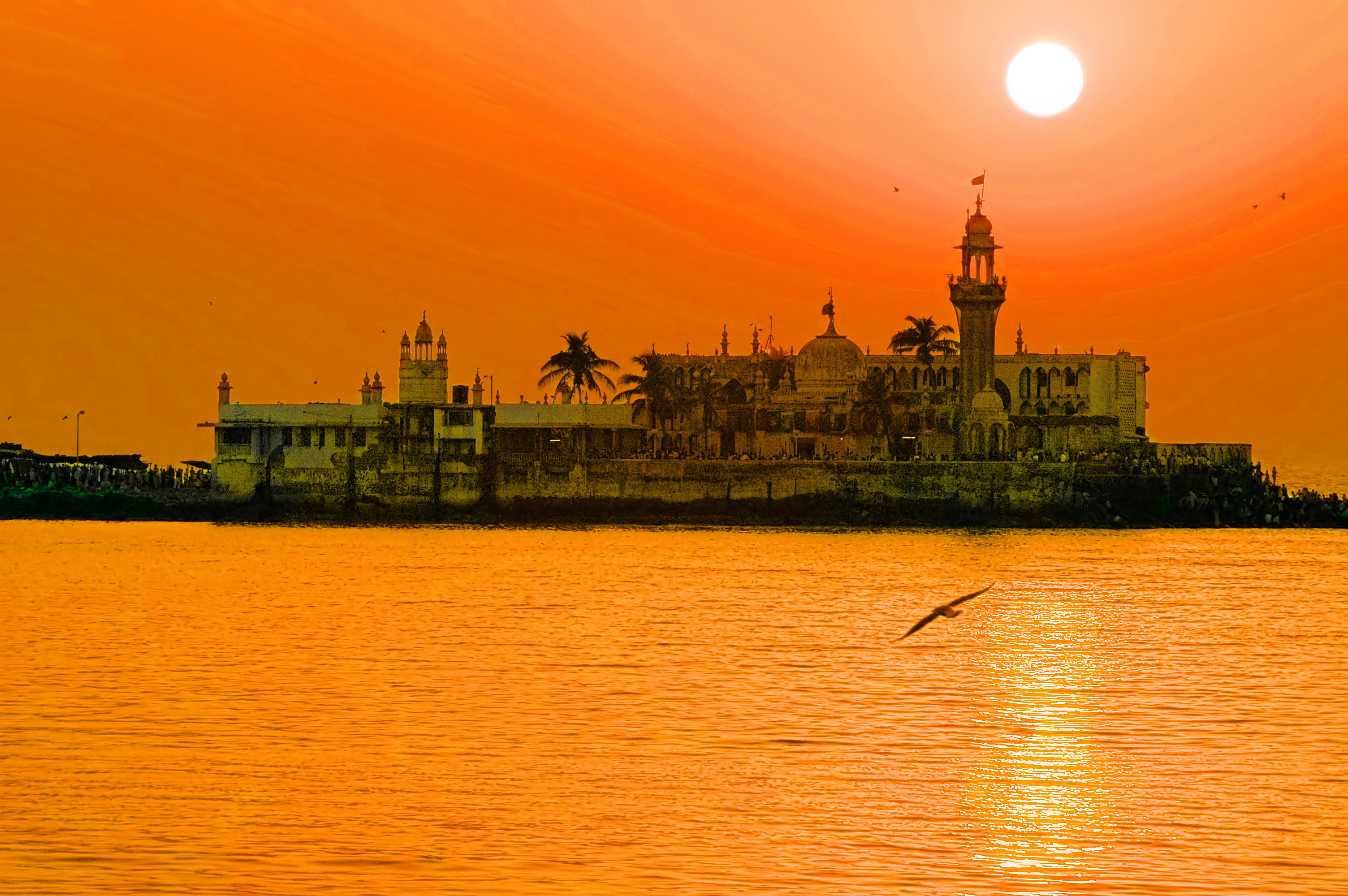
Maharashtra, IN

Aksa Beach

Aksa Beach afternoon.jpg

Maharashtra, IN

Aksa Beach

A Maharashtra Maritime Board seawall built at Aksa Beach in 2022 and 2023 began caving in within two years; in 2025 a tribunal ruled it illegal.

Aksa Beach afternoon.jpg · <a href="//commons.wikimedia.org/wiki/User:Sobarwiki" title="User:Sobarwiki">Sobarwiki</a> · Public domain
Nearest airport
BOM · 13 km
Story

Aksa Beach is a weekend beach in Aksa village, part of Malad, in the Mumbai suburbs, on the Arabian Sea. Wikipedia gives its coordinates as 19°10′34″N, 72°47′43″E, and describes it as bounded at one end by INS Hamla, an Indian Navy base, and at the other by a smaller beach called Dana Paani. The beach falls under the governance of the Brihanmumbai Municipal Corporation. The East Indian community, the Panchkalshi or Somvanshi Kshatriya Pathare, and Koli fishing families are named as the area's native population.

Aksa draws heavy weekend traffic and is described by Wikipedia as one of the cleanest beaches in the city, a claim the same page does not reconcile with its own account of shifting sand, strong currents, and quicksand in the water. Sources do not even agree on which neighborhood sits next to it: Wikipedia places it close to Marve Beach, while Mumbai's own community wiki places it close to Malvani.

The most consequential thing built at Aksa in recent years is not a resort or a boardwalk cafe. It is a concrete seawall and promenade, roughly 600 metres long and 4 metres wide, that the Maharashtra Maritime Board began building in 2022 as a beautification project, defended in front of a tribunal for more than two years, and which the sea itself started tearing apart before the tribunal finished ruling on it. That fight, and what it says about how the beach is actually managed, is the story below.

The currents and the shifting sand that Wikipedia flags are not incidental detail. Aksa's danger to swimmers is old, documented, and unresolved, and it has not stopped people from going into the water. That part of the record is reported plainly further down this page rather than folded into the seawall story, because it is a separate and equally real problem.

Practically, Aksa sits within reach of central Mumbai without being inside it: independent sources put it roughly 9 kilometres from Malad railway station and 12 kilometres from Borivali, while the beach dataset instead names Borivli as the nearest city at 9.4 kilometres, straight-line, and the airport at 12.5 kilometres, also straight-line. Neither of those two numbers is a road distance or a drive time, and none is documented here.

The spike

A Maharashtra Maritime Board seawall built at Aksa Beach in 2022 and 2023 began caving in within two years; in 2025 a tribunal ruled it illegal.

In July 2022 the Maharashtra Maritime Board sent a team of JCB machines onto Aksa Beach. They excavated sand, leveled the shore, and began concretizing a wide span of it, the opening move in what the board called a sea-front development and beautification project. What it became was a roughly 600-metre-long, 4-metre-wide concrete road and promenade, bordered by a cement sea-wall and boulders, running along one of Mumbai's public beaches.

The project was contested from close to the start. In May 2023, green activists petitioned the National Green Tribunal, arguing that Aksa Beach sits entirely within CRZ-I, the strictest category of India's Coastal Regulation Zone, and that the beach serves as a natural flood barrier during the monsoon. Petitioners Zoru Bhathena and Banda Nagraj Kumar contended that the beautification project was illegal construction under CRZ rules. Their case traced back to March 2019, when the Maharashtra Coastal Zone Management Authority had granted a CRZ clearance on the explicit condition that no permanent, solid construction be undertaken. The same authority, the petition noted separately, had rejected a proposed sea wall at Aksa six years earlier, along with proposals for a restaurant, food plaza, and gym on the beach.

The Maharashtra Maritime Board did not stop building while the tribunal deliberated. Activists alleged that the board pushed the project to nearly 95 percent completion even as the hearing continued at the NGT's western zonal bench. In its own defense, the board cited reports from the Central Water and Power Research Station and IIT Bombay describing Aksa as an eroding site, arguing the anti-sea-erosion bund was necessary to protect existing infrastructure such as electric poles. That defense turned the beach's own fragility into the justification for building on it: the more eroded the shoreline, the argument ran, the more it needed a permanent concrete edge to hold it in place, which is precisely the kind of permanent construction the 2019 clearance had ruled out. Petitioners never had to prove the erosion reports wrong to win their case. They only had to show that whatever the engineering said about erosion, the clearance itself did not permit a solid, permanent structure as the answer to it.

The sea did not wait for a verdict. By July 2024, with the case still open, the 600-metre seawall had begun caving in, roughly two years after MMB first broke ground on it in July 2022. The structure the board had built to hold the coastline in place was failing on the coastline it was built to hold.

On 17 September 2025, the National Green Tribunal ruled. It held that the Maharashtra Maritime Board's promenade at Aksa Beach was illegal, tracing the violation back to the March 2019 CRZ clearance that had barred exactly this kind of permanent construction. The ruling closed a case that had run for more than two years, over a structure that was already visibly failing before the tribunal's own bench had finished hearing arguments about whether it should have been built at all.

What makes Aksa's seawall worth dwelling on is not that a government project went over budget or ran late, the ordinary failure modes of infrastructure. It is that a public coastal authority built a permanent concrete structure on ecologically protected shoreline, defended that structure in front of an environmental tribunal using engineering reports commissioned by the same authority, kept building while the case was pending, and produced a structure that began failing on its own before the tribunal ruled against it. The MCZMA had already said no to a sea wall here once, six years earlier. Nothing about the outcome should have been a surprise, least of all to the people who built it.

The sequence also shows how little the tribunal's eventual answer actually settled. The National Green Tribunal ruled on legality, not on engineering, and it did not have to decide whether the sea-wall would have worked if it had been permitted. That question was answered on its own timeline by the beach itself, which began undermining the structure roughly two years after it went up, more than a year before any court weighed in on whether it should have existed at all. A ruling of illegality arriving after the thing ruled illegal has already started falling apart is not really a check on anything. It is closer to a coroner's report. The construction crews, the JCB machines, the concrete and boulders, the reports from CWPRS and IIT Bombay, all of it moved faster than the one process meant to have the power to stop it, and the tribunal's final word landed on a structure the sea had already begun rejecting on its own.

Taj Mahal Palace Hotel.jpg
History

What happened here

  1. 2008incident

    Four drown off Aksa Beach

    DNA reported that four people drowned off Aksa Beach.

  2. 2013incident

    Three Malad youths drown, one rescued

    The Times of India reported three Malad youths drowned off Aksa Beach; a lifeguard pulled one to safety.

  3. 2015incident

    Two college students drown

    DNA India reported two college students drowned at Aksa Beach.

  4. 2022construction

    MMB begins concretizing the beach

    The Maharashtra Maritime Board deployed JCB machines to excavate sand and concretize a stretch of Aksa Beach for its beautification project.

  5. 2023policy

    Activists petition the NGT

    Green activists moved the National Green Tribunal, arguing Aksa Beach is CRZ-I land and the beautification project violates coastal rules.

  6. 2024incident

    The new seawall begins caving in

    The 600-metre MMB seawall at Aksa Beach began caving in roughly two years after construction began, while the NGT case was still open.

  7. 2025policy

    NGT rules the promenade illegal

    The National Green Tribunal held that the Maharashtra Maritime Board's promenade at Aksa Beach was illegal, citing the 2019 CRZ clearance's ban on permanent construction.

  8. 2026incident

    17-year-old drowns; search called off

    A 17-year-old student entered the water near INS Hamla with two friends; a multi-agency search involving police, fire brigade, and ambulance services was called off that evening without locating him.

  9. 2026culture

    Ramayana film crew shoots at Aksa

    The upcoming film Ramayana, starring Ranbir Kapoor, Sai Pallavi, and Yash, had recently shot scenes at Aksa Beach.

Elephanta Caves, India, Shiva as Nataraja, King of Dance.jpg
Anatomy

The shape of the place

INS Hamla end

10%

The naval-base boundary at Aksa's northern end, marking where the public beach meets INS Hamla, an Indian Navy base.

The June 2026 drowning was reported as occurring in the water between this end and either JJ Point or Shitala Devi Temple, depending on the source.

Main public stretch

50%

The central, most-visited section of Aksa, drawing heavy weekend crowds despite posted warning signs and lifeguards.

Best for Weekend visits, sunset watching

Currents are strong and the sand shifts with wave action; the water here is not considered safe for swimming.

MMB seawall and promenade

60%

A roughly 600-metre concrete promenade and sea-wall the Maharashtra Maritime Board built across 2022 and 2023, ruled illegal by the NGT in 2025 and already caving in by mid-2024.

Sits within the CRZ-I zone; construction here was found to violate a 2019 clearance condition.

Dana Paani end

90%

A smaller beach named Dana Paani marks Aksa's southern boundary.

Landmarks

INS Hamla

naval base

An Indian Navy base marking one end of Aksa Beach; Wikipedia describes it as the beach's northern boundary marker.

Dana Paani

beach

A smaller beach at Aksa's other end, named as the beach's southern boundary marker by Wikipedia.

MMB seawall and promenade · 2023

coastal structure · Maharashtra Maritime Board

A roughly 600-metre, 4-metre-wide concrete promenade and sea-wall built across 2022 and 2023, ruled an illegal CRZ-I construction by the National Green Tribunal in September 2025 after it had already begun caving in.

A day here

From first light to dark

Dawn

Early morning brings fishermen and a handful of walkers to the sand before the weekend crowds arrive; the water is calmest at this hour but the posted warning signs and lifeguard presence apply from open to close, not just at peak crowd times.

Midday

Midday is when weekend crowds are heaviest and the sun is hardest overhead; it is also, per the drowning study cited on this page, part of the pre-monsoon window when incidents have historically peaked, driven by the size of the crowd rather than a change in the water.

Golden hour

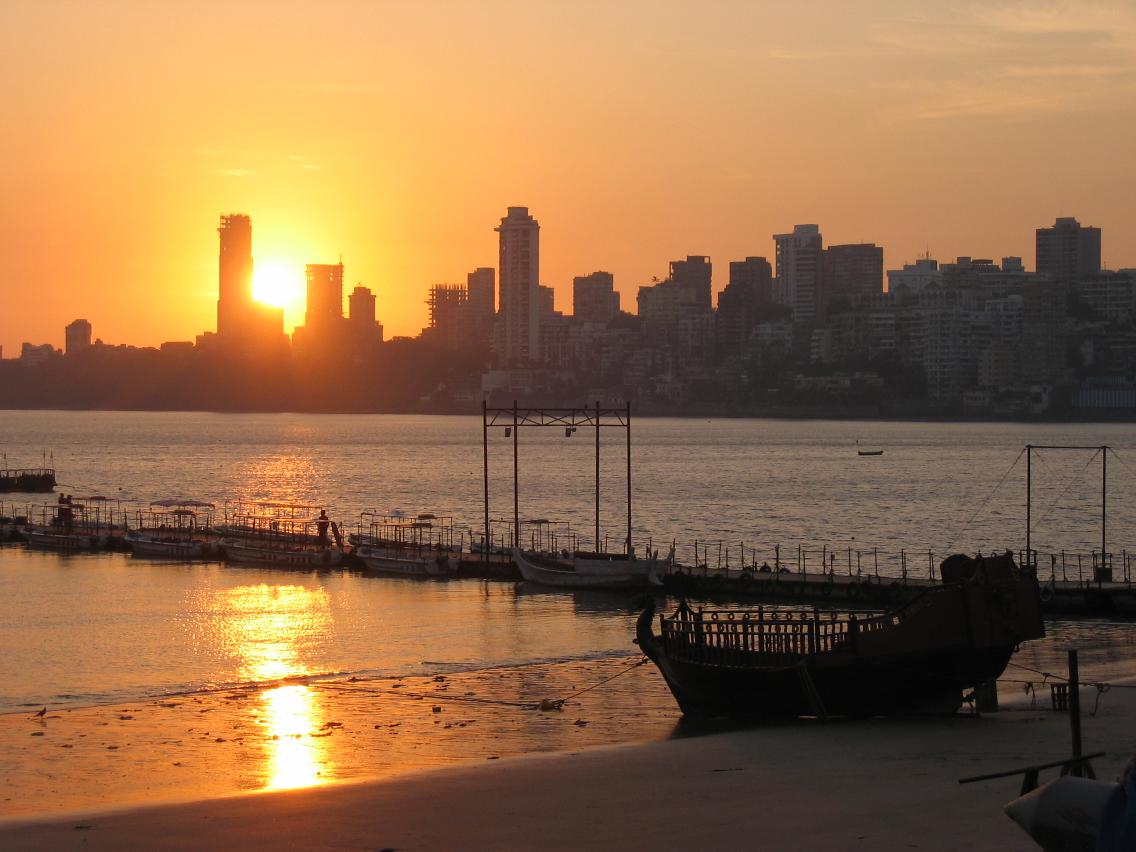
Aksa faces west into the Arabian Sea, and its sunsets are the beach's most reliable draw, pulling photographers and evening visitors to the sand as the light drops.

Night

The beach is not lit for after-dark use, and the same currents and shifting sand that make daytime swimming risky do not become safer once visibility drops.

Hajiali.jpg
Culture

Where it shows up

Film
  • Ramayana
    Cast includes Ranbir Kapoor, Sai Pallavi, and Yash

    The upcoming film Ramayana had recently shot scenes at Aksa Beach as of an August 2026 report.

Other
  • "World's most treacherous beach" headline · 2013
    Hindustan Times

    Hindustan Times ran a story on 6 May 2013 describing Aksa as the world's most treacherous beach after three deaths there.

History
  • East Indian, Pathare, and Koli communities

    The East Indian community, the Panchkalshi or Somvanshi Kshatriya Pathare, and Koli fishing families are named as Aksa's native population.

The honest part
“An average of 38 drownings a year over that stretch would put the total well above the 45 Wikipedia's own citation gives.”

Aksa's danger to swimmers is not a footnote to the seawall story; it is a separate, older, and still-unresolved one. An academic drowning study covering 2006 to 2018 found an average of 38 drowning incidents a year at Aksa Beach, 445 people rescued after near-drowning, and 45 deaths recorded over that stretch, with the single worst year in 2007 and 15 distinct drowning spots identified along the shore. Those figures come from Wikipedia's own citation of the study, and Wikipedia's own numbers do not fully reconcile with each other; an average of 38 drownings a year sustained across the study period would imply a total well above 45. That inconsistency has not been resolved in the sources available here, and neither has the underlying danger. Warning signs and lifeguards have been posted at Aksa for years, and drowning has kept happening anyway: press reports document four drowned in June 2008, three in May 2013, two college students in May 2015, and, most recently, a 17-year-old student who entered the water with two friends in June 2026 and did not come back. Search teams from the Mumbai Police, the fire brigade, and the ambulance service worked into the evening before calling it off.

What unites the seawall and the drowning record is the same authority operating on the same stretch of coast: a government able to move 95 percent of a concrete promenade into place while a court case about its legality was still open, on a beach where the underlying, better-documented danger, people drowning in the surf, has not been solved by two decades of signage.

Hanging-Gardens-5.jpg
Sea & surf

What the water does

JFMAMJJASONDmetres (significant wave height)

Solid = typical monthly wave height; pale = the bigger days (90th pct). Offshore/regional swell from Open-Meteo Marine (ERA5 Ocean reanalysis, 2023–2024); a sheltered cove may sit calmer than this.

Mixed — usually swimmable, with a livelier season
Typical wave height
0.99 m
Biggest swell
Jul · 2.37 m
Calmest
Nov · 0.44 m
Typical period
8.4 s (groundswell)
Before you go

Things to know

Swimming

The sand shifts with strong wave action and currents are strong; Wikipedia states it is not safe to swim, and quicksand has also been documented in the water. Warning signs and lifeguards are posted, but accidents have continued.

Risk timing

Drowning incidents have historically peaked in the pre-monsoon season, which coincides with the summer vacation crowd surge, and the beach becomes more dangerous still once the monsoon itself arrives.

Distances

Independent sources put Aksa roughly 9 km from Malad railway station and 12 km from Borivali; the beach dataset instead lists Borivli as nearest at 9.4 km and the airport at 12.5 km, both straight-line, not road distance.

Food and lodging

No named, currently-operating restaurant, hotel, or vendor at or on Aksa Beach is confirmed by the sources consulted here; treat any specific business claim about Aksa with caution.

Sharks

No incidents on record in the global shark-attack file.

Plan

If you go

Getting there
Nearest airport
Chhatrapati Shivaji Maharaj International Airport (BOM) · 13 km
Nearest town
Borivli · 9 km

Aksa Beach sits in Aksa village, part of Malad, in Mumbai's northwestern suburbs. The beach dataset lists Borivli as the nearest city at 9.4 km, straight-line, and Chhatrapati Shivaji Maharaj International Airport (BOM) at 12.5 km, also straight-line; no road-distance or drive-time figure to either is confirmed. Separately, Mumbai's community wiki instead treats Malad railway station, about 9 km away, as the effective nearest station, with Borivali roughly 12 km away, reachable from there by select BEST buses toward Madh Island or by private transport and autorickshaw.

When to go
  • Weekend crowd surge · Saturdays and Sundays, year-round; heaviest in the pre-monsoon season

    Weekend crowds are Aksa's main recurring draw, and the pre-monsoon season, which coincides with the summer vacation crowd, is when the academic drowning study cited on this page found incidents peak.

What to eat & drink
No documented vendors on the sand

No restaurant, stall, or vendor operating directly on Aksa Beach is confirmed by any source consulted here; the available reporting on Aksa covers its coastline dispute and drowning record, not its food scene.

Aksa Beach

Malad and Borivli, off the beach

The nearest towns carry Mumbai's ordinary restaurant and street-food scene, but no specific, currently-operating business at or near Aksa has been verified, so none is named here.

Malad / Borivli

Aksa village guesthouses, unverified

Small private cottages and guesthouses are known to exist in Aksa village, and some may serve meals to guests, but none could be confirmed as a currently operating, named business.

Aksa village

Go deeper
Sources & references
  1. Deccan Herald, Sept 2025 · cited 3×
  2. Wikipedia: Aksa Beach · cited 3×
  3. Free Press Journal, Sept 2025 · cited 2×
  4. DNA, 22 June 2008
  5. Times of India / Hindustan Times, 6 May 2013
  6. DNA India, 12 May 2015
  7. Deccan Herald, May 2023
  8. Free Press Journal, July 2024
  9. Latestly / Lokmat Times, June 2026
  10. Asianet News lifestyle piece, Aug 2026
  11. academic drowning study, cited via Wikipedia
Colophon · Provenance

Where this page comes from

Geography, facilities
OpenStreetMap (ODbL) for geometry and facility tags within 500 m of the beach centroid. GeoNames for city/airport distances.
Climate & ocean
Open-Meteo ERA5 + Marine archive, 2014–2023 monthly normals.
Photography
Archival, original tone (Tier B — Wikimedia Commons). Each image licensed per its own terms; attribution visible inline.
History & culture
Every factual claim is linked to its source in the prose above. Wikipedia citations inline. Non-wiki sources named where relevant.
Editorial voice
Register: severe. Written to pass a local's nod test; corrections welcome.
Written by Erin Rose
Last reviewed 2026-04-19
v0.9 — in editorial development toward v1.0