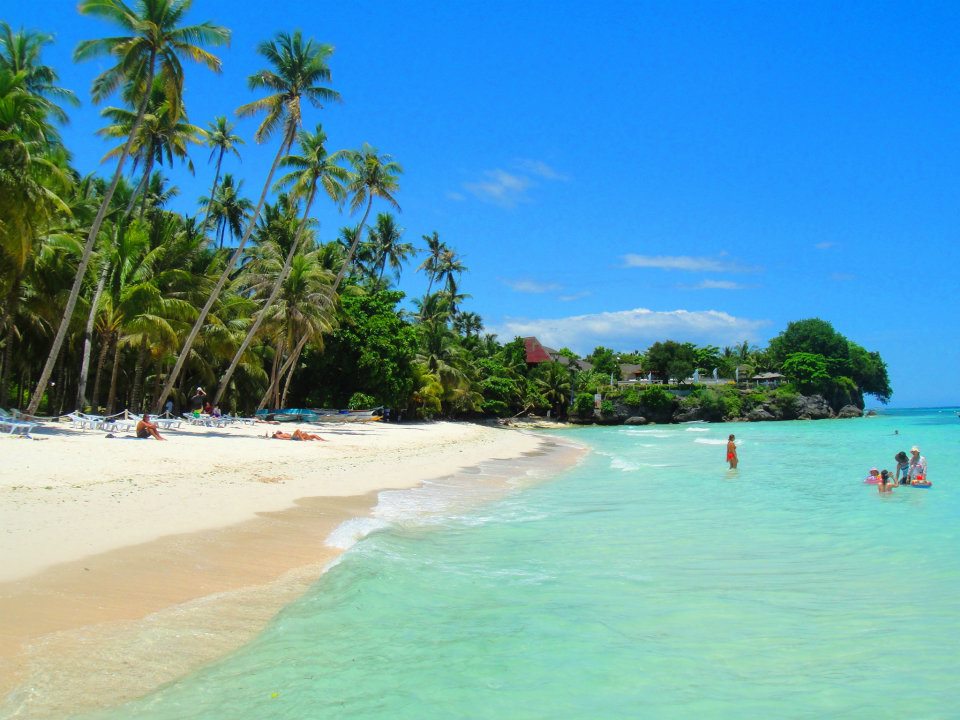
Central Visayas, PH

Alona Beach

Swimming pool overlooking the Bohol sea - panoramio.jpg

Central Visayas, PH

Alona Beach

In 1973, a film crew shooting Esteban asked locals what to call an unnamed beach; they said Alona Beach, after co-star Alona Alegre, and it stuck.

Swimming pool overlooking the Bohol sea - panoramio.jpg · <a rel="nofollow" class="external text" href="https://web.archive.org/web/20161023202226/http://www.panoramio.com/user/671268?with_photo_id=64299570">Mats Sjödin</a> · CC BY 3.0
Substrate
sand
Nearest airport
TAG · 3 km
I’m here for
Story

Alona Beach is a stretch of white sand on Panglao Island's southern coast, Bohol Province, in barangay Tawala. Length estimates vary — Wikipedia says under a kilometer, Alona Divers cites a 1.5-km strip behind it — so call it roughly 800 m to 1 km of sand with a longer built-up frontage. The sand tests 91.7% quartz by the GloPrSM sand model, which is why it reads bright white.

The beach had no name before 1973. That year a crew filming the Fernando Poe Jr. picture Esteban, directed by Celso Ad. Castillo, used an unmarked Tawala beach as a location, with other scenes shot at 18th-century Baclayon Church. Asked what to call the beach, locals answered with the name of FPJ's co-star, Alona Alegre. Accounts differ on the details, but agree the name was invented on the spot and never let go.

Diving turned the accidental name into an industry. Seaquest Dive Center, open at Moalboal, Cebu since 1981, added an Alona Beach location in 1990. Alona Divers followed in 1996. Both still run boats out of Tawala today, mostly bound for Balicasag Island, about 6 km southwest, a 20-30 minute boat ride from Alona, where a community-run no-take marine sanctuary has stood since 1985.

Access accelerated after Bohol-Panglao International Airport opened on Panglao's north shore on 27-28 November 2018, cutting the trip from a 20-km drive off the old Tagbilaran airstrip to 2.8 km. Henann Resort Alona Beach, the strip's largest property at 6.5 hectares and roughly 400 rooms, had opened in June 2015; smaller hotels and dive shops packed in around both.

The density has a cost. In October-November 2018, DENR testing recorded fecal coliform at 16,000 most probable number per 100 mL against a 100-MPN swimming standard; a two-day ban followed, then lifted after a follow-up reading of 33 MPN. The same period, resorts were ordered to demolish seawalls built inside the 20-meter shore easement; demolition began in April 2019, and by November 2022 the DENR reversed course and approved new ripraps because erosion had worsened without them.

By February 2026, a Manila Times columnist who had last visited three years earlier described the water off Alona as turbid and thick with algae, the strip as overdeveloped, overcrowded, and overpriced, with only the Henann frontage holding up comparatively well. None of it has slowed the boats leaving for Balicasag each morning, or closed the dive shops built on a name a movie crew improvised in an afternoon in 1973.

The spike

In 1973, a film crew shooting Esteban asked locals what to call an unnamed beach; they said Alona Beach, after co-star Alona Alegre, and it stuck.

Alona Beach is named after a person, not a place feature, and the naming happened by accident in front of a film camera.

The unmarked beach. In 1973 a Fernando Poe Jr. action film called Esteban, directed by Celso Ad. Castillo, went into production in Bohol. FPJ starred as a man blinded by an injury inflicted by bandits led by Max Alvarado; Baclayon Church, a coral-stone Jesuit church completed in 1727 and about 15 kilometers from Panglao, stood in as a location. Part of the shoot used a stretch of white sand on the southern coast of Panglao Island, in barangay Tawala, that had no name printed on any map and no tourist facilities of any kind — no resorts, no restaurants, nothing distinguishing it from any other unused stretch of Visayan coastline.

The naming. FPJ's co-star was Alona Alegre, born Maria Lourdes Salvador on 1 January 1948, daughter of comedian-actor Lou Salvador Sr. and LVN actress Inday Jalandoni, and by 1973 already a working leading lady and, per her later obituaries, a recognized sex symbol of Philippine cinema. Accounts of what exactly she did on that beach vary in specificity. Wikipedia's article states she ran along the beach during filming; an earlier, more detailed local retelling (a 2013 blog post drawing on regional reporting) says only that she was frolicking and cavorting on the sand during the shoot, without describing anything more dramatic. What every version agrees on is the naming mechanism: when the film crew, or visitors afterward, asked locals what the beach was called, there was no answer, because it had no name. Locals reportedly answered with 'Alona Beach' on the spot, reaching for the most memorable thing about the place at that moment, and the name stuck immediately and permanently.

Why this is more than trivia. Most Philippine beach names describe geography or borrow the barangay or municipality that contains them. Alona Beach is named after neither. It's named after a person's presence during a several-week film shoot, chosen ad hoc by people who had no reason to think the name would outlast the production. There was no marketing intent, no naming committee, no branding exercise — the opposite of how destinations are usually named today, where tourism boards spend real budgets workshopping names precisely because they expect the name to carry decades of commercial weight. This one was free, and it worked better than most paid ones do.

What the accident produced. That accidental name now anchors a real economy. Seaquest Dive Center, which had opened its first Philippine location at Moalboal, Cebu, in 1981, expanded to Alona Beach in 1990 and calls itself the area's longest-established dive operator. Alona Divers followed in 1996. Both still operate under the name today, running boats to Balicasag Island's marine sanctuary, established in 1985, and to Pamilacan Island — built on a name an actress's beach walk gave them for free. Henann Resort Alona Beach opened in June 2015 with roughly 400 rooms on 6.5 hectares, the single largest hospitality investment on a beach whose whole identity traces to that 1973 afternoon. None of these businesses paid for or invented the brand equity they're built on; they inherited it from a naming accident five decades old.

The asymmetry. Alona Alegre died on 9 December 2018 at age 70, of asthma and cardiac arrest, according to her PEP.ph obituary. She is not known to have received any ongoing benefit from the beach carrying her name — no royalty, no plaque tied to commercial revenue, no formal recognition beyond being cited in tourism blog posts as the namesake. Bohol province recorded more than a million visitor arrivals in multiple recent years; almost none of that value traces back to the name's origin. That gap, between what an accidental name generates and what its source received, is not unique to Alona Beach, but Alona Beach is an unusually clean example of it, because the naming event is dated and traceable to a single film production rather than lost in centuries of folk etymology.

The honest caveat. No contemporary 1973 news account of the naming has surfaced in available sources; what exists is a chain of later retellings — a 2013 blog post citing regional reporting, and Wikipedia's summary of it — that agree on the core mechanism but differ on the specific detail of what Alegre was doing on the sand. Absent a primary 1973 source, the safest version of the story is the one every account shares: an unnamed beach, a film crew, a leading lady who was there, and a name locals invented on request that never stopped being used.

Alona beach - panoramio (1).jpg
Culture

Where it shows up

Film
  • Esteban · 1973
    Celso Ad. Castillo (director)

    The Fernando Poe Jr. action film shot partly at Baclayon Church and on the then-unnamed Tawala beach that was named Alona Beach during production.

History
  • Alona Alegre · 1948

    Born Maria Lourdes Salvador; Filipino actress whose presence on the Esteban shoot gave Alona Beach its name. Died 9 December 2018 at age 70.

Other
  • Panglao Dive Festival
    DOT-Central Visayas and the Municipality of Panglao

    A multi-day dive-industry trade event organized by DOT-Central Visayas and the Municipality of Panglao, with PADO (Panglao Association of Dive Operators) among the participants; the most recently documented edition ran June 16-21, 2021 at Modala Beach Resort near Alona (one source gives a 5-day event ending June 20 — sources conflict on the exact end date).

  • 'Choking on Tourism' (Manila Times column) · 2026

    A February 2026 opinion column describing Alona Beach's transformation from 'an exemplary Philippine tourism destination to an absolute dump' over three years, citing turbid, algae-clogged water.

Alona Beach Palmtree.jpg
History

What happened here

  1. 1973cultural

    Alona Beach gets its name

    A film crew shooting the Fernando Poe Jr. picture Esteban, directed by Celso Ad. Castillo, uses an unnamed white-sand beach in barangay Tawala as a location; locals name it 'Alona Beach' after co-star Alona Alegre, who was on set.

    Wikipedia →
  2. 1985policy

    Balicasag Island marine sanctuary established

    Local residents and officials, working with Silliman University's Marine Conservation and Development Program, establish a no-take marine sanctuary on Balicasag Island, the dive site that anchors Alona's dive-tourism economy today.

  3. 1990founding

    Seaquest Dive Center opens on Alona Beach

    Seaquest, which opened its first Philippine dive center at Moalboal, Cebu in 1981, opens a second location on Alona Beach, making it one of the beach's earliest dive operators.

  4. 1996founding

    Alona Divers established

    Alona Divers, a Filipino-owned PADI dive resort, opens at the center of Alona Beach.

  5. 2015founding

    Henann Resort Alona Beach opens

    Henann opens its roughly 400-room, 6.5-hectare resort on Alona Beach, becoming the largest single hospitality property on the beach.

  6. 2018policy

    Fecal coliform spike and brief swimming ban

    DENR testing records fecal coliform at Alona Beach at 16,000 MPN per 100 mL against a 100 MPN swimming standard; an inter-agency task force bans swimming for two days before a follow-up reading of 33 MPN and the ban is lifted.

  7. 2018infrastructure

    Bohol-Panglao International Airport opens

    The new airport on Panglao's north shore opens commercially on 27-28 November 2018, cutting the trip from Alona Beach to an arrivals hall to 2.8 kilometers and replacing the old Tagbilaran airstrip.

    Wikipedia →
  8. 2019policy

    DENR-ordered seawall demolition begins

    Resort owners begin tearing down seawalls and riprap built inside the 20-meter shore easement, complying with a DENR order issued after the 2018 Boracay closure; at least 20 establishments comply by the 30 May deadline.

  9. 2022policy

    DENR authorizes new ripraps against erosion

    After seawall removal leaves the beach more exposed to habagat-season erosion, the DENR gives resorts along Alona Beach the go-ahead to build new ripraps.

The honest part
“An exemplary Philippine tourism destination to an absolute dump in three years, one columnist wrote in 2026 — the water turbid and thick with algae.”

Alona Beach's environmental record has moved in the wrong direction according to the most recent independent account available. In October-November 2018, DENR testing recorded fecal coliform at 16,000 most probable number per 100 milliliters, 160 times the swimming standard of 100 MPN; an inter-agency task force banned swimming for two days, then lifted the ban after a follow-up reading of 33 MPN, a swing large enough that neither number should be treated as a stable baseline. The same year, the national government ordered resort owners to tear down seawalls and riprap built inside the 20-meter shore easement to hold sand against habagat-season waves. The demolitions didn't actually start until April 2019, moved slowly because engineers worried fast removal would accelerate erosion, and by November 2022 the DENR reversed course and authorized resorts to build new ripraps because the erosion had, in fact, gotten worse without them.

By February 2026, a Manila Times columnist who had last visited three years earlier described the water off Alona as turbid and thick with algae, and the strip itself as overdeveloped, overcrowded, and overpriced — a shift, in the columnist's own words, from 'an exemplary Philippine tourism destination to an absolute dump' in three years, with only the stretch fronting Henann Resort holding up comparatively well. No published rebuttal water-quality reading has surfaced to counter that account as of this writing. What's verifiable is that the underlying tension — a beach dense enough with hotels and dive shops to require government intervention on sewage and shoreline engineering twice in under a decade — has not been resolved, only managed episode by episode.

Alona Beach, Bohol.jpg
Anatomy

The shape of the place

Western rocky point

10%

The beach narrows against rocky outcrops at its western end, the 'rocky cliffs' referenced in Wikipedia's physical description; less commercial density than the central strip.

Best for Quieter sand, tide-pool exploring at low tide

Henann Resort frontage

35%

The stretch fronting Henann Resort Alona Beach, the largest single property on the beach (6.5 hectares, ~400 rooms, opened June 2015). A February 2026 press account singled this section out as comparatively better-maintained than the rest of the strip.

Best for Guests of Henann and adjacent mid-range hotels

Alona Beach Road frontage

50%

The dense center of the beach: dive shops, restaurants, and bars packed along the sand behind Alona Beach Road. This is also the section most affected by the crowding and water-turbidity complaints in recent accounts.

Best for Dive-shop bookings, restaurants, nightlife

House reef and dive-boat channel

50%

The shallow reef flat directly offshore, used for beginner snorkeling, and the channel dive boats use en route to Balicasag Island, about 6 km southwest, a 20-30 minute boat ride away.

Best for Snorkeling, boat launches to Balicasag

Balicasag's no-take marine sanctuary dates to 1985.

Landmarks

Baclayon Church · 1727

church · Jesuit missionaries (Society of Jesus)

A coral-stone church about 15 km from Alona Beach, founded as a settlement in 1596 with the present stone structure completed in 1727; it served as a filming location for Esteban (1973), the production that gave Alona Beach its name.

Wikipedia →

Balicasag Island Marine Sanctuary · 1985

marine protected area

A community-established no-take marine sanctuary on Balicasag Island, about 6 km southwest of Alona Beach, a 20-30 minute boat ride away, that anchors the dive trade run out of Tawala.

Bohol-Panglao International Airport · 2018

infrastructure

Opened 27-28 November 2018 on Panglao's north shore, 2.8 km from Alona Beach, replacing the old Tagbilaran airstrip and accelerating tourism growth on the beach.

Wikipedia →
A day here

From first light to dark

Dawn

Dive boats load between 6 and 7 a.m., before the wind picks up and before the afternoon plankton bloom that operators say cuts underwater visibility at Balicasag; this is also the coolest, least crowded window on the sand itself.

Midday

By late morning the restaurant strip is at its most crowded, dive groups back from morning boats mix with day-trippers off the airport road, and the nearshore turbidity a 2026 press account described is easiest to see, particularly away from the Henann Resort frontage.

Golden hour

Late afternoon empties the water and fills the beachfront bars and restaurants; Panglao's south-coast position means Alona doesn't have Manila Bay's due-west sunset postcard, but the light off the water still draws the dinner crowd.

Night

After dark the strip stays lit and commercial — bars, restaurants, and dive-shop signage keep the frontage active well past 10 p.m. — while the reef and the boats sit idle until the next 6 a.m. departure.

Alona Beach 01.jpg
Sea & surf

What the water does

JFMAMJJASONDmetres (significant wave height)

Solid = typical monthly wave height; pale = the bigger days (90th pct). Offshore/regional swell from Open-Meteo Marine (ERA5 Ocean reanalysis, 2023–2024); a sheltered cove may sit calmer than this.

Calm — gentle swimming water most of the year
Typical wave height
0.46 m
Biggest swell
Feb · 0.61 m
Calmest
Jun · 0.27 m
Typical period
3.9 s (wind chop)
Before you go

Things to know

Water quality varies

DENR recorded fecal coliform at 16,000 MPN/100mL in October 2018 (160x the swimming standard); a follow-up reading weeks later came back at 33 MPN. There's no continuously published, current water-quality feed for the beach — treat conditions as variable, especially after heavy rain.

The sand you're standing on is contested

Seawalls resorts built to fight erosion were ordered demolished by the DENR in 2018-19 as illegal easement construction, then partly rebuilt as DENR-approved ripraps by 2022 once erosion worsened without them.

Getting there

Bohol-Panglao International Airport (TAG) is 2.8 km away, open since 27-28 November 2018. Tagbilaran port, for ferries from Cebu, is about 20 km / 30-40 minutes by road.

Reef-safe sunscreen

Balicasag Island's dive sanctuary, the main boat destination from Alona, has been a no-take marine protected area since 1985; mineral sunscreen is standard operator guidance for boat trips there.

Swimming

Usually calm water — among the gentler beaches for a swim.

Sharks

No incidents on record in the global shark-attack file.

Plan

If you go

Getting there
Nearest airport
Bohol-Panglao International Airport (TAG) · 3 km
Nearest town
Tawala · 1 km

Alona Beach sits in barangay Tawala on Panglao Island's southern coast. Bohol-Panglao International Airport (TAG) is 2.8 km away — about a 10-minute drive — and has handled scheduled flights since opening on 27-28 November 2018. From Tagbilaran's ferry port, roughly 20 km northeast, it's a 30-40 minute drive by taxi, tricycle, or hotel transfer; ferries from Cebu City to Tagbilaran run multiple times daily.

When to go
  • Panglao Dive Festival · June (dates vary by year)

    A multi-day dive-industry trade event organized by DOT-Central Visayas and the Municipality of Panglao, with the local dive-operator association PADO participating; the most recently documented edition ran June 16-21, 2021 at Modala Beach Resort (sources differ on the exact end date).

What to eat & drink
Kinilaw

Bohol's version of the Filipino raw-fish preparation, cured in vinegar, calamansi, and chili rather than cooked with heat; effectively every seafood restaurant on the Alona Beach Road strip serves a version.

Seafood restaurants along Alona Beach Road, Tawala

Kalamay

A sticky rice cake cooked down from glutinous rice, coconut milk, and brown sugar, set inside half a coconut shell. Jagna, on Bohol's southern coast, is the province's kalamay center — it's a take-home item, not something made on the beach itself.

Souvenir and pasalubong shops in Panglao and Tagbilaran

Peanut kisses

Cone-shaped, meringue-based peanut cookies that are Bohol's standard pasalubong (take-home gift), sold in nearly every souvenir shop on the island.

Souvenir shops across Panglao and Tagbilaran

Sources & references
  1. CCEF MPA Database: Balicasag Island Fish Sanctuary · cited 2×
  2. Wikipedia: Alona Beach; raulgatal.blogspot.com, 'How Alona Beach Got Its Name' (2013)
  3. Seaquest Dive Center company site
  4. Alona Divers company site
  5. Henann Resorts official site; Trip.com, Expedia listings
  6. BusinessMirror; GMA News, Nov-Dec 2018 coverage
  7. Rappler: 'Duterte inaugurates Bohol-Panglao International Airport' (2018)
  8. Inquirer.net: 'Resort owners tear down illegal structures along Alona Beach in Panglao' (2019)
  9. Bohol Chronicle: 'Resorts at Alona Beach get go-signal to build ripraps to stop erosion' (2022)
  10. Wikipedia: Alona Beach
  11. OpenStreetMap relation/1239802
  12. Wikipedia; Alona Divers company site
  13. Rappler: 'Duterte inaugurates Bohol-Panglao International Airport'
  14. BusinessMirror; GMA News, Nov-Dec 2018
  15. IBTrACS v04r01 (NOAA NCEI)
  16. World Beach Tour safety pipeline
Colophon · Provenance

Where this page comes from

Geography, facilities
OpenStreetMap (ODbL) for geometry and facility tags within 500 m of the beach centroid. GeoNames for city/airport distances.
Climate & ocean
Open-Meteo ERA5 + Marine archive, 2014–2023 monthly normals.
Photography
Archival, original tone (Tier B — Wikimedia Commons). Each image licensed per its own terms; attribution visible inline.
History & culture
Every factual claim is linked to its source in the prose above. Wikipedia citations inline. Non-wiki sources named where relevant.
Editorial voice
Register: wry. Written to pass a local's nod test; corrections welcome.
Written by Erin Rose
Last reviewed 2026-04-19
v0.9 — in editorial development toward v1.0