Wales, GB

Barafundle Bay

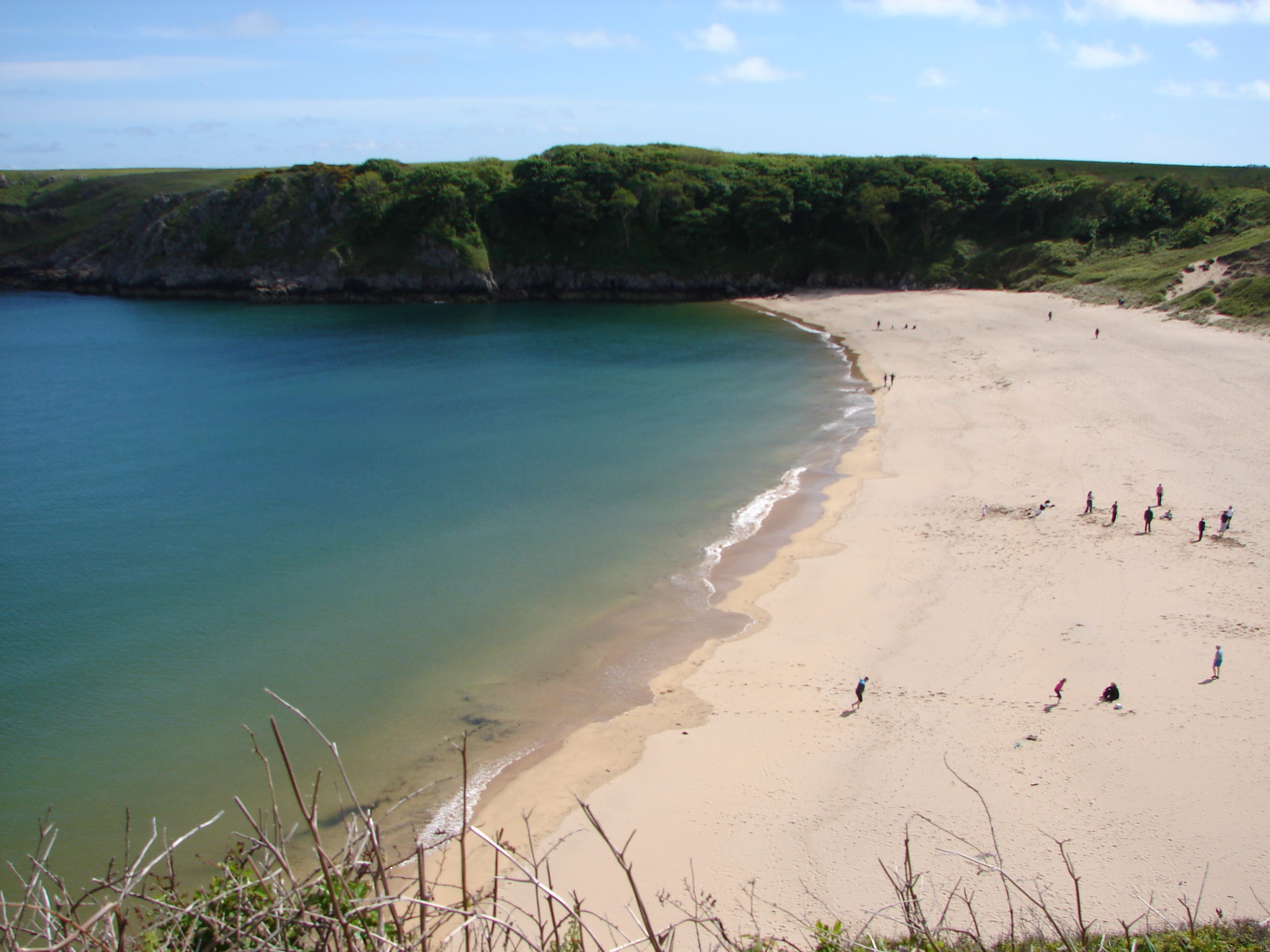
Barafundle Bay - panoramio (3).jpg

Wales, GB

Barafundle Bay

Barafundle has no road and no facilities on the sand; the only way in is a half-mile walk from Stackpole Quay over the Cawdors' 18th-century wall.

Barafundle Bay - panoramio (3).jpg · <a rel="nofollow" class="external text" href="https://web.archive.org/web/20161014031424/http://www.panoramio.com/user/2490701?with_photo_id=26774010">PJMarriott</a> · CC BY 3.0
Substrate
sand
Spring tide
6.79 m
Nearest airport
HAW · 24 km
Tier
Featured
I’m here for
Story

Barafundle Bay is a remote, east-facing crescent of golden sand on the south Pembrokeshire coast, set between limestone headlands inside the Pembrokeshire Coast National Park. It has no road. There is no car park at the beach, no kiosk, no toilet, no lifeguard. To get there you park at Stackpole Quay, walk about half a mile (0.8 km) along the coast path, climb a flight of stone steps over a wall, and drop down through pine and dunes to the sand. That single fact — you have to earn it on foot — is why Barafundle keeps turning up on lists of the best beach in Britain while staying half-empty on a weekday.

The wall and steps you climb are not municipal infrastructure. They were built by the Cawdor family, owners of the Stackpole Estate, in the 18th century to ease their own access to what was then a private beach behind their deer park. The whole estate — beach, woodland, the dammed lily ponds at Bosherston, the eight-arch bridge of 1797, and the tiny harbour at Stackpole Quay the Earl built to ship out his limestone — passed to the National Trust in 1976, after the Campbells (Earls Cawdor) left and Stackpole Court itself was demolished in 1963.

What the walk delivers is a sheltered bay backed by dunes and pine, with Carboniferous limestone cliffs closing it at both ends. Because it faces east it is protected from the prevailing south-westerlies, so on a calm day the water can be flat and clear. The land around it is the Stackpole National Nature Reserve, run by the National Trust with Natural Resources Wales: choughs work the cliffs, seals haul out nearby, otters live in the lakes inland, and the estate holds the largest colony of greater horseshoe bats in Wales.

None of that comes with a safety net. There are no lifeguards, and the official advice is blunt: strong rips are likely, the sand shelves quickly, and you must watch the tide so you are not cut off. The remoteness that makes the beach beautiful is what makes a rescue slow — you are half a mile and a flight of steps from the nearest road. There are no bins or toilets on the sand, so the Trust asks visitors to carry out everything they carry in.

Barafundle has a cultural afterlife too. Gorky's Zygotic Mynci named their 1997 album 'Barafundle' after it, and in 2009 the bay was the setting of 'Third Star', about a terminally ill young man — played by Benedict Cumberbatch before his fame — who makes a last trip to his favourite beach with three friends. People attach endings to this place, partly because getting there already feels like a small pilgrimage.

The honest version of Barafundle is this: a former private beach, beautiful and undeveloped precisely because nobody ever developed it, now held in trust and reachable only by those willing to walk. Take your litter home, check the tide, and don't mistake the calm of a sheltered bay for the absence of a current.

The spike

Barafundle has no road and no facilities on the sand; the only way in is a half-mile walk from Stackpole Quay over the Cawdors' 18th-century wall.

The thing that makes Barafundle Bay singular is an absence: there is no road to it. Almost every famous British beach has, somewhere behind it, a car park, a promenade, a chip shop, a sea wall, a row of houses. Barafundle has none of these touching the sand. The nearest you can drive is the National Trust car park at Stackpole Quay, and from there the only way to the beach is your own two feet — about half a mile (0.8 km) along the Pembrokeshire Coast Path, up and over a flight of stone steps set into an old wall, and down through dunes and a band of pine. There is no vehicle access, no kiosk, no toilet, no bin, and no lifeguard on the beach itself. Everything you want on the sand, you carry in; everything you leave with, you carry out.

Why the wall and steps are there at all is the heart of the story. They are not a council footpath. Barafundle was a private beach belonging to the Cawdor family — the Campbells, Earls Cawdor — who owned the Stackpole Estate. The wall on the northern approach enclosed their land, and the steps were cut to ease the family's own access down to a beach that, for most of its history, ordinary people had no right to use. So the very barrier you climb to reach Barafundle is a relic of the time it was kept from the public. The estate around it was a designed aristocratic landscape: the Campbells built the Palladian mansion Stackpole Court in the 1730s; Sir John Campbell, inheriting in 1777, dammed a limestone valley to create the Bosherston lily ponds and planted thousands of trees; the eight-arch bridge linking the court to the deer park and the quay was built in 1797; and Stackpole Quay itself — one of Pembrokeshire's smallest harbours — was built by Earl Cawdor at the end of the 18th century to ship out limestone from his quarry and bring in goods for the house.

Then the family left, and the absence of development became permanent. In 1938 the Ministry of Defence requisitioned around 6,000 acres of the estate for the Castlemartin tank range. Soldiers billeted in Stackpole Court stripped lead from the roof; dry and wet rot followed, and the mansion was demolished in 1963. The Campbells retreated to their Scottish estates, and in 1976 the coast, woodlands, lakes and beaches passed to the National Trust. Because the estate was never sold off for housing or holiday camps, Barafundle skipped the entire 20th-century apparatus of the seaside resort. There was no developer to put a road in, and once the National Trust held it, there never would be. The beach is undeveloped not by accident of remoteness alone but because of a specific chain of ownership: private deer park, then military requisition, then conservation trust — three regimes in a row, none of which had any interest in building a car park on the sand.

The geography makes the walk worth it and the swim dangerous in the same breath. Barafundle faces east, tucked between limestone headlands, so it is sheltered from the prevailing south-westerly winds that batter the rest of this coast. On a calm day that shelter gives you flat, clear water and fine golden sand backed by dunes — the look that earns the bay its Caribbean comparisons and a 2004 listing among the best beaches in Britain. But the same sand that shelves so pleasantly for paddling shelves quickly into deeper water, and the official guidance for the bay is explicit that strong rip currents are likely and that swimmers must check the tide to avoid being cut off against the cliffs. There is no lifeguard to pull you out and no road to speed an ambulance in. The remoteness that filters the crowd also filters the help.

The land around the beach is a working nature reserve, not a backdrop. Barafundle sits within the Stackpole National Nature Reserve, managed by the National Trust in partnership with Natural Resources Wales and protected as a Site of Special Scientific Interest. Choughs — the rare red-billed, red-legged crow — nest on the cliffs; razorbills and guillemots crowd the ledges at Stackpole Head; grey seals use the coves; otters live in the inland lily ponds the Campbells dammed; and the estate holds the largest colony of greater horseshoe bats in Wales, roosting in the old estate buildings and trees. The geology itself is designated: the cliffs here are Carboniferous limestone, around 330 to 347 million years old, and the folds and fault-collapse breccias exposed at Stackpole Quay are notable enough that the structure featured on the cover of the first issue of the Journal of Structural Geology in 1979. You are walking through a designed landscape, a protected ecosystem, and a textbook geological section to reach a beach with nothing built on it.

That is the whole argument for Barafundle: it is one of the most admired beaches in Britain precisely because it was never made convenient. The wall you climb was built to keep you out; the lack of a road is the reason the sand is still empty enough to deserve the praise. The reward is a sheltered east-facing bay; the price is a half-mile walk, a flight of steps, no facilities, no lifeguard, and a current that does not care how far you came.

Barafundle Bay - panoramio (2).jpg
Culture

Where it shows up

Music
  • Barafundle (album) · 1997
    Gorky's Zygotic Mynci

    The Welsh band named their fourth studio album after the bay, cementing Barafundle's place in Welsh cultural memory as a name as much as a beach.

Film
  • Third Star · 2010
    Hattie Dalton (director)

    A British drama starring Benedict Cumberbatch as James, a terminally ill young man who makes a last camping trip to his favourite beach, Barafundle Bay, with three friends. Shot at the bay in October 2009; premiered as the closing film at the Edinburgh Film Festival in 2010.

History
  • Stackpole Court (demolished 1963) · 1730
    Campbell (Cawdor) family

    The Palladian mansion at the centre of the estate, built in the 1730s and demolished in 1963 after wartime damage. Its absence — and the family's departure — is why the surrounding coast, Barafundle included, was never developed.

Other
  • Journal of Structural Geology, first issue cover (1979) · 1979

    The dramatic syncline and fault structures exposed at neighbouring Stackpole Quay were notable enough to feature on the cover of the first issue of the Journal of Structural Geology in 1979, a marker of the area's standing as a geological site.

Barafundle Bay beach (May 2009).jpg
History

What happened here

  1. 1689history

    The Campbells of Cawdor acquire Stackpole

    Elizabeth Lort, heiress of the Stackpole Estate, married Alexander Campbell of Cawdor, bringing the south Pembrokeshire estate — including Barafundle Bay — into the Scottish Campbell (later Earls Cawdor) family, who would hold it for nearly three centuries.

    Wikipedia →
  2. 1730development

    Stackpole Court built in the Palladian style

    The Campbells built the early Georgian mansion of Stackpole Court in the 1730s, on the site of an earlier fortified house, as the centre of a grand designed landscape that would come to include the beach, deer park and quay.

    Wikipedia →
  3. 1777development

    Sir John Campbell begins the landscape works

    Inheriting in 1777, Sir John Campbell began landscaping on a grand scale — damming a limestone valley to create the Bosherston lily ponds and planting thousands of trees. The wall and steps easing private access down to Barafundle date from this 18th-century estate building.

    Wikipedia →
  4. 1797development

    Eight-arch bridge and Stackpole Quay built

    The eight-arch bridge was built in 1797 to link Stackpole Court and Home Farm to the quay and the New Deer Park. Around the same time Earl Cawdor built the small harbour at Stackpole Quay to ship out limestone from his quarry and bring luxury goods in for the house.

  5. 1938history

    MOD requisitions 6,000 acres for Castlemartin Range

    The Ministry of Defence requisitioned around 6,000 acres of the Stackpole Estate to form the Castlemartin tank training range, breaking up the estate and beginning the decline of the Cawdor presence in Pembrokeshire.

    Wikipedia →
  6. 1963history

    Stackpole Court demolished

    After soldiers billeted in the house during the war stripped lead from the roof, dry and wet rot set in. The Campbells returned to their Scottish estates and the Palladian mansion of Stackpole Court was demolished in 1963, leaving only outbuildings, parkland and the coast.

    Wikipedia →
  7. 1976policy

    Stackpole Estate passes to the National Trust

    A large proportion of the estate — the coast, woodlands, lakes and beaches, including Barafundle Bay — passed to the National Trust in 1976. Because the land went to a conservation body rather than developers, Barafundle was never built on, and remains road-free.

    Wikipedia →
  8. 1997cultural

    Gorky's Zygotic Mynci release 'Barafundle'

    The Welsh band Gorky's Zygotic Mynci named their fourth album 'Barafundle' (1997) after the bay, one of the clearest signs of the beach's place in Welsh cultural memory.

    Wikipedia →
  9. 2009cultural

    'Third Star' filmed at Barafundle

    The film 'Third Star', about a terminally ill young man (Benedict Cumberbatch, pre-fame) making a last trip to his favourite beach with three friends, was shot at Barafundle Bay in October 2009. It premiered at the Edinburgh Film Festival in 2010 as the closing film.

    Wikipedia →
The honest part
The same remoteness that keeps Barafundle half-empty and beautiful is what makes a rescue slow — there is no lifeguard, no road, and a current that does not care how far you walked.

Barafundle's beauty and its danger are the same fact. There is no road, no lifeguard, no toilet, no bin, and no kiosk on the beach — the nearest of any of those is a half-mile walk and a flight of steps away at Stackpole Quay. The official guidance for the bay is direct: there are no lifeguards, strong rip currents are likely, the sand shelves quickly into deep water, and you must watch the tide so the sea does not cut you off against the cliffs. Because the beach is remote, any rescue is slow; you are a long way from the nearest road. People treat a sheltered, east-facing, clear-watered bay as safe water, and a calm surface hides a current that runs regardless. The second, quieter problem is litter and pressure: a beach with no bins and no facilities depends entirely on every visitor carrying out what they carried in, and on a hot day the half-mile filter does not stop the dunes, the pine strip and the cliff path from taking a beating. The National Trust's plea — take your rubbish home, keep to the paths — is the rent you pay for a beach nobody built on.

Barafundle Bay - panoramio (1).jpg
Anatomy

The shape of the place

The steps and deer-park wall (northern approach)

5%

The northern entrance, where the coast path from Stackpole Quay crosses the old Cawdor wall by a flight of stone steps and drops down to the sand. The historic threshold of the beach — built as private access in the 18th century.

Best for Arriving, the first view down over the bay, photographs of the dunes and pine from above

Steps are uneven and unsuitable for pushchairs or wheelchairs; this is the only practical way in from the Quay.

Main sand and dunes

50%

The wide central crescent of fine golden sand, backed by dunes and a strip of pine, sheltered by the cliffs at either end. The heart of the beach — and entirely without facilities.

Best for Swimming on a calm day, picnics, the classic Barafundle day out

No lifeguard, no bins, no toilets. Carry out all litter; check the tide so you are not cut off against the cliffs.

Southern cliffs toward Stackpole Head

90%

The southern limestone headland closing the bay, where the coast path continues toward Stackpole Head and Broad Haven South. Seabird ledges, choughs, and the Carboniferous limestone geology are best seen here.

Best for Cliff walking, birdwatching (razorbills, guillemots, choughs), continuing the coast path

Stay back from cliff edges; this stretch is exposed and the rocks are part of a designated geosite.

Landmarks

The Cawdor wall and steps · 1777

historic_structure · Campbell (Cawdor) family of Stackpole

The stone wall and flight of steps on the northern approach, built by the Cawdor family in the 18th century to ease their own access to what was then a private beach behind their deer park. The structure every visitor still climbs to reach the sand.

Wikipedia →

Stackpole Quay · 1797

harbour · Earl Cawdor

One of Pembrokeshire's smallest harbours, built by Earl Cawdor at the end of the 18th century to ship out limestone from his quarry and bring goods in for Stackpole Court. The car park, cafe and toilets here are the nearest facilities to Barafundle, half a mile away.

Stackpole National Nature Reserve

natural

The protected reserve surrounding the bay, managed by the National Trust with Natural Resources Wales — limestone cliffs, dunes, woodland and the freshwater Bosherston lily ponds. Home to otters, choughs, seals and the largest greater horseshoe bat colony in Wales.

Wikipedia →
A day here

From first light to dark

Dawn

At first light, before the Stackpole Quay car park fills, the half-mile walk in is empty and the east-facing bay catches the sunrise full on — Barafundle is one of the few British beaches that faces the morning sea. The sand is untouched, the choughs are already working the cliffs, and you may have the whole crescent to yourself, because almost nobody walks half a mile before breakfast.

Midday

On a warm summer day the beach fills with people who have made the walk, but it never feels like a resort because there is nothing to crowd around — no kiosk, no flags, no lifeguard tower, just sand, dunes and pine. Check the tide before you settle: at high water the beach narrows toward the cliffs, and the official advice is not to let the incoming sea cut you off.

Golden hour

Late afternoon light rakes across the dunes and the band of pine behind the beach, and the day-trippers thin as people start the climb back over the steps before the Quay cafe and toilets close. The water, sheltered from the south-westerly, often calms in the evening — the postcard hour, and the one the film 'Third Star' leaned on.

Night

After dark Barafundle is genuinely remote — no lights, no road, no facilities, a half-mile and a flight of steps from the nearest car. The estate's greater horseshoe bats hunt over the woodland and lakes inland. This is not a place to be on the sand at night; the same isolation that empties it of crowds empties it of any help.

Compare

How it ranks

Peak warmth
Warmer than 62% of beaches in its country
Peak-month high ≈ 19°C

Ranked against every beach in our database — 228,000+ worldwide.

Barafundle Bay - panoramio.jpg
Sea & surf

What the water does

JFMAMJJASONDmetres (significant wave height)

Solid = typical monthly wave height; pale = the bigger days (90th pct). Offshore/regional swell from Open-Meteo Marine (ERA5 Ocean reanalysis, 2023–2024); a sheltered cove may sit calmer than this.

Exposed — real surf, and rip current to respect
Typical wave height
1.83 m
Biggest swell
Dec · 2.55 m
Calmest
May · 1.03 m
Typical period
8.8 s (groundswell)
Before you go

Things to know

There is no road and no parking at the beach

The only way in is on foot: about half a mile (0.8 km) from the Stackpole Quay car park along the coast path and over a flight of steps, or 1.3 miles from Broad Haven South. It is not suitable for pushchairs or wheelchairs.

No facilities on the sand

No toilets, no kiosk, no bins, no drinking water and no lifeguard on the beach. The nearest toilets and cafe are at Stackpole Quay, about a mile away. Bring what you need and carry all litter back out.

Check the tide and respect the rips

There are no lifeguards. Strong rip currents are likely and the sand shelves quickly into deep water. Check tide times so the incoming sea does not cut you off against the cliffs, and never swim alone — a rescue here is slow.

It is a National Nature Reserve

Barafundle sits within the Stackpole NNR and SSSI. Keep to the paths to protect the dunes, take your rubbish home, and give nesting choughs, seabirds and hauled-out seals room. Dogs are allowed year-round but must be cleaned up after.

Surf & rip

Powerful water — strongest around Dec, gentlest in May. Mind rip currents; this isn't a wade-in-anywhere beach.

Sharks

No incidents on record in the global shark-attack file.

Plan

If you go

Getting there
Nearest airport
Haverfordwest Airport (HAW) · 24 km
Nearest town
Pembroke · 6 km

Barafundle Bay has no road, no car park and no facilities of its own. Park at the National Trust car park at Stackpole Quay (charges apply roughly March-October, free after about 5:30 p.m.), then walk about half a mile (0.8 km) along the Pembrokeshire Coast Path, up and over a flight of stone steps set in the old Cawdor wall, and down through dunes and pine to the beach. It can also be reached on a longer 1.3-mile (2.1 km) coast walk from Broad Haven South. The route is uneven and unsuitable for pushchairs or wheelchairs. Toilets and a cafe are at Stackpole Quay; there is nothing on the beach, so carry in what you need and carry all litter out.

When to go
  • National Trust car park season at Stackpole Quay · Charges apply roughly March to October; free after about 5:30 p.m.

    Access to Barafundle depends entirely on the Stackpole Quay car park, which charges in season and fills early on hot summer days. There is no other practical parking within walking distance, so a full car park effectively limits beach access.

  • Summer day-tripper peak · School summer holidays, July to August

    On warm summer days the half-mile walk filters but does not stop the crowds, and the dunes, pine strip and cliff path take the pressure. With no bins or toilets on the beach, this is when the Trust's 'take your litter home' message matters most.

What to eat & drink
Boathouse Tea-room, Stackpole Quay

The National Trust tea-room beside the tiny harbour at Stackpole Quay is the nearest food and drink to Barafundle — about a mile and a half-mile walk away. There is nothing to eat or drink on the beach itself, so this is where people refuel before or after the walk. Seasonal opening; check before relying on it out of season.

Stackpole Quay, near the National Trust car park (about a mile from the beach)

Pembrokeshire seafood and Welsh cakes inland

The wider Pembrokeshire coast is known for crab and lobster landed at small quays, and for Welsh cakes — griddled spiced flat scones sold warm. You will not find these on Barafundle's sand; the nearest pubs and cafes are in the villages of Stackpole and Bosherston, a short drive inland.

Villages of Stackpole and Bosherston, inland from the bay

Bring your own — there is nothing on the beach

Country Life named Barafundle the best place in the UK for a picnic in 2006, and a packed lunch carried in is the honest plan: there is no kiosk, no ice-cream van, and no water on the beach. Whatever you bring, you carry the wrappers back out — there are no bins.

On the sand at Barafundle (self-catered only)

Sources & references
  1. National Trust: History of Stackpole · cited 2×
  2. Wikipedia: Barafundle Bay · cited 2×
  3. National Trust: History of Stackpole; Pembrokeshire Historical Society
  4. National Trust: History of Stackpole; Wikipedia: Barafundle Bay
  5. Ports.org.uk: Stackpole Quay; Eight-Arch Bridge sources
  6. National Trust: History of Stackpole; Boydell & Brewer
  7. National Trust: History of Stackpole; Britain Express
  8. Wikipedia: Barafundle Bay; Wikipedia: Barafundle (album)
  9. Wikipedia: Barafundle Bay; Wikipedia: Third Star
  10. Wikipedia: Barafundle Bay; Pembrokeshire Coast National Park
  11. Pembrokeshire Coast National Park; National Trust
  12. Wikipedia: Barafundle Bay; National Trust
  13. Pembrokeshire Coast National Park; Wikipedia: Barafundle Bay
  14. Pembrokeshire Coast National Park; RNLI guidance
  15. Natural Resources Wales; National Trust; First Nature
Colophon · Provenance

Where this page comes from

Geography, facilities
OpenStreetMap (ODbL) for geometry and facility tags within 500 m of the beach centroid. GeoNames for city/airport distances.
Climate & ocean
worldclim_v2.1_2.5m
Tides
eot20
Photography
Archival, original tone (Tier B — Wikimedia Commons). Each image licensed per its own terms; attribution visible inline.
History & culture
Every factual claim is linked to its source in the prose above. Wikipedia citations inline. Non-wiki sources named where relevant.
Editorial voice
Register: reverent. Written to pass a local's nod test; corrections welcome.
Written by Erin Rose
Last reviewed 2026-04-19
v0.9in editorial development toward v1.0