New South Wales, AU

Bronte Beach

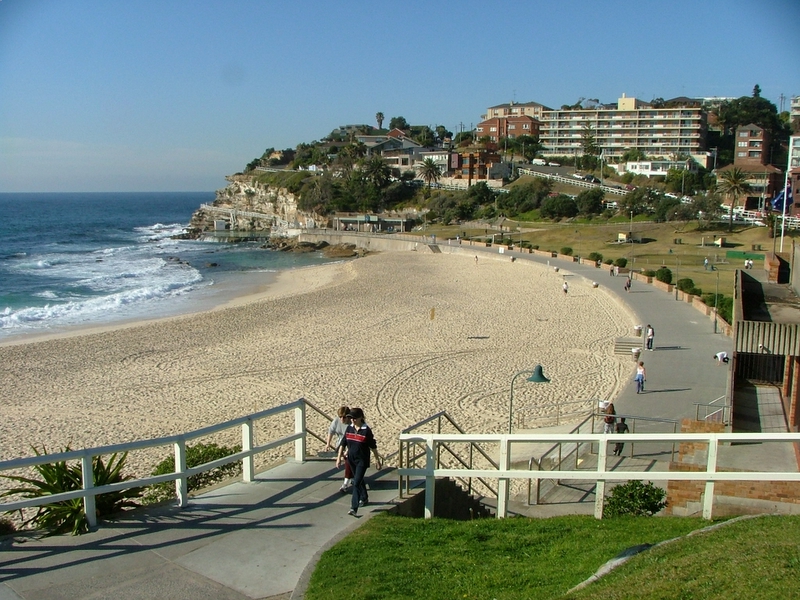
AUS Sydney, Waverley, Bronte Beach 006.jpg

New South Wales, AU

Bronte Beach

Bronte's surf club calls itself the world's oldest, founded 1903, but no primary record proves it; Bondi's 1907 founding is the earliest documented.

AUS Sydney, Waverley, Bronte Beach 006.jpg · <a href="//commons.wikimedia.org/wiki/User:-wuppertaler" title="User:-wuppertaler">-wuppertaler</a> · CC BY 4.0
Substrate
sand
Nearest airport
SYD · 10 km
I’m here for
Story

Bronte Beach is a short surf beach in the City of Waverley, in Sydney's eastern suburbs, about 7 kilometres east of the central business district and one headland south of Bondi. Sandstone cliffs box in roughly 250 metres of sand; a grassed park with Norfolk Island pines fills the gully behind it, and a 30-metre ocean pool, Bronte Baths, is cut into the rock at the southern end. The suburb is named for Horatio Nelson, made Duke of Bronte by the King of Naples in 1799; the bay was originally called Nelson Bay.

The beach's real distinction is a boast. The Bronte Surf Life Saving Club, whose clubhouse sits above the south end, dates itself to 1903 and describes itself as the oldest surf life saving club in the world. The trigger it points to is a death: on Boxing Day 1902 a bather named William Fox drowned at the beach's south end, and Waverley Council afterward bought lifesaving gear and formalised the volunteers who had been patrolling the surf.

The world-first claim is contested and has never been proven from primary records. In 2005 the historians of Surf Life Saving Australia reviewed the competing claims and found the earliest documented foundation to be the Bondi Surf Bathers' Life Saving Club, whose inaugural meeting is minuted for 21 February 1907. Bronte's case rests on a set of 1907 minutes describing a "fourth annual meeting" and on a 1931 affidavit, neither backed by surviving contemporaneous documents. The secondary histories do not even agree: one surf archive dates Bondi's club to February 1906 and Bronte's to May 1906, a third chronology again.

The water is genuinely serious. Bronte is an exposed beach with a strong, near-permanent rip on its southern side that local lifesavers call the Bronte Express; the swell averages about 1.3 metres and pushes past 2 metres in the autumn and winter months. Bronte Baths was built in 1887 by walling in a natural rock pool the colonists called the bogey hole, from an Aboriginal word for a bathing place. The pool's history includes its own near-disaster: during heavy seas in 1961, six children swimming in the bogey hole were washed into its outflow pipes and all six were rescued.

Behind the sand, the land was set aside early: the government approved the resumption of 14 acres for public recreation on 21 September 1886, creating Bronte Park, and the creek gully behind it was later named Ebsworth Glen after a family gift. At the northern end, near a stairway, a large sandstone cave sits in the cliff, a sheltered space that may have been used by the area's Aboriginal people. The beach itself is smaller than it once was: a promenade and sea wall built in 1914 narrowed it permanently.

The spike

Bronte's surf club calls itself the world's oldest, founded 1903, but no primary record proves it; Bondi's 1907 founding is the earliest documented.

Most beaches earn a page for something you can photograph. Bronte earns one for an argument. Painted on its clubhouse and printed on its letterhead are three words, "Since 1903," and behind them a much larger claim: that the Bronte Surf Life Saving Club is the oldest surf life saving club in the world. It is a genuine world-first title, in a sport Australia effectively invented, and it is one of the least-settled bragging rights in Australian sport. The singular thing about this short surf beach is not the sandstone cave or the ocean pool. It is that the club here has spent more than a century claiming to be first, and the sport's own historians have never been able to prove it.

The death that started a club. The story Bronte tells begins with a drowning. On Boxing Day 1902, a bather named William Fox drowned at the south end of the beach. In the aftermath Waverley Council bought lifesaving equipment and put the informal groups of volunteer bathers who had been pulling people from the surf onto a more official footing. Out of that, the club says, came the Bronte Surf Bathers' Life Saving Club in 1903, later renamed the Bronte Surf Life Saving Club. That much is the club's own account, and it is the foundation of everything painted on the wall.

What "1903" actually rests on. The problem is documentary. No incorporation record, no founding minute, no membership roll survives from 1903 to fix the date. Bronte's case is built on two later pieces of paper. The first is a set of minutes from 1907 that describe a meeting as the club's "fourth annual meeting," which, counted backwards, would place the first meeting around 1903 or 1904. The second is an affidavit made in 1931, reinforced by a time capsule placed under the old clubhouse on 7 February 1931, in which officers of the Surf Life Saving Association of Australia, president C. D. Patterson and honorary general secretary Donald D. McIntyre among them, signed a document stating that Bronte was first. A back-count and a sworn statement made three decades after the fact are the whole of the primary evidence.

Bondi's better paperwork. A kilometre north, Bondi makes the rival claim, and it makes it with cleaner records. The Bondi Surf Bathers' Life Saving Club dates its inaugural meeting to 21 February 1907, and that meeting is minuted. The wider surf-rescue story also leans Bondi's way in its early hardware: the surf reel, the line-and-drum rescue device that defined organised beach lifesaving, was first used on Bondi Beach on 23 December 1906, credited to Lyster Ormsby. Bondi does not claim to be the oldest in the world; it claims to be Australia's oldest, and it has the document to anchor the date it uses.

The ruling nobody at Bronte likes. In 2005 the historians of Surf Life Saving Australia went through the competing claims. Their finding was that the earliest proven and documented foundation was Bondi's, on 21 February 1907, on the strength of the surviving Waverley Library minutes. Manly and Bronte both claim to have come first, the review noted, but there are no primary sources for either. Bronte's claim in particular was traced to the 1931 affidavit and the "fourth annual meeting" minutes, and judged unverifiable. The governing body of the sport, in other words, could not certify its own reputed birthplace.

Even the secondary record disagrees. The dates do not settle when you widen the net; they scatter. One dedicated surf-history archive dates the Bondi club to February 1906 and Bronte to May 1906, three months apart and both a year off the numbers the clubs themselves use. So there are at least three competing chronologies in circulation: Bronte's 1903, the SLSA-certified Bondi 1907, and a secondary 1906-and-1906 that reverses the usual order of seniority. Where sources conflict this sharply, the honest position is that the founding year of organised surf lifesaving cannot be pinned to a single beach.

Why it can't be resolved. The reason is in the nature of the thing being dated. The first surf clubs were not incorporated bodies with charters and seals; they were loose associations of volunteer swimmers, some meeting in a tent in the dunes, keeping few records and losing most of what they kept. Whether Bronte or Bondi was "first" depends entirely on what you agree to count as a club, and no agreed definition existed at the time. The title is a retrospective prize awarded to a period that was not keeping score.

What the beach is regardless. Strip the plaque away and Bronte is still a working rescue beach with reason to have a lifesaving club. It is exposed, with a strong permanent rip on the south side that lifesavers call the Bronte Express, and its 30-metre ocean pool has its own rescue history. The volunteers who patrol it are the point; the founding year on the wall is the argument. Both are real, and only one of them can be verified.

Bronte Beach, 16-6-2018.jpg
Culture

Where it shows up

History
  • Horatio Nelson, Duke of Bronte · 1799

    The British admiral whose Sicilian dukedom, granted by the King of Naples in 1799, gives the beach and suburb their name. The bay had earlier been called Nelson Bay.

  • Bronte House · 1845
    Robert Lowe

    The 1845 clifftop villa that carried the Bronte name inland from the bay. Robert Lowe, later a British Chancellor of the Exchequer, built it above the beach.

Other
  • The bogey hole

    The natural rock pool at the south end that became Bronte Baths in 1887. The name comes from an Aboriginal word for a bathing or swimming place, and it survives in the naming of ocean pools along the New South Wales coast.

  • The Bronte Express

    The local name for the strong, near-permanent rip current that runs seaward along the southern rocks of the beach, and part of the reason Bronte has always been a patrolled beach.

Bronte Beach, north view 20230224 2.jpg
History

What happened here

  1. 1799cultural

    Nelson made Duke of Bronte

    The King of Naples makes Horatio Nelson the Duke of Bronte. The title later attaches to Robert Lowe's Sydney villa and, through it, to the bay that had been called Nelson Bay, giving the beach its name.

    Wikipedia →
  2. 1845founding

    Bronte House completed

    Robert Lowe, who had bought the land and foundations in 1843, completes Bronte House, a Gothic-and-Georgian villa above the bay. Its name spreads to the surrounding estate and the beach below.

  3. 1886policy

    Bronte Park resumed for public recreation

    The government approves the resumption of 14 acres (5.6 hectares) for public recreation on 21 September 1886, creating Bronte Park. Waverley Council is appointed trustee, and the gully behind the beach is later named Ebsworth Glen after a family gift.

  4. 1887founding

    Bronte Baths built

    A natural rock pool at the south end, the colonists' bogey hole, is walled in with a sea wall to form the 30-metre Bronte Baths ocean pool.

    Wikipedia →
  5. 1902natural

    William Fox drowns on Boxing Day

    A bather named William Fox drowns at the south end of the beach on Boxing Day 1902. Waverley Council afterward buys lifesaving equipment and formalises the volunteer bathers who had been patrolling the surf.

    Wikipedia →
  6. 1903founding

    Bronte club dates its founding

    The Bronte Surf Bathers' Life Saving Club, later the Bronte Surf Life Saving Club, is founded, by its own account, in 1903. The club uses this year to claim status as the oldest surf life saving club in the world, though no primary founding record survives.

    Wikipedia →
  7. 1907founding

    Bondi's documented founding meeting

    The Bondi Surf Bathers' Life Saving Club holds an inaugural meeting minuted for 21 February 1907. This is the date SLSA historians later certify as the earliest documented foundation of any surf life saving club, ahead of Bronte's undocumented 1903.

    Wikipedia →
  8. 1961natural

    Six children washed into the bogey hole pipes

    During heavy wave conditions in 1961, six children swimming in the bogey hole at Bronte Baths are washed back into the pool's outflow pipes. All six are rescued alive.

    Wikipedia →
  9. 2005other

    SLSA historians rule on the oldest-club dispute

    Surf Life Saving Australia's historians review the competing claims and find the earliest proven and documented foundation to be Bondi's, on 21 February 1907. Bronte's and Manly's claims to be first are recorded as unsupported by primary sources.

The honest part
“The club's proudest fact, that it is the world's oldest, is the one thing about the beach that cannot be proven.”

The uncomfortable part of Bronte's story is that its proudest fact is unproven. The club presents "the oldest surf life saving club in the world, since 1903" as settled history, on the clubhouse and in its own literature. It is not settled. When Surf Life Saving Australia's historians reviewed the competing claims in 2005, they found the earliest documented foundation belonged to Bondi, at a meeting minuted for 21 February 1907, and that Bronte's earlier date rested on a 1931 affidavit and a back-count from a 1907 "fourth annual meeting" minute, with no primary sources to confirm it. Manly makes a claim too, equally undocumented.

None of this is fraud, and none of it makes Bronte less of a real lifesaving beach. The early clubs were informal groups of volunteers who kept almost no records, and the exact year organised surf lifesaving began simply was not written down in a way that survived. The reasonable reading is not that Bronte is lying but that the question has no verifiable answer, and that a marketing certainty has been built on top of a genuine historical blank. The beach is honest about the water, which will drown you if you ignore the Bronte Express. It is less honest about the date on the wall.

Bronte Beach, north view 20230224 1.jpg
Anatomy

The shape of the place

Bronte Baths and the surf club

15%

The southern end, where the 30-metre Bronte Baths ocean pool is cut into the rock below the Bronte Surf Life Saving Club. This is the sheltered, pool-swimming end, and also where the Bronte Express rip runs out along the rocks.

Best for Lap swimming in the ocean pool and calmer water away from the open beach

The Baths were built in 1887 from a natural bogey hole; the strongest rip on the beach is on this side, not in the pool.

The main beach

50%

The central 250 metres of sand, patrolled in season and flagged for swimming away from the southern rip. The beach is exposed and picks up real surf, averaging around 1.3 metres and bigger in autumn and winter.

Best for Flagged swimming and bodysurfing when the flags are up

Swim between the red-and-yellow flags; the sandy area is smaller than it was before the 1914 promenade and sea wall.

Bronte Park and Ebsworth Glen

50%

The grassed park and creek gully behind the sand, planted with Norfolk Island pines and fitted with free public barbecues. This is the picnic and shade side of Bronte, resumed for public recreation in 1886.

Best for Picnics, barbecues, and shade off the open beach

The gully was named Ebsworth Glen after the family that gave the creek land to the council; the park fills on summer weekends.

The northern rocks and cave

85%

The northern end below the cliff, where a large sandstone cave sits near a stairway. The rock platform here runs out toward the headland and the coastal walk to Tamarama and Bondi.

Best for The sandstone cave, rock-platform walking, and the start of the cliff path north

The cave is thought to have been used by the area's Aboriginal people; the rock platform is exposed to swell and slippery.

Landmarks

Bronte Baths · 1887

pool

A 30-metre ocean pool at the beach's south end, formed in 1887 by walling in a natural rock pool the colonists called the bogey hole. It is one of the best-known of Sydney's ocean pools and is filled and flushed by the surf.

Wikipedia →

Bronte Surf Life Saving Club

building

The surf club above the south end of the beach, which dates itself to 1903 and claims to be the oldest surf life saving club in the world, a claim the sport's historians have not been able to document. Its volunteers patrol the beach in season.

Wikipedia →

Bronte House · 1845

building

The Gothic-and-Georgian villa completed by Robert Lowe in 1845 on the land above the bay. Its name, taken from Nelson's dukedom of Bronte, spread to the estate and then to the beach below.

A day here

From first light to dark

Dawn

Bronte fills early: ocean-pool swimmers work lengths in the Baths at the south end before the crowds, and runners take the cliff path toward Bondi and Tamarama. On an exposed beach facing roughly east, first light comes straight off the water, and the rip on the south side is already running.

Midday

By late morning in summer the park behind the sand is full, its free electric barbecues smoking and the Norfolk pines throwing the only real shade on an otherwise open beach. Lifesavers set the red-and-yellow flags away from the Bronte Express; the surf sits around a metre and swimmers are funnelled into the safe corridor.

Golden hour

Late afternoon empties the sand slowly as the light warms the sandstone headlands. The Baths at the south end hold their swimmers longest, and the coastal walk carries a steady line of walkers along the cliff tops above the beach.

Night

After dark the beach is unpatrolled and the flags are down, and the water should be left alone. The park stays lit and used, the café strip across Bronte Road keeps its lights on, and the surf keeps working the southern rocks in the dark.

Bronte Beach afternoon.jpg
Sea & surf

What the water does

JFMAMJJASONDmetres (significant wave height)

Solid = typical monthly wave height; pale = the bigger days (90th pct). Offshore/regional swell from Open-Meteo Marine (ERA5 Ocean reanalysis, 2023–2024); a sheltered cove may sit calmer than this.

Exposed — real surf, and rip current to respect
Typical wave height
1.32 m
Biggest swell
May · 1.54 m
Calmest
Aug · 1.06 m
Typical period
9.3 s (groundswell)
Before you go

Things to know

Respect the Bronte Express

The beach has a strong, near-permanent rip on its southern side. Swim between the red-and-yellow flags and only when the beach is patrolled; the water looks calmest exactly where the rip pulls out.

The pool is the safe option

Bronte Baths, the 30-metre ocean pool at the south end, is the calmer place to swim when the surf is up, though it is flushed by the sea and can be washed over in big swell.

The 'oldest club' claim is unproven

The surf club presents itself as the world's oldest, founded 1903, but SLSA historians found the earliest documented founding to be Bondi's, on 21 February 1907. Treat the date on the wall as a claim, not a settled fact.

Park behind, not on, the beach

Bronte Park has free public barbecues and shade under Norfolk pines. Street parking around the beach fills early on sunny summer weekends; buses from the city and Bondi Junction are the easier approach.

Surf & rip

Powerful water — strongest around May, gentlest in Aug. Mind rip currents; this isn't a wade-in-anywhere beach.

Sharks

No incidents on record in the global shark-attack file.

Plan

If you go

Getting there
Nearest airport
Sydney Kingsford Smith International Airport (SYD) · 10 km
Nearest town
Bronte · 0 km

Bronte Beach is about 7 km east of central Sydney and roughly 9.7 km by road from Sydney Kingsford Smith Airport (SYD). There is no train to the beach; the usual approach is a Sydney bus from the city or, more quickly, a train to Bondi Junction and a connecting bus down to Bronte. Street parking around Bronte Park fills early on summer weekends.

When to go
  • Summer beach patrols · Weekends and public holidays, roughly late September to April

    Volunteer lifesavers from the Bronte Surf Life Saving Club patrol the beach and set the red-and-yellow swimming flags away from the Bronte Express through the Australian patrol season. Outside those hours and dates the beach is unpatrolled.

  • Nippers · Sunday mornings in summer

    The club's junior program teaches children surf-safety and beach skills on Sunday mornings through the summer, one of the largest such programs on the eastern beaches.

What to eat & drink
Flat white and long black

Sydney's eastern-suburbs café culture is dense at Bronte, and the coffee is the local ritual. The cafés sit across Bronte Road and along Macpherson Street rather than on the sand itself, and open early for the swim-and-coffee crowd.

The café strip on Bronte Road and Macpherson Street, a short walk up from the beach

The sausage sizzle

Bronte Park has free public electric and gas barbecues, and the do-it-yourself sausage-in-bread cook-up is the standard Australian park meal here on weekends, done on the grass under the Norfolk pines behind the sand.

Bronte Park, the grassed gully directly behind the beach

Fish and chips

The beach-kiosk and takeaway staple of the New South Wales coast, eaten on the park grass or the sea wall. It is takeaway food from the shops behind the beach, not a sit-down meal on the sand.

Takeaway shops on Bronte Road, eaten at Bronte Park or the promenade

Sources & references
  1. Dictionary of Sydney; Wikipedia: Bronte Beach · cited 4×
  2. Wikipedia: Bronte Beach · cited 4×
  3. Dictionary of Sydney · cited 3×
  4. Bronte Surf Life Saving Club; Wikipedia: Bronte Surf Lifesaving Club
  5. Wikipedia: Bondi Surf Bathers' Life Saving Club
  6. SLSA review 2005; Bronte Surf Life Saving Club
  7. Bronte Surf Life Saving Club; Wikipedia: Bronte Beach
  8. SLSA review 2005; Wikipedia: Bondi Surf Bathers' Life Saving Club
  9. Open-Meteo Marine (ERA5 reanalysis, 2023-2024)
Colophon · Provenance

Where this page comes from

Geography, facilities
OpenStreetMap (ODbL) for geometry and facility tags within 500 m of the beach centroid. GeoNames for city/airport distances.
Climate & ocean
Open-Meteo ERA5 + Marine archive, 2014–2023 monthly normals.
Photography
Archival, original tone (Tier B — Wikimedia Commons). Each image licensed per its own terms; attribution visible inline.
History & culture
Every factual claim is linked to its source in the prose above. Wikipedia citations inline. Non-wiki sources named where relevant.
Editorial voice
Register: wry. Written to pass a local's nod test; corrections welcome.
Written by Erin Rose
Last reviewed 2026-04-19
v0.9 — in editorial development toward v1.0