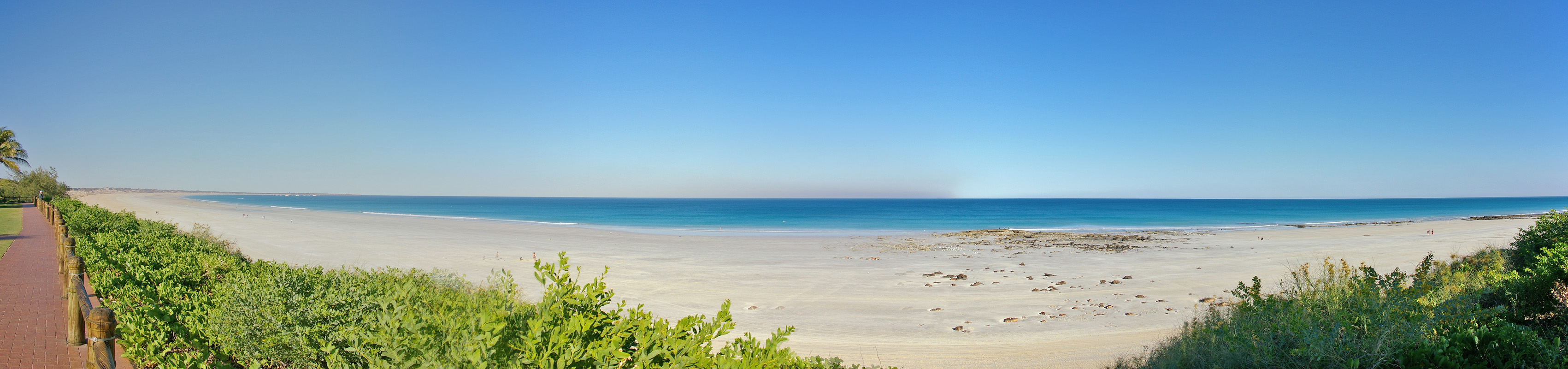
Cable Beach's clothes-optional strip is the kind of local institution that survives by staying out of the brochure. Since the 1960s, naturists have gathered on the section known as "north of the rocks," north of the beach access road from the car park, to sunbake, fish and swim in the nude. Wikipedia calls it one of Australia's most famous nudist beaches, and for decades it operated on an understanding as old as the practice itself: a quiet stretch of sand, self-selecting company, and no one making a fuss about it either way.
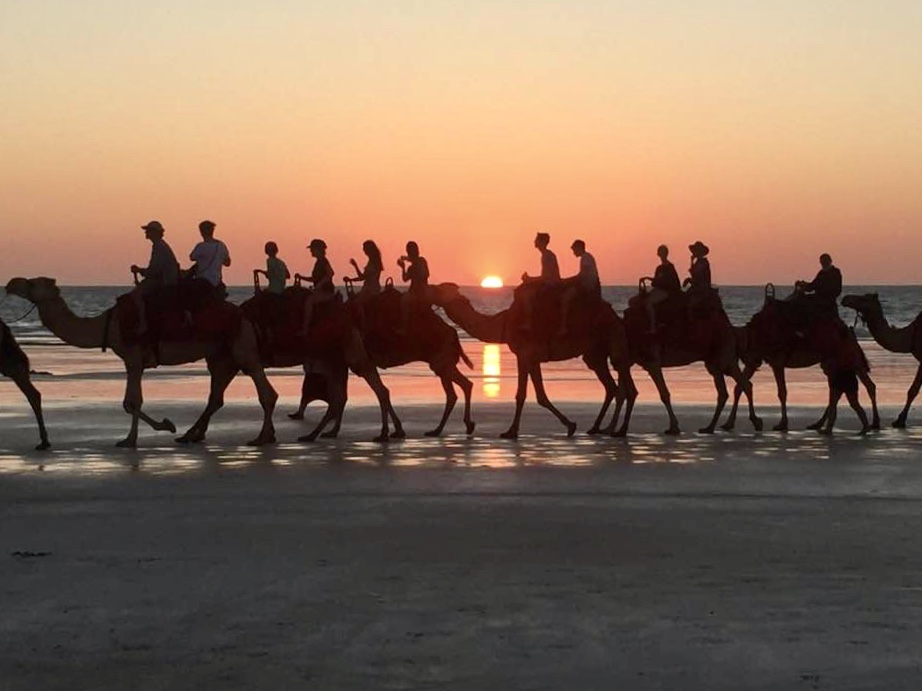
That understanding has been getting harder to keep. The same stretch of coast that made "north of the rocks" attractive to naturists — remote, wide, unpatrolled by the standards of a city beach — is also the stretch that Broome's tourism industry built its signature product on. Camel rides are available around sunrise and sunset, the hours when the light is best and the crowds are thickest, and as of 2016 Broome's three camel tour companies operated within the same 100-metre stretch as the clothing-optional section; today only two, Red Sun Camels and Broome Camel Safaris, remain. That is not a coincidence of geography so much as a collision of two different uses for the same narrow band of sand, one that predates the other by decades and has no formal priority over it.
The numbers tell the rest of the story. A 2016 ABC News report on the state of naturism in Australia found that the once-crowded strip had thinned out substantially: one longtime regular said plainly that only three or four people still came down on any given day. That is a steep drop from a tradition that, by its own account, once drew enough people to be considered a fixture of Broome life rather than a curiosity. The report frames the cause as generational and cultural — nudism's popularity fading nationally, not just at Cable Beach — but the camel operation detail complicates that reading. It is one thing for a practice to quietly go out of fashion. It is another for it to be sharing its remaining ground, literally every day, with a tour product built to move as many paying customers as possible past the same spot, "meaning there are hundreds more sets of peering eyes moving slowly past," in the ABC's own phrasing.
Neither side is cast as the villain in the source material, and the page will not invent one. The camel operators are running a legitimate, long-running Broome business on a public beach; nothing in the record suggests they chose their route to displace anyone. The naturists have no more formal claim to "north of the rocks" than anyone else does — there is no bylaw carving out the strip for clothes-optional use, just custom. What the record does support is the shape of the pressure: a small, aging group of regulars, holding onto a specific patch of a specific beach, watching the exact same patch absorb more foot and hoof traffic every season as Broome's tourism economy grows around it. Nothing in the sources suggests the arrangement is protected or permanent.
It is also worth being honest about what is not known. There is no post-2016 count of how many naturists still use the strip, no indication of whether the three-or-four figure has held, grown, or gone to zero in the years since, and no record of any formal move — by the Shire of Broome or anyone else — to protect or restrict the area either way. The 2025 closure of the beach's vehicle ramp for a foreshore redevelopment, and the accompanying rule that pedestrian access to "north of the rocks" and the camels now runs through the surf club gate rather than a car park at the site, changes how everyone reaches that stretch of sand, naturists included, but nothing in the source material connects that infrastructure project to the naturist story directly. It is a separate pressure on the same geography, arriving at the same time, and it is one more way the beach that once required almost no infrastructure at all is now being actively managed, gated, and rerouted around its visitors.
What makes this a genuine spike rather than a curiosity is the contrast it sits inside: Cable Beach is marketed, correctly, as a photogenic, camel-ride, sunset-postcard destination, and it is also, quietly and without much fanfare, the site of one of the country's most enduring nudist traditions — a tradition that, by its own participants' account, is now down to a handful of people sharing their strip of sand with the very tourism machine that made the beach famous in the first place.