Elliot's Beach is the rare urban beach whose entire identity is built around a single act of self-sacrifice, a small white monument, and the gap between how a place feels and what it actually is. To understand Bessie you have to hold three things at once: the calm that draws people, the death that the beach memorialises, and the deaths it still causes.
The memorial, and the argument about who it commemorates. Near the shore stands an obelisk to Kaj Schmidt, who drowned on 30 December 1930 while trying to save others caught in the surf. The inscription is plain and exact: "To commemorate the gallantry of Kaj Schmidt who was drowned near this spot on December 30, 1930 while helping to save the lives of others." The widely repeated story is that Schmidt went in after an English girl struggling against the tide, got her out, and lost his own life doing it; the girl reportedly attended a party the next evening as if nothing had happened, and the then-governor of Madras, said to be angered by her indifference, ordered the memorial built. That account is told consistently across local histories, though no single contemporary source names the governor.
There is a genuine factual dispute worth stating plainly: many older accounts call Schmidt a Dutch sailor. More recent research, including engagement from the Danish side, identifies him as Danish, with his fuller name given as Kaj Erik Gjolstad Schmidt, and questions whether he was a sailor at all. The sources conflict. Calling him simply "a Dutch sailor" repeats the older version; the better-supported reading is that he was Danish. Either way, the load-bearing facts are the same: a foreigner died here saving a stranger, and the city decided that was worth a monument. The obelisk fell into disrepair over the decades, and a restoration effort began in 2013 after a local resident pushed the city corporation to act, with technical work involving IIT Madras.
The calm is real but partial. Bessie's draw is that it is gentler than the long, exposed Marina to the north. The wave record supports that as a tendency, not a promise. The annual mean wave height is about 0.94 m. February is the calmest month at roughly 0.69 m; the water is at its most swimmable in the cool, dry first quarter of the year. December is the liveliest at about 1.33 m, with a peak big-day reading of 1.74 m, and the northeast-monsoon months from October to December bring both the year's heaviest rain (November alone averages around 346 mm) and the bigger swells. The tides are mixed and modest, with a spring range under a metre, so tidal currents are not the headline hazard. Rip and undertow are. The number that should sit in any honest description is this: in 2010, eleven drownings were reported off this beach. The municipal response was not signage alone but all-terrain-vehicle patrols by police, with additional vehicles sanctioned in 2012. A beach that needs ATV lifeguard patrols is not a placid swimming pool, however calm it photographs.
The water you are standing in. The uncomfortable truth about south Chennai's coast is sewage. The Buckingham Canal, the old colonial-era navigation channel that runs parallel to the coast, now carries a large share of the city's untreated wastewater; reporting on Chennai's drainage has put the canal's share of the untreated sewage surplus at roughly 60 percent, and decades of encroachment have narrowed it and blocked the outfalls that once let tides flush the estuaries. The visible consequence further up the same coast is periodic toxic foam at Marina Beach. The point is not that Elliot's Beach is uniquely filthy; it is that this is a working city's shoreline downstream of a failing drainage system, and the Bay of Bengal here is not water you should swallow.
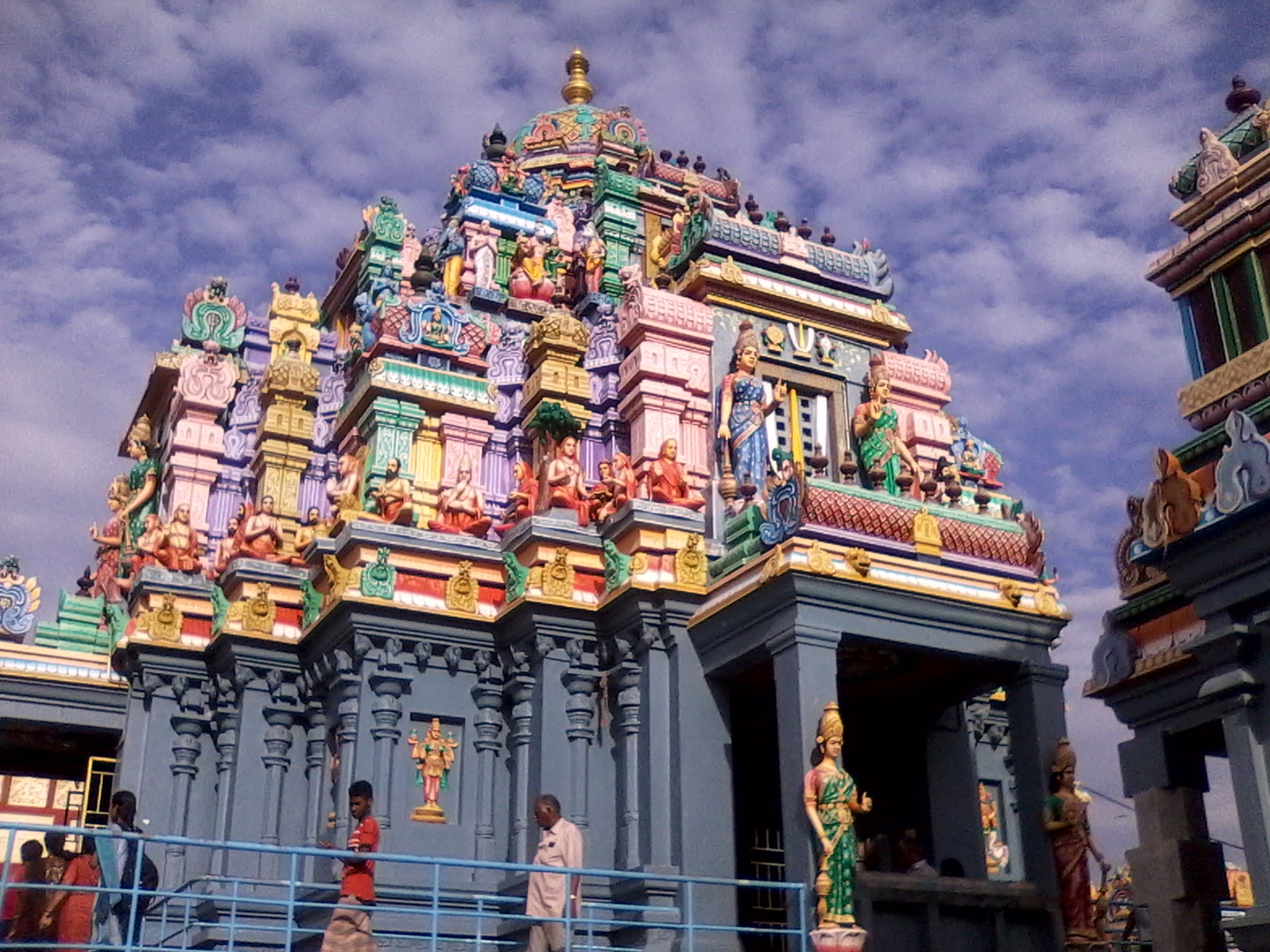
Why people come anyway, and why that matters. What makes Bessie singular is not scenery; it is function. After independence the beach became the default release valve for a dense residential quarter, and it still is. The promenade is an open-air food street: idli and dosa from neighbourhood institutions, sundal (spiced chickpeas) sold by the cone, roasted corn, fried fish, and the molaga (chilli) bajji that the beach is locally known for. Besant Nagar's cafe culture grew up behind it. Two religious anchors bracket the same stretch of sand within a short walk of each other: the Annai Velankanni Shrine, a 1970s Catholic church built as a Chennai stand-in for the great Velankanni basilica at Nagapattinam, and the Ashtalakshmi Temple, consecrated in 1976, its eight shrines to the forms of Lakshmi stacked in a modern multi-level plan so pilgrims circulate without re-entering a sanctum. A drowning memorial, a Marian shrine, a Lakshmi temple, and a chilli-fritter stall, all on the same kilometre of sand: that compression of grief, faith, and ordinary evening pleasure is the thing Elliot's Beach actually offers. It is not pretty in the postcard sense. It is dense, used, and human, and it rewards being read rather than merely looked at.