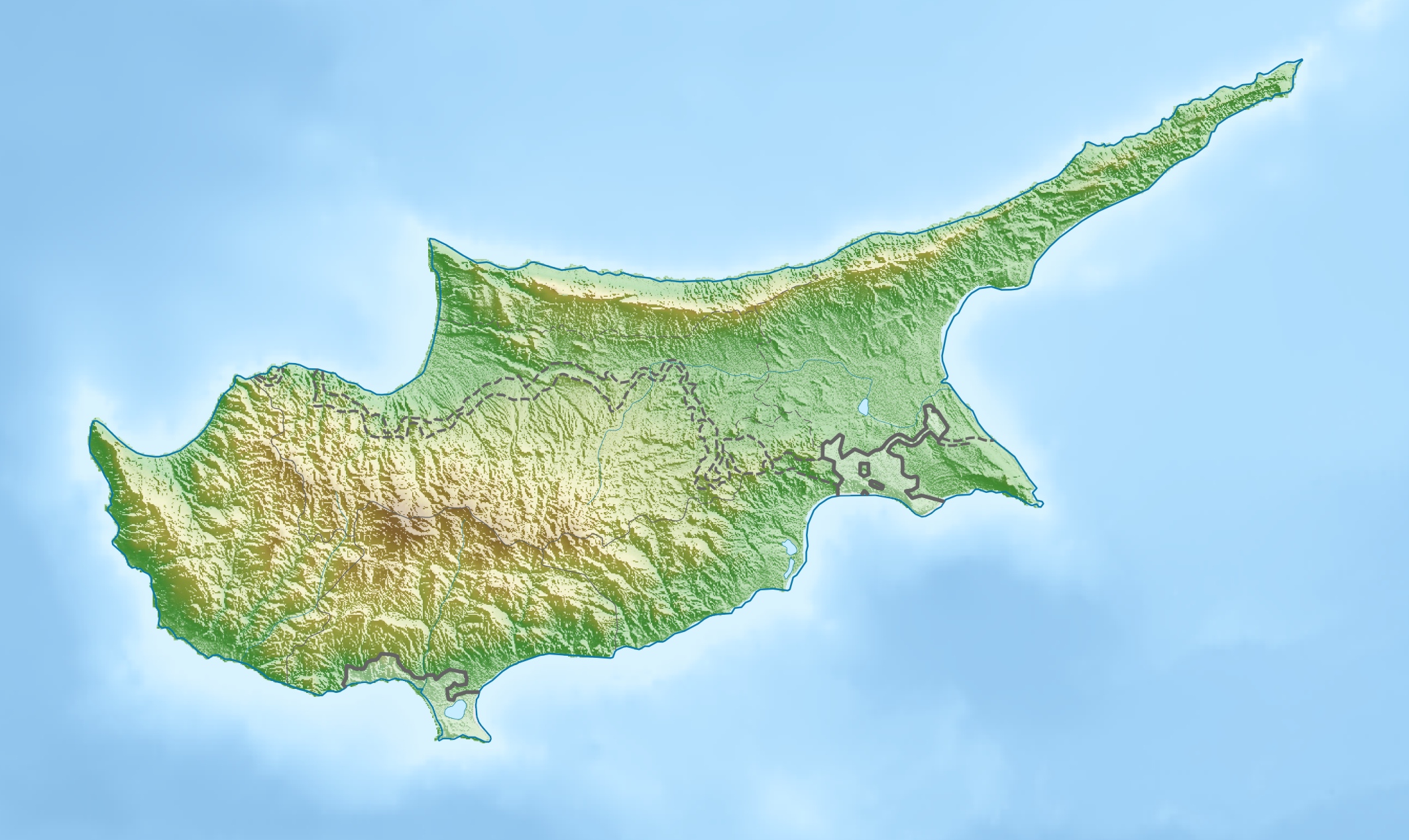
Fig Tree Bay is a 500-metre crescent of pale gold sand at Protaras, in the Paralimni municipality of the Ammochostos (Famagusta) district on the eastern coast of the Republic of Cyprus. It takes its name from the fig trees that grow along the coast behind it, not from a single tree. The bay is sheltered and its water shallow and clear; a small uninhabited islet, covered in low scrub, sits close enough that swimmers wade and paddle out to it. The waves are modest, an annual mean near 0.67 metres and biggest in January.
What made Fig Tree Bay a name outside Cyprus was a ranking. In 2011 TripAdvisor placed it third among European beaches in its Travellers' Choice awards. It slipped to 13th by 2013, then reappeared on a European top-19 list for 2026 as the only Cypriot beach on it. The 2011 result arrived as Protaras was building out, and it became a marketing line the resort strip has leaned on ever since.
Protaras is a resort because of 1974. When Turkish forces took Famagusta that August, the modernist hotel corridor of Varosha was evacuated and sealed, and its Greek Cypriot population fled inland to Paralimni and Deryneia. In the decades after, the tourism Varosha had built moved down the surviving coast to Protaras and Ayia Napa. The wall of hotels, apartments, and tavernas behind Fig Tree Bay is the second act of a resort industry that lost its first stage a few kilometres north.
The beach itself needs upkeep to stay the beach in the photographs. In 2018 the Paralimni municipality pumped sand onto the shoreline to counter erosion, one round in the maintenance a heavily used, engineered tourist bay requires. Lifeguards work the sand from 9am to 6pm, April to October, and the bay carries Blue Flag certification for water quality and management.
Under the coastal path is something much older. In May 2010, workers cutting a new pedestrian walkway uncovered an un-looted tomb roughly 2,400 years old, from around 300 BC, holding four sarcophagi with painted floral lids, human bones, glass, and pottery. The Department of Antiquities called it valuable precisely because raiders had never reached it, and read it as a sign of a larger buried cemetery.
Stand on the sand and all of it is in one frame: shallow turquoise water and the islet in front, the packed resort strip behind, replenished sand underfoot, a Hellenistic grave a few metres inland. Fig Tree Bay is family-safe and genuinely pretty, and it is also a maintained product of a ranking, a war, and a coastline that keeps trying to wash away.