A range built for a war Wales didn't fight. Castlemartin Training Area was carved out of farmland and the remains of the Cawdor Estate in 1938, a year before the war it was arguably built for. The Royal Armoured Corps used it for tank gunnery, the ranges went quiet soon after 1945, and it reopened in 1951 when the Korean War revived demand for tank-training ground. None of that is unusual for a British range with a twentieth-century pedigree. What happened next is.
Why West Germany's tanks ended up on a Welsh beach. In 1961, six years after West Germany joined NATO and rebuilt an army from nothing, the Bundeswehr had a problem: nowhere in the northern part of the country large enough to run live tank gunnery at scale. The British Army of the Rhine, stationed in West Germany, couldn't absorb the demand on its own UK ranges either. So NATO brokered an agreement in Paris: the newly reactivated German tank units could use Castlemartin's roughly 6,000-acre range on the Pembrokeshire coast. From May 1961, German soldiers were firing live tank rounds a few hundred metres from a beach that, decades later, tourists would associate almost exclusively with a fictional house-elf's grave.
Thirty-five years, then reunification ended it. The arrangement wasn't a one-off exercise. It ran continuously until October 1996 — 35 years, longer than the Berlin Wall stood. It ended for a specific, almost bureaucratic reason: German reunification in 1990 eventually handed the united Bundeswehr access to ranges in the former East Germany, and by 1996 Castlemartin was no longer necessary. A Cold War training relationship that started because northern West Germany lacked suitable tank-gunnery ranges closed because East Germany, six years after it stopped existing as a separate state, finally supplied the missing acreage.
"44 weeks a year" is not a rounding error. Castlemartin is still active. The British Army treats it as the country's only range generally available for large-scale live-fire gunnery and manoeuvre training, and it runs roughly 44 weeks out of 52. When it is live, the exclusion zone offshore extends anywhere from 3 to 12 nautical miles depending on the ammunition in use — a hazard radius large enough, at its widest, to reach past Freshwater West itself and out into the swell surfers are there to ride. The Pembrokeshire Coast Path, which would otherwise run along this stretch of cliff, has been permanently rerouted inland around the range; in 2011 the Ministry of Defence opened a dedicated diversionary route so walkers no longer had to negotiate the narrow country roads with fast-moving traffic that the previous route required.
The deaths are real, and they didn't happen on the beach — they happened feet away. It would be easy to treat Castlemartin as historical trivia, a Cold War footnote that no longer matters day to day. It isn't. Three soldiers have died there in the twenty-first century: Ranger Michael Maguire of the Royal Irish Regiment, killed by a stray round in May 2012; two Royal Tank Regiment crew members killed in June 2017 when an incompletely fitted tank part let hot gas ignite weapon charges; and Sergeant Gavin Hillier of the Welsh Guards, killed during a live-firing exercise in March 2021. None of these deaths happened on Freshwater West's sand. All of them happened on the range that shares a boundary with it, close enough that the beach's own safety notices and coast-path diversions exist because of it.
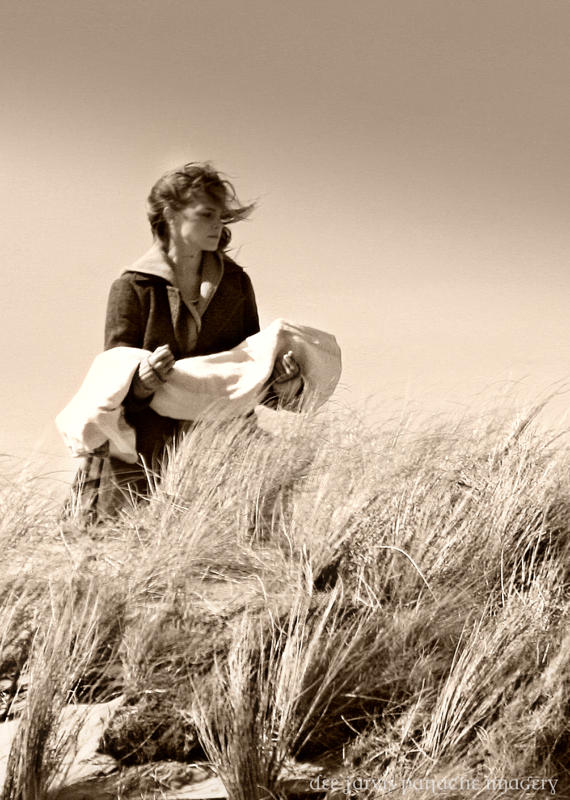
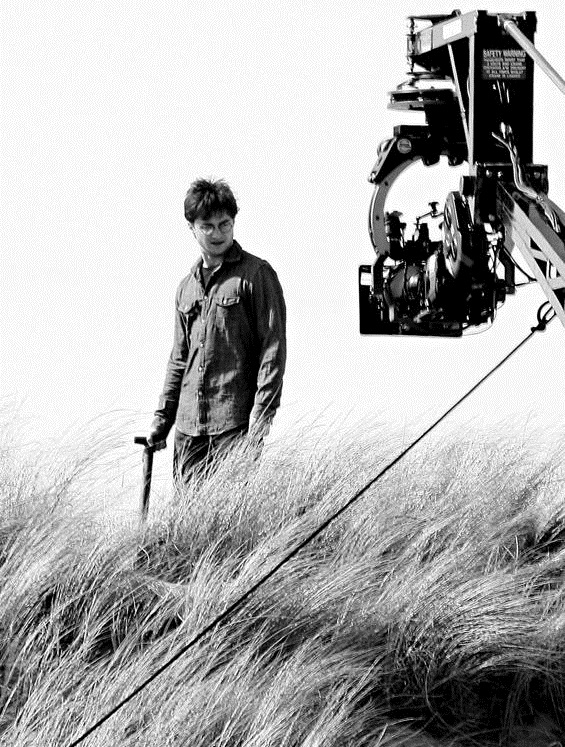
Two production crews used the quiet side of that boundary. The same isolation that made Castlemartin useful to the military — remote, sparsely populated, hard to overlook — is what made Freshwater West useful to film crews who wanted an empty coastline. Ridley Scott's Robin Hood shot its beach battle here in June and July 2009 with over 600 extras and 150 horses on the sand, depicting the French invasion of southern England. That same year, Warner Bros. built a temporary cottage in the dunes for Harry Potter and the Deathly Hallows – Part 1, the set for Dobby's death and burial. The cottage was fully dismantled once filming wrapped — no part of the set survives on site. The grave visitors find today is a fan-made memorial erected at the filming spot, not a remnant of the production. On 1 November 2022 the National Trust for Wales announced the memorial could remain in the immediate term, with a standing request that visitors take only photographs and leave no painted pebbles or socks.
What "layered" actually means at this beach. Freshwater West's identity isn't one story stacked on an otherwise blank beach — it's several unrelated institutions that happened to want the same isolated stretch of Pembrokeshire coast for different reasons. The Ministry of Defence wanted emptiness to fire tank rounds into. NATO wanted a substitute for ranges West Germany didn't have. A film production wanted emptiness to fake a fictional coastline, twice, in the same summer. Surfers want the swell that the same exposure to open Atlantic produces, consistent enough to host a national championship. None of these uses cancels out the others, and none of them fully explains the beach without the rest. A visitor standing on the sand today is standing somewhere that was, within living memory, licensed to a foreign army's live ammunition for longer than most Cold War alliances lasted, and that is still licensed to live ammunition roughly forty-four weeks of every year.