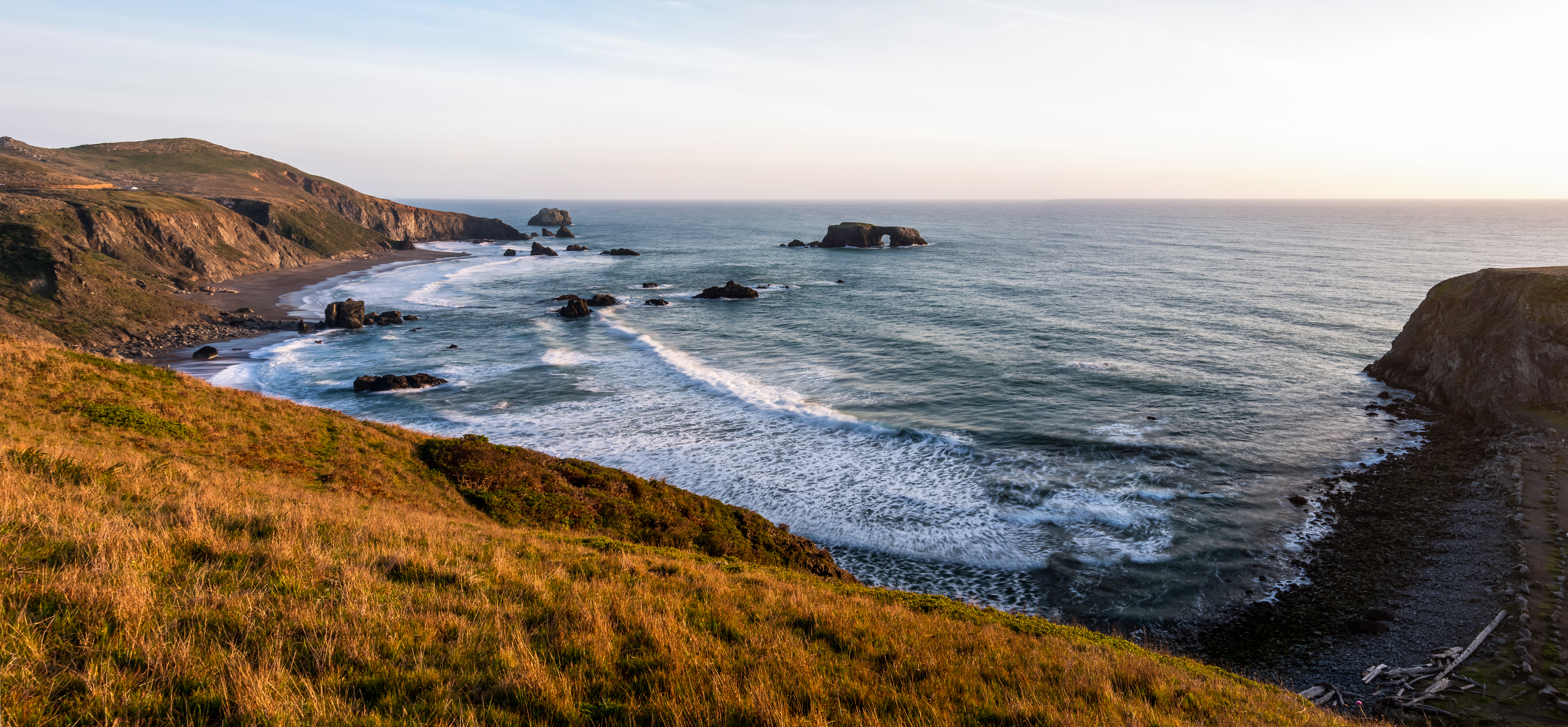
Goat Rock Beach killed people for more than a decade before it had a single lifeguard.
The pattern before 2018. In 2003, a sneaker wave swept a 3-year-old girl away as she walked with her grandmother at Goat Rock Beach. In 2015, a kayaker drowned there in high surf. In 2016 alone, Sonoma County news coverage documented three more drownings, including a 75-year-old woman swept away while carrying flowers to memorialize her own late son. On Feb. 26, 2016, lifeguard Aaron Pendergraft rescued a 7-year-old girl and her mother after a sneaker wave dragged them out to sea, and was hospitalized afterward for hypothermia. There was, at that point, still no permanent lifeguard tower at Goat Rock Beach, only the occasional presence of a rescuer like Pendergraft.
The day that finally changed it. On Dec. 17, 2017, a father and his 6-year-old son were swept out to sea by an undertow while the boy played in shallow water. Both bodies were recovered roughly an hour later. Five months after that, in May 2018, Goat Rock Beach became the first beach on the Sonoma coast to get a lifeguard tower.
Why the beach is dangerous in the first place. The hazard is not exotic. Swimming is strictly prohibited at Goat Rock Beach because of rip currents and sneaker waves, sudden surges that can arrive without warning far beyond the apparent waterline. Along the Bay Area coast, including at Goat Rock, sneaker waves are most likely to strike between December and February, though the season can start as early as September and run through April — which means the risk window covers most of the year, not just the depths of winter. The beach's own vehicle gate periodically closes to traffic during dangerous ocean conditions, though pedestrians can still walk in while it is closed, which does nothing to stop someone already on the sand from wading toward the water.
The tension. Goat Rock Beach was, by 2016, already one of the most-visited beaches in Sonoma County — voters in a Metroactive readers' poll ranked it the county's second-most-popular beach. It had also, by then, appeared on film as the Goonies' "Cauldron Point" and drawn generations of picnickers, photographers and seal-watchers. Popularity and hazard rose together for years, and the response — a staffed lifeguard tower — arrived only after a child and his father were among the dead. A beach does not need a rare or unknown danger to go unguarded for that long; it can be a famous one, visited by thousands, and still take that many years and that many bodies before anyone puts a person in a tower to watch the water.
What the tower did and did not fix. A lifeguard tower changes what happens after someone gets into trouble in the water; it does not change the water. Goat Rock Beach's currents, its sneaker waves and its gate closures are the same hazards they were before 2018. The tower means a trained person is more likely to be watching, and more likely to reach someone in time, during the season the beach is staffed. It does not mean the beach became safe to swim in, and it is not staffed at every hour visitors are free to walk onto the sand. The prohibition on swimming did not change either: it was in place before the tower and remains in place after it, which is itself a signal about how much a single tower can do against conditions this beach has never controlled.
What a rescue actually looks like here. Pendergraft's 2016 rescue is worth sitting with, because it shows what "sneaker wave" means in practice rather than as a warning label. A wave large enough to drag a 7-year-old and her mother out to sea arrived on a day that, from the parking lot, would not have looked unusual. The lifeguard who reached them was hospitalized afterward for hypothermia -- the water itself, not just the current, is cold enough to become its own hazard for the rescuer as well as the swimmer. That is the version of this beach that a sign reading "no swimming" is trying, imperfectly, to compress into two words.
The years the tower did not cover. It is also worth being precise about what May 2018 did not undo. The people who drowned in 2003, 2015, 2016 and 2017 did not have a lifeguard tower to look up and see. Whatever the tower prevents from this point forward, it prevented nothing before it existed, and nothing about its installation explains why a beach this visited went so long without one. The honest reading is not that Goat Rock Beach became safe in 2018; it is that a threshold of visible deaths was finally judged high enough to justify a tower that the beach's popularity and its hazard record could have justified years, or a decade, earlier.