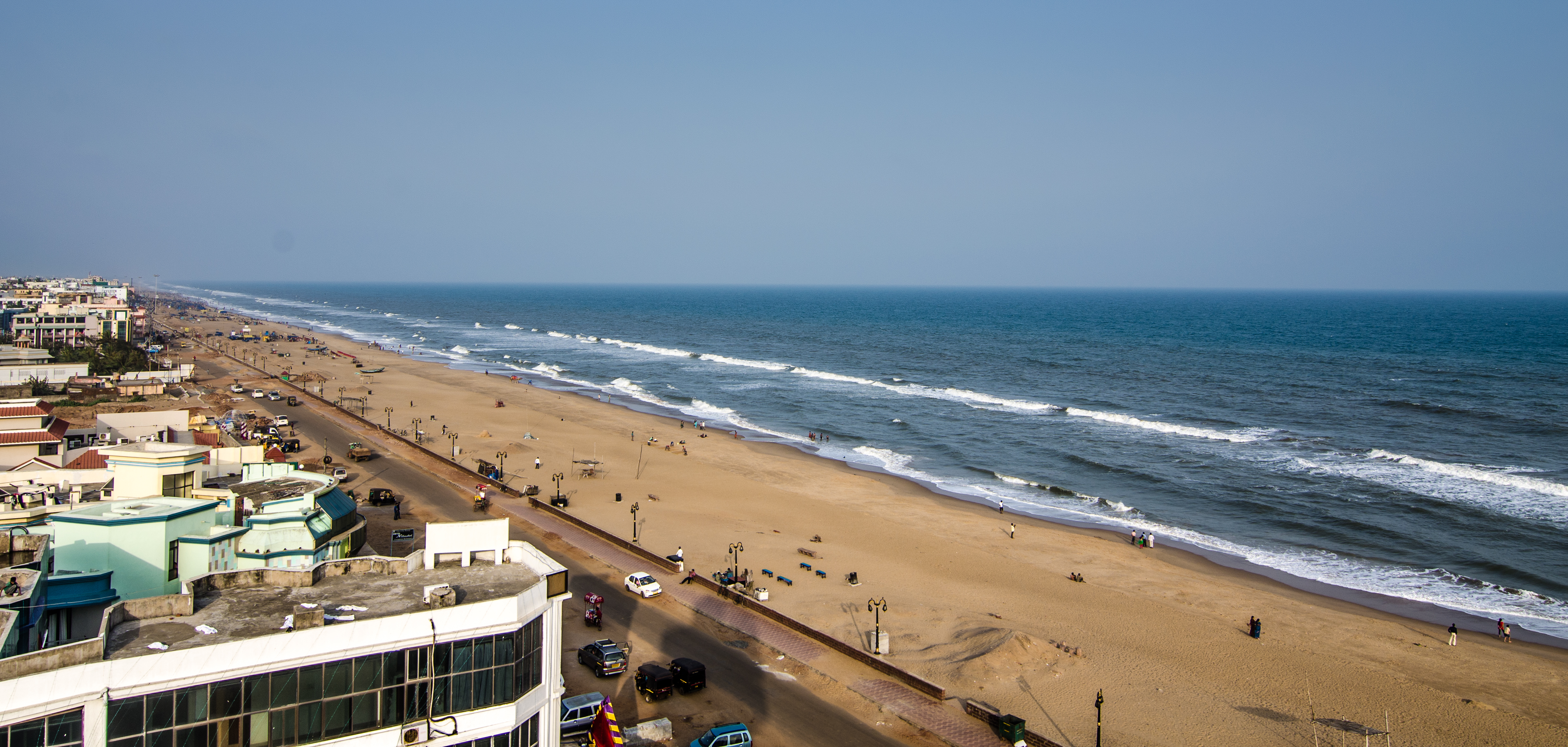
Odisha, IN

Golden Beach, Puri

At Puri beach 05.jpg

Odisha, IN

Golden Beach, Puri

One of India's first Blue Flag beaches, in the sacred Char Dham city of Puri, watched over by a century-old line of Nulia fishermen-lifeguards in conical white hats.

At Puri beach 05.jpg · <a href="//commons.wikimedia.org/wiki/User:Kritzolina" title="User:Kritzolina">Kritzolina</a> · CC BY-SA 4.0
Length
400 m
Nearest airport
BBI · 51 km
Tier
Featured
I’m here for
Story

Golden Beach is the sea beach of Puri, on the Bay of Bengal in the Indian state of Odisha, and in October 2020 it became one of the first beaches in India to fly the international Blue Flag. But the certification is the least of what the beach is. Puri is a sacred city, one of the four Char Dham, the cardinal pilgrimage sites of Hinduism, and for the millions who come here the beach is not a holiday destination but part of the pilgrimage itself: a ritual sea-bathe in the Bay of Bengal before or after the darshan of Lord Jagannath.

The city is built around the 12th-century Jagannath Temple, and the beach lives in its gravity. Each year in the monsoon month of Ashadha the temple stages the Rath Yatra, when the deities Jagannath, Balabhadra, and Subhadra are pulled along the Grand Road to the Gundicha Temple on enormous wooden chariots, Jagannath's car standing some 14 meters high, rebuilt from scratch every year and hauled by crowds of devotees. The English word juggernaut, an unstoppable crushing force, comes directly from those chariots and the throngs around them. The beach absorbs the overflow of all of it.

Watching over the water is one of the most distinctive institutions on any beach in the world: the Nulia. The Nulias are hereditary fishermen who have served as the beach's lifeguards since the British period, more than a century, recognizable by their tall conical white hats. Today over 450 of them work the Puri coast under a lifeguard federation, and they are not ornamental. The Bay of Bengal here runs strong rip currents, the bathers are often inland pilgrims who cannot swim, and the Nulias pull people from the undertow constantly, scores in a single busy week.

The beach also has an artist. Sudarsan Pattnaik, the internationally awarded sand sculptor who was given the Padma Shri in 2014, is based at Puri, where he runs a sand-art school and where his sculptures and an international sand-art festival have made the tideline a gallery. Alongside the annual Puri Beach Festival, co-sponsored by the national tourism ministry, the sand becomes a stage for a few weeks each year.

What Golden Beach is, then, is several beaches at once: a certified, blue-flagged tourist strand; the ritual shoreline of a pilgrimage city of immense antiquity; a working fishing coast; and a dangerous swim guarded by a caste of fishermen in conical hats. The Blue Flag flies over all of it, and over a stretch of sea that, certification notwithstanding, has to be watched every single day.

The spike

One of India's first Blue Flag beaches, in the sacred Char Dham city of Puri, watched over by a century-old line of Nulia fishermen-lifeguards in conical white hats.

Golden Beach at Puri is easy to file under one label and wrong every time. It is a Blue Flag beach, one of the first in India, awarded the international eco-certification on 11 October 2020. It is a Hindu sacred shoreline, the sea-edge of one of the four holiest cities in the religion. It is a working fishing coast. And it is a dangerous swim guarded by a hereditary caste of lifeguards in conical hats. All of these are true at once, and the interesting thing about Puri is how they sit on top of each other.

The sacred city first. Puri is one of the Char Dham, the four cardinal pilgrimage sites of Hinduism, and it is built around the 12th-century Jagannath Temple. For the pilgrims who pour into the city, and there are millions, the beach is not recreation; a dip in the Bay of Bengal is part of the religious act of coming to Puri. The city's defining event is the Rath Yatra, held each year in the monsoon month of Ashadha, when the deities Jagannath, Balabhadra, and Subhadra are brought out and hauled along the Grand Road to the Gundicha Temple on colossal wooden chariots, Jagannath's car alone standing around 14 meters high and rebuilt from scratch every year. The English word 'juggernaut' comes straight from this: from Jagannath, and from the unstoppable mass of the chariots and the crowds. The beach is downstream of all that human pressure.

The Nulias. Standing between the pilgrims and the sea is one of the most distinctive institutions on any beach in the world. The Nulias are hereditary fishermen who have served as the Puri shore's lifeguards since the British period, more than a century, marked out by their tall conical white hats. Over 450 of them now work the coast under a lifeguard federation, covering the hotel stretches and the Blue Flag zone alike. They are not a costume for tourists. The Bay of Bengal here runs hard rip currents, and the bathers are very often inland pilgrims who cannot swim and who underestimate the sea entirely. The Nulias pull people out of the undertow constantly, dozens in a single busy week, and the near-drownings keep coming despite endless advisories. The casualty figures are as low as they are because of this community, doing punishing, long-informal work.

The artist and the festival. Puri's sand has also become a stage. Sudarsan Pattnaik, the internationally awarded sand sculptor given the Padma Shri in 2014, is based here, runs a sand-art school on the beach, and has made the tideline a gallery, with an international sand-art festival and a steady stream of large sculptures. The annual Puri Beach Festival, co-sponsored by the national tourism ministry and regional cultural bodies, turns the sand into a fairground of music, dance, and handicraft for a few days each year. The beach is, among everything else, a cultural performance space.

The Blue Flag, and what it does and doesn't mean. The 2020 certification is real and earned: it reflects bathing-water quality, sanitation, safety infrastructure, and environmental management in the certified zone, and it put Puri at the front of India's beach-tourism push. India has since certified roughly a dozen Blue Flag beaches, but Puri's was among the very first batch, and it remains the only one attached to a pilgrimage city of this scale and this human pressure. But a Blue Flag certifies a managed stretch; it does not calm the sea. The same beach that flies it is one of the more dangerous swims on the Indian coast, and the gap between the flag and the undertow is filled, every single day, by the fishermen in the conical hats.

What it is. Golden Beach is the meeting point of three Indias on one strip of sand: the ancient pilgrimage city, the modern certified tourism product, and the working fishing community that quietly underwrites both. The pilgrims come for the temple and end up at the sea; the tourists come for the Blue Flag and the sand art; the Nulias watch all of them. It is not the most beautiful beach in India, and it does not need to be. It is one of the most alive, and one of the few where the lifeguards are a thousand-year-old city's living institution rather than a municipal hire.

At Puri beach 04.jpg
Culture

Where it shows up

History
  • The Rath Yatra and the word 'juggernaut'

    Puri's annual chariot festival, in which the deities are hauled along the Grand Road on towering wooden cars rebuilt each year. The English word 'juggernaut', an unstoppable crushing force, derives from Jagannath and these chariots.

Other
  • Sudarsan Pattnaik's sand art · 2014
    Sudarsan Pattnaik

    The Padma Shri sand sculptor based at Puri, whose international award-winning sand works and sand-art festival have made the Puri tideline famous as a gallery of the form.

  • The Nulia lifeguards

    The hereditary fishermen who have guarded the Puri shore in conical white hats for over a century, a living institution as distinctive to the beach as anything built on it.

  • The Puri Beach Festival

    The annual festival on the beach, co-sponsored by the Indian Ministry of Tourism, the city of Puri, the Development Commissioner of Handicrafts, and the Eastern Zonal Cultural Centre, Kolkata.

PuriSea2.jpg
History

What happened here

  1. 1161founding

    The Jagannath Temple

    The great Jagannath Temple of Puri is built in the 12th century, attributed to the Eastern Ganga king Anantavarman Chodaganga Deva and completed under his successors. It makes Puri one of the four Char Dham pilgrimage sites and the reason the beach exists in the gravity of a sacred city.

    Wikipedia →
  2. 1890other

    The Nulias take up lifeguarding

    By the British colonial period, the hereditary Nulia fishermen of Puri have taken on the role of the beach's lifeguards, recognizable by their conical white hats, a role the community has now held for more than a century.

  3. 2014cultural

    Sudarsan Pattnaik receives the Padma Shri

    The Puri-based sand sculptor Sudarsan Pattnaik, internationally awarded for his beach sand art, is conferred the Padma Shri, one of India's highest civilian honors, cementing the Puri tideline's reputation as a sand-art stage.

    Wikipedia →
  4. 2020policy

    Golden Beach gets the Blue Flag

    On 11 October 2020 the Golden Beach at Puri is awarded the international Blue Flag by the Foundation for Environmental Education (Denmark), becoming one of the first eight beaches in India to receive the certification.

    Wikipedia →
  5. 2022other

    The lifeguards organized

    The Nulia lifeguards, now over 450 strong, operate under the Puri Beach Lifeguard Federation across the coast from the hotel stretches to the Blue Flag zone, increasingly trained and equipped after generations of informal, unpaid rescue work.

The honest part
A Blue Flag flies over one of the more dangerous swims in India, and a line of fishermen in conical white hats is what stands between the pilgrims and the undertow.

The honest tension at Golden Beach is between the flag and the water. A Blue Flag certifies bathing-water quality, safety infrastructure, and environmental management, and Puri earned it; the certified zone is clean and patrolled. But the Bay of Bengal off Puri is genuinely dangerous, with strong rip currents, and the people most exposed are inland pilgrims who have come for the temple, not the sea, and often cannot swim. The result is a steady toll of near-drownings: the Nulia lifeguards routinely rescue dozens of bathers in a single busy stretch, and despite constant advisories the incidents recur. The certification describes a managed beach; the undertow does not read certificates.

There is a second, quieter reckoning about the Nulias themselves. They are the reason the casualty figures are not far worse, a hereditary fishing community doing century-old, physically punishing, often informal lifeguard work for a city that depends on them, while the beach around them is increasingly framed as a polished tourism product. Their livelihood as fishermen is under the same pressure every small-boat fishery faces, and their role as lifeguards has only recently been organized and equipped. The beach sells the Blue Flag and the sand art; the people who actually keep it safe are easy to photograph in their conical hats and easy to overlook.

Puri Sea Beach, Odisha.jpg
Anatomy

The shape of the place

The sand-art stretch

40%

The area associated with Sudarsan Pattnaik's sculptures and the international sand-art festival, where the tideline becomes a gallery of large sand works during events.

Best for Sand sculpture during the festival and display days

Sudarsan Pattnaik runs a sand-art institute at Puri.

The main town beach

45%

The broad open sand fronting the town and Marine Drive, where the pilgrim and tourist crowds gather for sunrise bathing, camel and horse rides, and vendors. The fairground heart of the beach.

Best for Sunrise, the crowd, the ritual sea-bathe, beach-fair atmosphere

The busiest and least-managed stretch; where most rescues happen.

The Blue Flag zone

60%

The certified Golden Beach stretch, with the managed bathing area, amenities, and signage that earned the 2020 Blue Flag. The orderly, infrastructure-backed face of the Puri shoreline.

Best for The cleanest, most-managed swimming and the certified facilities

Blue Flag certifies water quality and safety infrastructure; the rip currents still require the Nulias.

The Nulia fishing end

80%

The working end of the beach, where the Nulia fishing community's boats and life are based, the same community that supplies the lifeguards.

Best for Seeing the fishing community behind the lifeguard tradition

The Nulias' two roles, fishermen and lifeguards, are the same people.

Landmarks

Jagannath Temple · 1161

temple · Eastern Ganga dynasty (Anantavarman Chodaganga Deva)

The 12th-century temple of Lord Jagannath, about 2.5 km from the beach, one of Hinduism's four Char Dham pilgrimage sites and the reason Puri is a sacred city. Its inner sanctum is open only to Hindus.

Wikipedia →

Gundicha Temple

temple

The temple about 3 km from the Jagannath Temple to which the deities are pulled on their chariots during the Rath Yatra, the destination of the Grand Road procession.

Wikipedia →

Konark Sun Temple · 1250

temple · Eastern Ganga king Narasimhadeva I

The 13th-century UNESCO World Heritage Sun Temple, built as a colossal stone chariot, about 35 km up the coast from Puri and part of the same pilgrimage and tourism circuit.

Wikipedia →
A day here

From first light to dark

Dawn

Puri faces east, and sunrise over the Bay of Bengal is the beach's first event of the day. Pilgrims come down to the water at first light for a ritual sea-bathe, the Nulias already posted along the tideline in their white hats, and the light comes up gray-gold over a sea that is calm-looking and deceptively strong.

Midday

By midday the beach is a fairground: camel and horse rides, vendors, families, sand sculptures drying in the sun. The certified Blue Flag zone is the orderly stretch; elsewhere the crowd spreads along the open sand. The Nulias watch the swimmers constantly, whistling people back from the rip lines.

Golden hour

Late afternoon brings the largest crowds and the festival energy, especially during the Puri Beach Festival or a sand-art display. The light warms the sculptures and the wet sand; the town's pilgrim traffic, fresh from the temple, flows down to the sea for the evening.

Night

After dark the beach quiets but the city does not; Puri runs on a pilgrim rhythm that never fully stops. The sea goes black beyond the lit stretch near the hotels, the Nulias stand down from the worst of the currents, and the chant and bell of the temple town carry over the sand.

Puri Beach.JPG
Sea & surf

What the water does

JFMAMJJASONDmetres (significant wave height)

Solid = typical monthly wave height; pale = the bigger days (90th pct). Offshore/regional swell from Open-Meteo Marine (ERA5 Ocean reanalysis, 2023–2024); a sheltered cove may sit calmer than this.

Mixed — usually swimmable, with a livelier season
Typical wave height
1.04 m
Biggest swell
Jul · 1.65 m
Calmest
Jan · 0.61 m
Typical period
10.5 s (groundswell)
Before you go

Things to know

The currents are dangerous

The Bay of Bengal off Puri has strong rip currents and is a frequent site of near-drownings, especially among non-swimming pilgrims. Swim only in the patrolled/Blue Flag zone and obey the Nulia lifeguards' whistles and flags.

This is a sacred pilgrimage city

Puri is one of the Char Dham. Dress and behave respectfully, especially near the Jagannath Temple, whose inner sanctum is open only to Hindus; non-Hindus are not permitted inside the temple.

Rath Yatra brings vast crowds

During the Rath Yatra (June/July) the city fills with well over a million pilgrims and accommodation, transport, and the beach itself are overwhelmed. Plan far ahead or avoid the festival window if you want a quiet visit.

Getting there

The nearest airport is Biju Patnaik International (BBI) in Bhubaneswar, about 50 km away; Puri is a major railway terminus with direct trains from across India. The beach fronts the town.

Sharks

No incidents on record in the global shark-attack file.

Plan

If you go

Getting there
Nearest airport
Biju Patnaik International Airport (BBI) · 51 km
Nearest town
Puri · 0 km

Golden Beach fronts the town of Puri in Odisha, on the Bay of Bengal. The nearest airport is Biju Patnaik International Airport (BBI) in Bhubaneswar, about 50 km away; Puri is a major railhead with direct long-distance trains. The certified Blue Flag zone is a specific stretch of the town's sea beach, a short walk from the hotels along Marine Drive and CT Road.

When to go
  • Rath Yatra (Chariot Festival) · Monsoon month of Ashadha, June or July

    Puri's defining festival, when Jagannath, Balabhadra, and Subhadra are pulled along the Grand Road to the Gundicha Temple on enormous wooden chariots before crowds of devotees. The city and beach are overwhelmed with pilgrims.

  • Puri Beach Festival · Annual (typically late in the year)

    A multi-day cultural festival on the beach with music, dance, handicrafts, and sand art, co-sponsored by the national tourism ministry and regional cultural bodies.

What to eat & drink
Mahaprasad from the Jagannath Temple

Puri's defining food is the Mahaprasad, the temple offering cooked in the Jagannath Temple's vast kitchen and sold at the Ananda Bazaar; it is central to the pilgrimage, eaten as sacred food rather than a meal out. It is the cultural anchor of eating in Puri.

Jagannath Temple complex, about 2.5 km from the beach

Seafood and Odia food on the beach road

The beachfront and Chakratirtha (CT) Road hold seafood shacks and Odia restaurants serving fresh Bay of Bengal catch, dalma, and Odia thalis to tourists and pilgrims alike.

Marine Drive and CT Road, fronting the beach

Beach vendors

The open sand is lined with vendors selling chaat, roasted corn, jhalmuri, tea, and cold drinks to the daytime crowds, the ordinary fairground food of an Indian sea beach.

Along the main Puri beach

Sources & references
  1. Wikipedia: Jagannath Temple, Puri · cited 2×
  2. Wikipedia: Puri Beach; Odisha Tourism · cited 2×
  3. The Statesman; Puri Beach Lifeguard Federation
  4. Government of India; Wikipedia: Sudarsan Pattnaik
  5. Puri Beach Lifeguard Federation; press reports
  6. Wikipedia: Puri Beach
  7. Puri Beach Lifeguard Federation; The Statesman
  8. Wikipedia: Ratha Yatra (Puri)
  9. Wikipedia: Sudarsan Pattnaik
  10. Beach data
  11. The Statesman; Deccan Chronicle
Colophon · Provenance

Where this page comes from

Geography, facilities
OpenStreetMap (ODbL) for geometry and facility tags within 500 m of the beach centroid. GeoNames for city/airport distances.
Climate & ocean
Open-Meteo ERA5 + Marine archive, 2014–2023 monthly normals.
Photography
Archival, original tone (Tier B — Wikimedia Commons). Each image licensed per its own terms; attribution visible inline.
History & culture
Every factual claim is linked to its source in the prose above. Wikipedia citations inline. Non-wiki sources named where relevant.
Editorial voice
Register: reverent. Written to pass a local's nod test; corrections welcome.
Written by Erin Rose
Last reviewed 2026-04-19
v0.9in editorial development toward v1.0