Uusimaa, FI

Hietaranta

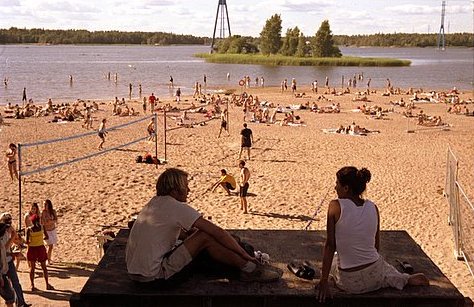
Beach volley at Hietsu 2013.jpg

Uusimaa, FI

Hietaniemi Beach (Hietsu)

Helsinki's most-loved city beach, built from a landfill and barged-in sea sand and adopted in 1929, lives a frantic 2.5-month Baltic summer shadowed by blue-green algae.

Beach volley at Hietsu 2013.jpg · <a href="//commons.wikimedia.org/wiki/User:Jonik" title="User:Jonik">Jonik</a> · CC BY-SA 3.0
Substrate
sand
Nearest airport
HEL · 16 km
Tier
Featured
I’m here for
Story

Hietaniemi beach, known to everyone in Helsinki as Hietsu, is the most popular beach in the center of the Finnish capital, a stretch of pale sand on the Baltic in the Töölö district. In the few weeks of the Nordic summer it is one of the busiest places in the city, the whole of Helsinki seemingly out at once on the sand, in the cool water, and on the beach-volleyball courts. The rest of the year it is a quiet, often snow-covered strip beside a cemetery. Few beaches swing so hard between two states.

The first surprising thing about Hietsu is that it is, essentially, a made beach. In the early twentieth century the area was used as a landfill and then as a place to store sand, which was brought in by barge from the bottom of the sea. In 1929 the locals simply adopted the result as a sand beach, and it has been Helsinki's beach ever since. It is a reminder that even a beloved natural-seeming city beach can be, underneath, a piece of engineering and a bit of municipal improvisation.

The second thing is the brevity and intensity of its season. Helsinki monitors the water quality of its public beaches during an official swimming season that runs only from 15 June to 31 August, a window of about ten weeks, and Hietsu lives almost its entire public life inside it. When the brief, bright Nordic summer arrives, with daylight stretching close to around the clock near midsummer, the beach fills completely: swimmers in the cold Baltic, the long-running Hietsu Beach Volley tournament that has been played here since 1995, ultimate frisbee, picnics, and over the years music festivals on the sand. Finns do not waste summer, and Hietsu is where central Helsinki spends it.

The honest shadow is the water. The Baltic here is cold and brackish, and in the warmth of late summer it is prone to blooms of blue-green algae, cyanobacteria, which can cause nausea, fevers, and skin problems and which periodically make the water at Helsinki beaches, Hietsu included, unsafe to swim in. The city tests the beaches through the season precisely because the quality can deteriorate quickly as the water warms. The beach that the whole city pours into for ten weeks is also a beach the city has to watch.

And behind it all is the deeper Finnish relationship with water, which is not really about beaches at all. Hietsu is beside the Hietaniemi Cemetery, the resting place of much of the nation's pantheon, and it belongs to a culture whose central water ritual is the sauna and the cold plunge, the year-round alternation of intense heat and freezing water that in winter becomes avantouinti, swimming through a hole in the ice. A summer city beach is the cheerful, sociable face of a people whose real devotion to water runs hottest and coldest in the dark months. Hietsu is the bright two months; the sauna is the other ten.

The spike

Helsinki's most-loved city beach, built from a landfill and barged-in sea sand and adopted in 1929, lives a frantic 2.5-month Baltic summer shadowed by blue-green algae.

Hietsu, formally Hietaniemi beach, is the most popular beach in central Helsinki, and it is one of the best small lessons anywhere in what a beach means at a high northern latitude, where the sea is cold, the summer is brief, and a city has to work for its beach life. It is a place defined less by ideal conditions than by enthusiasm in the face of difficult ones.

A made beach. The first thing to know is that Hietsu is not a natural strand. In the early twentieth century the Hietaniemi shore was used as a landfill and then as a sand-storage yard, with sand barged in from the bottom of the sea. In 1929 the locals simply adopted the result as a public beach, and it has been Helsinki's central beach ever since. There is something quietly telling in that origin: a northern capital that wanted a city beach effectively built one out of a dump and some dredged sand, and then loved it for a century. The beloved, natural-seeming strand is, underneath, a piece of municipal improvisation.

The ten-week city. The second defining fact is the season, which is astonishingly short and astonishingly intense. Helsinki monitors the water quality of its public beaches only from 15 June to 31 August, and Hietsu lives almost its whole public life inside that ten-week window. When the brief Nordic summer arrives, with the daylight near midsummer stretching to almost around the clock, the beach fills to capacity: swimmers in the cold Baltic, the Hietsu Beach Volley tournament that has run here since 1995, ultimate frisbee, picnics, and, across the 2010s, full-scale music festivals on the sand. Finns are famous for not wasting summer, and Hietsu is the proof in central Helsinki, a city compressing months of beach into a few warm, light-soaked weeks before the cold returns.

The water is the catch. The honest complication is the Baltic itself. The sea here is cold and brackish, and in the warmth of late summer it is prone to blooms of blue-green algae, cyanobacteria, which can cause nausea, fever, and skin problems and which can make the water at Helsinki beaches, Hietsu included, unsafe to swim in. This is exactly why the city tests its beaches through the season: the quality can deteriorate quickly as the water warms. So the beach that the whole city pours into for ten weeks is also one the city has to watch, and on a bad algae day, the most-loved beach in central Helsinki is a beach you are advised not to swim at.

The deeper water culture. And then there is the largest context, which is that for Finns the real relationship with water is not the beach at all. Hietsu sits beside the Hietaniemi Cemetery, the resting place of much of the national pantheon, the composer Jean Sibelius and Marshal Mannerheim among them, and it belongs to a culture whose central water ritual is the sauna and the cold plunge. That alternation of intense heat and freezing water runs all year, and in winter it becomes avantouinti, swimming through a hole cut in the ice, often straight from a sauna at eighty or ninety degrees into water just above freezing. A sunny summer beach is the cheerful, sociable, ten-week face of a people whose deepest devotion to water is practiced hottest and coldest in the dark months. Hietsu is the bright two months; the sauna and the ice hole are the other ten.

Why it matters. Hietsu earns its place as the tour's first northern, cold-water city beach, and as a corrective to the idea that a beach needs warm seas and long seasons to matter. It is a made beach, on a cold and sometimes toxic sea, open for swimming barely a quarter of the year, beside a cemetery, in a country whose truer water culture happens in steam and ice. And it is genuinely, intensely beloved, packed every available summer hour by a city that decided it would have a beach and has wrung every drop out of the short window the climate allows. It is a triumph of enthusiasm over conditions, and that, in the far north, is exactly what a beach is.

Helsinki Hietaniemi Beach cleaner tractor 1 2011-06-08.jpg
Culture

Where it shows up

Other
  • Hietsu, the city's summer · 1929

    The beloved nickname and institution: Hietsu as the place central Helsinki spends its brief, intense summer, a made beach the city adopted in 1929 and has packed every warm afternoon since.

History
  • Finnish sauna and avantouinti

    The deeper Finnish water culture the beach sits inside: the sauna and the cold plunge, which in winter becomes avantouinti, swimming through a hole in the ice, a year-round devotion to hot-and-cold water that a summer beach only hints at.

Music
  • Festivals at Hietsu · 2013

    The major music festivals staged on the sand in the 2010s (Rock the Beach, Sonisphere, Weekend Festival), part of how a northern city crams its cultural summer into a handful of light-filled weeks.

Hietaniemen uimaranta 1.jpg
History

What happened here

  1. 1910other

    Landfill and barged sand

    In the early twentieth century the Hietaniemi shore is used as a landfill and then as a place to store sand, which is brought in by barge from the bottom of the sea, laying, almost accidentally, the foundation of a future beach.

    Wikipedia →
  2. 1929founding

    The locals adopt a beach

    In 1929 Helsinki residents adopt the sand area as a public beach. Hietsu has been the city's main central beach ever since, a made strand willed into being on a barged-sand foundation.

    Wikipedia →
  3. 1931cultural

    The sundial on the hill

    A stone sundial designed by Gerda Qvist is installed on a hill by the beach in 1931, an early civic fixture of the new beach landscape.

    Wikipedia →
  4. 1995cultural

    Hietsu Beach Volley begins

    The Hietsu Beach Volley tournament starts in 1995 and becomes a fixture of the beach's summers, part of its identity as central Helsinki's sporting and social shore.

    Wikipedia →
  5. 2013cultural

    Festivals on the sand

    Through the 2010s Hietsu hosts major music festivals, including Rock the Beach (2013, 2017), Sonisphere (2014), and the Weekend Festival (2018), confirming it as a venue for the city's compressed summer events.

    Wikipedia →
The honest part
A triumph of enthusiasm over climate: a beach that works because a city decided it would have one and uses every available hour of it.

The honest reckoning at Hietsu is mostly about limits, and they are the limits of the Baltic and the Finnish year rather than failings of the beach. The swimming season is genuinely tiny: Helsinki monitors its beaches only from 15 June to 31 August, and outside that ten-week window the beach is cold, often frozen, and effectively closed for bathing. And within the season, the water itself is the catch. The Baltic off Helsinki is cold and brackish, and as it warms in late summer it is prone to blue-green algae blooms, cyanobacteria that can cause nausea, fever, and skin issues and that can render the water unsafe quickly; the city tests Hietsu and its other beaches through the summer for exactly this reason. The most-loved beach in central Helsinki is, on a bad algae day, a beach you should not swim at.

The other honest note is the made-ness of it, which is more charming than damning. Hietsu is not a natural strand; it is a former landfill turned sand store, its sand barged up from the sea floor, that the public adopted as a beach in 1929. That origin is a fair emblem of the whole place: a northern capital with a short, cold-water summer willed a city beach into being and has loved it intensely ever since, algae and brief season and landfill foundations and all. The fair summary is that Hietsu is a triumph of enthusiasm over climate, a beach that works not because the conditions are ideal but because a city decided it would have one and uses every available hour of it.

Hietaranta Helsinki 2022-09-19 03.jpg
Anatomy

The shape of the place

The cemetery and the sundial hill

25%

The quiet edge by the Hietaniemi Cemetery, the resting place of much of Finland's national pantheon, with the 1931 Gerda Qvist sundial on a nearby hill. The contemplative counterpoint to the beach's summer noise.

Best for A quiet walk; the cemetery and the views; the sundial

Hietaniemi Cemetery holds figures including Sibelius and Mannerheim.

The main sand and swimming

50%

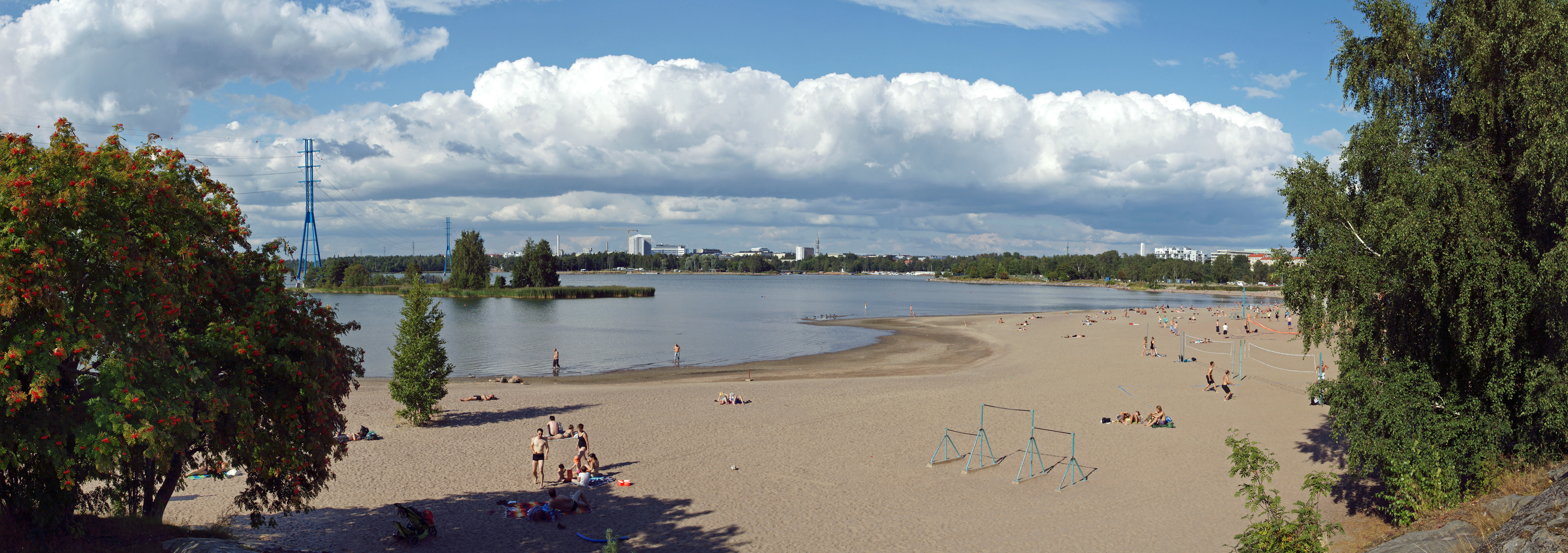
The pale sand strand and the cold Baltic swimming water, the heart of Hietsu, packed in the brief summer and monitored for water quality through the official 15 June–31 August season.

Best for Summer swimming and sunbathing in the short Nordic season

Cold, brackish Baltic water; check the city's blue-green algae status before swimming.

The beach-volleyball courts

65%

The sport heart of Hietsu, with the beach-volleyball courts that host the tournament played here since 1995, plus ultimate frisbee and pickup games, busy all through the summer.

Best for Beach volleyball and beach sports; the social, active side of Hietsu

The Hietsu Beach Volley tournament has run since 1995.

Landmarks

Hietaniemi Cemetery

cemetery

The major Helsinki cemetery beside the beach, the resting place of much of Finland's national pantheon, including the composer Jean Sibelius and Marshal Mannerheim, lending the cheerful summer beach a solemn neighbor.

Wikipedia →

The Gerda Qvist sundial · 1931

monument · Gerda Qvist

The stone sundial designed by Gerda Qvist and placed on a hill by the beach in 1931, an early civic landmark of the made beach.

Wikipedia →

Central Helsinki / Töölö

district

The central Helsinki district the beach sits in, putting one of the busiest summer spots in the Finnish capital within a walk or tram ride of the city center.

Wikipedia →
A day here

From first light to dark

Dawn

On a high-summer morning the light is already up and almost never fully went down; near midsummer Helsinki barely darkens. Early swimmers take the cold Baltic before the crowds, the sand cool and quiet, the cemetery still behind. It is the calm shoulder of a day the whole city will soon claim.

Midday

By midday in July or August Hietsu is full: families and students and office workers on the pale sand, swimmers in the grey-blue water, the beach-volleyball courts in constant use. This is the compressed intensity of a Nordic summer, a city packing months of beach into a handful of warm afternoons.

Golden hour

The Finnish summer evening is the beach's best hour, a long, low, golden light that lasts for hours because the sun is in no hurry to set. The volleyball games run late, the sand stays warm enough, and Hietsu holds the kind of light other latitudes only get for minutes.

Night

Near midsummer there is barely a night, just a long luminous dusk, and the beach stays sociable into the small hours. In the other ten months the story inverts entirely: the beach is dark, cold, often snow-covered and empty, the cemetery quiet beside it, and the city's relationship with water moves indoors to the sauna and out to the ice holes.

Hietaniemen uimaranta 2.jpg
Sea & surf

What the water does

JFMAMJJASONDmetres (significant wave height)

Solid = typical monthly wave height; pale = the bigger days (90th pct). Offshore/regional swell from Open-Meteo Marine (ERA5 Ocean reanalysis, 2023–2024); a sheltered cove may sit calmer than this.

Calm — gentle swimming water most of the year
Typical wave height
0.48 m
Biggest swell
Oct · 0.66 m
Calmest
May · 0.3 m
Typical period
3.5 s (wind chop)
Before you go

Things to know

The season is short

Hietsu's swimming life runs roughly mid-June to the end of August, the window Helsinki monitors (15 June–31 August). Outside it the beach is cold, often frozen, and not a bathing beach; come in high summer if you want the beach, not just the place.

Check the algae before you swim

The Baltic here is cold and prone to blue-green algae (cyanobacteria) blooms in warm late summer, which can cause nausea, fever, and skin issues. Helsinki monitors and posts water quality; check the city's status and don't swim in visible algae.

The real Finnish water culture is the sauna

A summer beach is only part of the story. To understand the Finnish relationship with water, pair Hietsu with a public sauna and cold plunge, or in winter the avantouinti (ice-hole swimming) that is the country's true cold-water ritual.

Getting there

Hietsu is in central Helsinki's Töölö district, a short walk or tram ride from the city center; Helsinki-Vantaa Airport (HEL) is about 16 km away. The Hietaniemi Cemetery is right beside the beach.

Swimming

Usually calm water — among the gentler beaches for a swim.

Sharks

No incidents on record in the global shark-attack file.

Plan

If you go

Getting there
Nearest airport
Helsinki Vantaa Airport (HEL) · 16 km
Nearest town
Helsinki · 2 km

Hietaniemi beach (Hietsu) is in the Töölö district of central Helsinki, Finland, a short walk or tram ride from the city center. Helsinki-Vantaa Airport (HEL) is about 16 km away. The beach sits beside the Hietaniemi Cemetery; the city monitors its water quality across the 15 June–31 August swimming season.

When to go
  • The summer swimming season · 15 June to 31 August (water-quality monitored)

    Helsinki monitors Hietsu's water quality across the official swimming season from 15 June to 31 August, the roughly ten-week window in which the beach lives almost its entire public life.

  • Hietsu Beach Volley · Summer, annual since 1995

    The beach-volleyball tournament played at Hietsu every summer since 1995, one of the fixtures of the beach's active season.

  • Winter ice swimming (avantouinti) · Roughly December to March (Finnish culture)

    Not at the summer beach itself but across Finnish culture: the winter sauna-and-ice-hole tradition that is the country's true year-round relationship with cold water, the inverse of the summer beach.

What to eat & drink
Beach kiosks and central Helsinki

In season Hietsu has the usual beach kiosks for ice cream, coffee, and snacks, and central Helsinki is a short walk or tram ride away with its full range of Finnish and international food, from market-hall fare to fine dining.

Hietsu beach and central Helsinki

Finnish summer food

The Finnish summer table is its own brief season: new potatoes, fresh and pickled herring and other Baltic fish, rye bread, and berries, eaten while the light lasts. Helsinki's market halls (kauppahalli) and the market square are the places to find it.

Helsinki kauppahalli and market square

Sauna and the cold plunge

The real Finnish water ritual is not a beach snack but the sauna, often followed by a plunge into cold sea or a lake; Helsinki's public saunas and sea pools (such as the Allas Sea Pool) are where the culture's year-round relationship with water actually lives.

Helsinki's public saunas and sea pools

Sources & references
  1. Wikipedia: Hietaniemi beach · cited 9×
  2. City of Helsinki
  3. City of Helsinki (water-quality monitoring)
  4. Wikipedia: Hietaniemi Cemetery
  5. Beach data
Colophon · Provenance

Where this page comes from

Geography, facilities
OpenStreetMap (ODbL) for geometry and facility tags within 500 m of the beach centroid. GeoNames for city/airport distances.
Climate & ocean
Open-Meteo ERA5 + Marine archive, 2014–2023 monthly normals.
Photography
Archival, original tone (Tier B — Wikimedia Commons). Each image licensed per its own terms; attribution visible inline.
History & culture
Every factual claim is linked to its source in the prose above. Wikipedia citations inline. Non-wiki sources named where relevant.
Editorial voice
Register: wry. Written to pass a local's nod test; corrections welcome.
Written by Erin Rose
Last reviewed 2026-04-19
v0.9in editorial development toward v1.0