Kerala, IN

Kollam Beach

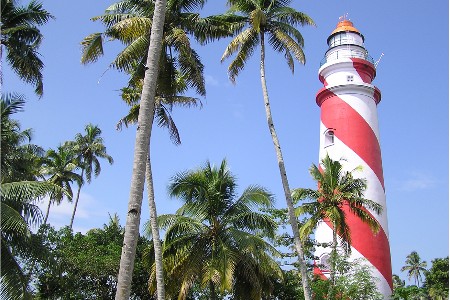
തങ്കശ്ശേരി പുലിമുട്ടിൽ നിന്നൊരു ദൃശ്യം.JPG

Kerala, IN

Kollam Beach (Mahatma Gandhi Beach)

Kollam Beach, called one of Kerala's deadliest, got an IIT Madras geo-tube redesign plan in 2023 after 57 drownings in 7 years.

തങ്കശ്ശേരി പുലിമുട്ടിൽ നിന്നൊരു ദൃശ്യം.JPG · <a rel="nofollow" class="external text" href="https://www.flickr.com/people/72025004@N00">പ്രതീഷ് പ്രകാശ്</a> · CC BY-SA 2.0
Nearest airport
TRV · 57 km
Story

Kollam Beach, also called Mahatma Gandhi Beach, sits at Thamarakulam in Kollam city on Kerala's Arabian Sea coast, over 2,300 meters long and next to Kollam Port and the Tangasseri breakwater, which extends about 1.8 kilometers south-southeast of Tangasseri Point. It is a working port city's beach, carrying a high hazard rating and patrolled by lifeguards, not a groomed resort strip.

The beach is described as Kerala's first "beach wedding destination," a title event managers Jo and Company, from Thiruvananthapuram, trace to a ceremony they organized here that they say was the first beach wedding held at Kollam. Local legend also credits Lord Parasurama, the sixth incarnation of Vishnu, with throwing his axe into the sea to reclaim the coastal land of Kerala, Kollam included.

Kollam, once known as Quilon, was a favoured settlement of the Portuguese, Dutch and English in succession before Indian independence, the Portuguese arriving first in the 16th century. Ruins of Portuguese and Dutch forts and 18th-century churches remain near the port. The 144-foot Tangasseri Lighthouse, built in 1902, still marks the harbor entrance, and Kollam Port itself is one of the oldest ports on the Malabar Coast for the international cashew trade; as of 2025 it ranks third largest in Kerala, though a Tamil Wikipedia account instead ranks it second largest per a 2010 estimate.

Mahatma Gandhi Park, next to the beach, was inaugurated by then vice president of India Zakir Husain -- 1 January 1961, per the English and Tamil Wikipedia articles, though the Malayalam-language article dates the same inauguration to 1967. The original complex included a deer park and an aquarium, but neglect let it decline into what a 2011 newspaper account called a haven for anti-socials before a five-year maintenance contract that year refurbished it, setting entry at Rs. 5 per person; the beach itself has no entry fee.

The beach's other reputation is more dangerous. Kollam Beach has been called one of the deadliest in the state: the water near shore runs about four meters deep with turbulent waves, and 57 people drowned there over the preceding seven years before Kollam Corporation and a team from IIT Madras presented a 2023 plan to lengthen the beach by about a kilometer, shrink its depth, and add groynes and geo-tubes. No source behind this page confirms whether that redesign has since been built.
The spike

Kollam Beach, called one of Kerala's deadliest, got an IIT Madras geo-tube redesign plan in 2023 after 57 drownings in 7 years.

Kollam Beach is a beach the Kerala tourism circuit sells as a sunset destination and a wedding backdrop, and that the state's own newspaper of record calls one of the deadliest stretches of coast in Kerala. Both descriptions are true at once, and neither cancels the other out.

What the record actually shows. In January 2023, The Hindu reported that Kollam Beach -- "considered to be one of the deadliest beaches in the state" -- would be developed into a safe and tourist-friendly destination. The reporting was specific about why: the water near the coast runs about four meters deep, and the waves are described as very turbulent, a combination that makes the beach riskier than other beaches on the Kerala coast. Over the preceding seven years, 57 people had drowned there. That is the toll that put a redesign on the table, not a vague sense that beaches can be dangerous in general.

The plan on paper. A team from IIT Madras presented a detailed project report for the beach's sustainable development, including the introduction of water sports. The core engineering idea was straightforward: use groynes and geo-tubes to reshape the shoreline itself, increasing the beach's length by around a kilometer while decreasing its depth -- pushing the dangerous drop-off further from where people actually wade and swim. On paper, it is a plan to engineer the hazard out of the beach rather than simply warn people away from it.

What isn't known. Nothing in the record available here says whether that 2023 plan was ever funded, built, or completed. No later dated source confirms the groynes and geo-tubes exist today, that the beach has grown by the planned kilometer, or that the water near shore is any shallower than it was when the report was presented. The honest position is that a plan was announced -- not that a plan was executed. Readers weighing whether Kollam Beach is safer today than it was in January 2023 should treat that question as open, not settled.

This isn't the beach's first safety scare. Kollam Beach has had a lifeguard outpost since 2005, and by July 2015 it was one of only three beaches in south Kerala -- alongside Kovalam and Varkala -- with one. That is a long-standing institutional acknowledgment that the water here needs watching, well before the 2023 redesign was ever proposed. Advice aimed at visitors is consistent with that history: avoid swimming or surfing in deep or rough water, especially at high tide or during the monsoon season, when the surf is roughest.

Why the tension matters. Kollam Beach also markets itself, without apparent irony, as Kerala's first "beach wedding destination" -- a title traced to a single 2016 ceremony organized by Jo and Company, event managers from Thiruvananthapuram. Sunset weddings on a beach whose water depth and wave action put it in the same conversation as the state's most dangerous coastline is not a contradiction anyone involved has had to resolve publicly; the wedding marketing and the drowning statistics simply exist in parallel, in different corners of the record, until a fact sheet like this one puts them on the same page.

The larger pattern. None of this makes Kollam Beach unique among urban Indian beaches -- plenty of city-adjacent coastlines carry both a tourism pitch and a documented death toll. What makes Kollam a clean case is how well-documented and how unresolved both halves are: a specific, sourced drowning count; a specific, sourced engineering plan to address it; and a specific, sourced silence on whether that plan was ever carried out. The beach's official hazard rating remains high, and it remains lifeguard-patrolled. That is the honest floor of what can be said. Anyone visiting Kollam Beach today is visiting a place where the state itself, in writing, called the water dangerous enough to warrant a coastal engineering project -- and where nothing in the available record says that project is finished.

For now, the story of Kollam Beach is written in two archives that don't cite each other: a hospitality record of sunsets and ceremonies, and a hazard record of drownings and unbuilt-or-unconfirmed engineering. Until a dated, sourced follow-up says otherwise, both stay true. Kollam Beach's hazard rating and its lifeguard patrols are not cosmetic signage; they are the only mitigation confirmed to exist today, pending whatever the unconfirmed 2023 engineering plan eventually becomes.

Leuchtturm in Kollam.jpg
History

What happened here

  1. 1902landmark

    Tangasseri Lighthouse built

    The 144-foot Tangasseri Lighthouse is built at the harbor entrance, still marking it today.

    Wikipedia →
  2. 1961history

    Mahatma Gandhi Park inaugurated

    Vice president Zakir Husain inaugurates the park beside the beach on 1 January, per English and Tamil Wikipedia; the Malayalam article instead dates it to 1967.

    Wikipedia →
  3. 2005safety

    Lifeguards posted at the beach

    Kollam Beach gets its first stationed lifeguards; by July 2015 it is one of only three south Kerala beaches with a lifeguard outpost.

  4. 2011renovation

    Mahatma Gandhi Park refurbished

    A five-year maintenance contract restores the deteriorated park; entry is set at Rs. 5 per person, parking at Rs. 5-10.

  5. 2014development

    Marine aquarium construction begins

    Work starts on a 40-tank marine aquarium, billed as Kerala's first, with completion expected by December; no later source confirms it opened.

  6. 2016culture

    First claimed beach wedding

    Event managers Jo and Company hold what they call the first beach wedding at Kollam, launching the beach's wedding-destination reputation.

  7. 2023policy

    IIT Madras safety redesign presented

    After 57 drownings in seven years, IIT Madras presents a plan to lengthen the beach, cut its depth, and add groynes and geo-tubes.

Jalakeli Kendram, Kollam.jpg
Anatomy

The shape of the place

Kollam Port frontage

10%

The working end of the beach nearest Kollam Port, where cargo and fishing traffic dominate over recreation.

Best for Watching harbor traffic

Kollam Port has handled the Malabar Coast cashew trade for generations.

Mahatma Gandhi Park stretch

50%

The central beach fronting Mahatma Gandhi Park, the setting for the beach's wedding-destination reputation and its high hazard rating alike.

Best for Sunset visits and photography

Deep water and turbulent waves start close to shore here; lifeguards patrol this stretch.

Tangasseri Point

85%

The lighthouse end of the beach, backed by colonial-era fort ruins and 18th-century churches near the breakwater.

Best for History and the lighthouse view

The breakwater here runs about 1.8 km south-southeast of Tangasseri Point.

Landmarks

Tangasseri Lighthouse · 1902

lighthouse

A 144-foot (44-meter) lighthouse marking the harbor entrance, a major landmark at the beach.

Wikipedia →

Mahatma Gandhi Park · 1961

park

The park adjoining the beach, inaugurated by vice president Zakir Husain -- 1961 per English and Tamil Wikipedia, 1967 per the Malayalam edition.

Wikipedia →

Tangasseri fort ruins and churches

historic ruins

Remnants of Portuguese and Dutch forts and 18th-century churches near the port, mementoes of colonial rule.

Wikipedia →
A day here

From first light to dark

Dawn

At first light the harbor beach is a working shoreline before it is a viewing one: fishing boats move past the Tangasseri breakwater as Kollam Port's day begins, and the Tangasseri Lighthouse still shows its beam against the gray Arabian Sea.

Midday

By midday the heat sets in and the beach's high hazard rating matters most; lifeguards are the reason locals still swim close in, and the water near shore stays turbulent regardless of the hour.

Golden hour

Sunset is when Kollam earns its reputation as a wedding beach, the light over the Arabian Sea drawing the ceremonies behind the beach's 'first beach wedding destination' claim.

Night

After dark the beach empties out to the port's shipping traffic and the lighthouse beam; Mahatma Gandhi Park next door, inaugurated decades ago by vice president Zakir Husain, closes with it.

MG Park in Kollam Beach, Kerala.jpg
Culture

Where it shows up

History
  • Legend of Parasurama's axe

    Local legend credits Lord Parasurama, the sixth incarnation of Vishnu, with throwing his axe into the sea to reclaim Kerala's coastal land, Kollam included.

  • Colonial settlement era

    Kollam was a favoured settlement of the Portuguese, Dutch and English in succession before Indian independence, the Portuguese arriving first in the 16th century.

Other
  • Kerala's first beach wedding destination · 2016

    Event managers Jo and Company, of Thiruvananthapuram, say they held the first beach wedding at Kollam in 2016, the claim behind the beach's wedding-destination reputation.

The honest part
“57 people drowned at Kollam Beach in the seven years before anyone presented a plan to fix it.”

Kollam Beach carries two identities that don't sit easily together. It is marketed as Kerala's first "beach wedding destination," a title dating to a single 2016 ceremony, and it fronts a historic port city with a 1902 lighthouse and colonial-era ruins worth the visit. It is also, by The Hindu's own account, one of the deadliest beaches in the state: the water runs about four meters deep close to shore with turbulent waves, and 57 people drowned there over the preceding seven years before a 2023 plan to lengthen the beach and add groynes and geo-tubes was even presented.

No source available here confirms that redesign has since been built. A 2014 marine aquarium meant to be the first of its kind in Kerala was likewise expected to be complete by December of that year, and then vanishes from the record; nothing confirms it ever opened or is running today. The beach that hosts weddings and sunsets is the same beach the state government itself called dangerous, and the fixes proposed for it are, on the evidence available here, still unconfirmed.

Marine Aquarium (UC) at Kollam Beach.jpg
Sea & surf

What the water does

JFMAMJJASONDmetres (significant wave height)

Solid = typical monthly wave height; pale = the bigger days (90th pct). Offshore/regional swell from Open-Meteo Marine (ERA5 Ocean reanalysis, 2023–2024); a sheltered cove may sit calmer than this.

Mixed — usually swimmable, with a livelier season
Typical wave height
1.02 m
Biggest swell
Jul · 1.78 m
Calmest
Jan · 0.59 m
Typical period
10.5 s (groundswell)
Before you go

Things to know

Entry fee

There is no entry fee for the beach itself; some activities such as boating, surfing, fishing, or the adventure park may charge separately.

Swimming safety

Avoid swimming or surfing in deep or rough water, especially at high tide or during the monsoon; the beach carries a high hazard rating and is lifeguard-patrolled.

Getting to the beach

The nearest bus station is 3.1 km away, the railway station 2.4 km, and the ferry terminal 3.1 km; central Kollam is about 3 km, roughly a 10-minute auto-rickshaw ride.

Nearest airport

Trivandrum International Airport (TRV) is the nearest airport; road-distance sources differ, giving 66 km in one place and about 70 km in another.

Sharks

No incidents on record in the global shark-attack file.

Plan

If you go

Getting there
Nearest airport
Thiruvananthapuram International Airport (TRV) · 57 km
Nearest town
Kollam · 1 km

Kollam Beach sits at Thamarakulam, about 3 km from central Kollam -- roughly a 10-minute auto-rickshaw or taxi ride -- near Kollam Port and the Tangasseri lighthouse. The nearest bus station is 3.1 km away, the railway station 2.4 km, and the ferry terminal 3.1 km; Kollam Junction Railway Station is the nearest major rail hub. Trivandrum International Airport (TRV) is the nearest airport, about 56.8 km away in a straight line, with road-distance estimates of 66-70 km depending on the source.

When to go
  • President's Trophy Boat Race · Annually, associated with Kollam

    A boat race associated with Kollam, named alongside Kollam Pooram among the city's events.

  • Kollam Pooram · Annually, associated with Kollam

    A festival associated with Kollam city, named alongside the President's Trophy Boat Race as a local event.

What to eat & drink
Karimeen fry

Pan-fried pearl spot fish, one of the seafood specialties associated with Kollam's coast.

Local restaurants near Kollam Beach

Prawn curry

A Kerala coastal curry named among the seafood specialties served near the beach.

Local restaurants near Kollam Beach

Fish moilee

A coconut-based fish preparation named alongside the beach's other seafood specialties.

Local restaurants near Kollam Beach

Crab masala

A spiced crab dish named among the seafood specialties tied to the Kollam coast.

Local restaurants near Kollam Beach

Go deeper
Sources & references
  1. Wikipedia: Kollam Beach · cited 9×
  2. The Hindu, Jan 2023 · cited 3×
  3. Wikipedia: Kollam Beach (English & Tamil)
  4. The Hindu, Aug 2011
  5. The New Indian Express, Nov 2016
Colophon · Provenance

Where this page comes from

Geography, facilities
OpenStreetMap (ODbL) for geometry and facility tags within 500 m of the beach centroid. GeoNames for city/airport distances.
Climate & ocean
Open-Meteo ERA5 + Marine archive, 2014–2023 monthly normals.
Photography
Archival, original tone (Tier B — Wikimedia Commons). Each image licensed per its own terms; attribution visible inline.
History & culture
Every factual claim is linked to its source in the prose above. Wikipedia citations inline. Non-wiki sources named where relevant.
Editorial voice
Register: severe. Written to pass a local's nod test; corrections welcome.
Written by Erin Rose
Last reviewed 2026-04-19
v0.9 — in editorial development toward v1.0