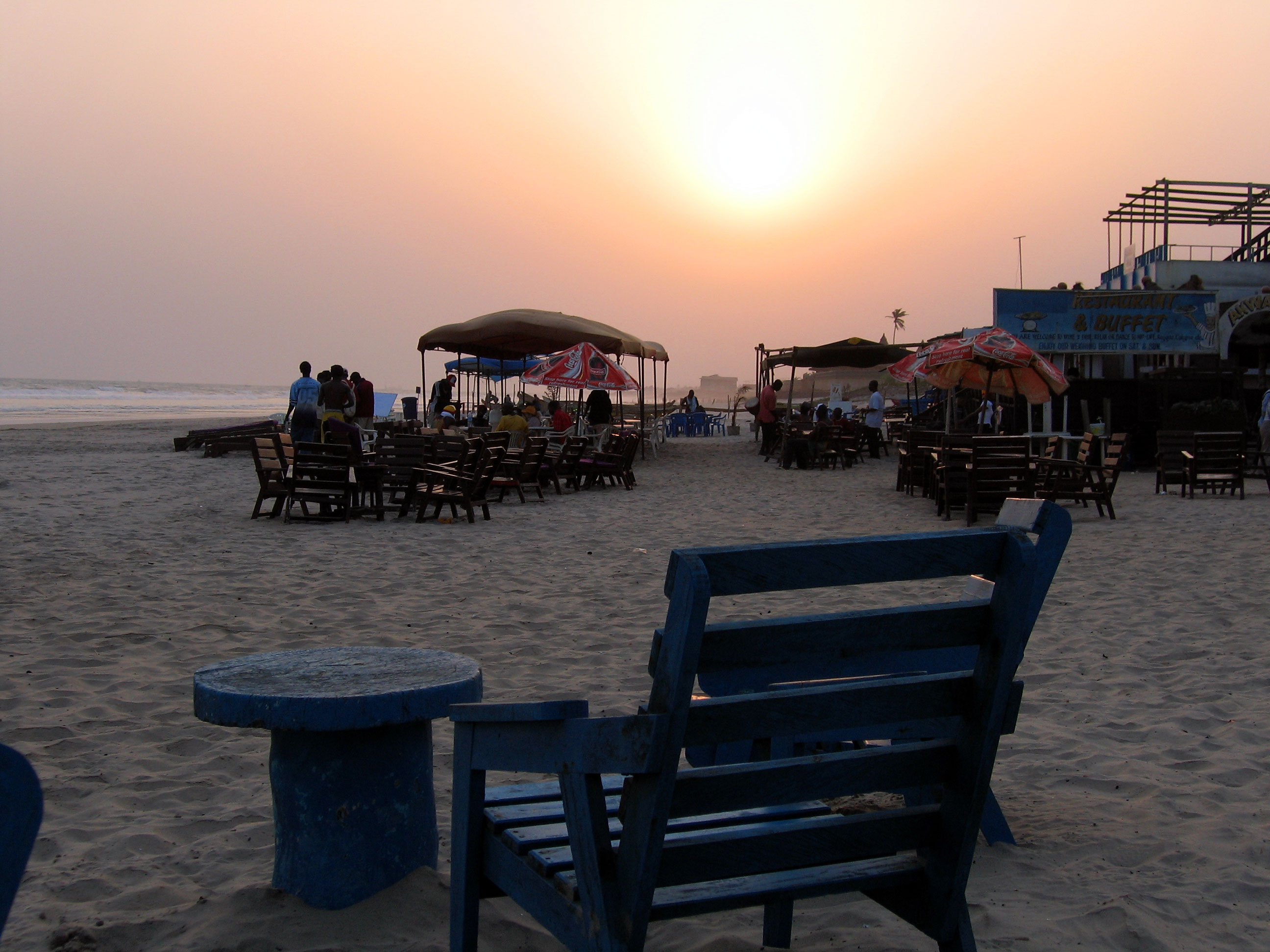
Labadi Beach, formally La Pleasure Beach, is the busiest beach on Ghana's coast and the closest thing Accra has to a communal front yard. It sits in the town of La, popularly Labadi, a historic Ga community near Teshie in the Greater Accra Region, a few kilometers from the city center and barely five from the international airport. It is not a quiet beach, and quiet is not the point. On a weekend it is a fairground of sound and motion: live reggae and hiplife, cultural drumming and dancing, horses cantering along the wet sand, vendors, food, and crowds.
It is also, unusually for a public beach, a beach you pay to enter. Labadi is maintained by the local hotels that line it, and visitors not staying at those hotels are charged an entrance fee, typically a modest 10 to 20 Ghanaian cedis, a dollar or two, more on event days. That arrangement, a paid, managed pleasure beach rather than a free open shore, shapes the whole experience and is a recurring subject of public debate in Accra about who the beach is really for and where the money goes.
The culture is the main attraction and it is genuinely distinctive. There is a famous reggae night every Wednesday from 6pm, with local reggae stars; on weekends and holidays the beach fills with hiplife, the Ghanaian fusion of highlife and hip-hop, plus playback sets and traditional Ga drumming and dancing. Horse and pony rides run along the shoreline for a few cedis. Early on weekend mornings, before the music, the beach belongs to people working out. This is a beach used as a stage, a gym, a dance floor, and a meeting place as much as a swimming spot.
The honest shadow over all of it is the Atlantic itself, and what the city pours into it. Labadi, like Accra's whole coast, is increasingly fouled by plastic and waste, most of it generated inland and dumped into drains, gutters, and streams that carry it to the sea, from where the tide brings it back and lays it along the sand. The litter is a real and visible problem, and a network of weekly volunteer clean-ups and projects, including Sunday morning clean-ups on neighboring stretches and a partnership between the Ghana Clean-up Project and the beach's Polo Beach Club, now works against the tide, literally.
So Labadi is two things held together by a single strip of West African sand: the most joyful, music-soaked, horse-and-drum public beach in Ghana, and a frontline of the plastic crisis choking the Gulf of Guinea coast. It is alive and it is compromised, and it would be dishonest to show either without the other. The reggae plays on Wednesday, the horses run on Sunday, and the sea keeps handing the city back its own garbage.