· Surfrider Foundation
A breakwater fight in 1984 became the Clean Water Act's teeth
Three surfers, one proposed breakwater, forty-two years and counting. The largest coastal-protection nonprofit on Earth was born at First Point, and it is still losing — and partially winning, and losing again — the same water quality fight at the same creek mouth.
In August 1984, three surfers filed incorporation papers for a nonprofit in California. Glen Henning, Tom Pratte, and Lance Carson were not trying to start a movement. They were trying to stop a breakwater.
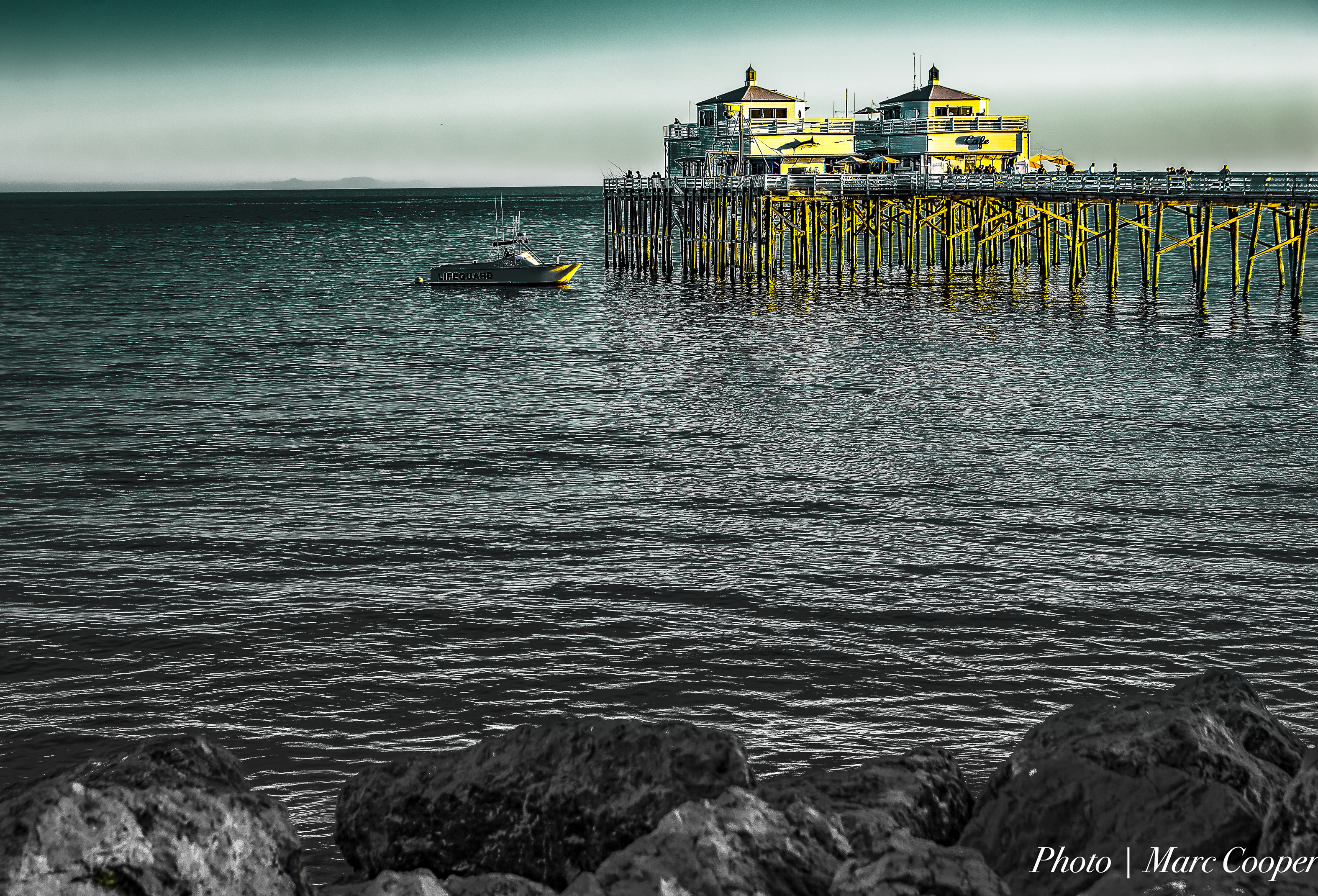
The proposal on the table would have extended a rock structure south from Malibu Pier to enable expanded development and protect vessel moorings. To anyone who understood how First Point actually worked — how the wave was a product of southwest swell refracting off a specific submerged cobblestone ramp angled away from the headland — the breakwater read as a demolition order. Carson understood. He had been riding the wave since the late 1950s and had watched, one county south, as the El Segundo and Hermosa breakwaters structurally killed the surf spots they displaced. Breakwaters do not coexist with point breaks. They end them.
So the three of them named the organization after the state beach they were trying to save. Surfrider Foundation. Forty-two years later it is the largest grassroots coastal-protection nonprofit on Earth — eighty-plus chapters across four continents, a legal arm with a docket, a policy presence at California Coastal Commission hearings, in the halls of Congress, and in the New Zealand Parliament.
All of it started at First Point. Against a breakwater. Over a wave.
This is the story of how a Malibu fight built a global organization, won a landmark Clean Water Act case fifteen hundred miles north of where it started, and then spent forty years losing — and partially winning, and losing again — the same water quality fight at the same creek mouth where the whole thing began.
Put a rock wall in front of a point break, and you do not have a point break anymore
The 1983–84 proposal was not subtle. A breakwater structure extending from the south side of Malibu Pier, engineered to attenuate incoming southwest swell energy in order to enable expanded marina-type use of the pier facility and adjacent waterfront. Read the engineering language charitably and it is still a wave killer. Read it any other way and it is worse.
First Point works because the submerged cobblestone point — laid down over centuries of creek-mouth sediment delivery from Malibu Creek — creates a bathymetric ramp that bends southwest swell around the headland. Lines arriving at a shallow angle wrap the point and peel from west to east in a mechanically consistent way. That is what makes the wave the longest, most makeable right point break in Southern California. It is not generic reef. It is a precise refraction event depending on a precise underwater geometry.
A breakwater south of the pier would have done three things simultaneously. First, it would have intercepted and reflected swell energy that currently refracts around the point, flattening the wave face or erasing the peel altogether. Second, by altering longshore transport, it would have starved the cobblestone ramp of replenishing sediment, degrading the bottom contour within years. Third, it would have redirected rip and tidal circulation in ways that no model of the period could reliably predict, which in practice meant it would have silted the cove or scoured it — either way, not the wave that existed.
The comparison was already documented up the coast. El Segundo. Redondo. Hermosa. Breakwaters built in the mid-twentieth century to protect infrastructure and enable harbor development had, within a generation, erased the surf breaks that preceded them. The pattern was so consistent by 1984 that California surfers had a working heuristic: put a rock wall in front of a point break and you do not have a point break anymore.
Carson knew. Henning and Pratte knew. They incorporated Surfrider in August 1984. The breakwater, for reasons that are historically tangled — pier ownership complexity, Coastal Commission review, local opposition Surfrider helped coordinate — did not get built. The wave is still there. Whether the nonprofit killed the proposal or merely witnessed its death, the organization’s founding mythology fused to the outcome. Surfrider existed because First Point existed. First Point still existed because Surfrider had shown up.
The template for the modern coastal lawsuit was written in Malibu
At the time, the largest Clean Water Act citizen suit in United States history.
Seven years after incorporation, Surfrider Foundation transitioned from a local anti-breakwater committee into a federal legal actor.
Surfrider Foundation v. Louisiana-Pacific Corporation and Simpson Paper Company, Northern District of California, 1991. The defendants were two pulp mills in Humboldt County — Louisiana-Pacific at Samoa and Simpson at Fairhaven — that had been discharging an estimated forty million gallons per day of chlorinated bleach plant effluent, laden with dioxins and furans, directly into the Pacific Ocean off the North Coast. Local surfers at nearby breaks had been reporting rashes, infections, and respiratory symptoms for years. State and federal regulators had moved slowly. The mills had been operating under expired or insufficiently protective NPDES permits.
The Clean Water Act of 1972included a citizen-suit provision specifically for this scenario: when the government will not enforce, the public can sue in the government’s place.
Surfrider’s legal team filed under that provision. The case, at the time, was the largest Clean Water Act citizen suit in United States history. The settlement, finalized in 1991, included a then-record multi-million-dollar penalty, injunctive relief requiring the mills to upgrade treatment systems and install oxygen-delignification technology to eliminate chlorine-based bleaching, and a precedential establishment that a surf nonprofit had Article III standing to enforce federal water quality law against industrial polluters on behalf of ocean users.
The template Surfrider wrote in that case has been used by coastal advocates ever since. Citizen-suit provisions in the CWA, the Resource Conservation and Recovery Act, and the Endangered Species Act now form the enforcement backbone of American environmental law in areas where agency capacity has thinned. Waterkeeper, Riverkeeper, and a dozen regional successors built on the path Surfrider cleared.
The organization that won that case was headquartered in San Clemente and named for a beach in Malibu. Which is where the irony becomes impossible to avoid.
Surfrider Foundation, in 1991, successfully forced two industrial polluters to stop poisoning beaches in Humboldt County — while its founding beach, the one it was literally named after, was and remains one of the most consistently polluted surf spots in the state of California. The organization won a landmark federal clean-water case on behalf of waves fifteen hundred miles from the wave it was born defending. That is not a failure of the organization. It is a fact about the problem.
An 89-square-mile watershed that ends at the takeoff zone
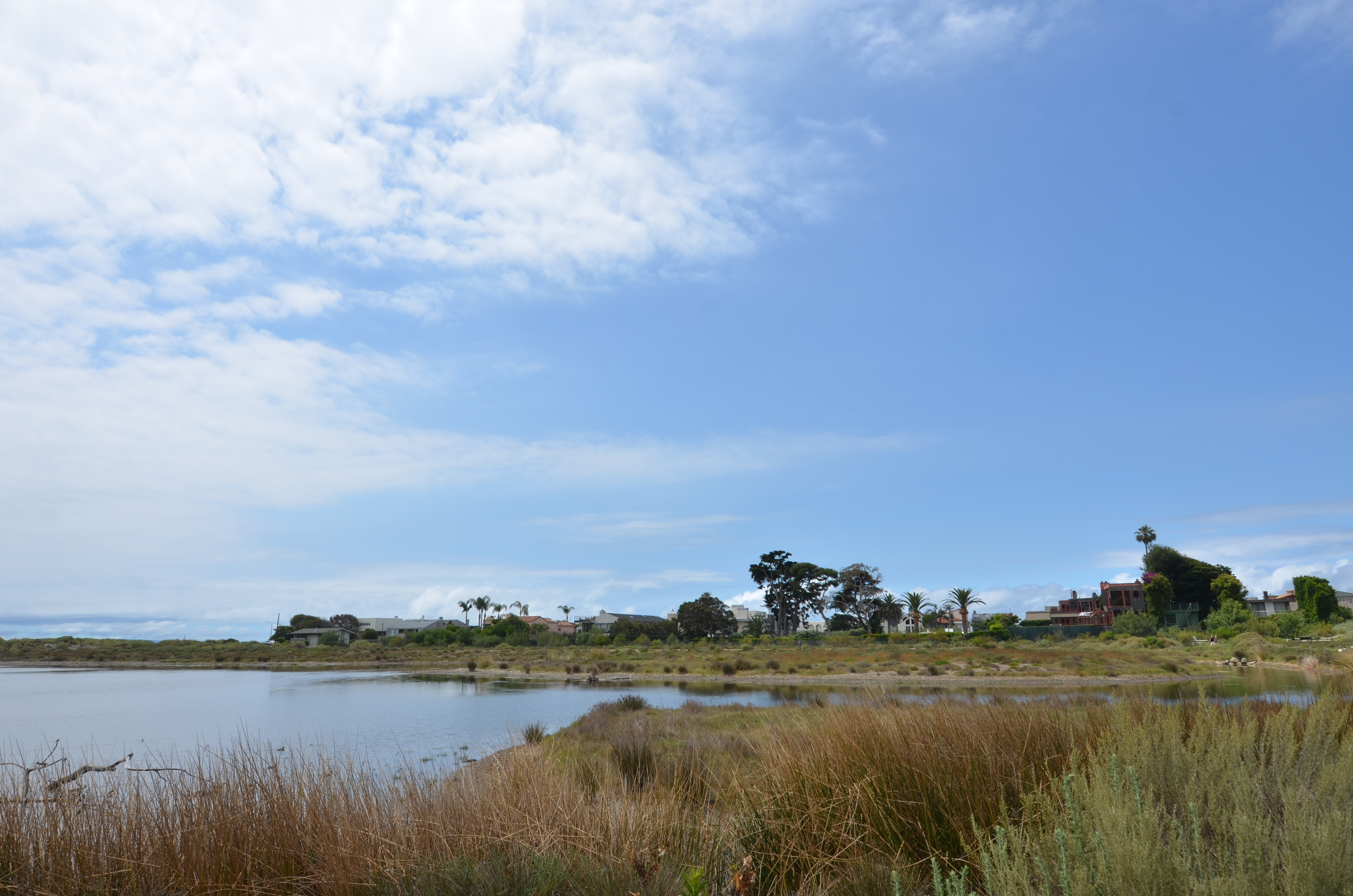
Malibu Creek drains an eighty-nine-square-mile watershed that includes Agoura Hills, Calabasas, Westlake Village, and a large swath of the Santa Monica Mountains. Most of what happens in that watershed eventually reaches First Point.
The Tapia Water Reclamation Facility, operated by Las Virgenes Municipal Water District, sits high in the watershed and has discharged treated wastewater effluent to Malibu Creek since 1965. Regulatory pressure has reduced and seasonally restricted those discharges over time — a 2015 order effectively eliminated dry-season discharge to the creek — but the historical load is still working through the system, and the hillside septic systems of residential Malibu, many of them old and failing, contribute their own continuous input. Nitrogen, phosphorus, and bacterial loads in the lower creek remain elevated. The creek mouth is the surf zone.
Heal the Bay’s annual Beach Report Card, which has graded California beaches A through F on bacterial water quality since 1991, has listed Surfrider Beach among the ten most polluted beaches in California repeatedly over the last two decades, particularly during wet weather. Failing the Beach Report Card is not abstract. It means people who paddle out are measurably more likely to get sick.
The seventy-two-hour rule is real. Los Angeles County Department of Public Health, along with every surf advisory Heal the Bay publishes, recommends that surfers and swimmers avoid Malibu-area waters for seventy-two hours following any measurable rainfall. Bacterial counts at First Point have been documented to remain elevated for that window. Locals who ignore the rule often pay for it with an ear infection within three days.
In 2013, California State Parks completed the Malibu Lagoon Restoration Project, over bitter and organized local opposition including a lawsuit that delayed the work. Bulldozers reworked the western arm of the wetland, re-engineered channel geometry to restore tidal flushing, removed non-native vegetation, and replanted native marsh species. Surfers who had known the old lagoon for decades were furious at the sight of heavy equipment in a culturally sacred piece of coastline. Water quality scientists, in the years following, documented measurable improvements in dissolved oxygen, bacterial indicators, and ecological function in the restored western arm. The surfers were not wrong that the construction was brutal. The scientists were not wrong that the water is cleaner.
Then, in November 2018, the Woolsey Fire burned from the Santa Susana Mountains to the edge of the Pacific. Much of the Malibu Creek watershed went black. Winter rains the following season carried ash, sediment, and combustion byproducts into the creek and out to the surf zone. Water quality at First Point degraded visibly for months.
In 2026, the water at Surfrider Beach is better than it was in 1991. It is still not good enough.
Eighty-plus chapters, a legal department, the Blue Water Task Force
The organization that three surfers incorporated in Malibu in 1984 now has more than eighty chapters across the United States, Japan, Europe, Australia, and Latin America. It employs attorneys. It has a policy department. It has a science program — the Blue Water Task Force — that trains and equips volunteer water-quality samplers in communities that state agencies have effectively abandoned.
The legal docket in 2026 still looks like its founding case, scaled. Beach access enforcement under the California Coastal Act, including ongoing pressure on the Malibu Colony and Broad Beach encroachments where residential development has privatized what the law considers public coast. Plastic pollution litigation and the Rise Above Plastics policy campaign that drove the California bag ban and is now the template for state-level producer-responsibility legislation. Offshore oil and gas challenges on both coasts. Marine Protected Area advocacy. Coastal armoring and seawall pushback in an era when climate-driven erosion is generating local political demand for exactly the kind of hard-infrastructure responses that kill beaches.
The tension inside the organization is that it is both a grassroots membership nonprofit — chapters run by volunteers, monthly meetings in rented rooms, cleanups organized by people who have day jobs — and an internationalist professional entity with full-time attorneys and policy staff. Surfrider has tried to hold both. The chapters give the legal work democratic legitimacy. The legal work gives the chapters something to point at.
The West Los Angeles / Malibu chapterstill runs a monthly beach cleanup at Surfrider Beach, traditionally on the first Saturday of each month. The chapter still operates Blue Water Task Force sampling at the creek mouth and at points east and west. You can find the schedule on the chapter’s page. You can show up. If you live anywhere near Malibu and you surf First Point more than twice a year, you have very little excuse for not knowing the chapter.
Membership money funds the legal department. Legal department funds are what forced two pulp mills out of a bleach-plant effluent practice in 1991 and are what forces coastal-access fence removal at Carbon Beach today. If the wave at Surfrider still exists as a wave in twenty years, some of the credit will trace to people who wrote a check to a nonprofit named after it.
The hardest fight is the one at home
Surfrider Beach is both the birthplace of the largest coastal-protection nonprofit on Earth and one of the most polluted beaches in California. Those two facts are not contradictions. They are consequences of each other.
A wave does not become the mythological center of California surfing without drawing the tourism, the development, the upstream population, and the regulatory visibility that together expose its pollution. And a pollution problem does not persist for forty years at the scale of Malibu Creek without generating, in response, an activist organization with the depth of Surfrider. The beach is famous, so the water is watched. The water is bad, so the activists are organized. The activists are organized, so the water is slightly less bad than it otherwise would be. None of that ends with the water being clean.
The lesson is not that Surfrider failed. Surfrider, by any honest measure, is one of the most successful grassroots environmental organizations in American history. The lesson is that winning a Clean Water Act case against a pulp mill in Humboldt County is easier than fixing your own watershed in the town where you filed your incorporation papers. Distant industrial polluters have names and outfalls. A regional sewage infrastructure serving four municipalities, ten thousand hillside septic tanks, and eighty-nine square miles of burned and rebuilding chaparral does not.
Every surfer who paddles out at First Point in 2026 is riding a wave that three people saved from a breakwater in 1984, in water that the organization those three people founded is still, forty-two years later, trying to clean up. That is the honest picture. The wave is still here. The fight did not end. It got quieter and harder and more necessary.
The rest of Malibu
Surfrider Beach →
The three-point cobblestone right-hander, the canon, the honest reckoning.
First Point →
The wave itself. Cobblestone geology, the south-swell window, the longboard canon from Simmons to Carson to today's crew, and why First Point is a physics argument for a specific kind of surfing.
Gidget →
The cultural explosion 1956–1975. Kathy Kohner's summer notebooks, her father's novel, Sandra Dee, the Beach Boys, The Endless Summer — and how a 5'1" teenager accidentally sold Malibu to the world.
Humaliwo →
Before "Malibu": the Chumash village of Humaliwo, the Rindge land grant that erased it, and the two-thousand-year history buried under the First Point parking lot.
Written by Erin Rose. Sources: Surfrider Foundation organizational history (surfrider.org/about); Surfrider Foundation v. Louisiana-Pacific Corp. and Simpson Paper Co. (N.D. Cal. 1991) settlement filings; Heal the Bay annual Beach Report Cards; California State Parks Malibu Lagoon Restoration Project (2005–2013) planning documentation; Las Virgenes Municipal Water District Tapia Water Reclamation Facility public records; Los Angeles County Department of Public Health beach advisory archives. Corrections welcome, especially on the 1991 settlement specifics and on current-decade chapter activity. Corrections welcome, especially on Portuguese-language framings and on the named practices of Nazaré. Version v0.9.