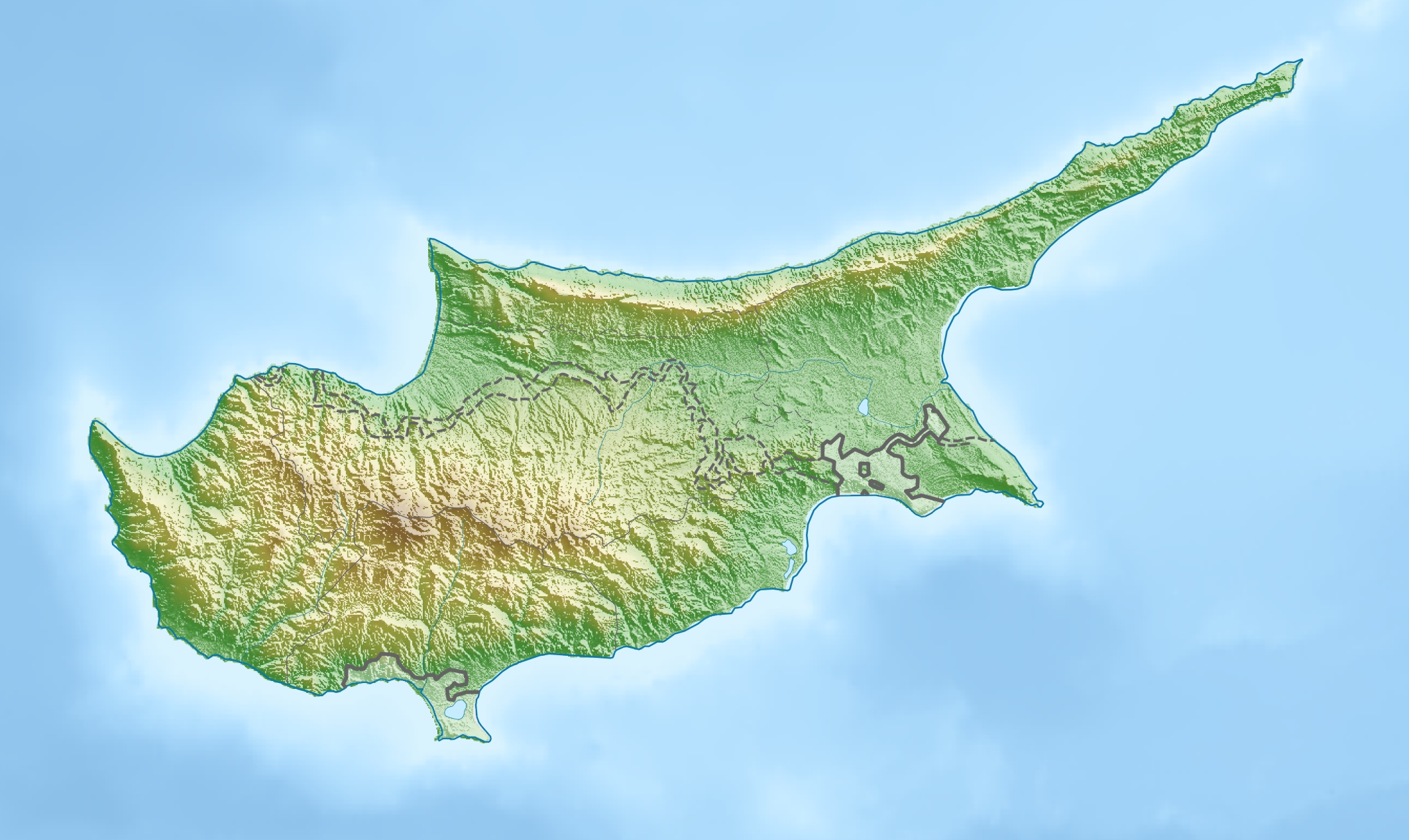
Nissi Beach sits about 3.3 kilometres west of the centre of Ayia Napa, on the southeast corner of Cyprus. The named strip of sand runs roughly 500 metres along a sheltered bay, which is far shorter than the wider arc of coastline it belongs to. The sand is fine and pale, closer to white than gold under a midday sun, and the water stays shallow for a long way out. "Nissi" is Greek for "island," and the name is literal: a small uninhabited islet sits just off the shore, low and scrubby, reachable on foot across a sandbar that surfaces in the shallows.
That islet is the whole reason this beach has a name and a reputation rather than being one more pretty cove on a coast full of them. At calm low water you can walk out to it ankle- to knee-deep, which is the photograph everybody takes and the thing every guide leads with. The bay faces roughly south and is partly screened from wind, so the surface is often glassy in the early hours, before the day's crowd and the day's boats churn it.
The water quality here is rated excellent under EU bathing-water monitoring, and the beach flies a Blue Flag, the European award for cleanliness, water quality and safety provision. There are lifeguards in season, showers, toilets, sunbed rows and a wall of water-sports operators. None of that is incidental. Nissi is an organised resort beach, not a wild one, and it is run as a business from the sand up.
The business with the loudest voice is the Nissi Bay Beach Bar, set right behind the sand. Through the summer it runs a daily programme of DJs, beach parties and foam parties, with a machine that pumps out up to 250 litres of foam a minute over a crowd of holidaymakers. By mid-afternoon the quiet glassy bay of the dawn photographs is gone, replaced by speakers and a lot of sunburnt people who came for exactly this.
That split personality is the honest description of Nissi. The same beach is a near-empty mirror of water at 7am and a packed open-air club at 3pm, and Ayia Napa built its modern identity on the second version. To understand why, you have to look at how a fishing village of a couple of hundred people became one of the most recognisable party towns in the Mediterranean, and how a beach bar near this sand helped do it.