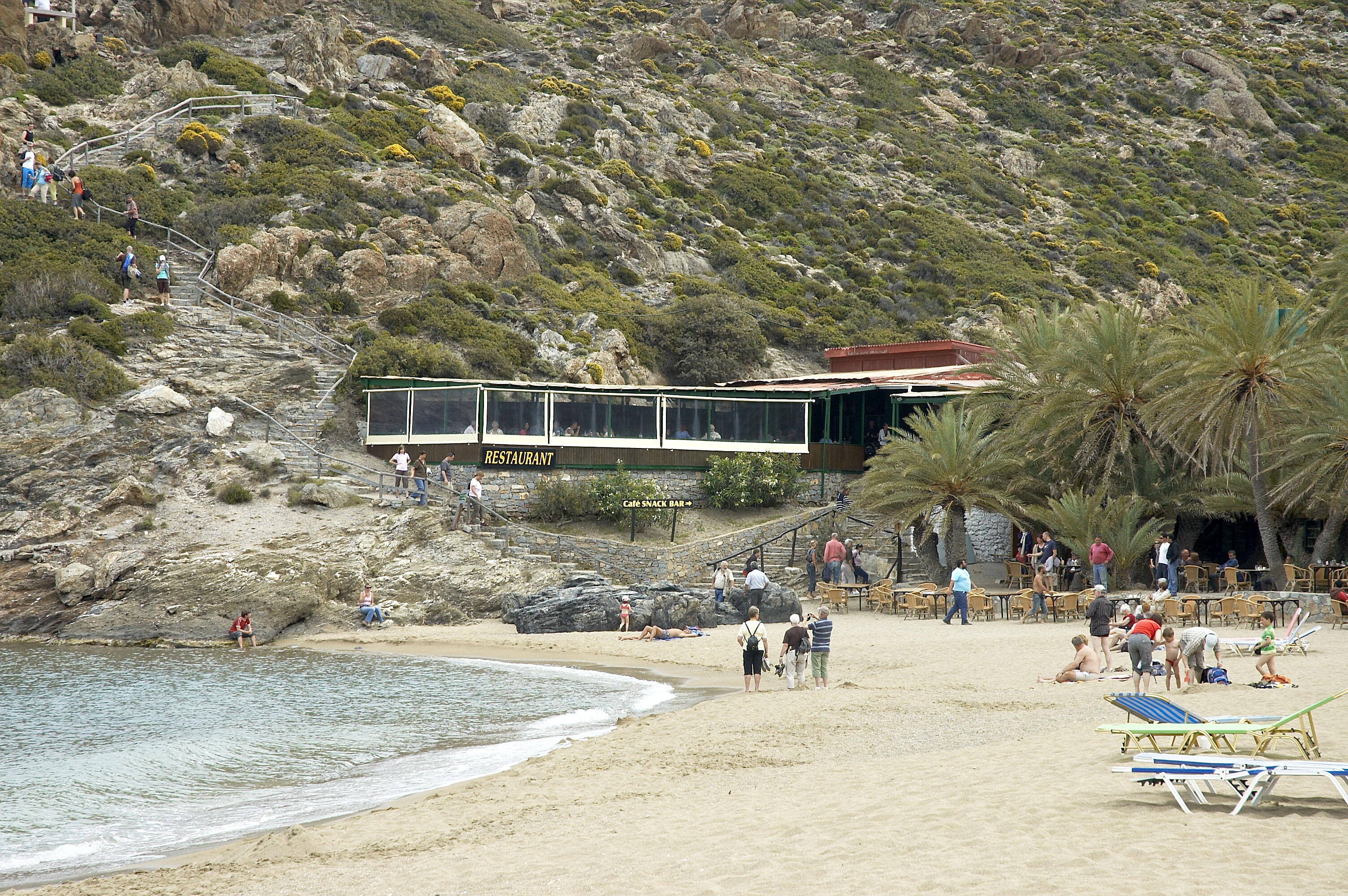
Crete, GR

Παραλία του Βάι

Genista acanthoclada B.jpg

Crete, GR

Vai

The largest natural grove of the endemic palm Phoenix theophrasti in Europe grows on the sand behind this beach.

Genista acanthoclada B.jpg · <a href="//commons.wikimedia.org/wiki/User:Wouterhagens" title="User:Wouterhagens">Wouter Hagens</a> · CC BY-SA 3.0
Substrate
sand
Spring tide
0.11 m
Nearest airport
JSH · 16 km
Tier
Featured
I’m here for
Story

Vai sits at the far northeastern corner of Crete, between Cape Sidero and Cape Plaka, about 6 kilometres from the village of Palekastro and 24 kilometres east of Sitia. The sand is pale and the bay is sheltered, but almost nobody comes for the water. They come for what stands behind it: roughly 5,000 Cretan date palms, Phoenix theophrasti, the largest natural palm grove in Europe.

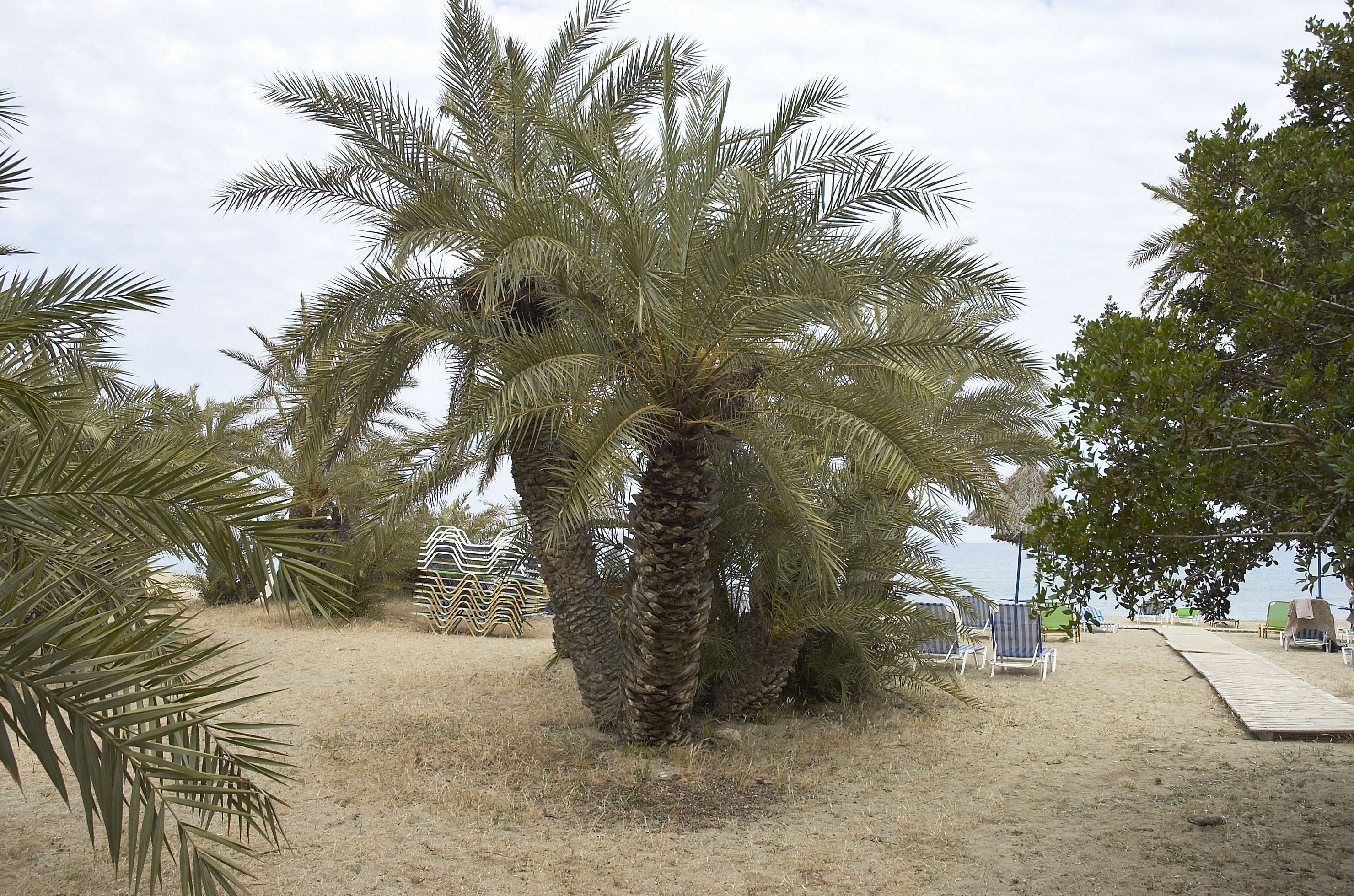
The palm is not a decoration and it is not imported. Phoenix theophrasti is endemic to the eastern Mediterranean, native to a handful of sites in southern Greece and coastal Turkey. The Swiss botanist Werner Greuter separated it from the cultivated date palm in 1967 and named it after Theophrastus, the ancient Greek who first described a Cretan palm more than two thousand years ago. Its dates are small, fibrous and acrid, inedible to people. It grows in clumps of several slender trunks rather than one, which is how you can tell the grove was never planted as an orchard.

The usual story told to visitors is that the palms sprang from date stones spat out by Phoenician traders, or Roman legionaries, or Saracen pirates resting on the beach. It is a good story and it is false. The grove is older than all of those arrivals by millennia, and the species is wild Cretan stock, not a sprouted snack. The legend persists because it is tidier than the truth, which is that a relict palm survived here on its own.

The grove the legend grew up around has had a hard century. By the late 1950s an agricultural project had cut it from about 300 hectares to roughly 12. In the early 1970s a Bounty chocolate-bar advert filmed against the palms put Vai on the map; the crew had to wire fake coconuts into trees that only make dates. Hippies followed the advert, backpackers followed the hippies, and through the 1980s the beach became a free campground that trampled seedlings and lit fires under the canopy.

The fence went up to stop that. Today you walk a boardwalk along the edge of the grove, not through it, and the palms are closed at night. An EU LIFE conservation project from 1999 to 2002, run with the Monastery of Toplou and the Lasithi Forest Directorate, replanted about 26 hectares and roughly doubled the protected habitat. The beach below is still small, still crowded, and in high summer its car park fills before nine in the morning.
The spike

The largest natural grove of the endemic palm Phoenix theophrasti in Europe grows on the sand behind this beach.

Why Vai is singular comes down to one plant doing something it should not be able to do: an entire natural forest of palm trees, endemic to the spot, surviving on a European coastline.

The tree is Phoenix theophrasti, the Cretan date palm. It looks, to a casual eye, like the date palm you would see in North Africa or the Gulf, and for a long time botanists assumed that is exactly what it was: an escaped cultivar, the descendant of orchard trees gone wild. That assumption held until 1967, when the Swiss botanist Werner Greuter examined the Cretan populations and concluded they were a distinct species. He named it after Theophrastus, the pupil of Aristotle and the so-called father of botany, because Theophrastus had described a palm from Crete in antiquity. The name is a deliberate claim that this palm has been here, as itself, since the ancient world.

The differences from the cultivated date palm, Phoenix dactylifera, are the proof that Vai is wild and not an abandoned plantation. A commercial date palm grows a single thick trunk and produces the sweet, fleshy fruit sold in shops. Phoenix theophrasti grows in clumps, sending up several slender stems from one base, and its dates are thin-fleshed, fibrous and acrid, with no agricultural value. Nobody plants a tree whose fruit they cannot eat or sell, in clumps that are hard to harvest. The form of the tree is the signature of a wild population that has been left to grow on its own terms.

That is what makes the founding legend worth correcting rather than repeating. Visitors are told the grove grew from date stones discarded by passing travellers: Phoenician merchants, Roman soldiers, Saracen pirates, depending on who is telling it. The arithmetic kills the story. The palm grove is understood to be well over two thousand years old, older than the Saracen raids and contemporary with or older than the Phoenician and Roman presence the legend invokes. A relict population of an endemic species cannot have been seeded by the travellers who arrived to find it already there. The legend survives because a beach that grew from spat-out pits is a charming origin, and a beach that is simply the last redoubt of a near-threatened wild palm is a harder, quieter fact. Vai is the second.

The scale is the second half of the claim. Counts vary between sources, but the grove holds on the order of 5,000 trees of Phoenix theophrasti, and it is consistently described as the largest natural palm forest in Europe. This is not a botanical-garden collection and not a hotel landscaping project. It is a self-sustaining stand of an endemic tree on a continent that otherwise has no native palm forests at this scale. The species as a whole is listed Near Threatened on the IUCN Red List, assessed in 1998, because its total range is small and fragmented across Crete, a few Aegean islands and the Turkish coast. Vai is the centre of gravity of that range.

The grove's survival has never been passive. Records show it was far larger before the twentieth century, on the order of 300 hectares, and that an agricultural project in the late 1950s cut it to roughly 12 hectares. Greek authorities declared Vai an Aesthetic Forest in 1973, a protection category reserved for natural areas of rare flora and fauna. Even that did not stop the bleeding, because protection on paper does nothing about the people standing on the seedlings. Between 1999 and 2002 an EU LIFE project, reference LIFE98 NAT/GR/005264, took the grove in hand with the Monastery of Toplou, the historic landowner, and the Forest Directorate of Lasithi. The project fenced the grove, installed irrigation and groundwater monitoring, relocated farming from the perimeter, and planted roughly 26 hectares of new Phoenix theophrasti at about a 95 percent survival rate. It grew the protected habitat from 15.6 to 31.7 hectares. The forest you see is, in part, a forest that was deliberately rebuilt.

The fence is the visible edge of all of this. You do not walk among the palms; you walk a boardwalk along their margin, and the grove closes at night. That single design decision is the whole argument of the place: the thing worth coming for is fragile enough that the way to keep it is to keep most visitors out of it. Vai is not singular because it is beautiful, though it is. It is singular because it is the largest surviving wild stand of a palm that exists almost nowhere else, propped up by a fence, a monastery and a four-year grant, and surrounded on its one open side by a small beach that fills with the very crowds the legend of the place keeps drawing in.

Phoenix theophrasti A.jpg
Culture

Where it shows up

Brand & advertising
  • Bounty chocolate bar advert · 1970
    Mars (Bounty)

    An early-1970s television commercial for the coconut Bounty bar was filmed against Vai's palms, with coconuts wired into the trees because they bear only dates. The ad made the previously obscure beach internationally famous.

History
  • Phoenix theophrasti, named for Theophrastus · 1967
    Werner Greuter

    The species was named in 1967 after Theophrastus, the ancient Greek 'father of botany', who had described a Cretan palm over two millennia earlier.

  • The date-pit origin legend

    A widely repeated folk legend holds that the palms grew from date stones dropped by Phoenician, Roman or Saracen travellers. Sources note it is historically impossible, as the grove predates those visitors by millennia.

Vai palm forest.jpg
History

What happened here

  1. -300history

    Ancient Itanos thrives nearby

    Just north of the grove stood Itanos, a notable city of ancient Crete that minted its own coin and traded in purple Tyrian dye from nearby Koufonisi.

    Wikipedia →
  2. 1967nature

    Recognised as a distinct species

    Swiss botanist Werner Greuter separates the Cretan palm from the cultivated date palm and names it Phoenix theophrasti, after Theophrastus.

    Wikipedia →
  3. 1970culture

    Bounty advert films at Vai

    An early-1970s commercial for the Bounty coconut chocolate bar is shot against the palms, with coconuts wired in because the trees only produce dates. The ad makes Vai internationally famous.

  4. 1973history

    Declared an Aesthetic Forest

    Greek authorities give Vai protected status as an Aesthetic Forest, a category for natural areas with rare flora and fauna.

  5. 1985history

    Camping era and fencing

    After years of unmanaged hippie and backpacker camping that damaged the grove, Vai is fenced and closed to overnight use; the palms become accessible only in daylight.

    Wikipedia →
  6. 1998nature

    Listed Near Threatened

    Phoenix theophrasti is assessed as Near Threatened on the IUCN Red List, reflecting its small, fragmented range across Crete, the Aegean and Turkey.

    Wikipedia →
  7. 1999nature

    EU LIFE restoration begins

    Project LIFE98 NAT/GR/005264 starts, run with the Monastery of Toplou and the Lasithi Forest Directorate: fencing, irrigation, perimeter farm relocation and replanting.

  8. 2002nature

    Habitat roughly doubled

    The LIFE project closes having planted about 26 ha of Phoenix theophrasti at ~95% survival and grown the protected habitat from 15.6 to 31.7 hectares.

  9. 2015history

    Sitia UNESCO Global Geopark

    Vai is incorporated into the Sitia UNESCO Global Geopark, adding a further layer of protection over the grove and surrounding coast.

    Wikipedia →
The honest part
The fence is not heritage theatre; it is what it took to stop visitors from loving a near-threatened forest to death.

Vai's fame and Vai's fence are the same event. The early-1970s Bounty advert, shot against the palms with coconuts wired into trees that only grow dates, turned an obscure grove into a destination. Hippies came to camp under the canopy, backpackers came after them, and through the 1980s the beach became an unmanaged campground where fires were lit and seedlings were trampled. The barbed wire and the daytime-only access were not heritage theatre; they were damage control for a near-threatened endemic forest that visitors were loving to death.

Fire is the standing threat, which is why open flames and overnight camping are banned outright. The lesson is local and recent: in August 2010 a wildfire tore through Crete's other palm grove at Preveli, on the south coast, and burned much of it. Vai's own grove has not suffered a comparable fire, but the ban exists because a single careless blaze under those palms would be irreversible. Below the fence, the beach itself stays small while the crowds do not: in high summer the car park fills before nine, sunbeds are packed, and roughly 200,000 visitors a year pass through a bay that was never large.

Phoenix theophrasti D.jpg
Anatomy

The shape of the place

Boardwalk and grove edge

50%

The fenced margin of the palm forest; a raised walkway lets you see into the grove without entering it.

Best for the palms themselves

The grove is closed at night; no entry among the trees.

Main beach

50%

Pale sand fronting a sheltered bay; the organised core with sunbed rows, kiosk and the day's crowd.

Best for swimming and facilities

Fills to capacity in July and August; arrive before 9 a.m. in summer.

South hill cove

90%

Over the low hill at the southern end, a smaller, quieter stretch of sand away from the organised beach.

Best for escaping the main-beach crowd

Short walk over the headland; no facilities.

Landmarks

Vai Palm Grove (Phoenix theophrasti forest)

natural

The roughly 5,000-tree stand of endemic Cretan date palm directly behind the beach, the largest natural palm forest in Europe, fenced and viewed from a boardwalk.

Wikipedia →

Toplou Monastery · 1500

monastery

Fortified Orthodox monastery inland from Vai, the historic landowner of the grove and a partner in its restoration. The present buildings date largely to the late medieval and Venetian period.

Wikipedia →

Ancient Itanos

archaeological_site

Ruins of a city of ancient and Roman Crete just north of Vai, once a trading centre that minted its own coinage and dealt in purple dye.

Wikipedia →
A day here

From first light to dark

Dawn

Before the gates open and the first cars arrive, the bay is quiet and the palms throw long shadows west across the sand. The Aegean is usually at its flattest, water clarity rated excellent by EU bathing surveys.

Midday

By late morning the car park is full and the small beach is at capacity; sunbeds and umbrellas, rented at roughly €15–40 a set, fill the open sand. July and August highs run near 29°C with hard, shadeless light off the water.

Golden hour

Late afternoon thins the crowd as day-trippers leave for Sitia and Palekastro. The low sun lights the green canopy from the side; the boardwalk along the grove's edge is the place to be, not the packed sand.

Night

The grove closes and the beach empties. Camping and fires are prohibited, so after dark Vai goes dark and silent. The nearest beds and tavernas are back toward Palekastro, 6 kilometres away.

Compare

How it ranks

Peak warmth
Cooler than 67% of beaches in its country
Peak-month high ≈ 29°C

Ranked against every beach in our database — 228,000+ worldwide.

Crete Vai C.jpg
Sea & surf

What the water does

JFMAMJJASONDmetres (significant wave height)

Solid = typical monthly wave height; pale = the bigger days (90th pct). Offshore/regional swell from Open-Meteo Marine (ERA5 Ocean reanalysis, 2023–2024); a sheltered cove may sit calmer than this.

Mixed — usually swimmable, with a livelier season
Typical wave height
1.11 m
Biggest swell
Jan · 1.37 m
Calmest
Jun · 0.91 m
Typical period
5.2 s (wind chop)
Before you go

Things to know

Do not enter the grove

The palm forest is fenced and viewed from the boardwalk only; it closes at night. Entering among the trees, camping and lighting fires are all prohibited.

Arrive early in summer

In July and August the car park fills before 9 a.m. and the small beach reaches capacity by midday. There is a parking charge and sunbed/umbrella rental (roughly €15–40 a set).

Shade and water

The beach itself is open and shadeless and the light off the Aegean is hard; bring water and sun cover. Sea-water quality is rated excellent under EU bathing surveys.

Eat in the villages

Beyond the seasonal canteen there is no proper food on the beach. Tavernas are in Palekastro (~6 km) and toward Sitia (~24 km).

Sharks

No incidents on record in the global shark-attack file.

Plan

If you go

Getting there
Nearest airport
Sitia Airport (JSH) · 16 km
Nearest town
Palekastro · 6 km

Vai is at the northeastern tip of Crete, about 6 km from Palekastro and 24 km east of Sitia; the nearest airport is Sitia (JSH), roughly 15 km away, with the main international gateways at Heraklion and Chania several hours' drive west. The practical approach is by car: the road runs in past the Toplou Monastery and ends at Vai's paid car park behind the beach. Seasonal buses connect Sitia to Vai in summer; outside high season public transport is sparse and a car is effectively required.

When to go
  • Peak-season day-tripper rush · Daily, July–August

    Tour buses and rental cars from Sitia, Agios Nikolaos and the resorts converge on Vai each summer morning; the car park typically fills before 9 a.m. and the small beach reaches capacity by midday.

What to eat & drink
Dakos

Cretan barley rusk soaked soft, topped with grated tomato, crumbled mizithra or feta, olive oil and oregano. The default cold mezze across Lasithi.

Tavernas in Palekastro and toward Sitia; not made at the beach itself.

Grilled fresh fish

Day-boat fish from the eastern Crete coast, grilled whole with lemon and oil. Itanos and Palekastro sit on a working fishing stretch.

Seaside tavernas at Palekastro, ~6 km from Vai.

Cretan dakos and horta

Wild boiled greens (horta) dressed with lemon and olive oil, a staple side that travels with the local olive-oil culture of the region.

Village tavernas around Sitia and Palekastro.

Beach canteen fare

Vai itself has a seasonal kiosk/snack bar serving drinks, coffee, toasted sandwiches and basics. It is functional, not regional cooking; eat in the villages for the real food.

Seasonal canteen at Vai beach.

Sources & references
  1. EU LIFE98 NAT/GR/005264 · cited 4×
  2. Wikipedia: Phoenix theophrasti · cited 3×
  3. cretanbeaches.com · cited 2×
  4. explorecrete.com / destinationcrete.gr · cited 2×
  5. Wikipedia: Vai (Crete) · cited 2×
  6. explorecrete.com
  7. IUCN Red List
  8. unescositesincrete.gr / cretanbeaches.com
  9. unescositesincrete.gr
Colophon · Provenance

Where this page comes from

Geography, facilities
OpenStreetMap (ODbL) for geometry and facility tags within 500 m of the beach centroid. GeoNames for city/airport distances.
Climate & ocean
worldclim_v2.1_2.5m
Tides
eot20
Photography
Archival, original tone (Tier B — Wikimedia Commons). Each image licensed per its own terms; attribution visible inline.
History & culture
Every factual claim is linked to its source in the prose above. Wikipedia citations inline. Non-wiki sources named where relevant.
Editorial voice
Register: reverent. Written to pass a local's nod test; corrections welcome.
Written by Erin Rose
Last reviewed 2026-04-19
v0.9in editorial development toward v1.0