Cienfuegos, CU

Playa Girón

2012-02-14 001 IMG 7201.JPG

Cienfuegos, CU

Playa Girón

To Cubans the 1961 Bay of Pigs invasion is simply Girón: this coral shore was Brigade 2506's main landing, where the CIA-backed force collapsed in 72 hours.

2012-02-14 001 IMG 7201.JPG · <a href="//commons.wikimedia.org/wiki/User:Anagoria" title="User:Anagoria">Anagoria</a> · CC BY 3.0
Nearest airport
CFG · 64 km
I’m here for
Story

Playa Girón is a village and beach on the east bank of the Bahía de Cochinos, the Bay of Pigs, in the municipality of Ciénaga de Zapata in Cuba's Matanzas Province. It takes its name from Gilberto Girón, a French pirate active on this coast around 1604. About 1,973 people live here, on the edge of the Ciénaga de Zapata, the largest wetland in the Caribbean. The shore itself is not a broad sweep of sand but a low coral and limestone iron-shore, the sharp fossil rock Cubans call diente de perro, edged by clear water over reef.

The reason the place is known far beyond its size is a name. To most of the English-speaking world the CIA-backed invasion of April 1961 is the Bay of Pigs; to Cubans it is simply Girón, after this beach, where the main seaborne landing came ashore. The battle is stamped on the map, the museum, the roadside, and a national boxing championship, and it is the axis around which everything else on this shore turns.

Around midnight on 17 April 1961, roughly 1,400 fighters of Brigade 2506, Cuban exiles trained and armed by the United States, landed at two beaches. Playa Girón was the principal target, code-named Blue Beach; Playa Larga, about 35 kilometres up the bay, was Red Beach. At about 09:30 that morning the transport Río Escondido, carrying the brigade's reserve ammunition and its fuel, was hit by a rocket from a Cuban Sea Fury and blew up and sank, a loss the invaders never recovered from. Over the next 72 hours the fighting moved through the Zapata swamp, with Girón the last ground the brigade held. By 19 April the invasion had collapsed. About 114 brigade members were killed and roughly 1,189 were captured; Cuba later released the prisoners in exchange for some $53 million in food and medicine.

The victory is preserved deliberately. The Museo Girón, founded in April 1976 and declared a National Monument in 1978, stands in the village with a British-built Hawker Sea Fury and one of Brigade 2506's M41 tanks parked outside. Concrete markers name Cuban dead along the coast road, a roadside billboard calls Girón "the first defeat of Yankee imperialism in Latin America," and the national amateur boxing tournament, the Campeonato Nacional de Boxeo Playa Girón, has carried the beach's name since 1962.

The water is the second reason to come. The same coral shelf that made this a hard beach to land on makes it a diving coast: Cueva de los Peces, a flooded sinkhole about 70 metres deep on the inland side of the road; Punta Perdiz, a reef edge a short distance up the bay; and Caleta Buena, a protected cove roughly 8 kilometres southeast. There is no wide beach and no lifeguard, and the entry is over sharp rock, but the visibility is long and the reef starts close in.

The spike

To Cubans the 1961 Bay of Pigs invasion is simply Girón: this coral shore was Brigade 2506's main landing, where the CIA-backed force collapsed in 72 hours.

Most beaches lend their name to a resort or a district. Playa Girón lends its name to a Cold War battle. In Cuba, the event the United States calls the Bay of Pigs invasion is called Girón, after this village and beach on the east bank of the Bahía de Cochinos. The singular fact of this shoreline is not its coral reef or its diving, real as both are. It is that a fishing village of fewer than two thousand people became the shorthand for a superpower's most public failure in the hemisphere, and that the Cuban state has kept the memory of the three days deliberately visible on the sand ever since.

The plan. Brigade 2506 was a force of roughly 1,400 Cuban exiles, recruited, trained, and equipped by the United States Central Intelligence Agency to overthrow Fidel Castro's government. The plan depended on air cover, a beachhead, and a rising that never came. The landing site was the Zapata coast: a thin road through a swamp, few approaches, and two beaches. Playa Girón was the main objective, code-named Blue Beach. Playa Larga, about 35 kilometres northwest up the bay, was Red Beach. The isolation that made the beaches defensible once held also made the brigade easy to seal in once the plan slipped.

The landing. Around midnight on 17 April 1961, two CIA landing craft, Blagar and Barbara J, led four transport ships, Houston, Río Escondido, Caribe, and Atlántico, toward the beaches. The brigade came ashore in the dark with five M41 tanks. It went wrong within hours. Castro's small air force, flying British-built Hawker Sea Fury propeller fighters and American-made T-33 jet trainers, still had aircraft in the air because a pre-invasion air strike had failed to destroy them on the ground. At about 09:30 on the 17th a Sea Fury put a rocket into the Río Escondido, the transport carrying the brigade's reserve ammunition and its fuel for the tanks and aircraft. The ship exploded and sank. Near Playa Larga the Houston was hit and beached, and roughly 180 men who reached shore were out of the fight for lack of weapons. The brigade was now on the beach with what it had carried, and no resupply.

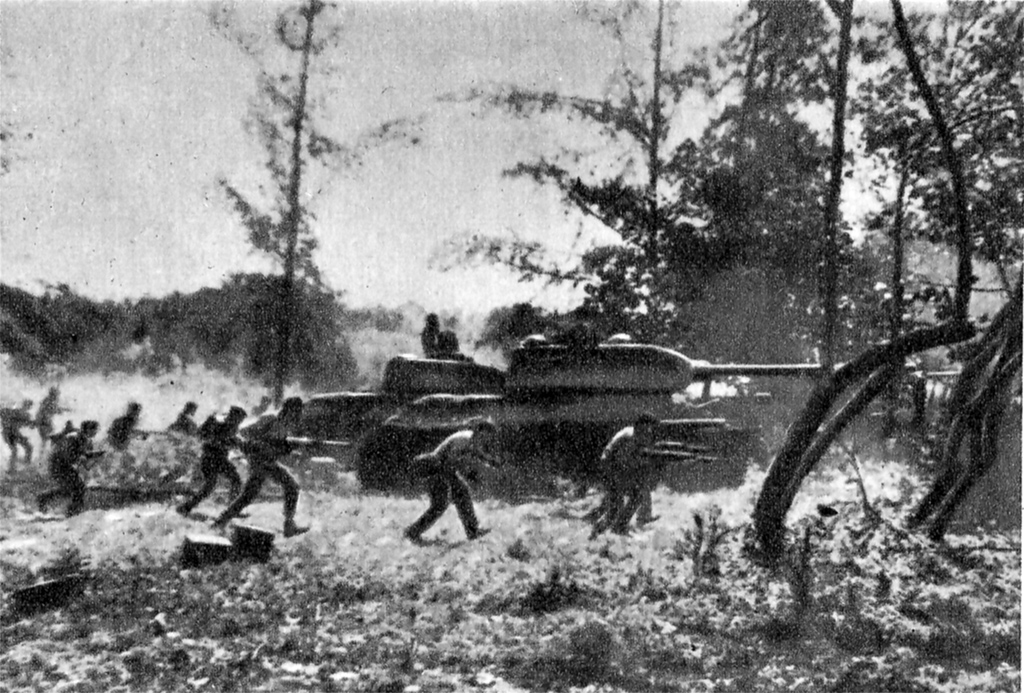
The three days. Castro directed the response personally and moved militia, army, artillery, and tanks down the single swamp road. Fighting spread through the Ciénaga de Zapata over about 72 hours, and it closed steadily on Girón, the last ground the brigade held. Out of ammunition and without the air cover and reinforcement the plan assumed, the brigade's line broke. By 19 April 1961 the invasion had collapsed on this beach. About 114 brigade members were killed in action; roughly 1,189 were taken prisoner, many pulled out of the swamp over the following days. Cuban losses, defenders and civilians, are recorded less precisely and are variously reported.

The ransom. The prisoners became a negotiation. After long talks led by the American lawyer James B. Donovan, Cuba agreed to release the captured brigade in exchange for roughly $53 million in food and medicine; the bulk were returned to the United States in December 1962, with the remainder following through 1965. The failure had lasting weight: it hardened Castro's alliance with the Soviet Union and helped set the stage for the Cuban Missile Crisis eighteen months later.

The memory, kept on site. What makes Girón unusual as a beach is that the battle is not a plaque you can miss. The Museo Girón, founded in April 1976 and declared a National Monument in 1978, sits in the village, and parked outside it are a Hawker Sea Fury of the type that sank the Río Escondido and one of Brigade 2506's M41 tanks, with an anti-aircraft gun alongside. Inside, two rooms hold photographs of the Cuban dead, captured uniforms and weapons, and field gear; the exhibits label the brigade as mercenaries. Along the coast road, individual concrete markers name Cuban fighters killed at the spots where they fell, and a roadside billboard declares Girón the first defeat of imperialism in the Americas. The state also fixed the name into daily life: the Order of Playa Girón, a national decoration, was created in 1961, and the Campeonato Nacional de Boxeo Playa Girón, Cuba's national amateur boxing championship, has run under the beach's name since 1962, its winners including the three-time Olympic champion Teófilo Stevenson.

What the beach is now. The coral shelf that helped defeat the landing is what draws visitors today. Cueva de los Peces, a flooded sinkhole about 70 metres deep, sits on the inland side of the road; Punta Perdiz and Caleta Buena, a cove about 8 kilometres southeast, are open, clear diving and snorkelling sites. There is no wide sand and no lifeguard, and you enter over sharp iron-shore rock. But the reason this beach earns a page is not the reef. It is that you can dive a quiet cove in the morning and, a short drive away, stand beside the tank and the fighter plane that decided a Cold War battle on a Caribbean beach.

Costa de Playa Girón.jpg
Culture

Where it shows up

History
  • Bay of Pigs Invasion (Girón) · 1961

    The CIA-sponsored invasion of 17-19 April 1961, defeated on this coast in about 72 hours. Cubans call it Girón, after the beach; the Americans call it the Bay of Pigs. The event is the reason the village is internationally known.

  • Order of Playa Girón · 1961

    A Cuban state decoration created in 1961 and named for the beach, awarded for exceptional service to the state, one of the ways the battle's name was fixed into national institutions.

Other
  • Campeonato Nacional de Boxeo Playa Girón · 1962

    Cuba's national amateur boxing championship, first held in March 1962 and named for the beach and the victory. Its long roster of Cuban champions includes the three-time Olympic gold medallist Teófilo Stevenson.

  • "Primera derrota del imperialismo" billboard

    A roadside propaganda billboard near the beach declaring Playa Girón the first defeat of Yankee imperialism in Latin America, a standing example of how the site is presented to visitors from the Cuban side.

Airplane in Museo Giron.jpg
History

What happened here

  1. 1604founding

    The beach takes a pirate's name

    The village and beach are named after Gilberto Girón, a French pirate active on this stretch of Cuba's southern coast around 1604, long before the wetland shore drew any wider attention.

    Wikipedia →
  2. 1961other

    Brigade 2506 lands at Blue Beach

    Around midnight on 17 April 1961, roughly 1,400 CIA-trained Cuban exiles of Brigade 2506 come ashore, with Playa Girón as the principal landing, code-named Blue Beach, and Playa Larga as Red Beach about 35 km up the bay.

    Wikipedia →
  3. 1961other

    Río Escondido sunk; supplies lost

    At about 09:30 on 17 April, a Cuban Hawker Sea Fury rockets the transport Río Escondido, which is carrying the brigade's reserve ammunition and fuel. The ship explodes and sinks, and the invaders are left without resupply within hours of landing.

    Wikipedia →
  4. 1961other

    The invasion collapses at Girón

    After about 72 hours of fighting across the Ciénaga de Zapata, Playa Girón is the last ground the brigade holds. Out of ammunition and without air cover, the force is defeated on the beach by 19 April 1961; about 114 are killed and roughly 1,189 captured.

    Wikipedia →
  5. 1961policy

    Order of Playa Girón created

    Cuba establishes the Order of Playa Girón, a state decoration named for the beach and the victory, one of several ways the battle is fixed into national life within the year.

    Wikipedia →
  6. 1962cultural

    First Playa Girón boxing championship

    The first Campeonato Nacional de Boxeo Playa Girón, Cuba's national amateur boxing championship, is held in March 1962, named for the beach less than a year after the invasion. It becomes the country's leading amateur tournament.

    Wikipedia →
  7. 1962policy

    Prisoners ransomed and returned

    After negotiations led by the American lawyer James B. Donovan, Cuba releases the captured brigade in exchange for roughly $53 million in food and medicine. The bulk of the prisoners return to the United States in December 1962, with the remainder following through 1965.

    Wikipedia →
  8. 1976cultural

    Museo Girón founded

    The Museo Girón (Museo Memorial Playa Girón) is founded in April 1976 to document the battle from the Cuban side, displaying a Hawker Sea Fury and one of Brigade 2506's M41 tanks outside and captured gear within.

  9. 1978policy

    Museum declared a National Monument

    On 10 October 1978 the National Commission of Monuments declares the Playa Girón museum site a National Monument by Resolution No. 3, formalizing the beach's status as a state memorial.

The honest part
“The museum's tank and fighter plane are real; the captions calling the dead exiles mercenaries are a state's account, not a settled one.”

Playa Girón is a war memorial that happens to be a beach, and the memorial is told from one side. Everything on the ground, the museum, the roadside markers, the billboard calling Girón the first defeat of Yankee imperialism in Latin America, presents the 1961 battle as a clean Cuban victory over foreign mercenaries. That framing is not wrong about the outcome: a CIA-organized invasion did land here and was destroyed on this coast in 72 hours. But it is a state narrative, curated to a purpose, and the men labelled mercenaries in the museum's captions were mostly Cuban exiles, and about 114 of them are buried by the same event the signs celebrate.

The visitor should take the beach as it is: a genuine historical site where the physical evidence, a real Sea Fury, a real M41 tank, real captured gear, is authentic, and the interpretation is political. The shore itself is honest about what it is not. There is no broad sand, no lifeguard, and no soft entry; you swim off sharp coral rock into clear water, and the draw is the diving and the history, not a day on the beach. It is a place to read carefully and dive carefully, and to remember that a monument's certainty is not the same as a settled account.

Attack near Playa Giron. April 19, 1961. - panoramio.jpg
Anatomy

The shape of the place

Cueva de los Peces and Punta Perdiz

12%

The dive coast up the road toward Playa Larga: Cueva de los Peces, a flooded sinkhole about 70 m deep, and Punta Perdiz, a reef edge with clear water, walls, and marine life a short distance offshore.

Best for Cenote swimming, snorkelling, and shore diving

The coast road between Girón and Playa Larga is lined with concrete markers naming Cuban fighters killed in the 1961 battle.

Museo Girón and the village

40%

The village core, anchored by the Museo Girón with a Hawker Sea Fury, an M41 tank, and an anti-aircraft gun parked outside, and the casas particulares where most visitors stay and eat.

Best for The battle museum, the hardware displays, and homestay meals

The museum is small, two rooms; a modest entrance fee, paid in cash, with an extra charge often applied for cameras.

The landing beach (Blue Beach)

50%

The low coral and limestone shore at the village where Brigade 2506's main landing came in on 17 April 1961. It is an iron-shore of sharp fossil rock rather than a sand beach, edged by clear water over reef.

Best for Standing on the ground of the main 1961 landing; easy reef access

No wide sand and no lifeguard; entry is over sharp diente de perro rock, so water shoes help.

Caleta Buena

90%

A protected cove about 8 km southeast of Girón, near the entrance of the bay, with clear water, rock landscapes, and a dive and snorkel operation. Entry is off rock into deep, sheltered water.

Best for Sheltered snorkelling and diving away from the village

Run as a day-use swimming and dive spot with a simple cafeteria; reached by the coast road southeast of the village.

Landmarks

Museo Girón · 1976

museum

The battle museum in the village, founded in April 1976 and declared a National Monument in 1978. Two rooms of photographs, uniforms, and captured weapons, with a Hawker Sea Fury, an M41 tank of Brigade 2506, and an anti-aircraft gun displayed outside.

Wikipedia →

Coast-road memorial markers

memorial

Individual concrete markers set along the coast road between Playa Girón and Playa Larga, each naming a Cuban fighter killed in the April 1961 battle at or near the spot where they fell.

Cueva de los Peces

cenote

A flooded karst sinkhole about 70 metres deep on the inland side of the coast road, holding a layered mix of fresh and salt water, used for swimming and snorkelling, with a small shore and reef across the road.

A day here

From first light to dark

Dawn

First light is quiet on the flat bay, the water usually glassy before the day's breeze, and the coral rock still cool. Divers and snorkellers are the early movers, heading for Cueva de los Peces or Caleta Buena before the sun climbs; the museum and the roadside markers stand empty.

Midday

By late morning the sun is hard overhead and there is little shade on the open iron-shore. The clear water is at its brightest for diving, and this is when tour vehicles from Playa Larga and further afield reach the Museo Girón to see the Sea Fury and the M41 tank parked outside.

Golden hour

Late afternoon softens the light along the coast road, where the concrete markers naming the Cuban dead run between Girón and Playa Larga. The bay is often calmest again toward evening, and the reef edge at Punta Perdiz holds the last good light for a final snorkel.

Night

After dark the village is small and quiet, life centred on the casas particulares where visitors eat and sleep. There is no beach nightlife; the water goes black over the reef, and the swamp behind the coast is loud with frogs and insects.

Anti-aircraft gun in Museo Giron.jpg
Sea & surf

What the water does

JFMAMJJASONDmetres (significant wave height)

Solid = typical monthly wave height; pale = the bigger days (90th pct). Offshore/regional swell from Open-Meteo Marine (ERA5 Ocean reanalysis, 2023–2024); a sheltered cove may sit calmer than this.

Mixed — usually swimmable, with a livelier season
Typical wave height
0.79 m
Biggest swell
Nov · 0.92 m
Calmest
May · 0.59 m
Typical period
6.2 s (wind chop)
Before you go

Things to know

This is a memorial coast, told from one side

The Museo Girón, the roadside markers, and the billboards present the 1961 battle as a Cuban victory over mercenaries. The hardware is authentic; the interpretation is a state narrative. Read it as such.

Not a sand beach

The shore is sharp coral and limestone iron-shore (diente de perro), not soft sand. Bring water shoes, and expect to enter the water off rock or from fixed ladders at the dive sites.

Come for diving and history, not swimming comfort

There is no lifeguard and no wide beach. The clear, reef-fringed water and the sinkhole at Cueva de los Peces make this a diving and snorkelling coast; the museum and coast-road memorials are the historical draw.

Bring cash

Playa Girón is a small village with limited and unreliable banking and card acceptance. Bring enough cash for lodging, meals, museum entry, and dive fees; casas particulares and cafeterias operate on cash.

Sharks

No incidents on record in the global shark-attack file.

Plan

If you go

Getting there
Nearest airport
Jaime Gonzalez Airport (CFG) · 64 km
Nearest town
Aguada de Pasajeros · 40 km

Playa Girón is on the coast road through the Ciénaga de Zapata in Matanzas Province. Most visitors arrive by car or hired taxi, roughly a 3 to 3.5-hour drive south from Havana or a shorter run from Cienfuegos, whose Jaime González Airport (CFG) is the nearest airport at about 64 km. Víazul intercity buses serve the Zapata coast on limited schedules; there is no rail service to the village.

When to go
  • Campeonato Nacional de Boxeo Playa Girón · Annual national amateur boxing championship

    Cuba's foremost amateur boxing tournament, run under the beach's name since 1962. It is held nationally rather than at the beach itself, but carries Girón's name as a standing commemoration of the 1961 victory.

  • Girón victory anniversary · Around 17-19 April each year

    The anniversary of the 1961 battle is marked in Cuba each April, and the museum and coast-road memorials at Playa Girón are the focal point of the commemoration of the victory.

What to eat & drink
Casa particular seafood

There are few restaurants on the beach itself; most visitors eat in the licensed private homestays (casas particulares) that dominate lodging in Girón. Home kitchens serve fresh fish and, when available, lobster, typically with rice and beans, fried plantains, and salad. Meals are arranged with the host and paid in cash.

Casas particulares throughout Playa Girón village

Congrí and moros y cristianos

The Cuban staple of rice cooked with beans, called congrí or moros y cristianos depending on the bean, is the standard side across the region, usually alongside roast pork or fish and tostones (twice-fried green plantain).

Casas particulares and roadside cafeterias in the Zapata area

Dive-site cafeterias

The state-run swimming and dive spots up the coast, Punta Perdiz and Caleta Buena, run simple cafeterias serving grilled fish, sandwiches, and drinks to day visitors. These are the main places to eat away from the village while diving the bay.

Punta Perdiz and Caleta Buena, north and southeast of Girón

Sources & references
  1. Wikipedia: Bay of Pigs Invasion · cited 3×
  2. Britannica: Bay of Pigs invasion · cited 2×
  3. EcuRed: Museo de Playa Girón · cited 2×
  4. Wikipedia: Playa Girón; Bay of Pigs Invasion · cited 2×
  5. Wikipedia: Playa Girón
  6. Wikipedia: Bay of Pigs Invasion; U.S. Naval Institute
  7. Wikipedia: Playa Girón; Britannica
  8. Wikipedia: Order of Playa Girón
  9. Wikipedia: Campeonato Nacional de Boxeo Playa Girón
  10. Britannica; Wikipedia: Bay of Pigs Invasion
  11. EcuRed: Museo de Playa Girón; History Hit
  12. Open-Meteo Marine (ERA5 reanalysis, 2023-2024)
Colophon · Provenance

Where this page comes from

Geography, facilities
OpenStreetMap (ODbL) for geometry and facility tags within 500 m of the beach centroid. GeoNames for city/airport distances.
Climate & ocean
Open-Meteo ERA5 + Marine archive, 2014–2023 monthly normals.
Photography
Archival, original tone (Tier B — Wikimedia Commons). Each image licensed per its own terms; attribution visible inline.
History & culture
Every factual claim is linked to its source in the prose above. Wikipedia citations inline. Non-wiki sources named where relevant.
Editorial voice
Register: clinical. Written to pass a local's nod test; corrections welcome.
Written by Erin Rose
Last reviewed 2026-04-19
v0.9 — in editorial development toward v1.0