Sardinia, IT

Poetto

Poetto beach.jpg

Sardinia, IT

Poetto

Cagliari's 8 km city beach, whose famous powdery white sand was buried in 2002 under darker imported sand in a renourishment so botched the city government was sued.

Poetto beach.jpg · Chris · CC BY 2.0
Nearest airport
CAG · 12 km
Tier
Featured
I’m here for
Story

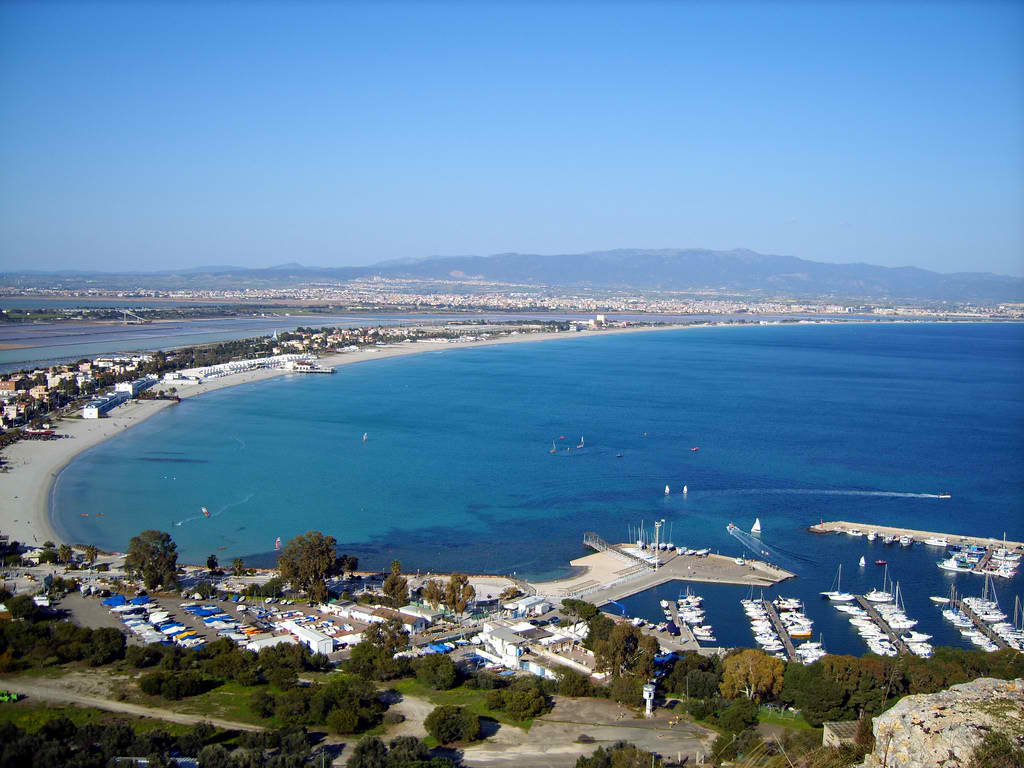
Poetto is the main beach of Cagliari, the capital of Sardinia, and it runs for about eight kilometers along the city's southeastern edge, from the limestone headland called the Sella del Diavolo, the Devil's Saddle, to the coastline of neighboring Quartu Sant'Elena. It is a true city beach: reachable by bus from the center, lined with stabilimenti and bars, packed with Cagliaritani in summer. For most of the twentieth century it was famous for one thing above all, its sand, a powdery, brilliant white that was the pride of the city.

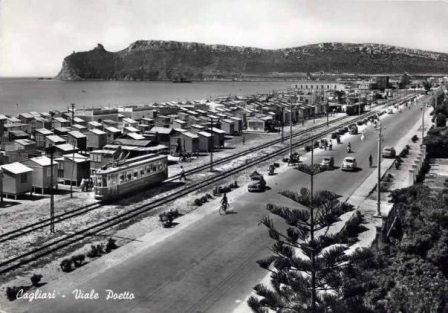
That sand is the heart of the beach's story, because Poetto has been losing it, and one of the attempts to save it became a notorious scandal. For decades the shore was dotted with casotti, colorful wooden huts that were half changing-room and half tiny beach house, a beloved local institution. They were entirely removed in 1986 for sanitation reasons, and their loss, combined with overcrowding and a lack of erosion-prevention work, set off a gradual dispersal of the sand and faster erosion.

The fix made it worse, and more famous. In 2002 the authorities approved a renourishment, locally the ripascimento, dredging sand from deeper water and spreading it along the Cagliari end of the beach to rebuild its surface. The new sand was the problem: darker, coarser, and of a completely different consistency than the fine white sand Cagliaritani had grown up with. It changed the face of Poetto so visibly and so unpopularly that the administration which approved the project was taken to court for damages. The beach had been given back its width and robbed of its color in the same stroke.

Behind all this, across the road, is the other half of Poetto's identity, and it is pink. The Molentargius wetlands and salt pans directly behind the beach host one of the most important Greater Flamingo breeding colonies in the western Mediterranean, alongside the Camargue in France and Fuente de Piedra in Spain. Flamingos have nested at Molentargius since 1993, in the thousands of pairs, and they fly over the city and the beach between the salt pans and the sea. Cagliari is, with some justification, a city of flamingos.

So Poetto is two stories on one shore: a much-loved urban beach in a long, losing fight with erosion and with its own botched repair, and the seaward edge of a great flamingo lagoon. It is not the flawless white strand of the postcards anymore, and the honest version, the lost huts, the darker sand, the lawsuit, the flamingos overhead, is more interesting than the postcard ever was.

The spike

Cagliari's 8 km city beach, whose famous powdery white sand was buried in 2002 under darker imported sand in a renourishment so botched the city government was sued.

Poetto is the beach of a city, and like a lot of city things it has been loved hard, managed badly, and argued over for decades. It is the eight-kilometer main beach of Cagliari, the capital of Sardinia, running from the limestone headland of the Sella del Diavolo to the edge of Quartu Sant'Elena, and for most of the last century its fame rested on a single quality: a powdery, brilliant white sand that Cagliaritani considered among the finest anywhere. The central story of modern Poetto is how that sand was lost, and how the attempt to restore it became a scandal.

The slow erosion. The trouble began with a loss of character. For decades the beach was lined with casotti, colorful wooden huts that were half changing-room and half miniature beach house, an institution of Cagliari summers. They were removed entirely in 1986 for sanitation reasons, and their disappearance, together with overcrowding and an absence of serious erosion-prevention work, set off a gradual dispersal of the beach's sand and a faster rate of erosion. The famous white strand started, quietly, to thin.

The fix that became the scandal. In 2002 the authorities acted, with a renourishment, the ripascimento in local usage. The plan was straightforward beach engineering: dredge sand from deeper water and spread it along the Cagliari end of Poetto to rebuild the lost width. The execution created a problem larger than the one it solved. The imported sand was darker, coarser, and of a completely different consistency than the fine white sand the city had grown up with, and it changed the look of Poetto visibly and immediately. The reaction was furious, and unusually concrete: the administration that approved the project was taken to court for damages. Poetto had been handed back some of its width and stripped of its color in the same operation, and the episode became a defining argument in the city's relationship with its own beach. Erosion has continued since, with reports of the beach losing on the order of a meter of sand a year and storms delivering fresh damage, so the renourishment did not even settle the underlying problem it was meant to fix.

The headland and the legend. The western end of the beach is anchored by the Sella del Diavolo, the Devil's Saddle, a saddle-shaped limestone promontory wrapped in a legend of a battle between an angel and the devil and topped by an old tower, the Torre del Poetto, that one account credits with giving the beach its name. Below it sits Marina Piccola, the small harbor that closes the Cagliari side. It is the dramatic, photogenic counterweight to the long flat sweep of the strand.

The pink behind the beach. And then there is the part of Poetto that has gone right, which is across the road and is pink. Directly behind the beach lie the Molentargius salt pans, a wetland in the middle of a metropolitan area, now a protected regional park, where Greater Flamingos have bred since 1993, in the thousands of pairs. Together with the Camargue in France and Fuente de Piedra in Spain, Molentargius is one of the three most important flamingo breeding colonies in the western Mediterranean, and the birds fly over the city and the beach between the salt pans and the sea. Cagliari has earned its informal title as a city of flamingos. They are visible from the beach itself, a wild pink commute against an urban skyline, an everyday sight few other European capitals can offer, and a reminder that the same shoreline holding a failed sand experiment also holds a thriving wild colony.

Why it matters. Poetto is worth a page precisely because it is not a pristine wonder but a real, contested, working city beach, and because the few hundred meters from the waterline to the salt pans contain two opposite environmental stories at once. On the seaward side is a cautionary tale: a beloved beach whose defining white sand was eroded away and then, in trying to fix it, recolored into something the city sued over. On the landward side is a quiet triumph: a protected lagoon that has produced one of Europe's great urban flamingo colonies. The honest Poetto is both, the darker sand and the pink birds, the lawsuit and the conservation success, held together on one shore. It is less beautiful than its old postcards and far more interesting than them.

Plage "Il Poetto", Cagliari.JPG
Culture

Where it shows up

Other
  • The flamingos of Cagliari · 1993

    The Greater Flamingos breeding at Molentargius behind Poetto since 1993 have made Cagliari, with the Camargue and Fuente de Piedra, one of the western Mediterranean's flamingo capitals, an emblem of the city.

History
  • The casotti · 1986

    The colorful wooden beach huts, half changing-room and half tiny house, that lined Poetto for decades and were removed in 1986, a lost piece of Cagliari's beach culture still remembered with affection.

  • The 2002 sand scandal · 2002

    The notorious renourishment that replaced Poetto's white sand with darker imported sand and led to a lawsuit against the city administration, a defining episode in modern Cagliari's relationship with its beach.

Lungomare Poetto - Cagliari.jpg
History

What happened here

  1. 1913founding

    The beach-establishment era

    In the early twentieth century Poetto develops as Cagliari's bathing beach, with the first Lido and its cabine (changing rooms) establishing the stabilimento culture that defines the shore. The colorful casotti huts grow up imitating them.

    Wikipedia →
  2. 1986policy

    The casotti are removed

    The casotti, the beloved colorful wooden huts lining the beach, are entirely removed in 1986 for sanitation reasons. Their removal, with overcrowding and a lack of erosion prevention, triggers a gradual dispersal of sand and faster erosion.

    Wikipedia →
  3. 1993natural

    Flamingos nest at Molentargius

    Greater Flamingos begin breeding at the Molentargius salt pans directly behind Poetto in 1993, establishing what becomes one of the western Mediterranean's most important flamingo colonies, in the thousands of pairs, in the heart of the city.

    Wikipedia →
  4. 2002policy

    The botched renourishment

    Authorities approve a renourishment (ripascimento), dredging darker, coarser deep-sea sand onto the Cagliari end of Poetto to rebuild its width. The new sand, of a completely different color and consistency, changes the beach's character so unpopularly that the administration is sued for damages.

    Wikipedia →
  5. 2023natural

    Erosion emergency

    Into the 2020s Poetto's erosion becomes an acknowledged emergency, with the beach reported to lose around a meter of sand a year and storms delivering further damage, prompting new sand-replenishment and prevention plans.

The honest part
The renourishment gave Poetto back its width and robbed it of its color in the same stroke.

The honest fact about Poetto is that it is a beach slowly losing the thing that made it famous, partly through the efforts to save it. The fine white sand that defined it for generations has been thinning for decades, accelerated by the 1986 removal of the casotti, by overcrowding, and by inadequate erosion control, and the beach is reported to lose on the order of a meter of sand a year. The headline failure was the 2002 renourishment: imported deep-sea sand, darker and coarser than the original, visibly changed the beach's character, and the project was controversial enough that the administration behind it was sued for damages. It is a textbook case of a fix that solved one problem (width) by creating another (identity), and it left Cagliari arguing about its own beach for years.

The more hopeful counterweight sits directly behind the sand. The Molentargius salt pans are a genuine conservation success: a wetland in the middle of a metropolitan area that has become one of the western Mediterranean's key flamingo breeding sites since 1993, protected as a regional park. The contrast is the real lesson of Poetto. On the seaward side, decades of mismanaged engineering have struggled to hold a beach together; on the landward side, protecting a lagoon has produced thousands of nesting flamingos in the heart of a city. The same few hundred meters hold both an environmental cautionary tale and an environmental win, and an honest visit takes in both.

Cagliari - Tram al Poetto.jpg
Anatomy

The shape of the place

Sella del Diavolo & Marina Piccola

8%

The Cagliari end of the beach, under the limestone headland of the Sella del Diavolo (the Devil's Saddle) with its legend and its old tower, beside the small harbor of Marina Piccola. The dramatic, photogenic anchor of the strand.

Best for The headland walk, the legend, the harbor, the western views

The 'Poetto' name is linked to an old tower (Torre del Poetto) above the Sella del Diavolo.

The main strand

50%

The long central body of the eight-kilometer beach, lined with stabilimenti and bars and packed with Cagliaritani in summer. The renourished sand here reads darker than the legendary white; this is the city's everyday beach.

Best for Swimming, the stabilimenti, the lungomare passeggiata, summer beach life

This is the stretch most affected by the 2002 renourishment and ongoing erosion.

The Molentargius salt pans

50%

The wetland and former salt pans directly behind the beach, now a regional park and one of the western Mediterranean's key flamingo breeding sites, with thousands of pink flamingos visible from the city.

Best for Flamingo watching, the wetland park, birdlife

Flamingos have bred here since 1993; the park is a conservation success in a metropolitan setting.

Landmarks

Sella del Diavolo (Devil's Saddle)

headland

The saddle-shaped limestone promontory closing the Cagliari end of Poetto, wrapped in a legend of a battle between angel and devil and topped by an old tower. The beach's defining natural landmark.

Wikipedia →

Molentargius–Saline Regional Park

protected area

The protected wetland and former salt-works directly behind Poetto, home to one of the western Mediterranean's most important Greater Flamingo breeding colonies and a rare urban conservation success.

Wikipedia →

Marina Piccola

harbour

The small marina at the Sella del Diavolo end of the beach, the harbor anchor of the Cagliari side of Poetto.

Wikipedia →
A day here

From first light to dark

Dawn

Early, before the city arrives, Poetto is long and quiet, the Sella del Diavolo a dark hump at the western end and the sea flat and clear. Over the salt pans behind the beach the flamingos are already up, pink against the early light, and joggers and swimmers have the eight kilometers nearly to themselves.

Midday

By day in summer Poetto is Cagliari's living room: stabilimenti and beach bars, umbrellas the length of the shore, kids in the warm shallow water, the whole city out on the sand. The renourished sand reads slightly darker than the famous white, but the scene is pure Mediterranean city beach.

Golden hour

Late afternoon light turns the limestone of the Devil's Saddle gold and softens the beach. Flamingos cross between the Molentargius pans and the sea, and the lungomare fills for the evening passeggiata, the slow walk along the front that is part of the daily ritual here.

Night

After dark the beach bars and the lidi along the front carry the night, and the lights of Cagliari curve around the gulf. The Sella del Diavolo stands black against the sky at the end of the strand, the salt pans quiet behind, the flamingos roosting until morning.

Cagliaripoetto.jpg
Sea & surf

What the water does

JFMAMJJASONDmetres (significant wave height)

Solid = typical monthly wave height; pale = the bigger days (90th pct). Offshore/regional swell from Open-Meteo Marine (ERA5 Ocean reanalysis, 2023–2024); a sheltered cove may sit calmer than this.

Calm — gentle swimming water most of the year
Typical wave height
0.5 m
Biggest swell
Mar · 0.62 m
Calmest
Aug · 0.36 m
Typical period
5 s (wind chop)
Before you go

Things to know

The sand isn't the legendary white anymore

Poetto's famous powdery white sand was largely replaced at the Cagliari end by darker, coarser sand in the controversial 2002 renourishment. It is still a fine city beach, just not the flawless white strand of older postcards.

Go see the flamingos

The Molentargius salt pans directly behind the beach host one of the Mediterranean's great flamingo colonies. The wetland park is free to visit and an easy, rewarding pairing with the beach, especially in nesting season.

It's a true city beach

Poetto is Cagliari's own beach, packed in summer and easily reached by city bus from the center. Come for the social, stabilimenti-and-passeggiata Mediterranean scene, not for solitude.

Getting there

Poetto fronts Cagliari, with Cagliari Elmas Airport (CAG) about 12 km away. City buses run from the center to the beach in minutes; the Sella del Diavolo end is the most scenic.

Swimming

Usually calm water — among the gentler beaches for a swim.

Sharks

No incidents on record in the global shark-attack file.

Plan

If you go

Getting there
Nearest airport
Cagliari Elmas Airport (CAG) · 12 km
Nearest town
Quartucciu · 5 km

Poetto is the city beach of Cagliari, capital of Sardinia, running about 8 km from the Sella del Diavolo to Quartu Sant'Elena. Cagliari Elmas Airport (CAG) is about 12 km away, and frequent city buses connect central Cagliari to the beach in minutes. The Molentargius salt pans and their flamingos lie directly behind the shore.

When to go
  • Flamingo nesting season · Spring into summer

    Each spring and summer thousands of Greater Flamingos nest and raise chicks at the Molentargius salt pans behind Poetto, a seasonal spectacle visible from the city and the beach.

  • The Cagliari summer beach season · June to September

    In the Sardinian summer Poetto becomes the social heart of Cagliari, with the stabilimenti, beach bars, and the evening lungomare passeggiata in full swing.

What to eat & drink
The Poetto stabilimenti and beach bars

The beach is lined with stabilimenti (bathing establishments) and chiringuito-style bars serving aperitivi, panini, fried fish, and drinks through the summer, the social engine of Cagliari's beach life as much as the swimming.

Along the Poetto lungomare

Cagliari and Sardinian food

The city behind the beach offers Sardinian cooking: fregola with clams, bottarga (cured mullet roe), su porceddu (roast suckling pig), culurgiones, and Vermentino wine. The Marina district and the old town are the places to eat properly.

Cagliari city (a short ride from the beach)

Seafood and the gulf

Cagliari is a seafood city on the Gulf of Angels; fresh fish, sea urchins in season, and shellfish feature heavily, much of it tied to the same coastal waters the beach fronts.

Cagliari and the Poetto front

Sources & references
  1. Wikipedia: Poetto · cited 5×
  2. Wikipedia: Poetto; L'Unione Sarda · cited 2×
  3. Wikipedia: Poetto (early-20th-century development)
  4. L'Unione Sarda; Molentargius–Saline Regional Park
  5. L'Unione Sarda (erosion reporting)
  6. L'Unione Sarda
  7. L'Unione Sarda; Molentargius park
  8. Beach data
Colophon · Provenance

Where this page comes from

Geography, facilities
OpenStreetMap (ODbL) for geometry and facility tags within 500 m of the beach centroid. GeoNames for city/airport distances.
Climate & ocean
Open-Meteo ERA5 + Marine archive, 2014–2023 monthly normals.
Photography
Archival, original tone (Tier B — Wikimedia Commons). Each image licensed per its own terms; attribution visible inline.
History & culture
Every factual claim is linked to its source in the prose above. Wikipedia citations inline. Non-wiki sources named where relevant.
Editorial voice
Register: wry. Written to pass a local's nod test; corrections welcome.
Written by Erin Rose
Last reviewed 2026-04-19
v0.9in editorial development toward v1.0