Faro, PT

Praia da Rocha

Praia da Rocha, Portimão 2.jpg

Faro, PT

Praia da Rocha

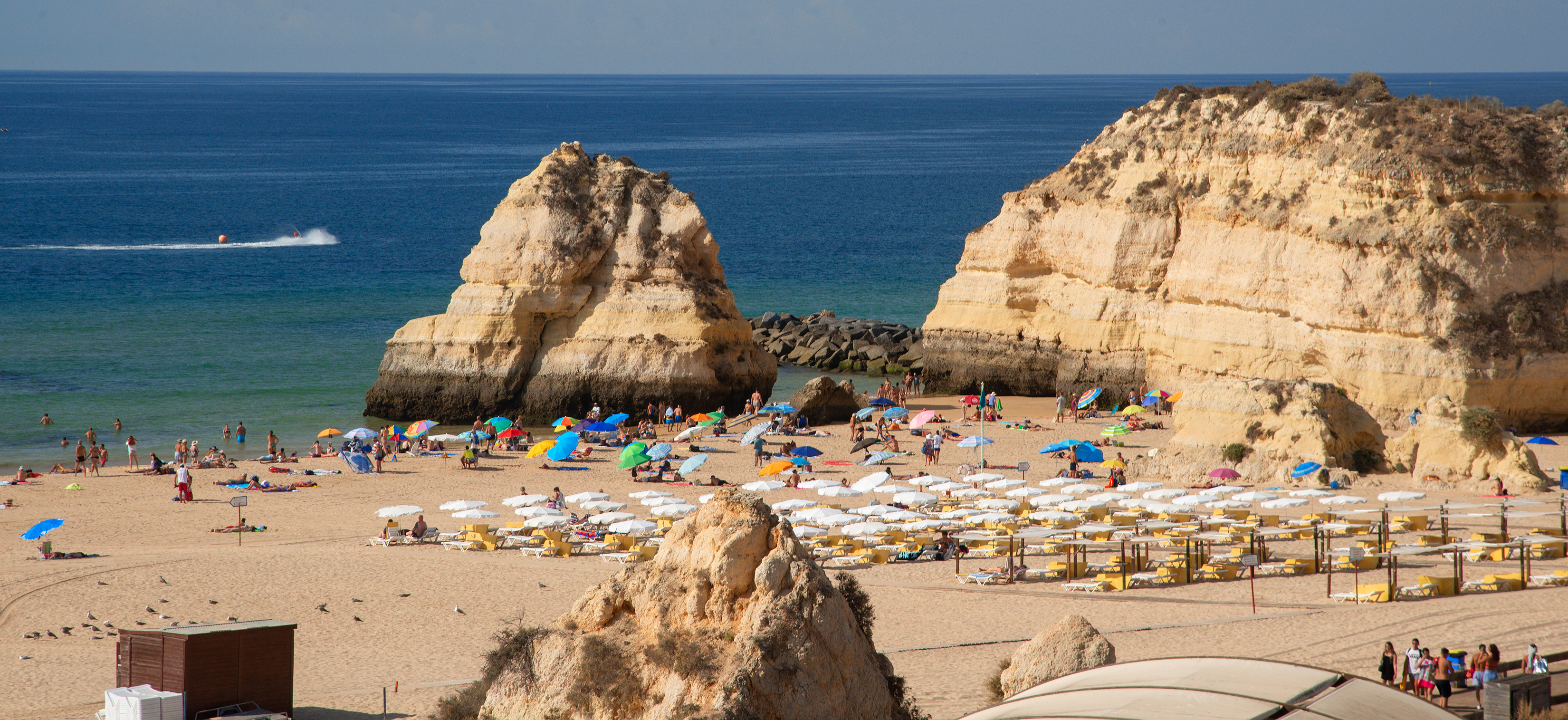
One of the Algarve's first resort beaches: a wide sand sweep under ochre cliffs and rock stacks that became the prototype for Portuguese mass tourism.

Praia da Rocha, Portimão 2.jpg · <a href="//commons.wikimedia.org/wiki/User:Stevenfruitsmaak" title="User:Stevenfruitsmaak">Steven Fruitsmaak</a> · CC BY-SA 3.0
Substrate
sand
Spring tide
2.72 m
Nearest airport
PRM · 6 km
Tier
Featured
I’m here for
Story

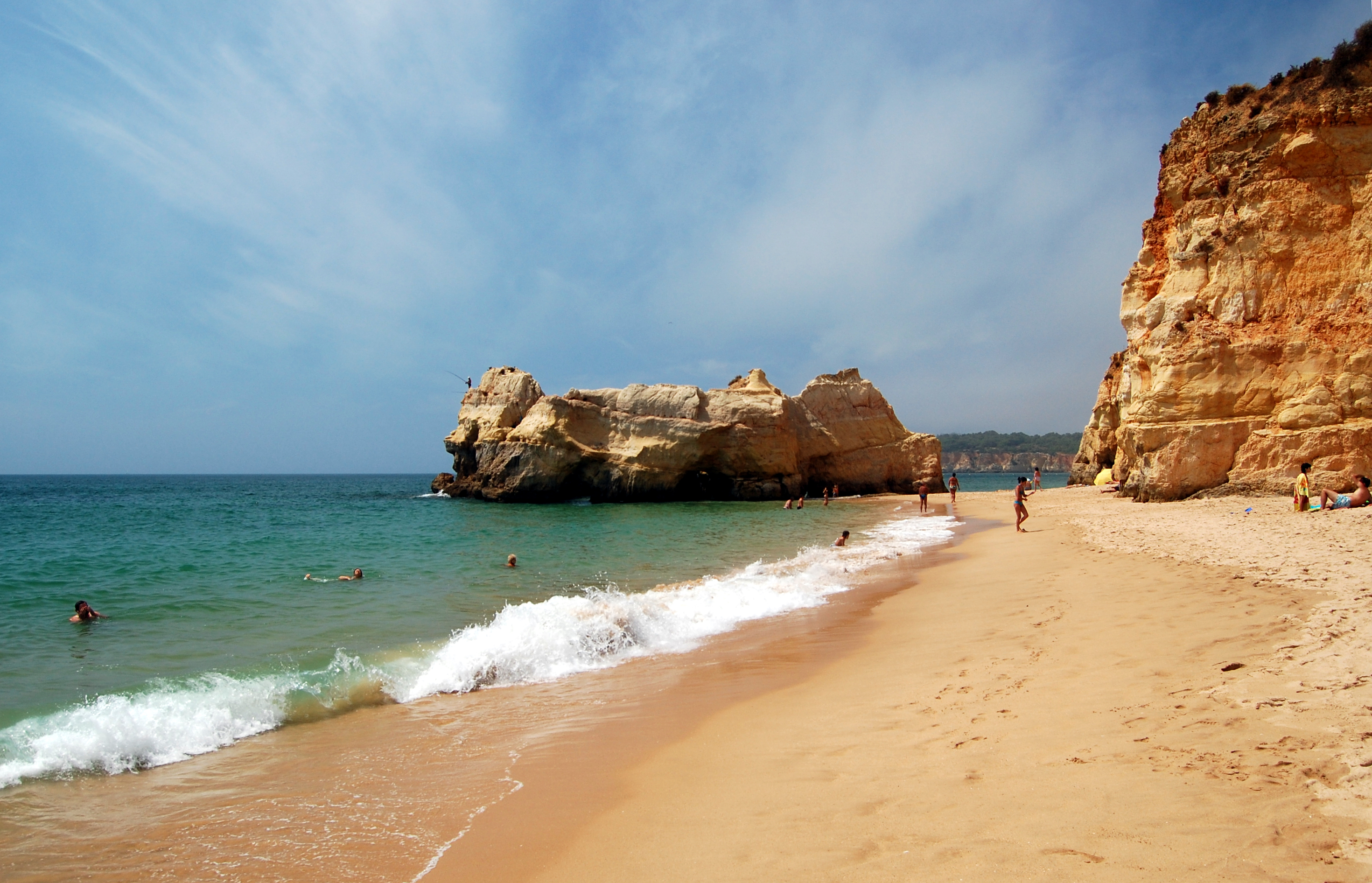
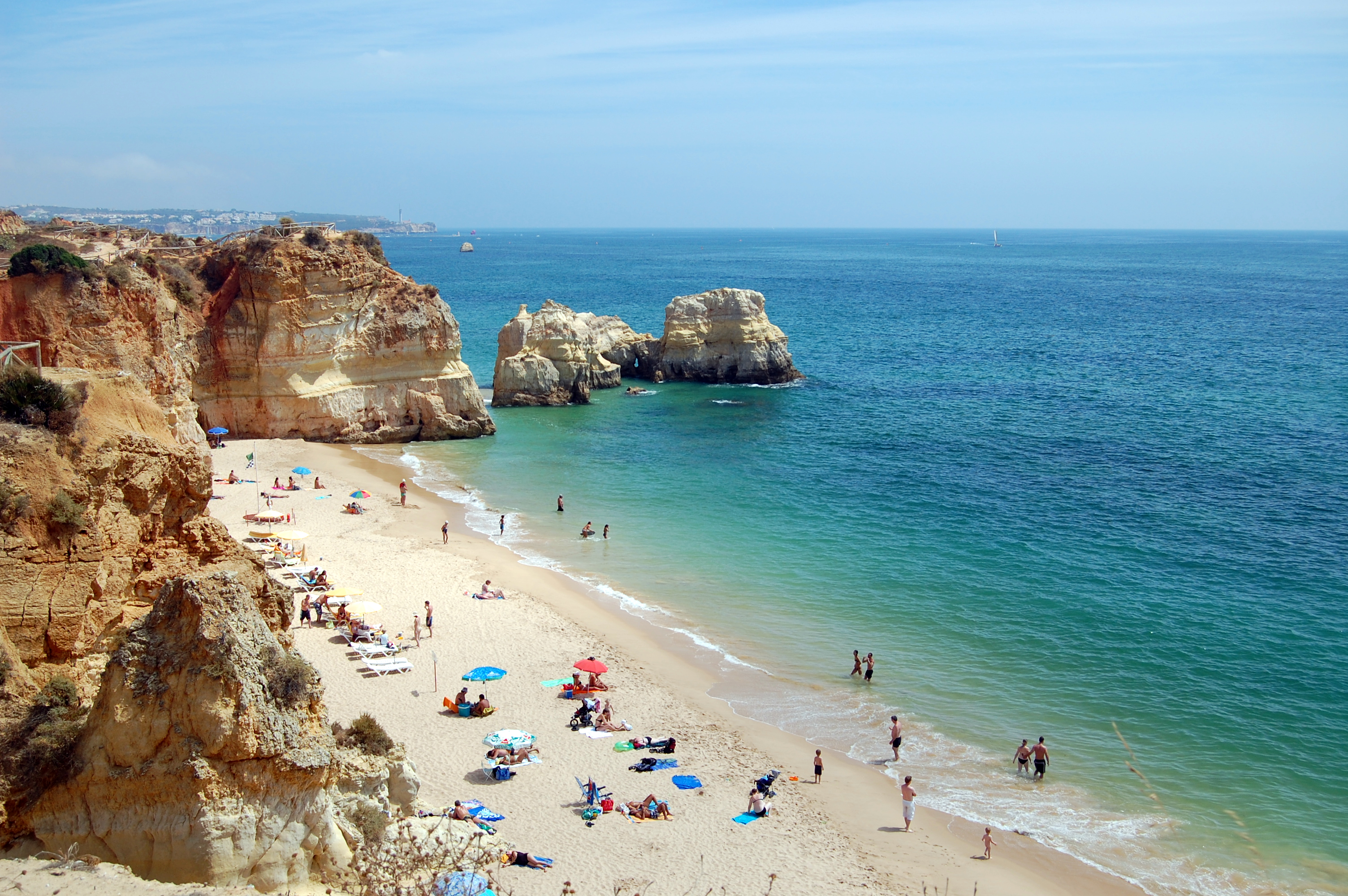
Praia da Rocha is a wide sweep of golden sand at the foot of ochre limestone cliffs on the Atlantic coast of Portimão, in the western Algarve of southern Portugal. The beach runs roughly 1.5 kilometers and is one of the widest in the Algarve — a vast low-tide expanse backed by cliffs the color of rust and honey, with detached rock stacks rising straight out of the water. At its eastern end, where the beach meets the mouth of the Arade River, stands the Fortaleza de Santa Catarina, a stone fort begun in 1621.

The cliffs and stacks are Miocene limestone. Where erosion cut into them it left the shapes that named the neighboring cove — Praia dos Três Castelos, the Beach of the Three Castles — weathered pinnacles up to about 10 meters, the rock's horizontal bedding showing like courses of masonry. The sand below is partly engineered: spoil dredged from the Arade to keep Portimão's harbor open was deposited here, widening the beach.

This was one of the first places in the Algarve outsiders came to on purpose. In the early twentieth century it was a small, elegant resort of villas and chalets for wealthy Portuguese families, rediscovered by the British in the 1930s and treated as a refuge by writers and intellectuals. The Bela Vista — built in 1918 as a private mansion, then one of the Algarve's first hotels — still stands among the towers. In 1932 the Grande Hotel opened on the cliff-top avenue, and Praia da Rocha got the first casino in the Algarve.

Then came the boom. After Faro Airport opened in 1965, foreign overnight stays in the Algarve went from about 30,000 in 1960 to 500,000 by 1967, and Praia da Rocha took mass tourism first. Through the 1970s and 1980s the villas were torn down for high-rise hotels and apartment blocks. The elegant little resort of the 1930s was built over by the resort machine it had invented. The skyline today is concrete, and not everyone in Portimão is happy about it.

The spine of the modern resort is Avenida Tomás Cabreira, the cliff-top promenade lined with restaurants, sunset terraces and a wall of hotels, with concrete stairways down to the sand. In summer it is a nightlife strip, and since 2019 the beach has hosted Afro Nation — billed as the world's biggest Afrobeats festival, drawing 40,000-plus from over 100 countries onto the sand. The beach is genuinely good: wide, Blue Flag, lifeguarded in season, calm Atlantic water. What sits behind it is the most complete record in Portugal of what mass beach tourism does to the coast that invents it.

The spike

One of the Algarve's first resort beaches: a wide sand sweep under ochre cliffs and rock stacks that became the prototype for Portuguese mass tourism.

Praia da Rocha's spike is not a wave, a shipwreck, or a rare species. It is a transformation, and the fact that this is where the transformation started. This is the beach that taught the Algarve how to be a mass-tourism coast — and then was rebuilt, inside two generations, by the industry it had pioneered. To read Praia da Rocha honestly you have to hold the beach and the skyline as a single object: the wide ochre-cliff sand that drew the first visitors, and the wall of concrete that the visitors eventually became.

The beach itself. Geologically, Praia da Rocha is a textbook stretch of the Barlavento (windward) Algarve. The cliffs are Miocene limestone, roughly rust-and-ochre colored, and the sea has cut them into sheer faces in some places and into detached stacks in others. The most photographed of these sit off the adjacent cove, Praia dos Três Castelos — the Three Castles — where weathered pinnacles up to about 10 meters stand in the shallows with their horizontal bedding planes showing like stacked stone. The main beach below is unusually wide for the Algarve, especially at low tide, which is exactly why it became a resort: a vast flat sand floor is what a sunbathing tourism economy is built on. Part of that width is human-made. Sand dredged from the Arade River, to keep the port of Portimão navigable, was deposited onto the beach, enlarging it. So even the sand is partly a tourism artifact.

The fort at the river mouth. At the eastern end, where the beach meets the Arade, stands the Fortaleza de Santa Catarina. Construction began in 1621 and the fort was completed by 1633, designed by the military engineer Alexandre Massai, who chose the site for its command of the river mouth and its drinking water. Together with the Fort of São João do Arade on the Ferragudo bank opposite, it guarded the approach up the Arade toward Silves against pirates and raiders. The 1755 Lisbon earthquake — which devastated the whole Algarve coast — damaged it badly. In the twentieth century the Portuguese military held it; later it became what it is now, a viewpoint and esplanade with a café at the top of the cliff. It is the one structure on the beach that predates tourism by three centuries, and it watches the whole story from the corner.

The elegant resort, before the boom. Praia da Rocha was a beach destination long before the package flight. In the early twentieth century it was a small, fashionable resort of villas and chalets used by wealthy Portuguese families — and from the 1930s it was rediscovered by the British and treated as a quiet refuge by writers and intellectuals drawn to the cliffs and the light. The physical evidence still stands: the Bela Vista, built in 1918 as a private seaside mansion (a neo-Gothic, vaguely oriental villa) and soon converted into one of the very first hotels on the Algarve. In 1932 the Grande Hotel opened on the cliff-top avenue, and the resort acquired the first casino in the Algarve — the gambling anchor that, before Faro had an airport, made Praia da Rocha the most sophisticated beach in the south. This is the part the high-rises erased: a low-built, slightly aristocratic, literary little resort that for a few decades was the Algarve's idea of glamour.

The boom, and the conversion. Then access arrived and the scale changed. Faro Airport opened in 1965, the road network improved, and the Algarve's foreign overnight stays exploded — from roughly 30,000 in 1960 to 500,000 by 1967. Praia da Rocha, already the best-known beach with the best-known name, was the first to absorb mass tourism at volume. Through the 1970s and 1980s the development became wholesale: the old villas and chalets were demolished and replaced by high-rise hotels and apartment towers, and the cliff-top filled in with a continuous wall of building. The beach that had taught Portugal how to do beach tourism was rebuilt by the success of the lesson. By the time the boom was done, the elegant resort of the 1930s survived mostly as a single anomalous hotel (the Bela Vista) standing among towers, and as photographs in local memory exhibitions of a "disappeared" Praia da Rocha. An academic study of the place is literally subtitled *um paradigma da antropização do litoral* — a paradigm of the humanization (anthropization) of the coastline. That is the precise claim: this beach is the model case for what the tourism economy does to a coast.

The strip. The operational heart of the modern resort is Avenida Tomás Cabreira, the cliff-top promenade that runs the length of the beach. Concrete stairways drop from it down to the sand; along it run the restaurants, the beach cafés, the sunset terraces, and — in the towers behind — the bars and clubs that make Praia da Rocha a summer nightlife destination. The current five-star Hotel Algarve Casino keeps the gambling tradition on the same avenue. The beach below stays a family beach by day and the avenue above becomes a strip by night; the two coexist on the same cliff, separated by a staircase. Since 2019 the sand has also hosted Afro Nation, marketed as the world's largest Afrobeats festival, which in 2025 drew more than 40,000 people from over 100 countries onto the beach over a weekend — a 21st-century version of the same logic that built the place: bring the maximum number of people to this particular sand.

What Praia da Rocha reveals. Patong in Thailand or Benidorm in Spain are often cited as the type-specimens of overbuilt beach tourism, but the Algarve's version started here, earlier and more genteel, and then ran the full arc — fishing-and-villa coast, literary refuge, casino resort, then total redevelopment into concrete. The honest read is not that the beach was ruined; the sand is wide, clean, Blue Flag, lifeguarded, and the cliffs and stacks are real geology that no skyline can fake. The honest read is that you are standing on the origin point of Algarve mass tourism, looking up at the physical record of what that industry does when it succeeds. The fort has watched it for 400 years. The Bela Vista has watched it for 100. The towers are the last hundred. Go knowing you are reading a complete case history, not just lying on a beach.
Algarve Hotel - Beach side - panoramio (1).jpg
Culture

Where it shows up

History
  • 1930s literary refuge · 1930

    In the 1930s Praia da Rocha was rediscovered by British visitors and treated as a quiet refuge by writers and intellectuals, drawn to the cliffs and the light when the place was still an elegant resort of villas and chalets rather than a high-rise strip.

  • First casino in the Algarve · 1932

    Praia da Rocha hosted the Algarve's first casino, anchored by the Grande Hotel that opened on Avenida Tomás Cabreira in 1932. The gambling tradition continues at the modern Hotel Algarve Casino on the same avenue — the resort's longest-running form of nightlife.

Music
  • Afro Nation · 2019
    Afro Nation (festival)

    The festival marketed as the world's biggest Afrobeats event, held on Praia da Rocha beach since its 2019 debut. The 2025 edition drew more than 40,000 people from over 100 countries to the sand, with major Afrobeats and R&B headliners.

Literature
  • Praia da Rocha (Algarve, Portugal): um paradigma da antropização do litoral · 2012
    Revista de Gestão Costeira Integrada (academic study)

    A peer-reviewed coastal-management study that frames Praia da Rocha as the model case ('paradigm') of the anthropization — human reshaping — of the Algarve coastline, documenting in scholarly form what the skyline shows at a glance.

Praia da Rocha 2014-09-11.jpg
History

What happened here

  1. 1621built

    Fortaleza de Santa Catarina begun

    Construction of the Fort of Santa Catarina begins at the eastern end of the beach, where it meets the Arade River. Designed by military engineer Alexandre Massai, it guards the river approach toward Silves against pirates and raiders, paired with the Fort of São João do Arade on the Ferragudo bank opposite. The fort is completed by 1633.

    Wikipedia →
  2. 1755disaster

    Lisbon earthquake damages the fort and coast

    The 1 November 1755 Lisbon earthquake and its tsunami devastate the Algarve coast and badly damage the Fortaleza de Santa Catarina. The fort is later held by the Portuguese military before becoming the cliff-top viewpoint and esplanade it is today.

    Wikipedia →
  3. 1918built

    Bela Vista mansion built

    A neo-Gothic, vaguely oriental seaside mansion is built at Praia da Rocha as a private summer residence. It is soon converted into a hotel and becomes one of the very first hotels on the Algarve — and the surviving physical trace of the resort's elegant early era.

  4. 1932built

    Grande Hotel opens; first Algarve casino

    The Grande Hotel da Praia da Rocha opens on the cliff-top Avenida Tomás Cabreira, and the resort acquires the first casino in the Algarve. Before Faro had an airport, this makes Praia da Rocha the most sophisticated beach in the south, drawing wealthy Portuguese families and 1930s British visitors.

  5. 1965infrastructure

    Faro Airport opens

    Faro International Airport opens, and with improved roads it opens the Algarve to international mass tourism. Foreign overnight stays in the region climb from about 30,000 in 1960 to 500,000 by 1967. Praia da Rocha, already the best-known beach, is the first to take mass tourism at volume.

    Wikipedia →
  6. 1975development

    High-rise redevelopment of the cliff-top

    Through the 1970s and 1980s the elegant resort of villas and chalets is demolished and replaced by high-rise hotels and apartment blocks along the cliff-top. The low-built, aristocratic resort of the 1930s gives way to an almost continuous wall of concrete — the redevelopment that defines the modern skyline.

  7. 2012cultural

    Study names Praia da Rocha a coastal-anthropization paradigm

    A peer-reviewed paper in the Revista de Gestão Costeira Integrada, 'Praia da Rocha (Algarve, Portugal): um paradigma da antropização do litoral', frames the beach as the model case of human modification of the Algarve coast — academic confirmation of what the skyline already shows.

  8. 2019cultural

    Afro Nation debuts on the beach

    The Afro Nation festival, billed as the world's biggest Afrobeats event, holds its debut edition on Praia da Rocha. It returns annually; the 2025 edition draws more than 40,000 people from over 100 countries onto the sand over a weekend.

    Wikipedia →
  9. 2025cultural

    Afro Nation draws 40,000+

    Afro Nation's 2025 edition on Praia da Rocha gathers more than 40,000 festivalgoers from over 100 countries, with headliners including major Afrobeats and R&B acts — a 21st-century echo of the logic that built the resort: maximum people on this exact sand.

The honest part
The elegant little resort that taught the Algarve how to do tourism was demolished by the tourism it taught — the towers are the lesson learned too well.

Praia da Rocha is the place where Algarve mass tourism was invented, and it carries the full cost of that invention in its skyline. The elegant resort of villas, chalets and a casino that drew Portuguese families and 1930s British writers was not preserved — it was demolished. Through the 1970s and 1980s the cliff-top was rebuilt as an almost continuous wall of high-rise hotels and apartment blocks, and the low, slightly aristocratic resort the British rediscovered survives mainly as one out-of-place hotel (the 1918 Bela Vista) and as photographs of a 'disappeared' Praia da Rocha in local memory exhibitions. Foreign overnight stays in the Algarve went from about 30,000 in 1960 to 500,000 by 1967, and this beach took the first wave. A peer-reviewed study calls the place a paradigm of the anthropization of the coast — academic language for: this is the model case of what tourism does to a shoreline.

The trade-off is real on both sides. The beach is genuinely good — wide, Blue Flag, lifeguarded in summer, with calm Atlantic water and authentic ochre cliffs and rock stacks that no developer made. But the cliff-top promenade, Avenida Tomás Cabreira, is a summer nightlife strip backed by towers; July brings Afro Nation and 40,000-plus festivalgoers onto the sand; and high-season crowding is the defining condition, not the exception. Not everyone in Portimão is happy with the skyline, and they have a point. Report it plainly: a first-rate beach, a pioneering resort history, and the most complete monument in Portugal to the concrete that beach tourism builds.

Praia da Rocha beach, Portimão.jpg
Anatomy

The shape of the place

Praia dos Três Castelos (west)

5%

The cove west of the main beach, framed by sheer ochre cliffs and the detached limestone stacks — the 'Three Castles' — up to about 10 m high. Smaller, more sheltered, dramatic geology; reached via clifftop steps and the Miradouro dos Três Castelos viewpoint.

Best for Cliff-and-stack scenery, photography, a smaller cove away from the main crowd

Access is by steps; little shade; check the tide, as sand narrows at high water.

Main beach (below Avenida Tomás Cabreira)

50%

The wide central sweep of golden sand below the cliff-top promenade, reached by concrete stairways from Avenida Tomás Cabreira. Blue Flag, lifeguarded in season, very broad at low tide. Umbrellas, swimmers, boat-trip touts, and the calm Atlantic. The family beach by day.

Best for Swimming, wide-beach sunbathing, families, easy access from the strip above

Crowded in high season; the avenue above is a nightlife strip after dark.

Fortaleza de Santa Catarina (east end)

95%

The 17th-century stone fort at the eastern end where the beach meets the Arade River mouth — now a cliff-top viewpoint and esplanade with a café, overlooking the river, the marina and Ferragudo opposite.

Best for History, the best clifftop view, watching boats enter the Arade

Free to walk up; the oldest structure on the beach by three centuries.

Marina de Portimão / Arade mouth

100%

The marina and river-mouth zone just east of the fort, base for cave-and-dolphin boat trips up the coast and water-taxi crossings to Ferragudo. The link between the beach and Portimão's working riverfront.

Best for Boat excursions, dolphin and cave tours, crossing to Ferragudo

Not a swimming spot; this is the river channel and harbour.

Landmarks

Fortaleza de Santa Catarina · 1633

fort · Alexandre Massai

Stone coastal fort at the eastern end of the beach, begun in 1621 and completed by 1633 to a design by military engineer Alexandre Massai. Built to guard the mouth of the Arade River and the approach toward Silves against pirates and raiders, paired with the Fort of São João do Arade opposite. Damaged by the 1755 Lisbon earthquake, later held by the military, now a cliff-top viewpoint and esplanade with a café.

Wikipedia →

Bela Vista (hotel) · 1918

building

A neo-Gothic, faintly oriental seaside mansion built in 1918 as a private summer residence and soon converted into a hotel — one of the very first on the Algarve. It still stands among the high-rise towers, the surviving architectural trace of Praia da Rocha's elegant pre-boom resort era.

Três Castelos rock stacks

natural

A cluster of detached Miocene-limestone sea stacks off the cove west of the main beach, weathered into pinnacle shapes likened to castles (hence Praia dos Três Castelos, the Beach of the Three Castles). The tallest stands roughly 10 metres, with horizontal bedding planes visible like courses of stone.

Wikipedia →
A day here

From first light to dark

Dawn

At first light the wide beach is nearly empty and the strip above is shuttered. Low tide pulls the Atlantic back across the flat sand, exposing the full breadth of the beach and the bases of the rock stacks. The ochre cliffs catch the early sun and glow rust-orange; the Fortaleza de Santa Catarina sits dark against the brightening sky at the river end. Joggers and a few early swimmers have the sand to themselves.

Midday

By late morning the umbrellas are out across the wide sand, the lifeguards are posted, and the Blue Flag water fills with swimmers in the calm Atlantic. The beach is broad enough to absorb a large crowd without feeling packed at the waterline. Above, the cafés along Avenida Tomás Cabreira run full, boat-trip operators tout cave cruises out of the Arade, and the heat sits heavy on the cliff-top concrete.

Golden hour

Sunset is the avenue's hour. The cliff-top promenade faces the light, and the terraces and sunset bars along Tomás Cabreira fill to watch the sky go orange behind the stacks. The ochre cliffs deepen to copper. Below, the day-beach empties as the sunbathers climb the concrete stairs toward the bars, and the two halves of Praia da Rocha — beach and strip — swap places for the night.

Night

After dark the strip takes over. The bars and clubs in the towers behind Avenida Tomás Cabreira run late through the summer, and the promenade becomes a nightlife corridor above a black, quiet beach. On Afro Nation weekends in July the beach itself becomes the venue — tens of thousands on the sand, stages against the cliffs, the festival reproducing in one weekend the logic that built the whole place: bring the maximum number of people to this exact beach.

Compare

How it ranks

Peak warmth
Warmer than 69% of beaches in its country
Peak-month high ≈ 27°C

Ranked against every beach in our database — 228,000+ worldwide.

Praia da rocha portimão.jpg
Sea & surf

What the water does

JFMAMJJASONDmetres (significant wave height)

Solid = typical monthly wave height; pale = the bigger days (90th pct). Offshore/regional swell from Open-Meteo Marine (ERA5 Ocean reanalysis, 2023–2024); a sheltered cove may sit calmer than this.

Mixed — usually swimmable, with a livelier season
Typical wave height
0.77 m
Biggest swell
Feb · 1.08 m
Calmest
Jul · 0.55 m
Typical period
6.9 s (wind chop)
Before you go

Things to know

It is a city beach with a nightlife strip

Praia da Rocha is the opposite of a quiet cove. The cliff-top Avenida Tomás Cabreira is a wall of hotels, bars and restaurants that runs as a nightlife strip in summer. The beach below is a good family beach by day; if you want silence, this is not the beach — go west to the smaller coves.

Mind the tide and the stairs

The beach is widest at low tide and narrows considerably at high water, especially in the Três Castelos cove. Access from the avenue is by long concrete stairways down the cliff — fine going down, a climb coming back up in the heat. There is little natural shade on the sand.

Blue Flag and lifeguarded, but it is the Atlantic

The water is Blue Flag and lifeguarded in season, and usually calm and swimmable. It is still the open Atlantic — cooler than the Mediterranean, with currents that can pick up. Swim near the lifeguard, and heed the flag colours.

July means a festival, not just a beach day

Afro Nation takes over the beach for a weekend in July, with tens of thousands of attendees and the sand turned into a festival site. Great if that is what you came for; check the dates before booking a quiet beach week, because that week will not be quiet.

Sharks

No incidents on record in the global shark-attack file.

Plan

If you go

Getting there
Nearest airport
Portimão Airport (PRM) · 6 km
Nearest town
Portimao · 3 km

Praia da Rocha is on the Atlantic coast of Portimão in the western Algarve, about 2 km south of Portimão town centre. The nearest airport is Faro (FAO), roughly an hour east by car or the A22 motorway; Lisbon is about 2.5–3 hours north. Portimão has a train station on the Algarve line (the Linha do Algarve) with connections toward Lagos, Faro and Lisbon, and local buses run from the town down to the beach. By car, follow signs from Portimão to Praia da Rocha; cliff-top parking along and off Avenida Tomás Cabreira fills fast in summer. Boat trips, dolphin-and-cave tours and the water taxi to Ferragudo leave from the Marina de Portimão and the Arade river mouth at the eastern end of the beach, by the fort.

When to go
  • Afro Nation Portugal · July

    Multi-day Afrobeats festival held on Praia da Rocha beach since 2019, billed as the world's biggest of its kind. Stages set against the cliffs; the 2025 edition drew more than 40,000 attendees from over 100 countries — the peak crowding event of the year.

  • High season · June to September

    The Algarve summer brings warm, calm Atlantic water, reliable sun and Praia da Rocha's heaviest crowds. The wide beach absorbs the numbers better than most, but the cliff-top strip on Avenida Tomás Cabreira runs full into the night.

  • Portimão Sardine Festival · August

    Portimão's annual grilled-sardine festival on the Arade riverfront a short ride from the beach — charcoal sardines, music and crowds, the town's working-fishing identity on display away from the resort strip.

What to eat & drink
Cataplana de marisco

The Algarve's signature dish: seafood — clams, prawns, white fish, sometimes pork — steamed in a hinged copper pan (the cataplana) that gives the dish its name, with tomato, onion, pepper and white wine. Portimão and the Arade estuary are a working fishing area, so the shellfish is local. Served at restaurants along and above the beach.

Seafood restaurants on Avenida Tomás Cabreira and along the Portimão riverfront (Ribeirinha)

Sardinhas assadas (grilled sardines)

Charcoal-grilled fresh sardines with bread, salad and boiled potatoes — Portimão's emblematic summer dish, celebrated at the town's sardine festival on the Arade riverfront in August. Cheap, smoky and genuinely local. Best eaten down on the Portimão riverside rather than on the resort strip.

Riverfront grill restaurants in Portimão, a short ride from the beach

Amêijoas à Bulhão Pato

Clams cooked quickly with garlic, olive oil, white wine, coriander and a squeeze of lemon — a Portuguese classic that the Arade estuary's shellfish suits well. A standard starter at the seafood places on the cliff-top.

Seafood restaurants on Av. Tomás Cabreira and the Portimão waterfront

Dom Rodrigo & figs

Algarve almond-and-egg sweets: Dom Rodrigo (egg-thread and almond confection wrapped in coloured foil) and dried-fig-and-almond cakes, a legacy of the region's almond and fig groves and its Moorish-influenced confectionery. Sold in cafés and pastry shops in Portimão.

Pastelarias and cafés in Portimão and along the resort

Sources & references
  1. Portugal Visitor; algarvehistoriacultura · cited 2×
  2. Barlavento; Portugal Visitor · cited 2×
  3. Algarve Housing tourism history · cited 2×
  4. Portugal Visitor; ancient-history-sites
  5. Bela Vista hotel history; Portugal Visitor
  6. algarvetips; Rough Guides
  7. Revista de Gestão Costeira Integrada (aprh.pt/rgci)
  8. Afro Nation; event reporting 2025
  9. Ebony; event reporting 2025
  10. Portugal Visitor; algarve-tourist.com
  11. Wikipedia: Praia da Rocha
  12. Wikipedia; Três Castelos guides
  13. Booking/Bela Vista history; Portugal Visitor
  14. Afro Nation; Ebony/event reporting 2025
Colophon · Provenance

Where this page comes from

Geography, facilities
OpenStreetMap (ODbL) for geometry and facility tags within 500 m of the beach centroid. GeoNames for city/airport distances.
Climate & ocean
worldclim_v2.1_2.5m
Tides
eot20
Photography
Archival, original tone (Tier B — Wikimedia Commons). Each image licensed per its own terms; attribution visible inline.
History & culture
Every factual claim is linked to its source in the prose above. Wikipedia citations inline. Non-wiki sources named where relevant.
Editorial voice
Register: melancholic. Written to pass a local's nod test; corrections welcome.
Written by Erin Rose
Last reviewed 2026-04-19
v0.9in editorial development toward v1.0