Radhanagar's claim rests on one line that has been repeated for two decades: in 2004 TIME magazine called it the best beach in Asia. That is the engine of its fame, and it is worth being precise about what it is and is not.
TIME's recognition came in a 2004 feature on the best of Asia, not from a coastal scientist's annual survey. It is an editorial judgement, the kind of one-time pick that gets frozen into tourism copy and quoted as though it were a standing measurement. Wikipedia, drawing on the same period, phrases it more cautiously as one of the best beaches in the world. The exact wording shifts between sources — "best in Asia," "one of the best on Earth" — and the honest version is that a major Western magazine singled out a remote Indian beach once, in 2004, and the label stuck. It has never been re-awarded. Almost everything written about Radhanagar since is downstream of that one citation.
What the award was actually pointing at is a specific, defensible piece of geography. Radhanagar faces west across the open Bay of Bengal from the west coast of Havelock, with effectively nothing between the beach and the Indian mainland for hundreds of kilometres. India is an east-leaning country — its most famous beaches in Goa, Kerala, and Tamil Nadu mostly face the Arabian Sea or the Bay from the mainland, where the sun rises over the water and sets behind land. Radhanagar inverts that. The sun goes down directly into the sea, with no island or headland to clip the horizon, and the pale, fine sand holds the amber-to-turquoise gradient in the last light. The sunset is not a bonus; it is the structural feature the ranking was reacting to.
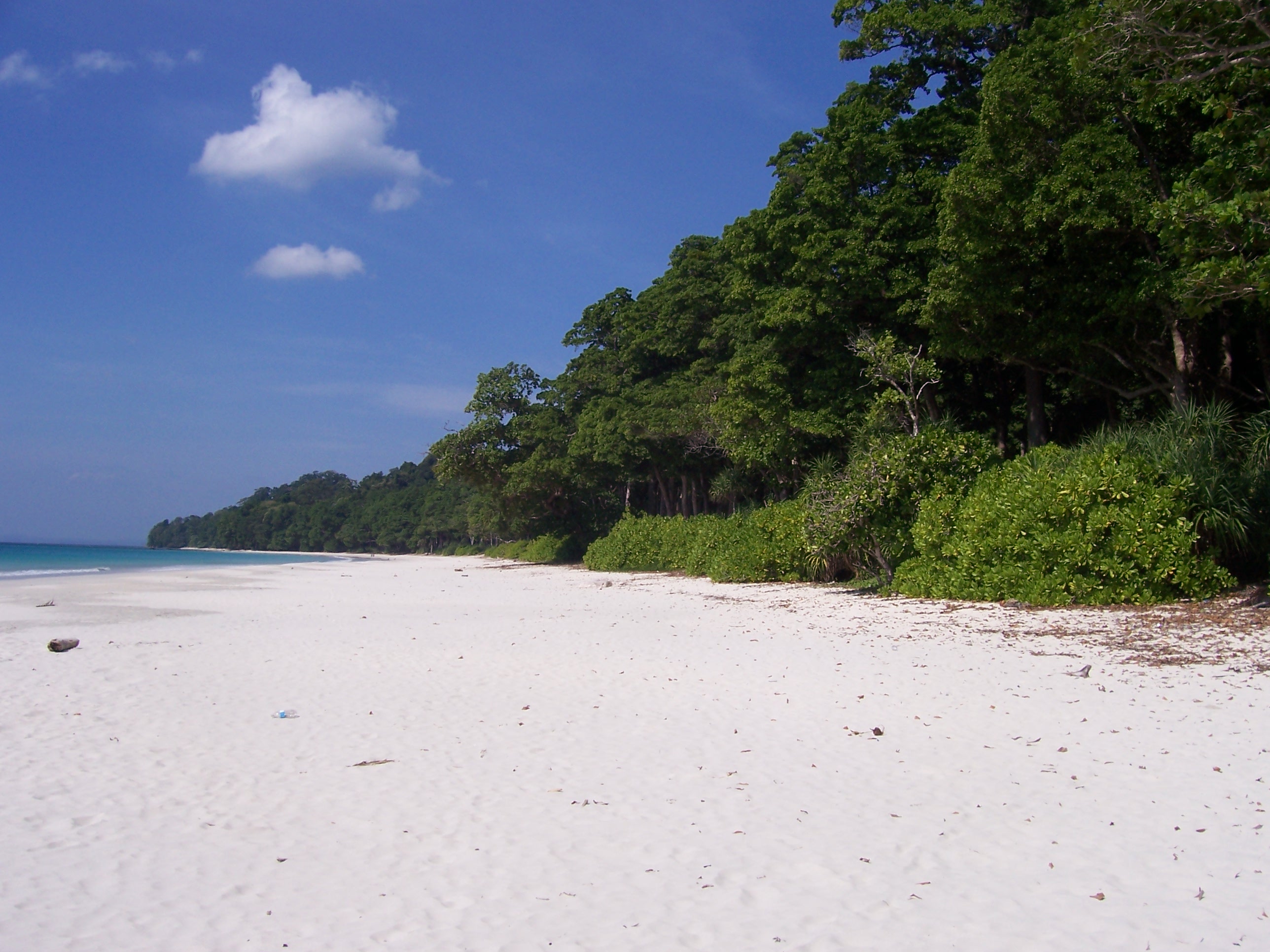
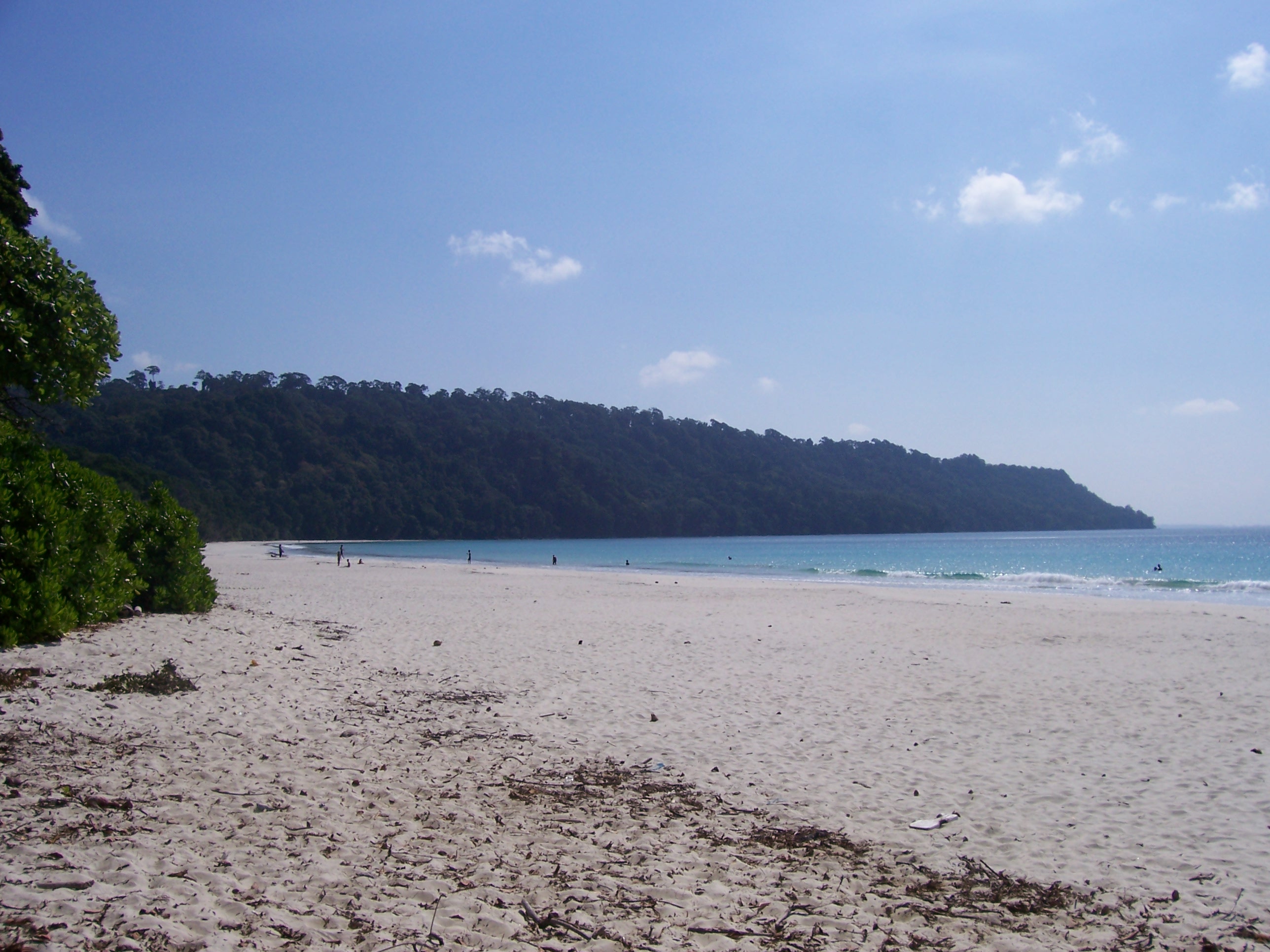
The second thing the award was pointing at is an absence: there is no commercial strip on the beach. Unlike almost every famous beach that gets a magazine ranking and then gets a row of bars behind it, Radhanagar has stayed bare. Construction near the shoreline is restricted, the accommodation sits back in the forest, and the sand itself carries no permanent buildings. The forest comes almost to the high-water line, two kilometres of it, dense and humid and audible at dusk. That undeveloped backdrop is rare for a beach this celebrated, and it is the reason photographs of Radhanagar look like a coastline rather than a resort frontage.
But the same wildness that the award flattered is the reason a person died here. This is the hard centre of Radhanagar's story. The Andaman Islands are home to the saltwater crocodile, Crocodylus porosus — the largest living reptile, an animal that lives in the mangrove creeks and estuaries of the archipelago and is entirely capable of moving along the open coast. On 29 April 2010, Lauren Failla, a 25-year-old American snorkelling off Radhanagar, was taken and killed by one. Her body was found the next day on an adjacent beach. A U.S. State Department spokesman noted at the time that roughly two dozen crocodile attacks, four of them fatal, had been recorded in the territory over the previous 25 years. The death prompted demands for trained lifeguards and prompted the local administration to confront a tension it had been ignoring: the same forest-and-mangrove wilderness that makes the Andamans extraordinary is crocodile country, and a beach marketed as a tropical idyll sits inside it. Warning signs went up, the beach has been closed at times after sightings, and the forest department now monitors the coast — but no fence separates the award-winning sand from the sea the crocodile came out of.
Radhanagar's third defining fact is that it is genuinely hard to reach, and that remoteness is load-bearing. Havelock is not on the Indian mainland and not even the main Andaman island; it is reached by ferry from Port Blair, about 37 nautical miles across open water, a one-to-three-hour crossing. For roughly four months a year the southwest monsoon roughens the Bay, ferry schedules are cut or suspended, and the surf at Radhanagar makes swimming inadvisable. Day-trippers who come over and back from Port Blair miss the sunset entirely, because the boats leave before the light that the beach is famous for. The effort filters the crowd, but it also means the beach you read about — calm water, clear amber sunset — exists for only part of the year. The Radhanagar of November to February and the Radhanagar of the monsoon are, in practice, two different beaches.
That is the argument. Radhanagar is a west-facing, undeveloped, two-kilometre crescent on a remote forested island, picked once by TIME in 2004 and coasting on that line ever since. The west-facing geometry is real and gives it a sunset most Indian beaches cannot. The bare, forested backdrop is real and rare. And the wildness those qualities depend on is the same wildness that put a saltwater crocodile in the water in April 2010 — which is the part of the singular beach that the singular sentence about it never includes.