Andhra Pradesh, IN

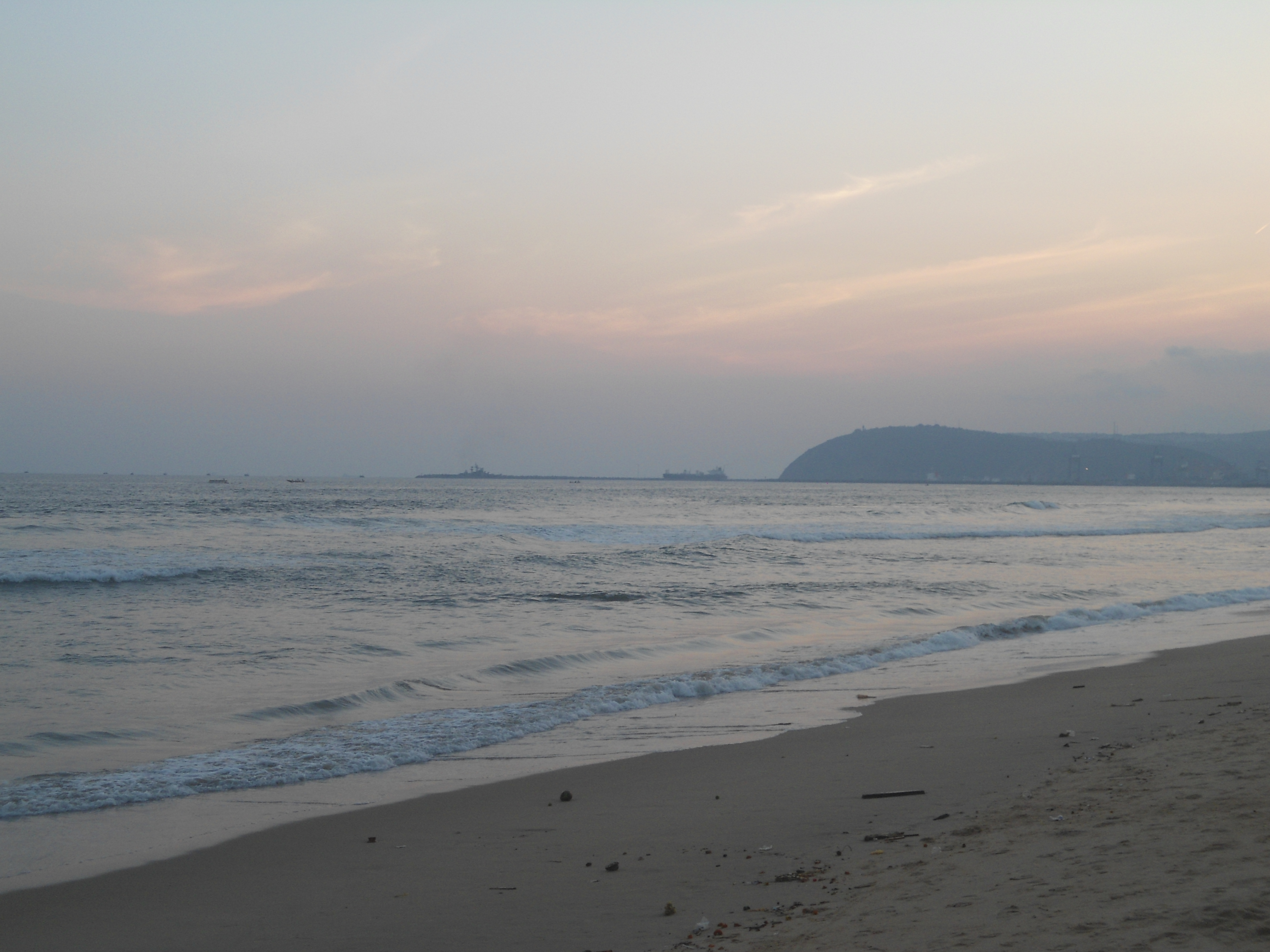
Ramakrishna Beach

Ramakrishna Math, Visakhapatnam.jpg

Andhra Pradesh, IN

Ramakrishna Beach

A 3.7 km city seafront that doubles as a naval museum yard: the submarine INS Kursura and a TU-142 bomber beached as exhibits.

Ramakrishna Math, Visakhapatnam.jpg · <a href="//commons.wikimedia.org/wiki/User:%E0%B0%A1%E0%B0%BE._%E0%B0%97%E0%B0%A8%E0%B1%8D%E0%B0%A8%E0%B0%B5%E0%B0%B0%E0%B0%AA%E0%B1%81_%E0%B0%A8%E0%B0%B0%E0%B0%B8%E0%B0%BF%E0%B0%82%E0%B0%B9%E0%B0%AE% · CC0
Substrate
sand
Spring tide
1.33 m
Nearest airport
VTZ · 10 km
Tier
Featured
I’m here for
Story

Ramakrishna Beach runs about 3.7 kilometers along the Bay of Bengal in Visakhapatnam, the largest city in Andhra Pradesh, on India's east coast. Almost everyone calls it RK Beach. The name comes from the Ramakrishna Mission ashram and the Ramakrishna Math monastery near the shore; the beach took its abbreviation from them. It is not a resort beach or a cove. It is the city's front edge — a strip of grey-gold quartz sand pinned between the open Bay and Beach Road, the promenade that carries Visakhapatnam's evening crowds.

What sets RK Beach apart from almost any other urban waterfront is what is parked on it. INS Kursura, a Soviet-built diesel-electric submarine that served the Indian Navy for 31 years, sits hauled out on the sand as a museum — the first submarine museum in South Asia, opened in 2002. A few hundred meters along, a Tupolev TU-142, a long-range maritime patrol and anti-submarine aircraft retired in 2017, is beached as a second museum. The beach is, in effect, the open-air yard of the Indian Navy's Eastern Naval Command, whose headquarters and the fleet's protected harbor sit a short way down the same coast.

Visakhapatnam — Vizag for short — is a steel-and-ships city, not a beach town that grew a port. It runs the only natural harbor on India's east coast, the fifth-busiest cargo port in the country, a large state steel plant, and a naval dockyard. RK Beach is where that industrial, military city comes to sit by the water. Beach Road is lined with statues, the navaratna-style Kali Temple built in 1984, food carts, and the two museum exhibits.

The water is the part that gets undersold. This is open Bay of Bengal, with rip currents and a steep enough nearshore that people drown here — a promenade beach far more than a swimming one, where local advice is to keep to the flagged shallows. The Bay also delivers the city's defining disaster: cyclones. Seventy-three tropical-cyclone tracks have crossed within range of this coast in the record, and in October 2014 Cyclone Hudhud made landfall directly on Visakhapatnam, tearing up this seafront.

The rhythm is monsoon-driven. The driest, calmest months run roughly November through March; the southwest monsoon stacks rain from June into October, peaking in September and October, which is also peak cyclone season. The best window to walk Beach Road and see the museums is the cool, dry winter.

The spike

A 3.7 km city seafront that doubles as a naval museum yard: the submarine INS Kursura and a TU-142 bomber beached as exhibits.

RK Beach's singular fact is not the sand — it is the hardware beached on it. Most famous urban beaches are defined by their water, their crowd, or their skyline. Ramakrishna Beach is defined by two retired war machines hauled out of the sea and set on the shore as museums, in a city that is the operational heart of the Indian Navy's eastern seaboard. To understand why a submarine and a four-engine bomber sit on a public beach, you have to understand that Visakhapatnam is a naval city first and a beach city a distant second.

Start with the submarine, because it is the headline. INS Kursura carried the pennant number S20. It was a Kalvari-class boat — the Indian Navy's designation for a variant of the Soviet Foxtrot-class diesel-electric submarine — and it was not a replica. It was built at the Sudomekh yard of the Admiralty Shipyard in Leningrad, launched on 25 February 1969, and commissioned into the Indian Navy on 18 December 1969. It is about 91 meters long, displaces roughly 1,950 tons surfaced and 2,475 tons submerged, and carried a crew of around 75 — eight officers and sixty-seven sailors — in the cramped, pipe-dense interior you can still walk through. Kursura served for 31 years, including patrol duty during the 1971 Indo-Pakistani War, and was decommissioned on 27 February 2001. Rather than scrap it, the boat was hauled ashore at RK Beach and converted into the INS Kursura Submarine Museum, which opened in 2002 — the first submarine museum in South Asia. You climb down through the actual hatches, past the torpedo tubes, the control room, the engine spaces, and the bunks, inside a vessel that spent three decades under the Bay of Bengal and the Arabian Sea. (Sources vary on the exact museum-opening date in August 2002; the year and the fact are not in dispute.)

Then there is the aircraft, which is the less-known half of the pairing. A short walk along Beach Road, a Tupolev TU-142 sits beached as a second museum. The TU-142 is a long-range maritime reconnaissance and anti-submarine-warfare aircraft — the naval, sub-hunting development of the Soviet Tu-95 "Bear" strategic bomber, one of the largest and fastest turboprop aircraft ever built. This particular airframe flew with the Indian Navy and was decommissioned on 29 March 2017 after roughly 29 years and tens of thousands of accident-free flying hours. It was then converted into the TU-142 Aircraft Museum, inaugurated in 2017 — billed as the first of its kind in the country, a full-size sub-hunter parked on a beach where it once would have flown overhead. The two exhibits are a deliberate pairing: a submarine and the aircraft built to find submarines, both retired, both grounded on the same sand.

The reason both ended up here is the city, not the beach. Visakhapatnam is the headquarters of the Indian Navy's Eastern Naval Command, the formation responsible for naval forces across the Bay of Bengal and the eastern Indian Ocean. It has the only natural protected harbor on India's east coast, a naval dockyard, and a submarine base; it is the home port of the eastern fleet. The Navy did not ship two decommissioned platforms to a random tourist beach — it placed them on the public waterfront of its own command city, where the population already lives alongside the fleet. RK Beach is the civilian face of a military port. That is why the most ordinary act on this beach — a family walking the promenade at sunset — happens in the literal shadow of a Cold War submarine.

The city around the beach reinforces the point at every turn. Visakhapatnam is nicknamed the "City of Destiny." It runs a large state-owned steel plant, is called the shipbuilding capital of India, and operates the fifth-busiest cargo port in the country. Its municipality dates to 1858; it became a municipal corporation in 1979. The beachfront itself is studded with civic monuments — bronze statues of Telugu literary figures and of Swami Vivekananda at the Ramakrishna Math, mermaid (Jala Kanya) sculptures, even a dinosaur statue — and the navaratna nine-spired Kali Temple, built in 1984 in the manner of Kolkata's Dakshineswar temple, sits right on Beach Road facing the Bay. The promenade is a working civic space: a place a steel-and-naval city of over two million people comes to be by the sea, with the museums as its anchors.

The water, by contrast, is the part the city keeps at arm's length — and rightly so. This is open Bay of Bengal. The nearshore drops to over 20 meters not far out, the swell builds through the monsoon, and rip currents pull bathers off the flagged shallows. Drownings are documented and recurrent; the standing local advice is that RK Beach is for the promenade, the museums, and the sunrise, and that real swimming belongs in the marked shallow zones under lifeguard watch, not in the deeper water. The singular thing here was never a swim. It is the improbable, completely real sight of a Soviet-built submarine and a Bear-derived sub-hunter sitting on a city beach, in the front yard of the fleet that once sailed and flew them.

Ramakrishna Mission Ashrama Library, Visakhapatnam.jpg
Culture

Where it shows up

History
  • INS Kursura (S20) · 1969

    Soviet-built Kalvari-class submarine commissioned into the Indian Navy in 1969, on patrol during the 1971 Indo-Pakistani War, decommissioned in 2001 and turned into the first submarine museum in South Asia on RK Beach. The beach's defining object.

  • Tupolev TU-142 · 2017

    Long-range maritime patrol and anti-submarine aircraft derived from the Soviet Tu-95 'Bear', retired by the Indian Navy in 2017 and beached on RK Beach as the TU-142 Aircraft Museum — the second of the seafront's two grounded war machines.

  • Ramakrishna Mission / Math

    The Ramakrishna Mission ashram and Math monastery near the shore, carrying a statue of Swami Vivekananda, that give the beach its name and 'RK' abbreviation. The civic and devotional origin of the seafront's identity.

  • Eastern Naval Command

    The Indian Navy's Eastern Naval Command, headquartered at Visakhapatnam and responsible for the Bay of Bengal and eastern Indian Ocean. RK Beach is the civilian waterfront of this naval city, which is why two decommissioned platforms sit on its sand.

RK Beach Night.jpg
History

What happened here

  1. 1858political

    Visakhapatnam municipality established

    The municipality of Visakhapatnam is established under British India, formalizing the port settlement that would grow into the largest city in what is now Andhra Pradesh and the naval and industrial hub behind RK Beach.

    Wikipedia →
  2. 1969historical

    INS Kursura (S20) commissioned

    INS Kursura, a Kalvari-class (Soviet Foxtrot-variant) diesel-electric submarine built at the Admiralty Shipyard in Leningrad and launched on 25 February 1969, is commissioned into the Indian Navy on 18 December 1969. It would later patrol during the 1971 Indo-Pakistani War.

    Wikipedia →
  3. 1984cultural

    Kali Temple built on Beach Road

    The navaratna (nine-spired) Kali Temple is built on RK Beach Road facing the Bay of Bengal, modeled on the Dakshineswar Kali temple in Kolkata. It becomes one of the seafront's principal landmarks.

    Wikipedia →
  4. 2001historical

    INS Kursura decommissioned after 31 years

    After 31 years of service, INS Kursura is decommissioned on 27 February 2001. Rather than being scrapped, the submarine is selected to be hauled ashore at RK Beach and converted into a museum.

    Wikipedia →
  5. 2002development

    INS Kursura Submarine Museum opens

    INS Kursura is beached on RK Beach and opened in 2002 as the first submarine museum in South Asia. Visitors descend through the actual hatches into the control room, torpedo spaces, and crew quarters. (Sources differ on the exact August 2002 date.)

    Wikipedia →
  6. 2014environmental

    Cyclone Hudhud devastates the seafront

    On 12 October 2014, Cyclone Hudhud makes landfall directly on Visakhapatnam with winds around 180–195 km/h, driving 2–3 m surge over Beach Road, uprooting thousands of trees, downing power and phone lines, and toppling the beach's aircraft exhibit. Regional damage runs into the billions of dollars.

    Wikipedia →
  7. 2017historical

    TU-142 decommissioned, becomes a beach museum

    A Tupolev TU-142 maritime patrol and anti-submarine aircraft — the naval, sub-hunting derivative of the Soviet Tu-95 'Bear' — is decommissioned by the Indian Navy on 29 March 2017 and converted into the TU-142 Aircraft Museum on RK Beach, opened the same year.

    Wikipedia →
  8. 2020environmental

    LG Polymers styrene gas leak (city)

    On 7 May 2020, a styrene gas leak at the LG Polymers plant on the outskirts of Visakhapatnam kills at least 11–13 people and sickens more than a thousand, forcing mass evacuations. Not on RK Beach, but the starkest measure of the industrial city the beach belongs to.

    Wikipedia →
The honest part
RK Beach is the civic face of a steel-and-naval port — and in October 2014 Cyclone Hudhud put two-to-three-meter surge across the promenade and knocked down its own beached aircraft.

The two facts the beach photos skip are the water and the weather. RK Beach is open Bay of Bengal with rip currents and a steeply deepening nearshore, and people drown here — it is genuinely a promenade-and-museum beach, not a swimming one, and the honest advice is to stay in the flagged shallows or out of the water entirely. The larger threat is cyclonic. Seventy-three tropical-cyclone tracks have crossed within range of this coast in the record, and on 12 October 2014 Cyclone Hudhud made landfall directly on Visakhapatnam with winds around 180–195 km/h, sending two-to-three-meter surge across Beach Road. Hudhud killed dozens across the region, caused damage on the order of billions of dollars, and physically wrecked this seafront — uprooting thousands of trees, downing power and phone lines, and toppling the beach's own aircraft exhibit. The promenade you walk today was rebuilt after that.

There is also the wider truth of the city the beach belongs to. Visakhapatnam is a heavy industrial and port city — a state steel plant, a busy cargo harbor, oil and chemical facilities — and that footprint brings real environmental cost to its air, water, and coast. The starkest reminder came on 7 May 2020, when a styrene gas leak at the LG Polymers plant on the city's outskirts killed at least 11 to 13 people and sickened more than a thousand, with mass evacuations of nearby villages. That plant is not on RK Beach, but it is the same city, and it is the clearest measure of what living next to Vizag's industry can cost. The beach is the pleasant civic face of a place whose economy is steel, ships, chemicals, and the Navy — and that face was built on a coast the Bay of Bengal periodically tries to take back.

RK Beach at Sunset time 03.JPG
Anatomy

The shape of the place

Ramakrishna Math end

10%

The northern, named end near the Ramakrishna Mission ashram and Math that give the beach its name, with the statue of Swami Vivekananda. Quieter than the museum stretch, the original civic anchor of the seafront.

Best for The ashram and Vivekananda statue, a calmer walk, the origin of the name

Promenade beach; the water here is open Bay of Bengal like the rest — not a designated swim zone.

INS Kursura / museum stretch

45%

The heart of RK Beach: the beached INS Kursura submarine museum and, nearby, the TU-142 aircraft museum, ringed by statues, food carts, and the busiest length of Beach Road. The reason most people come.

Best for The submarine and aircraft museums, statues, sunset crowds, photographs

Most crowded stretch; keep to the promenade and the flagged shallows, not the deeper water.

Kali Temple frontage

70%

The stretch of Beach Road fronted by the nine-spired Kali Temple (1984), facing the Bay between businesses and residences. A devotional and civic node as much as a beach one.

Best for The Kali Temple, evening promenade, Vijayadashami crowds in September–October

Busy road frontage; the temple, not the sand, is the draw here.

Landmarks

INS Kursura Submarine Museum · 2002

museum

A real Kalvari-class (Soviet Foxtrot-variant) submarine, S20, that served the Indian Navy 31 years (commissioned 1969, decommissioned 2001) including the 1971 war, hauled ashore on RK Beach and opened in 2002 as the first submarine museum in South Asia. Visitors walk the actual hull — control room, torpedo tubes, engine spaces, bunks.

Wikipedia →

TU-142 Aircraft Museum · 2017

museum

A retired Tupolev TU-142 maritime patrol and anti-submarine aircraft — the naval, sub-hunting development of the Soviet Tu-95 'Bear' — decommissioned by the Indian Navy on 29 March 2017 and beached on RK Beach as a museum the same year, a short walk from the submarine.

Wikipedia →

Kali Temple · 1984

religious

A navaratna (nine-spired) temple to the goddess Kali on RK Beach Road, built in 1984 and modeled on Kolkata's Dakshineswar Kali temple. A prominent civic landmark on the promenade facing the Bay of Bengal; its main festival is Vijayadashami.

Wikipedia →
A day here

From first light to dark

Dawn

Sunrise is the beach's best hour: the Bay of Bengal faces east, so the sun comes straight up out of the water, and walkers, joggers, and yoga groups fill Beach Road before the heat. The tide is usually well down and the sand widest. The submarine and the aircraft sit dark against a pale sky, not yet open to visitors.

Midday

The sun is hard and the sand bakes; the promenade thins out. This is museum time — climbing down into INS Kursura's hull or walking around the TU-142 — rather than beach time. Vendors sell tender coconut and cut fruit along the road. Few people are in the water, and the lifeguarded shallows are the only sensible place to be wet.

Golden hour

After the heat breaks, Beach Road fills again — families, food carts, photographers, the statues lit by low sun. The crowd is at the statues, the Kali Temple, and the museum exhibits rather than swimming. This is the social peak of the day, the city out on its waterfront, with the submarine floodlit as the centerpiece.

Night

Beach Road stays busy and lit well after dark — snack stalls, families, the illuminated submarine and temple. The sand itself goes dark and the water is left alone; there is no reason and no safety to be in the Bay of Bengal at night here. The lit promenade, not the beach, is the night attraction.

Compare

How it ranks

Peak warmth
Warmer than 78% of beaches in its country
Peak-month high ≈ 35°C
Worldwide
Among the warmest 2% of beaches on Earth

Ranked against every beach in our database — 228,000+ worldwide.

Statue of Sri Vivekananda Swamy, Ramakrishna Math, Visakhapatnam.jpg
Sea & surf

What the water does

JFMAMJJASONDmetres (significant wave height)

Solid = typical monthly wave height; pale = the bigger days (90th pct). Offshore/regional swell from Open-Meteo Marine (ERA5 Ocean reanalysis, 2023–2024); a sheltered cove may sit calmer than this.

Mixed — usually swimmable, with a livelier season
Typical wave height
1.12 m
Biggest swell
Jul · 1.66 m
Calmest
Feb · 0.66 m
Typical period
9.1 s (groundswell)
Before you go

Things to know

A promenade-and-museum beach, not a swimming beach

This is open Bay of Bengal with rip currents and a steeply deepening nearshore, and drownings recur. Treat RK Beach as a place to walk Beach Road and see the submarine and aircraft museums; if you go in the water, stay in the flagged shallow zones under lifeguard watch and out of the deeper water.

Cyclone season is real here

The southwest monsoon (June–October) brings the biggest seas and the rain peaks in September–October, which is also peak cyclone season. Cyclone Hudhud hit the city directly in October 2014. The calm, dry window to visit is roughly November–March.

The submarine and aircraft are the point

INS Kursura (submarine) and the TU-142 (aircraft) are both ticketed museums on the beach, with their own opening hours and closed days. Going inside the submarine — down the real hatches — is the signature experience; check current timings, as they change.

An industrial, naval city

Vizag is a steel-and-port city, not a leisure town. Sea-water quality on an urban, industrialized harbor coast is not pristine; the beach is best for the walk, the museums, and the sunrise rather than as a place to spend hours in the water.

Sharks

No incidents on record in the global shark-attack file.

Plan

If you go

Getting there
Nearest airport
Visakhapatnam International Airport (VTZ) · 10 km
Nearest town
Yarada · 8 km

RK Beach runs along Beach Road in the heart of Visakhapatnam (Vizag), Andhra Pradesh, on India's east coast. Visakhapatnam International Airport (VTZ) is about 10 km away; the city is a major stop on the South Coast Railway, with Visakhapatnam railway station well connected to Chennai, Kolkata, Hyderabad, and beyond. Within the city, Beach Road is reachable by APSRTC city buses, autos, and taxis from anywhere in Vizag. The INS Kursura submarine museum and the TU-142 aircraft museum sit directly on the beach along Beach Road; the Kali Temple and the Ramakrishna Math are on the same stretch. Dolphin's Nose headland and the hilltop Kailasagiri park are short trips from the same waterfront.

When to go
  • Visakhapatnam Beach Festival · Typically in the cooler months (varies by year)

    A tourism-board cultural festival staged along RK Beach and Beach Road in some years, with music, dance, and beach events. Programming and dates vary year to year; treat exact timing as something to confirm locally.

  • Vijayadashami at the Kali Temple · September–October (month of Ashvin)

    The main festival at the Beach Road Kali Temple is Vijayadashami, drawing devotees to the seafront temple during the Hindu month of Ashvin, near the autumn equinox.

What to eat & drink
Beachfront snacks — pakodi, masala corn, tender coconut

RK Beach has no sit-down food on the sand; it has a promenade lined with carts. The staples are hot pakodi and bhajji (fritters), spiced masala corn, roasted peanuts, cut fruit with chili-salt, and tender green coconut drunk straight from the shell against the heat. Quality varies cart to cart; this is street snacking, not a meal.

Vendor carts along Beach Road, RK Beach

Andhra meals — rice with fiery curries

Off the beach, Vizag eats Andhra food, among the hottest regional cuisine in India: rice with chili-heavy fish, prawn, mutton, and vegetable curries, gongura (sorrel) dishes, and pickles. Eaten at the city's meals restaurants rather than on the sand. Andhra cooking is built around the same Bay of Bengal catch the port lands.

Andhra meals restaurants in Visakhapatnam city, off the beach

Bay of Bengal seafood

Vizag is a fishing and port city, and prawns, pomfret, and other Bay catch turn up in coastal Andhra preparations — fried, in spicy curries, or in biryani — at the city's seafood restaurants. Landed by the same fleet that works the harbor; not sold on RK Beach itself but a short ride away.

Seafood restaurants in Visakhapatnam city

Sources & references
  1. Wikipedia (INS Kursura (S20)) · cited 4×
  2. Wikipedia (Kali Temple, Visakhapatnam) · cited 2×
  3. Wikipedia (Cyclone Hudhud) / ReliefWeb · cited 2×
  4. Vizag Tourism / Indian Navy · cited 2×
  5. Wikipedia (RK Beach) · cited 2×
  6. Wikipedia (Visakhapatnam)
  7. Wikipedia (Visakhapatnam gas leak)
  8. Wikipedia (Eastern Naval Command / Visakhapatnam)
  9. IBTrACS v04r01 (NOAA)
Colophon · Provenance

Where this page comes from

Geography, facilities
OpenStreetMap (ODbL) for geometry and facility tags within 500 m of the beach centroid. GeoNames for city/airport distances.
Climate & ocean
worldclim_v2.1_2.5m
Tides
eot20
Photography
Archival, original tone (Tier B — Wikimedia Commons). Each image licensed per its own terms; attribution visible inline.
History & culture
Every factual claim is linked to its source in the prose above. Wikipedia citations inline. Non-wiki sources named where relevant.
Editorial voice
Register: technical. Written to pass a local's nod test; corrections welcome.
Written by Erin Rose
Last reviewed 2026-04-19
v0.9in editorial development toward v1.0