New South Wales, AU

Shelly Beach

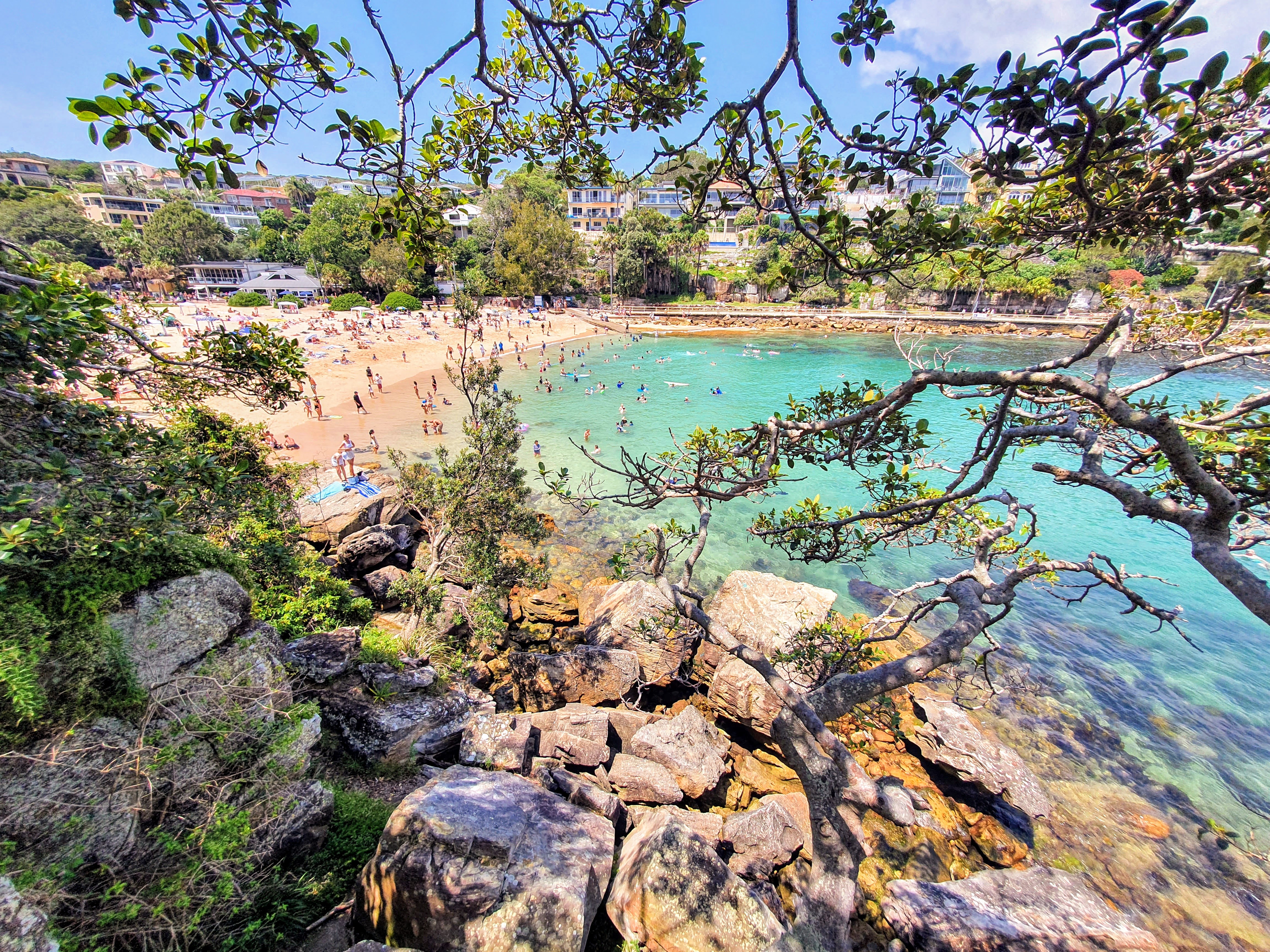
Bold and the Beautiful swim.jpg

New South Wales, AU

Shelly Beach

A 1920s scheme to turn Manly's Shelly Beach foreshore into an amusement park was defeated by locals; the site became a no-take marine reserve in 2002.

Bold and the Beautiful swim.jpg · <a href="//commons.wikimedia.org/wiki/User:Wittylama" title="User:Wittylama">Wittylama</a> · CC BY-SA 4.0
Substrate
sand
Nearest airport
SYD · 20 km
Story

Shelly Beach sits at Manly, a Sydney harbourside suburb, adjacent to North Head and Fairy Bower. It is also known as Shelley Beach, an older spelling that still surfaces in official material. According to the NSW Department of Primary Industries, it is the only west-facing beach on the New South Wales coast, which makes it one of the few local spots where you watch the sun go down over the water rather than behind you. The Gayamaygal people of the Eora nation are named by the NSW Department of Primary Industries as the traditional custodians of the Cabbage Tree Bay area.

The beach itself is small: Wikipedia describes it as a reflective beach about 100 metres long. Most of the water is shallow, 2 to 6 metres deep, with a maximum depth of around 12 metres, part of why it works so well for snorkelling and for beginner scuba students. It sits inside the Cabbage Tree Bay Aquatic Reserve, a "no-take" zone declared on 31 March 2002, covering roughly 20 hectares of bay, rocky shore, reef, seagrass meadow and kelp forest.

Inside that boundary, more than 160 fish species and about 50 marine invertebrate species have been recorded, including an Eastern blue groper population in which the largest females turn male when no males are present in a group. A small colony of the hard coral Pocillopora aliciae — usually a tropical species — has established itself here as its range shifts with warming seas. A resident green turtle is enough of a local fixture that regulars have given it a name.

In the 1920s, developers proposed turning the Manly foreshore into an amusement park; local opposition got the plan killed, and that fight is credited with helping set up the bay's eventual protection. The full account, including the century of access disputes that came before it, is in the history deep dive.

Facilities are deliberately minimal: two free electric barbecues, showers, toilets and a kiosk selling meals, drinks and coffee, plus parking at $8.00 an hour. There is no lifeguard patrol, dogs are prohibited at all times, and scuba schools use the beach specifically because conditions suit first-time divers.

The spike

A 1920s scheme to turn Manly's Shelly Beach foreshore into an amusement park was defeated by locals; the site became a no-take marine reserve in 2002.

Shelly Beach is small, protected, and named for something it no longer has much of: shells. What makes it worth explaining is not the sand but the near-miss. In the 1920s, developers proposed converting the Manly foreshore, Shelly Beach included, into an amusement park. Local opposition got the plans terminated. Decades later, the same stretch of water became one of the tightest marine protections on the New South Wales coast: a "no-take" aquatic reserve, declared on 31 March 2002, where nothing may be fished, speared, or collected.

The scheme that didn't happen. The historical record is thin on specifics — no plans have surfaced describing rides or attractions — but the shape of the conflict is clear enough: a wave of 1920s coastal development pressure hit Manly, and the community pushed back hard enough that the amusement-park proposal died. That single act of local resistance is credited, in the same telling, with setting up Cabbage Tree Bay's later transformation into protected water. It is a rare case where a beach's modern identity — quiet, no-take, built around snorkelling rather than spectacle — traces to something that was stopped rather than something that was built.

The slow bureaucratic follow-through. The gap between "developers turned away" in the 1920s and "no-take reserve" in 2002 is not explained by a straight line in the record, and it wasn't a straight line in practice either. The rocky shore of Cabbage Tree Bay was already under intertidal protection from 1993, nine years before the fuller no-take declaration closed the loop in 2002. Protection here arrived in stages, not in one sweeping act — first the shore, then the water column, over roughly seventy years since the amusement-park fight.

What the reserve actually protects. Cabbage Tree Bay's roughly 20 hectares pack sandy beach, rocky shore, reef, seagrass and kelp forest into a small area — more habitat variety per hectare than most Sydney beaches attempt. More than 160 fish species and about 50 marine invertebrate species have been recorded inside it. A small colony of the hard coral Pocillopora aliciae, normally found in tropical water, has established itself here as the reef's range shifts south with warming seas — a coral colony inside a Sydney city beach is not something the 1920s amusement-park planners could have imagined, and it exists specifically because no one is allowed to touch it.

Why "no-take" is the load-bearing phrase. A no-take reserve is stricter than most marine parks: no line fishing inside the aquatic reserve boundary, no spearfishing, no collecting shells or invertebrates. The exception sits just outside the line — a spot called Blueys, at the southeast end of the Shelly Beach headland car park, falls within a separate intertidal protected area where line fishing is still allowed, though collecting invertebrates is not. That carve-out is a small, deliberate reminder that the reserve's boundary is a real, enforced line on a map, not a vague no-fishing feeling across the whole bay.

The century-long thread. Shelly Beach's public status has been contested before. The beach and its ocean foreshore were excluded from public access in 1885 and were not returned to the people until 1898, at Manly Council's request, because it was already a popular recreation spot. Read that way, the 1920s amusement-park fight was not an isolated flashpoint — it was the second time in decades that Manly residents had to fight to keep this stretch of coast usable on their own terms rather than a developer's or a landholder's. The reserve declared in 2002 is the version of "kept public" that a long run of community pressure eventually produced.

None of this makes Shelly Beach immune to newer problems — what those are, and how they sit against the reserve's reputation, is its own story. But the 1920s decision not to build is the reason there was anything left worth protecting by 2002.

Why the story still matters. The reserve's day-to-day identity now runs on activities the amusement-park scheme would have crowded out entirely. A dive shop has served the local community from Belgrave Street since 1962 — as Dive Centre Manly from 1993, and as Dive Sydney since 2023 — sending generations of beginner divers into water that a fairground would have paved over or fenced off. The present stone kiosk on the beach itself began life as a 1923 tearoom, a small, still-standing structure from the very decade the bigger development was refused. None of that infrastructure is glamorous — a kiosk, a dive shop, two free electric barbecues — and that is closer to the point than a coincidence. A beach that was nearly turned into a fairground in the 1920s ended up, eighty-odd years later, defined by a marine reserve where the built environment stayed deliberately small.

MotorbikeShelly.jpg
History

What happened here

  1. 1885access

    Beach closed to the public

    Shelly Beach and its ocean foreshore are excluded from public access.

  2. 1898access

    Returned to the public

    Shelly Beach and its foreshore are returned to the people at Manly Council's request, since it was already a popular recreation spot.

  3. 1920policy

    Amusement-park scheme defeated

    Developers propose an amusement park for the Manly foreshore, Shelly Beach included; community opposition gets the plan terminated.

  4. 1923landmark

    Stone kiosk built as a tearoom

    Shelly Beach's present stone kiosk begins life as a tearoom, hosting community dances that decade.

  5. 1962business

    Dive shop opens on Belgrave Street

    A dive shop (Ron Harding's Sports Store, one of only three in Sydney at the time) begins operating from Belgrave Street; it later traded as Dive Centre Manly and, since 2023, as Dive Sydney.

  6. 1993policy

    Intertidal protection begins

    The rocky shore of Cabbage Tree Bay is designated an intertidal protected area, ahead of the fuller reserve.

    Wikipedia →
  7. 2002policy

    No-take aquatic reserve declared

    Cabbage Tree Bay is declared a 'no-take' aquatic reserve on 31 March, closing the loop the 1920s fight opened.

    Wikipedia →
  8. 2016hazard

    Storm damages the walkway

    A severe storm on 4-5 June badly damages the walkway between Manly and Shelly Beach, including the Fairy Bower Pool sculpture; barriers come down in August once repairs finish.

    Wikipedia →
  9. 2019hazard

    Suspected shark attack

    A swimmer suffers serious injuries in a suspected shark attack between Manly and Shelly Beaches; Manly Beach closes for 24 hours.

  10. 2025report

    Ranked among Sydney's worst swim sites

    Shelly Beach lands among the bottom ten swim sites in Sydney's annual water-quality report.

Shelly Beach in Summer 2022.jpg
Anatomy

The shape of the place

Bower point break

15%

A surf break at the beach's western point, regarded as one of Sydney's most shallow-breaking waves.

Best for Surfing

Main sand & snorkel arc

50%

The reflective, roughly 100-metre sand arc, shallow (2-6 m) across most of its width, backed by the bush track around the headland.

Best for Snorkelling and swimming

Depths run to about 12 m at their deepest.

Kiosk & facilities apron

60%

The landward strip holding the kiosk, two free electric barbecues, showers and toilets.

Best for Picnics and breaks between swims

Parking here runs $8.00 an hour.

Blueys headland fishing spot

90%

A popular recreational fishing site at the southeast end of the headland car park, sitting just outside the no-take reserve boundary.

Best for Line fishing

Collecting marine invertebrates is still prohibited here, even though line fishing is allowed.

Landmarks

Fairy Bower walkway and pool

coastal walkway

The walkway between Manly Beach and Shelly Beach, including the sculpture at Fairy Bower Pool, was badly damaged in a severe storm on 4-5 June 2016; safety barriers went up and came down again in August 2016 once repairs were finished.

Wikipedia →

Shelly Beach stone kiosk · 1923

kiosk

The present stone kiosk began life as a tearoom built in 1923, and hosted community dances in the 1920s.

Bower surf break

surf break

A surf break on the beach's western point, regarded as one of Sydney's most shallow-breaking waves.

Wikipedia →
A day here

From first light to dark

Dawn

Scuba schools favour Shelly Beach for exactly this hour, bringing beginner students in before the day's crowds build, since there is no lifeguard patrol at any time to wait for.

Midday

This is peak snorkel time, water at its clearest over the 2-6 metre shallows, with a resident green turtle sometimes grazing seagrass in plain view of anyone in the water.

Golden hour

As the only west-facing beach on the New South Wales coast, Shelly Beach is one of the rare local spots where the sunset falls straight over the water instead of behind you.

Night

Facilities amount to nothing after dark — no lifeguard, no patrol, and dogs remain banned at every hour regardless.

Looking over Shelly Beach and Cabbage Tree Bay in Sydney.jpg
Culture

Where it shows up

Film
  • BMX Bandits · 1983

    The opening scene of the 1983 film BMX Bandits was shot on the walkway between Manly Beach and Shelly Beach.

History
  • The 1936 vampire octopus · 1936

    In 1936, G.J. Sly found an extremely rare vampire octopus washed up at Shelly Beach — one of only ten ever sighted worldwide and the only one found in Australia — which ended up used as bait.

Other
  • Basil the green turtle

    A resident green turtle nicknamed Basil is a local celebrity at Shelly Beach, regularly seen grazing on seagrass.

The honest part
“The same water sold as a snorkeller's aquarium tested nearly double the safe bacteria limit in 2025.”

The reserve's reputation is built on protection and calm water, and neither has held up perfectly in recent years. On 2 July 2019, Manly resident Peter Schultz, 57, was attacked by a suspected shark while swimming between Manly and Shelly Beaches before dawn, suffering serious cuts to his leg, abdomen and hand; Manly Beach was closed by council lifeguards for 24 hours, and it was the fifth shark attack or major encounter in NSW in the preceding 12 months. On 21 January 2023, at least one suspected bull shark killed a dolphin near Shelly Beach — three bull sharks were spotted in the area at the time — and beaches between Shelly and Queenscliff were closed as a precaution and monitored. Neither incident makes Shelly Beach unusually dangerous by Sydney standards, but both happened in water the reserve's own reputation sells as safe for casual swimming and snorkelling. Worth flagging plainly: the structured safety dataset this site draws on records zero shark incidents for Shelly Beach, while the dated press record above documents two — a discrepancy between the two sources, not a contradiction to smooth over.

Then there's the water itself. Sydney's 2025 State of the Beaches report, examining pollution samples from October 2024 to October 2025, placed Shelly Beach among the city's ten worst swim sites: a mean enterococci reading of 79.4 CFU/100mL, nearly double the 41 CFU/100mL that NHMRC guidance treats as safe for swimming. That's a striking result for a beach inside a marine reserve people travel to specifically to get in the water — and it sits against a mostly good statewide picture, where 76% of NSW swim sites and 95% of ocean beaches were rated good or very good in the same report. Shelly Beach's problem isn't systemic; it's local, and it's real.

Shelly Beach pano.jpg
Sea & surf

What the water does

JFMAMJJASONDmetres (significant wave height)

Solid = typical monthly wave height; pale = the bigger days (90th pct). Offshore/regional swell from Open-Meteo Marine (ERA5 Ocean reanalysis, 2023–2024); a sheltered cove may sit calmer than this.

Exposed — real surf, and rip current to respect
Typical wave height
1.2 m
Biggest swell
Apr · 1.4 m
Calmest
Aug · 0.95 m
Typical period
9.3 s (groundswell)
Before you go

Things to know

Lifeguards

Shelly Beach is not patrolled by lifeguards; there is no seasonal roster here the way there is at nearby Manly beaches.

Dogs

Dogs are prohibited from the aquatic reserve and beach area at all times.

Fishing & collecting

Inside the no-take reserve, nothing may be fished or collected. The one exception is Blueys, at the southeast end of the headland car park, where line fishing is allowed (collecting invertebrates still isn't) because it sits just outside the reserve boundary.

Wheelchair access

Of the Eastern Hill Heritage Walk's three sections, only the South Steyne-to-Shelly Beach leg is fully wheelchair accessible.

Surf & rip

Powerful water — strongest around Apr, gentlest in Aug. Mind rip currents; this isn't a wade-in-anywhere beach.

Sharks

No incidents on record in the global shark-attack file.

Lifeguard

No lifeguard service — swim within your limits.

Plan

If you go

Getting there
Nearest airport
Sydney Kingsford Smith International Airport (SYD) · 20 km
Nearest town
Manly · 1 km

Shelly Beach sits about 0.9 km from central Manly, reached via the oceanway that also passes Fairy Bower; Sydney Kingsford Smith Airport (SYD) is 19.7 km away in a straight line, not a road or transit distance. Parking at the beach's own facilities runs $8.00 an hour, and public toilets are also available at Little Manly Beach and Fairy Bower. Of the Eastern Hill Heritage Walk's three legs, only the South Steyne-to-Shelly Beach section is fully wheelchair accessible.

When to go
  • Beach weddings (seasonal window) · May to October only

    Weddings at Shelly Beach are permitted only between May and October, per Northern Beaches Council.

What to eat & drink
Shelly Beach kiosk

A kiosk on the beach sells meals, drinks and coffee; the building itself started life as a tearoom built in 1923 and hosted community dances that decade.

On the sand at Shelly Beach

The Boathouse Shelly Beach

A restaurant called The Boathouse Shelly Beach operates on the beach itself, per Wikipedia; there's no more recent, dated source here confirming it's still trading, so treat that as background rather than a live recommendation.

On the beach

Nothing else on the sand

Beyond the kiosk and the Boathouse, there is no other dining directly on Shelly Beach. Manly's wider restaurant and cafe strip is a walk away along the oceanway that also passes Fairy Bower.

Manly, via the oceanway

Go deeper
Sources & references
  1. Wikipedia: Shelly Beach (Manly) · cited 4×
  2. Manly & Northern Beaches Australia heritage-walk guide, 2001 · cited 3×
  3. History Matters, Nov 2024 (University of Sydney); Dive Sydney, About Us · cited 2×
  4. Wikipedia: Cabbage Tree Bay Aquatic Reserve · cited 2×
  5. Wikipedia: Cabbage Tree Bay Aquatic Reserve; Northern Beaches Council · cited 2×
  6. Manly Observer, Oct 2025 · cited 2×
  7. History Matters, Nov 2024 (University of Sydney)
  8. Surf Life Saving NSW, Jul 2019
  9. NSW DPI; Northern Beaches Council; Wikipedia
Colophon · Provenance

Where this page comes from

Geography, facilities
OpenStreetMap (ODbL) for geometry and facility tags within 500 m of the beach centroid. GeoNames for city/airport distances.
Climate & ocean
Open-Meteo ERA5 + Marine archive, 2014–2023 monthly normals.
Photography
Archival, original tone (Tier B — Wikimedia Commons). Each image licensed per its own terms; attribution visible inline.
History & culture
Every factual claim is linked to its source in the prose above. Wikipedia citations inline. Non-wiki sources named where relevant.
Editorial voice
Register: wry. Written to pass a local's nod test; corrections welcome.
Written by Erin Rose
Last reviewed 2026-04-19
v0.9 — in editorial development toward v1.0