Lower Normandy, FR

Utah Beach

M4 Sherman Utah Beach.jpg

Lower Normandy, FR

Utah Beach

The westernmost D-Day beach: the 4th Division landed ~2 km off-target, and Utah cost fewer lives than its own rehearsal at Slapton Sands.

M4 Sherman Utah Beach.jpg · <a href="//commons.wikimedia.org/wiki/User:Jebulon" title="User:Jebulon">Jebulon</a> · CC0
Length
13.0 km
Spring tide
5.95 m
Nearest airport
CER · 34 km
Tier
Featured
I’m here for
Story

Utah Beach is a low, flat stretch of sand on the east coast of the Cotentin Peninsula in Normandy, in the commune of Sainte-Marie-du-Mont, Manche. The name is not French. It was the codename Allied planners gave the westernmost of the five D-Day landing beaches for the invasion of 6 June 1944, and it stuck. The other four beaches run east along the Calvados coast; Utah stands apart, around the corner of the peninsula.

The fight here turned on water, not cliffs. The Germans had deliberately flooded the marshland inland of the beach, so the only ways off the sand were a handful of raised causeways crossing the flood. That is why the American plan paired the seaborne landing with a night airborne drop: the 101st and 82nd Airborne Divisions came down inland in the dark to seize the causeway exits and the villages behind them, including Sainte-Mère-Église, about 12 km to the northwest.

The landing went better than anyone had a right to expect, partly by accident. Strong currents and lost control craft pushed the first wave of the U.S. 4th Infantry Division about 2,000 yards — roughly 2 km — south of its intended sector, onto more lightly defended ground. Brigadier General Theodore Roosevelt Jr., the only general in the first wave and a man who walked with a cane, chose not to correct the error but to land the follow-on waves where they were. The line attributed to him, "We'll start the war from right here," became the beach's signature sentence.

The cost was comparatively low, and the comparison is the uncomfortable part. The 4th Division's casualties for the whole of D-Day are most often cited at around 197, a figure that already included some 60 men lost at sea. The scattered airborne drops inland took far heavier losses than the beach did. And the rehearsal for this landing — Exercise Tiger at Slapton Sands that April — killed at least 749 American servicemen, more than died taking the beach itself.

What sits here now is a quiet beach in a nature park. The marshes the Germans flooded are today the Marais du Cotentin et du Bessin regional park, and the sand is part of it: birdwatchers come for waders, families swim in summer, and the water is calm, averaging about half a meter of wave. The Utah Beach Landing Museum stands on the dune at La Madeleine, built around a German blockhouse, and a granite obelisk marks the VII Corps that came ashore. It is a working seaside beach laid over the floor of an assault.

The spike

The westernmost D-Day beach: the 4th Division landed ~2 km off-target, and Utah cost fewer lives than its own rehearsal at Slapton Sands.

Most legendary beaches earn the word through nature: a reef, a wave, a tide, a color of sand. Utah earned it on a single morning in 1944, and its singular fact is a quieter and stranger one than its sister beaches carry. Utah is the D-Day beach where almost everything went *right* — the landing came in off-target and was the better for it, the casualties were comparatively light, the objectives were taken — and the discomfort of the place is precisely that lightness, because the men who paid the heaviest price here died in the air and in a training exercise rather than on the sand the name commemorates.

Start with the geography, because at Utah the geography is the whole plan. Unlike Omaha, with its killing bluffs, Utah is a low, almost featureless beach backed not by high ground but by marsh. The German command had flooded the low-lying land behind the dunes on purpose, turning the country inland into a shallow lake crossed by only a few raised roads, the causeways. The entire battle hinged on those causeways. A division could land on the open sand easily enough; what it could not do was get off the sand and into Normandy except by the handful of narrow exits across the flood. If the Germans held the inland ends of the causeways, the beach became a trap. This is why Utah, alone among the seaborne assaults, was built around a massive airborne operation the night before: the 101st Airborne Division, dropping from around 01:30, and the 82nd Airborne Division, from around 02:30, came down in the dark across the flooded country to seize the causeway exits, the road junctions, and the inland villages — above all Sainte-Mère-Église, about 12 km to the northwest, which became the first French town liberated and is fixed in memory by the paratrooper who hung from its church tower. The drops were badly scattered; many men came down in the flooded fields and some drowned under their equipment. The airborne divisions' losses were heavy, far heavier in proportion than the beach's, and they are part of Utah's true cost even though they fell inland.

The seaborne landing is where the beach's defining accident happened. At 06:30 the first wave of the 4th Infantry Division — companies of the 2nd Battalion, 8th Infantry — touched down, but not where it was supposed to. Strong tidal currents, the loss of control vessels, and smoke had pushed the assault craft roughly 2,000 yards (about 2 km) south of the intended sector. The men landed near a different exit than planned, in a place more lightly held than the one they had trained for. The senior officer on the sand was Brigadier General Theodore Roosevelt Jr., eldest son of the former president and a cousin of the sitting one, fifty-six years old, walking with a cane and a heart condition he kept quiet — and the only general to land with the first wave on any beach on D-Day. Recognizing that correcting the error would throw the timetable into chaos and that the ground he was standing on was actually *better*, Roosevelt made the call to bring the follow-on waves in where they were rather than where the plan said. The sentence attributed to him, "We'll start the war from right here," is the line the beach is remembered by. He was awarded the Medal of Honor for his conduct that day. He did not live to receive it: he died of a heart attack on 12 July 1944, about five weeks after the landing, and is buried in the Normandy American Cemetery above Omaha Beach.

Now the numbers, which must be handled carefully because the whole spike turns on them. The 4th Infantry Division's casualties for the entire day of 6 June are most often cited at around 197, and that figure already includes roughly 60 men lost at sea when part of a field-artillery battery went down before reaching shore. The two regiments that landed before noon, the 8th and 22nd Infantry, are reported to have lost on the order of 118 men, only a handful of them killed. By nightfall about 21,000 soldiers of the 4th Division and somewhere between 13,000 and 14,000 airborne troops were ashore on the Cotentin. Set ~197 against the roughly 2,400 American casualties most often cited for Omaha on the same morning, and you see why Utah is called the beach where the plan worked. But the honest reading does not stop there. The airborne divisions that made Utah possible bled inland in the dark. And the rehearsal cost more than the event: Exercise Tiger, the large live-fire D-Day practice at Slapton Sands in Devon in late April 1944, ended in catastrophe when German E-boats slipped into a convoy of landing ships in the small hours of 28 April and sank or crippled several. At least 749 American servicemen died — drowned, burned, or killed by friendly fire in the confusion — rehearsing for the Cotentin landing. More Americans died practicing for Utah than died taking it, and the disaster was kept secret at the time for fear of warning the enemy. Any clean, triumphal telling of Utah that leaves out Slapton Sands is dishonest by omission.

What fixes Utah in place today is the Utah Beach Landing Museum on the dune at La Madeleine. Opened in 1962 and rebuilt to about 3,000 square meters in 2011, it is constructed around a real German blockhouse — strongpoint WN-5 — that defended this stretch on D-Day, and its centerpiece is one of only a handful of surviving Martin B-26 Marauder bombers in the world, the medium bomber type that struck the Cotentin defenses. On the dunes nearby a red granite obelisk, dedicated on the 40th anniversary in 1984, commemorates the U.S. VII Corps, which landed here and turned north to take the port of Cherbourg. And behind it all spreads the Marais du Cotentin et du Bessin, the regional nature park that is the same flooded marshland the Germans used as a weapon, now a haven for waders, egrets, and lapwings.

That is the spike, and it is a subtle one. Utah is not the bloodiest beach or the most famous; it is the beach where the invasion's machinery functioned, where a lucky 2-kilometer error and a general with a cane turned a feared assault into a comparatively cheap one. Standing on the flat, calm sand of a regional nature park, the only honest way to hold the place is to remember that its lightness was bought by the men who fell in the marsh inland and on a beach in Devon — and that "comparatively low" still meant the dead.

4CavalryRegtCOA.jpg
Culture

Where it shows up

Film
  • The Longest Day · 1962
    Darryl F. Zanuck (producer)

    The large-scale ensemble film of the D-Day landings, based on Cornelius Ryan's book, dramatizes the Utah landing and the Sainte-Mère-Église airborne drop among its multiple sequences. For decades it was the standard cinematic account of 6 June 1944.

Television
  • Band of Brothers · 2001
    Steven Spielberg & Tom Hanks (HBO)

    The HBO miniseries follows Easy Company of the 506th Parachute Infantry Regiment, 101st Airborne — the division that dropped behind Utah Beach in the night to seize the causeway exits. Its Normandy episodes dramatize the scattered drops across the flooded Cotentin.

Literature
  • D-Day: The Battle for Normandy · 2009
    Antony Beevor

    A widely cited narrative history of the Normandy campaign, including the Utah landing, the airborne drops, and the comparative casualty figures, used here as a general reference for the events of 6 June 1944.

History
  • Exercise Tiger / Slapton Sands · 1944
    Allied military command

    The live-fire rehearsal for the Utah landing at Slapton Sands, Devon, in April 1944, in which a German E-boat attack on the practice convoy on 28 April killed at least 749 American servicemen — more than died taking the beach. Kept secret at the time; now commemorated by memorials in Devon.

  • Theodore Roosevelt Jr. at Utah Beach · 1944

    The only general to land with the first wave on D-Day, who at fifty-six and walking with a cane decided to fight from where the misdirected landing put his troops — "We'll start the war from right here." Awarded the Medal of Honor; died of a heart attack five weeks later. The defining human story attached to the beach.

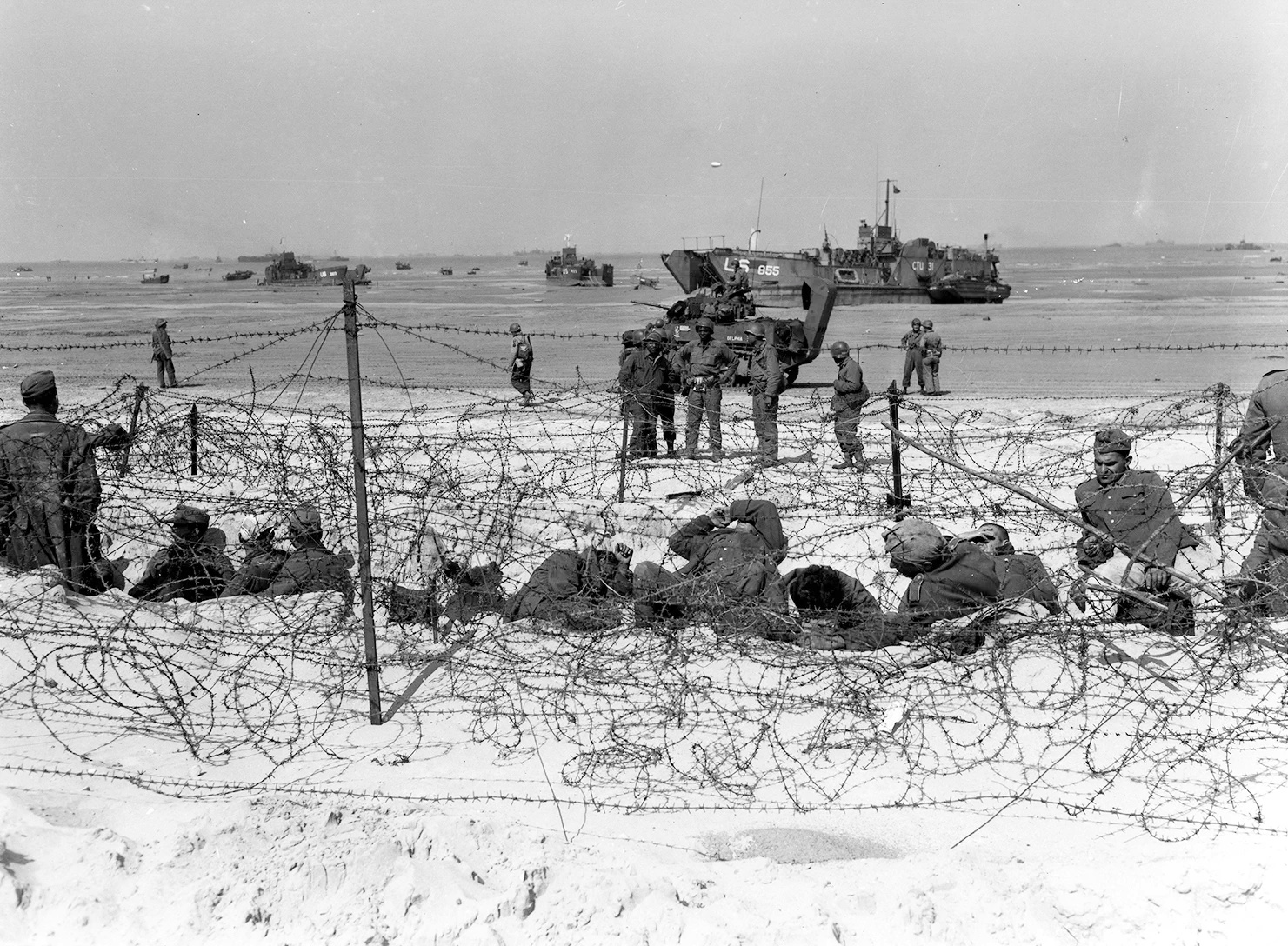
German prisoners of war in a barbed-wire enclosure on Utah Beach.jpg
History

What happened here

  1. 1944disaster

    Exercise Tiger disaster at Slapton Sands

    During Exercise Tiger, a large live-fire rehearsal for the Utah landing at Slapton Sands in Devon, German E-boats slip into a convoy of landing ships in the early hours of 28 April 1944, sinking or crippling several. At least 749 American servicemen are killed. The disaster is kept secret at the time; more men die rehearsing for Utah than in the landing itself.

    Wikipedia →
  2. 1944battle

    Airborne drops behind Utah

    In the early hours of 6 June 1944, the U.S. 101st Airborne Division (from ~01:30) and 82nd Airborne Division (from ~02:30) drop inland across the flooded Cotentin to seize the causeway exits, road junctions, and villages behind the beach, including Sainte-Mère-Église, about 12 km northwest. The drops are badly scattered and costly; some men drown in the flooded fields.

    Wikipedia →
  3. 1944battle

    The Utah Beach landing

    At 06:30 on 6 June 1944 the first wave of the U.S. 4th Infantry Division lands, pushed ~2,000 yards (≈2 km) south of its intended sector by currents and lost control craft, onto more lightly defended ground. Brig. Gen. Theodore Roosevelt Jr., the only general in the first wave, decides to land the follow-on waves there — "We'll start the war from right here." The division's casualties for the day are most often cited at ~197; ~21,000 troops are ashore by nightfall.

    Wikipedia →
  4. 1944military

    Roosevelt Jr. awarded the Medal of Honor

    Brig. Gen. Theodore Roosevelt Jr. is awarded the Medal of Honor for his conduct at Utah Beach on 6 June 1944, where he repeatedly led troops forward under fire despite a heart condition and walking with a cane. He does not live to receive it.

    Wikipedia →
  5. 1944death

    Death of Theodore Roosevelt Jr.

    Roosevelt Jr. dies of a heart attack on 12 July 1944, about five weeks after the landing, aged 56. He is buried in the Normandy American Cemetery above Omaha Beach, alongside his brother Quentin, killed in the First World War.

    Wikipedia →
  6. 1962memorial

    Utah Beach Landing Museum opens

    The Utah Beach Landing Museum opens at La Madeleine, on the dune at the center of the landing beach, built around a German blockhouse (strongpoint WN-5) that defended the sector on D-Day.

  7. 1984memorial

    Utah Beach American Memorial dedicated

    A red granite obelisk on the dunes, commemorating the U.S. VII Corps that landed here and drove north to liberate Cherbourg, is dedicated on 6 June 1984 for the 40th anniversary of D-Day, in the presence of allied heads of state. The ground was given to the United States in perpetuity by Sainte-Marie-du-Mont.

  8. 2011memorial

    Museum rebuilt and reopened

    The Utah Beach Landing Museum reopens after an extension to about 3,000 square meters, its centerpiece a rare Martin B-26 Marauder, one of only a handful of the medium bomber surviving in the world.

  9. 2024commemoration

    80th-anniversary commemorations

    The 80th anniversary of the Normandy landings is marked along the D-Day beaches, including Utah and the Sainte-Mère-Église airborne sites — among the last major commemorations expected to include living veterans of the invasion.

    Wikipedia →
The honest part
More Americans died rehearsing for Utah at Slapton Sands than died taking the beach itself — and the easy, triumphal telling leaves that out.

The discomfort at Utah is the opposite of Omaha's. There the horror is in the foreground; here it is the calm itself that has to be reckoned with. Utah is the D-Day beach where the plan worked, and the temptation is to tell it as a clean triumph: the lucky 2-kilometer error onto softer ground, the general with the cane who decided to "start the war from right here," the comparatively low count of roughly 197 casualties for the 4th Division on the day. Today the marsh the Germans flooded as a defensive weapon is a regional nature park, families swim in calm half-meter water, and birdwatchers walk the dunes. All of that is true and none of it is wrong. But "comparatively low" is doing heavy lifting, and the easy version hides where the real cost fell. The airborne divisions that seized the causeways so the beach could be taken came down scattered across the flooded fields in the dark and were cut up badly; some men drowned in the floods Utah's planners had not been able to drain. And the rehearsal for this very landing, Exercise Tiger at Slapton Sands that April, killed at least 749 American servicemen when E-boats fell on the practice convoy — more dead than the beach itself claimed, kept secret at the time, and easy to leave out of a feel-good story.

There is a second, slower tension, the one common to all the D-Day shore: remembrance against commerce. The museum, the granite obelisk, and the "Le Roosevelt" café on the dune coexist with coach tours, gift shops, and visitors who photograph a blockhouse as a backdrop. Sainte-Marie-du-Mont gave the ground for the monument to the United States in perpetuity, and the local communes are entitled to their beach and their living. But the line between honoring a place and consuming it is thin here, and the quietness of Utah — fewer crowds than Omaha, a working nature reserve — is part of what keeps it honest. The beach asks less of a visitor than Omaha does, and that is exactly why it is worth refusing the clean, triumphal version of it.

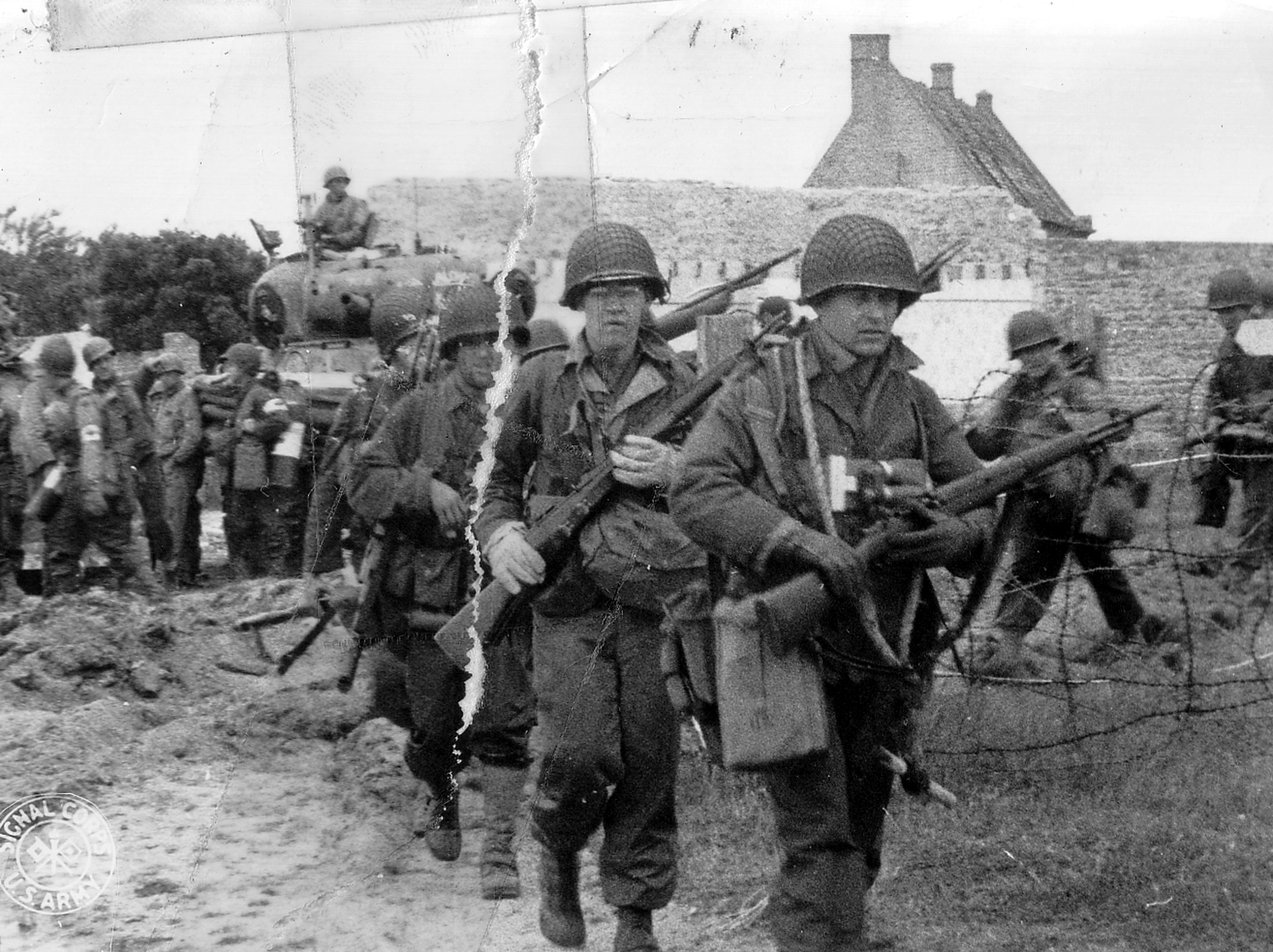
American Soldiers Landing at Utah Beach.jpg
Anatomy

The shape of the place

La Madeleine — Utah Beach Landing Museum (center)

50%

The central dune at La Madeleine, where the 4th Division's first wave came ashore after drifting south. The Utah Beach Landing Museum, built around a German blockhouse, stands here, with the granite obelisk to the U.S. VII Corps nearby and the "Le Roosevelt" café on the dune.

Best for the museum, the VII Corps obelisk, the main beach access and parking

This is the practical center of a visit: museum, memorials, café, and beach access all within a short walk.

The flooded marsh — Marais du Cotentin et du Bessin (inland)

50%

The low, wet land behind the dunes that the Germans flooded in 1944, now a regional nature park of marsh, wet meadow, and causeways. This is where the airborne troops came down in the dark; today it is grazing land and a haven for waders and wildfowl.

Best for birdwatching, the causeway exits, understanding the 1944 ground

Not a swimming area; it is the inland marsh, reached by road. The causeways across it were the key terrain of the battle.

Northern dunes and bunkers

80%

The flat sand and dune line running north from La Madeleine, with surviving German fortifications and quieter beach away from the museum. Open, exposed Channel beach used for walking and birdwatching.

Best for quiet walks, surviving bunkers, dune and shorebird watching

Exposed and open; few facilities away from the La Madeleine center. Mind the large tidal range.

Landmarks

Utah Beach Landing Museum (Musée du Débarquement) · 1962

museum

On the dune at La Madeleine at the center of the landing beach, built around a German blockhouse (strongpoint WN-5) that defended the sector on D-Day. Opened in 1962 and rebuilt to about 3,000 m² in 2011; its centerpiece is a rare Martin B-26 Marauder, one of only a handful surviving in the world. Tells the story of the seaborne landing and its link-up with the airborne troops inland.

Utah Beach American Memorial · 1984

monument

A red granite obelisk on the dunes, commemorating the U.S. VII Corps that landed at Utah and fought to liberate the Cotentin Peninsula and the port of Cherbourg, 6 June – 1 July 1944. Dedicated on 6 June 1984 for the 40th anniversary; stands on ground given to the United States in perpetuity by Sainte-Marie-du-Mont. Run by the American Battle Monuments Commission.

Sainte-Mère-Église church (inland)

church

The church of Sainte-Mère-Église, about 12 km northwest, where the village became one of the first liberated in France in the early hours of 6 June 1944 by airborne troops. An effigy of a paratrooper caught on its tower commemorates the night drop; the adjacent Airborne Museum tells the 82nd and 101st story.

Wikipedia →
A day here

From first light to dark

Dawn

On a falling spring tide the sea is far out and the flat sand lies bare and pale under a low Channel light, the dunes and the blockhouse of the museum dark against the sky. Birdwatchers in the Marais behind the beach are out for the waders feeding on the exposed flats before the day-trippers arrive.

Midday

In summer families spread along the sand near La Madeleine and swim in the calm, shallow water, lifeguards on station; the museum car park fills and coach tours work between the museum, the granite obelisk on the dune, and the causeway exits inland. This is the ordinary-beach face of Utah.

Golden hour

Late light rakes low across the flat beach and the marsh behind it, throwing long shadows from the obelisk and the dune grass as the tide pushes back in over the wide flat. The crowds thin; the nature park goes quiet but for birds.

Night

After dark the beach empties completely. There is no boardwalk and no strip of bars — only the dark dunes, the shape of the blockhouse, and the flooded marshland inland where the paratroopers came down in 1944. Sainte-Marie-du-Mont and the nearby villages are small and close early.

Compare

How it ranks

Peak warmth
Cooler than 84% of beaches in its country
Peak-month high ≈ 21°C

Ranked against every beach in our database — 228,000+ worldwide.

Arrow Jacques Joubert des Ouches Utah Beach Calvados.jpg
Sea & surf

What the water does

JFMAMJJASONDmetres (significant wave height)

Solid = typical monthly wave height; pale = the bigger days (90th pct). Offshore/regional swell from Open-Meteo Marine (ERA5 Ocean reanalysis, 2023–2024); a sheltered cove may sit calmer than this.

Calm — gentle swimming water most of the year
Typical wave height
0.58 m
Biggest swell
Jan · 0.78 m
Calmest
Jul · 0.37 m
Typical period
3.6 s (wind chop)
Before you go

Things to know

This is a war memorial first

Utah Beach is the westernmost D-Day landing beach. The dunes hold a museum built around a German blockhouse, a granite memorial to the VII Corps, and surviving fortifications. Treat the bunkers and monuments as memorials, not photo props; a half-day is realistic to see the beach, the museum, and the inland airborne sites at Sainte-Mère-Église.

Mind the tide

The spring tidal range is nearly 6 meters, so the sea retreats a long way across a wide, flat sand and returns quickly. Check the tide table before walking far out. The water and weather are cool English Channel conditions even in summer.

Lifeguards and swimming are seasonal

The beach is calm — average waves around half a meter — and used for summer swimming with lifeguards, but supervision is seasonal and the water is cold. Outside the summer season there is no coverage.

The marsh inland is a nature reserve

The flooded marshland the Germans used as a defense is now the Marais du Cotentin et du Bessin regional nature park, good for waders and wildfowl. It is the 1944 airborne ground; stay on roads and paths and respect the working farmland.

Swimming

Usually calm water — among the gentler beaches for a swim.

Sharks

No incidents on record in the global shark-attack file.

Plan

If you go

Getting there
Nearest airport
Cherbourg Manche airport (CER) · 34 km
Nearest town
Saint-Hilaire-Petitville · 13 km

Utah Beach is on the east coast of the Cotentin Peninsula in Normandy, at La Madeleine in the commune of Sainte-Marie-du-Mont (Manche), reached most easily by car. The nearest airport is Cherbourg–Manche (CER), about 34 km north. Carentan, about 12 km south with a station on the Paris–Cherbourg rail line, is the practical base; Sainte-Mère-Église and its Airborne Museum are about 12 km northwest. The beach is a standard stop on D-Day coach tours, though Utah is farther from the main Calvados beaches (Omaha is roughly an hour east by road) and is usually visited together with the inland airborne sites rather than the other landing beaches.

When to go
  • D-Day anniversary commemorations · Every 6 June, with major ceremonies on round anniversaries

    Ceremonies at the Utah Beach memorial and the inland airborne sites mark the anniversary of the landing each 6 June; round-number anniversaries (the 80th in 2024) draw larger gatherings and, increasingly few, living veterans.

  • Summer swimming season · Roughly July and August, lifeguarded

    In peak summer the beach at La Madeleine is used as an ordinary public swimming beach, with lifeguards and calm, shallow water — the living, present-tense face of Utah alongside its memorial role.

What to eat & drink
Huîtres de Normandie (oysters)

The Cotentin's east coast is oyster country; the flats off Saint-Vaast-la-Hougue, about 20 km north, are one of Normandy's best-known oyster grounds. Eaten raw with lemon and rye bread. There is little food on the beach itself beyond the museum café; you eat in the villages and ports behind it.

Saint-Vaast-la-Hougue and restaurants around Sainte-Marie-du-Mont and Carentan

Moules-frites

Mussels steamed in cider or white wine with shallots and served with fries, the standard plate of the Norman coast. The mussels are local to the Cotentin shellfish shore.

Cafés and restaurants in Sainte-Marie-du-Mont, Carentan, and Sainte-Mère-Église

Cider, pommeau, and Calvados

This is apple country. Dry Norman cider, pommeau (a blend of apple juice and Calvados), and Calvados apple brandy itself are the regional drinks, made on farms across the Cotentin and the wider Normandy bocage.

Farm cideries (cidreries) and shops across the Cotentin, village restaurants

Teurgoule

A traditional Norman baked rice pudding, slow-cooked for hours with cinnamon until a dark skin forms — a regional dessert of lower Normandy, not a tourist invention.

Bakeries and traditional restaurants in the Cotentin and Bessin

Sources & references
  1. Wikipedia · cited 2×
  2. Congressional Medal of Honor Society; U.S. Dept. of War · cited 2×
  3. U.S. Naval History and Heritage Command; Wikipedia
  4. Encyclopaedia Britannica; Wikipedia
  5. Congressional Medal of Honor Society; ww2ondeadline
  6. Utah Beach Landing Museum; Normandie Lovers
  7. American Battle Monuments Commission
  8. Utah Beach Landing Museum; Liberation Route Europe
  9. Encyclopaedia Britannica; Wikipedia (Utah Beach); figures are estimates
  10. Wikipedia (Utah Beach)
  11. Wikipedia (Utah Beach); Britannica
  12. U.S. Naval History and Heritage Command; Wikipedia (Exercise Tiger)
  13. World Beach Tour beach data
  14. World Beach Tour beach data (EOT20 tidal model)
  15. World Beach Tour beach data (Open-Meteo Marine, ERA5)
Colophon · Provenance

Where this page comes from

Geography, facilities
OpenStreetMap (ODbL) for geometry and facility tags within 500 m of the beach centroid. GeoNames for city/airport distances.
Climate & ocean
worldclim_v2.1_2.5m
Tides
eot20
Photography
Archival, original tone (Tier B — Wikimedia Commons). Each image licensed per its own terms; attribution visible inline.
History & culture
Every factual claim is linked to its source in the prose above. Wikipedia citations inline. Non-wiki sources named where relevant.
Editorial voice
Register: reverent. Written to pass a local's nod test; corrections welcome.
Written by Erin Rose
Last reviewed 2026-04-19
v0.9in editorial development toward v1.0