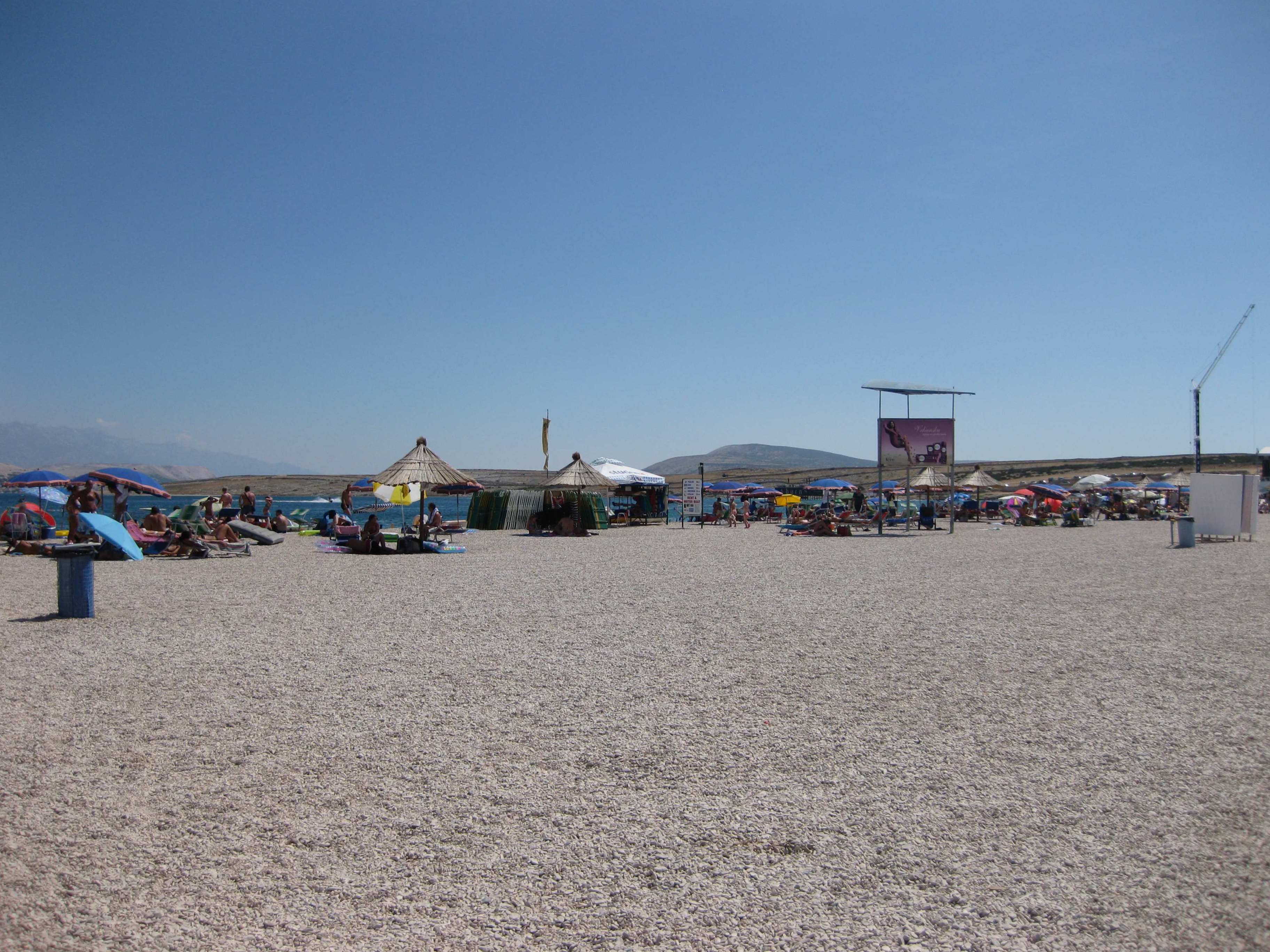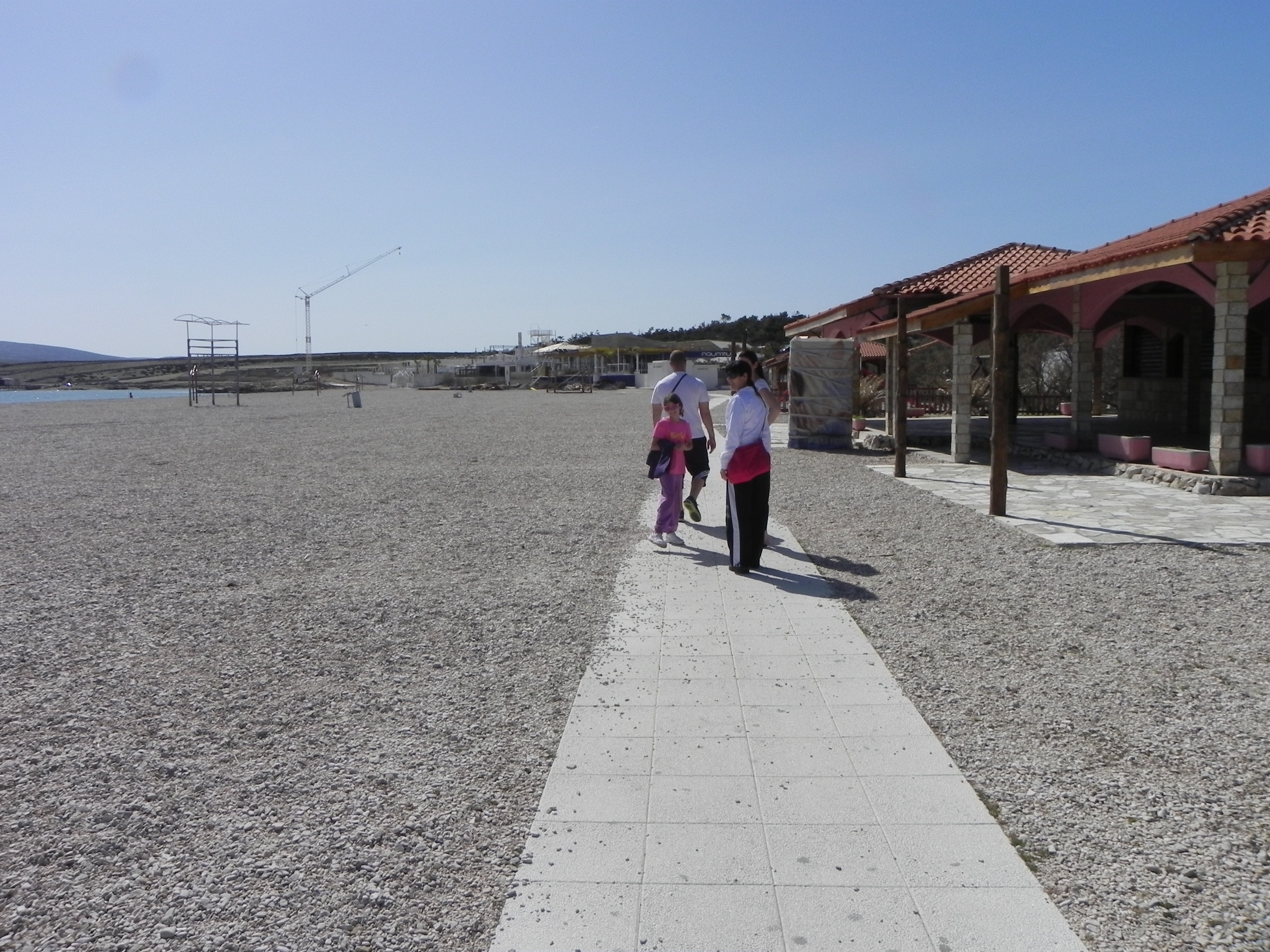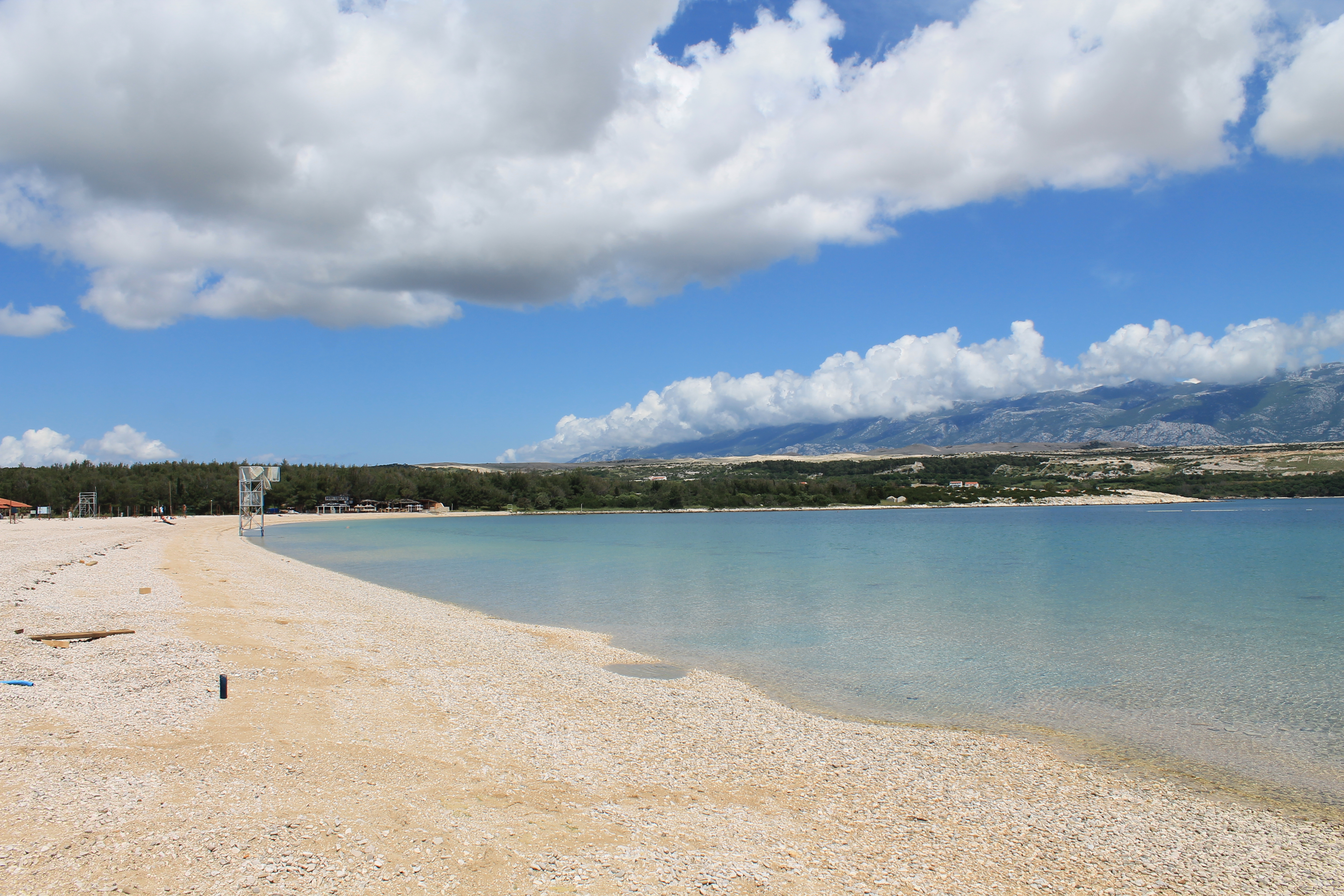
Zrće is a long white-pebble beach on the Adriatic island of Pag, about two kilometers from the town of Novalja, and on paper it is exactly the kind of place a Croatian-coast guide would praise and move on from: bright pebbles, clear turquoise water, a Blue Flag held since 2003. What it actually is, for a few months a year, is the loudest beach in Croatia. Zrće is the country's pre-eminent party beach, widely billed as the 'Croatian Ibiza,' and the pebbles are mostly a foundation for the sound systems.
The beach is lined with four large open-air nightclubs, Papaya, Aquarius, Kalypso, and Noa, that run, increasingly, around the clock. Recent 24-hour permits have made the model literal: Aquarius operates non-stop, a beach bar and restaurant by day, foam parties in the central pool in the afternoon, aperitifs to dance music at sunset, and theme nights and international DJ sets through the dark. The music is house, EDM, hardstyle, trance, hip-hop, and r'n'b at the peak of the summer, and the beach offers the full menu of party-resort activities alongside it: jet-skis, party boats, bungee jumping, inflatable catapults.
What sealed Zrće's reputation is the festivals. Across the summer the beach hosts a string of major electronic-music events, Hideout, Sonus, the Big Beach Spring Break, Wild & Free, Summer Peak, and others, and the headliners are the genuine top tier of the global dance scene: Swedish House Mafia, Armin van Buuren, Eric Prydz, Marshmello, Don Diablo, Timmy Trumpet. For a stretch of the European summer, this pebble beach on a remote Adriatic island is one of the continent's biggest dance floors, and it does it at a fraction of Ibiza's prices, which is much of the point.
The honest astonishment of Zrće is the island it sits on. Pag is, away from this one strip, the near-opposite of a rave: a stark, rocky, almost lunar landscape scoured by the bura wind, with some 35,000 sheep, ancient salt pans that still produce around two-thirds of Croatia's salt, and centuries-old crafts. Its sheep's-milk cheese, Paški sir, salt-cured by the bura that carries sea spray onto the meadows, is regarded as one of Croatia's finest; its hand-made lace has been worked by Benedictine nuns since the 15th century and is recognized as national heritage. Pag leads a genuine double life, and Zrće is one entire half of it.
So Zrće is the rare beach whose interest is sociological as much as scenic. It is a white-pebble Blue Flag cove that a remote, traditional, cheese-and-lace island somehow grew into one of Europe's premier 24-hour party destinations, and the most honest way to see it is against its own backdrop: the lasers and the foam pools in the foreground, and behind them the bare hills, the salt, and the sheep that have defined Pag for a thousand years.