Portugal's surf capital, built around a 16th-century fortress that Salazar used as his most-feared political prison.
· Story
Peniche is a Portuguese coastal city of roughly 27,000 people on a rocky peninsula jutting six kilometers into the Atlantic, fifty kilometers south of Nazaré and ninety kilometers north of Lisbon. The peninsula was an actual island as recently as the 16th century; a sandy isthmus formed after the 1755 Lisbon earthquake reshaped the regional coast, attaching what had been the Ilha de Peniche to the mainland. The town's shape, its cliffs, its fishing fleet, and much of its current character all date to the couple of hundred years since.
Peniche is the Portuguese surf capital. Five kilometers south of the old-town fortress is a beach break called Supertubos — named for the hollow, barrelling waves it produces on a south-southwest swell — that has hosted the WSL Championship Tour's Portugal stop since 2009. The event is now branded the MEO Rip Curl Pro Portugal and runs every October with the world's top 34 surfers. Supertubos is to Portugal what Pipeline is to Hawaiʻi and Trestles is to California: the country's marquee competition wave, the one the surf press shoots, the one the national tourism board uses in its posters. Peniche, in turn, is the town that hosts, feeds, and lodges the event, and has organized itself around the sport's global circuit.
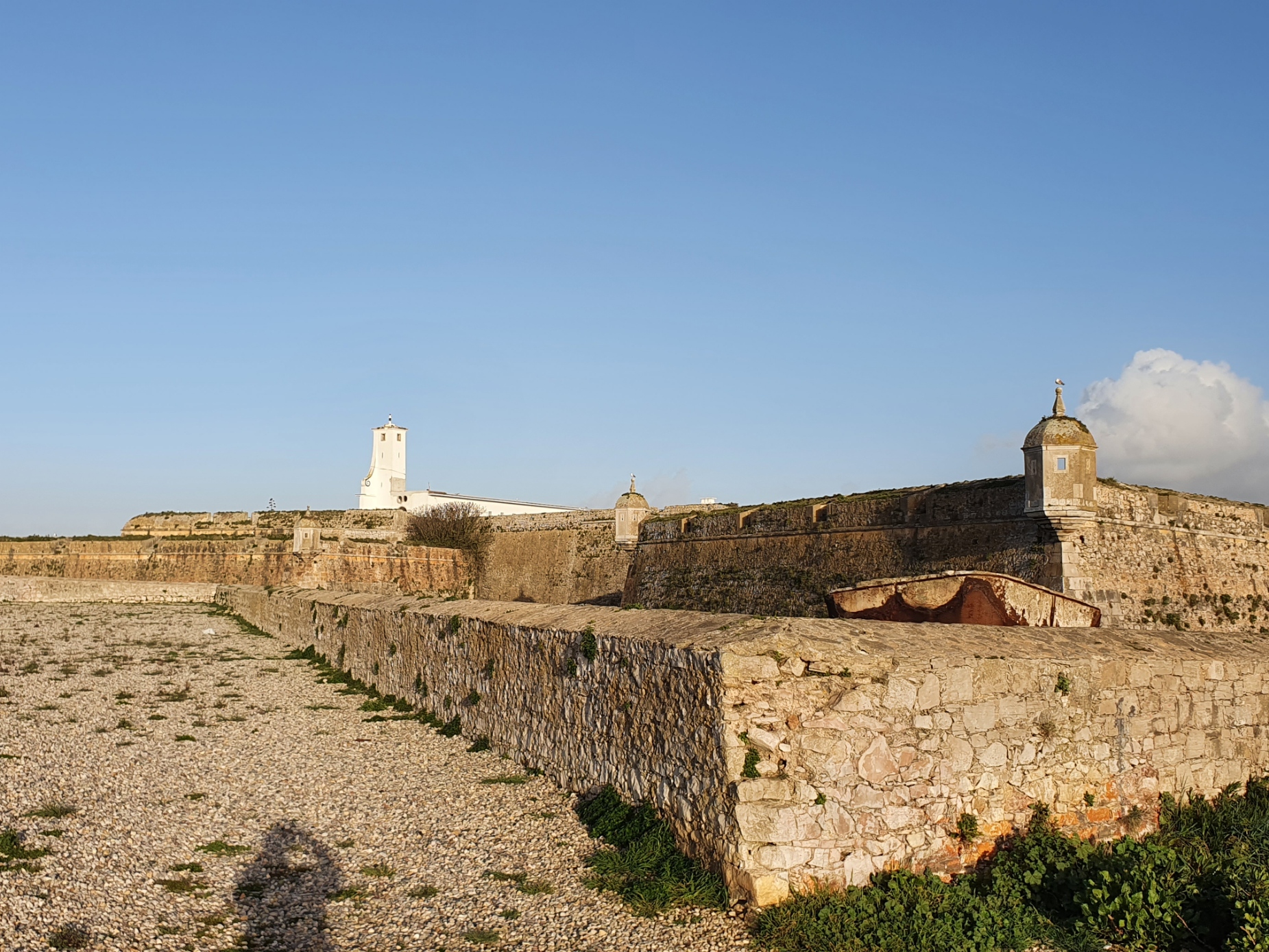
The Fortaleza de Peniche — a 16th-century fortress on the seaward edge of the old town — is the peninsula's second defining fact. Built in 1557 under King João III as an Atlantic coastal defense, rebuilt and expanded repeatedly, it became, under the Salazar dictatorship (1926–1974), Portugal's most feared political prison. The PIDE secret police held some of the 20th-century resistance's most prominent figures there — the Communist Party leader Álvaro Cunhal, who escaped in January 1960 in one of Europe's famous Cold War prison breaks. The fortress has been a museum of Portuguese political resistance since 1984.
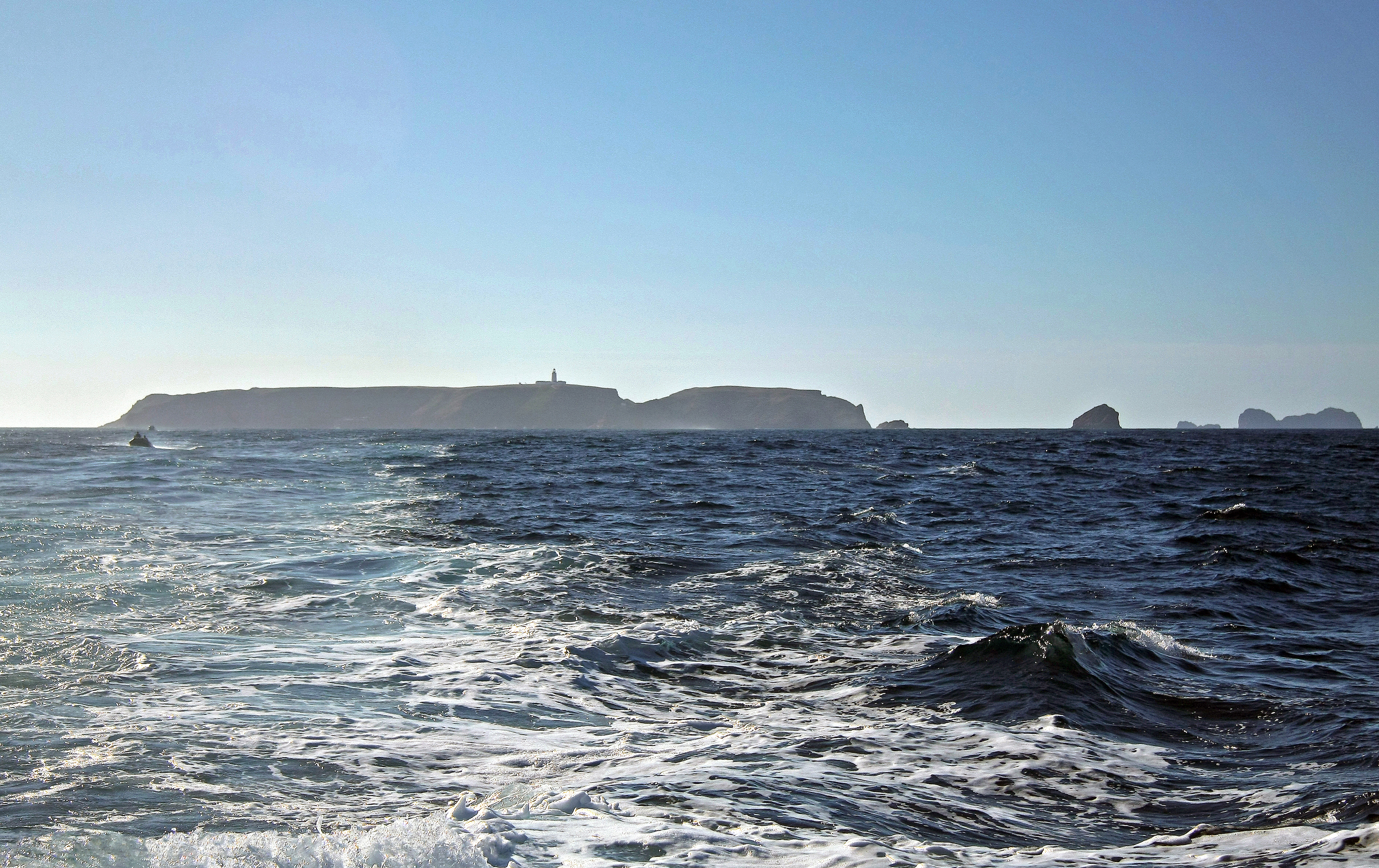
Ten kilometers offshore, visible on a clear day from the peninsula's western cliffs, is the Arquipélago das Berlengas — a small archipelago of rocky islands, a nature reserve since 1981 and a UNESCO Biosphere Reserve since 2011. The main island has a 17th-century fortified monastery (now a guesthouse), a seabird colony of rare Atlantic species, and the kind of raw-Atlantic-wilderness texture you can no longer find on the Portuguese mainland. The boat from Peniche harbor runs daily in summer; access is restricted by permit numbers to protect the reserve.
Peniche is a working town. The fishing fleet is still active — Portugal's largest sardine and mackerel fleet is based here. The cobblestone streets of the old town (Vila Velha) still run to the harbor, where the morning auction sells the night's catch. The surf industry is a layer on top of a 400-year fishery, not a replacement for it. Most visitors come for the waves or the fortress and leave without seeing the working harbor at 6 a.m., when the auctioneers are calling in Portuguese faster than any English-speaker can follow, and the crates of fresh sardines are already being loaded for the hour drive to Lisbon markets.
· Supertubos
Why Peniche is the Portuguese surf capital
A barrelling beach break four kilometers south of the old town that has hosted the world's top surfers every October since 2009. The wave is the reason Peniche is on the global surfing map.
Supertubos — formally Praia do Medão, colloquially "the super tubes" — is a sand-bottom beach break on the southern coast of the Peniche peninsula that produces some of the cleanest, hollowest waves in Europe on a south-southwest swell. The wave is not canyon-amplified like Nazaré; it is produced by the much more ordinary mechanism of Atlantic swell meeting a shallow, gently-sloping sandy seabed at the right angle. What makes it exceptional is consistency: Peniche's peninsula geography funnels southwest swells onto this beach with remarkable reliability across the year.
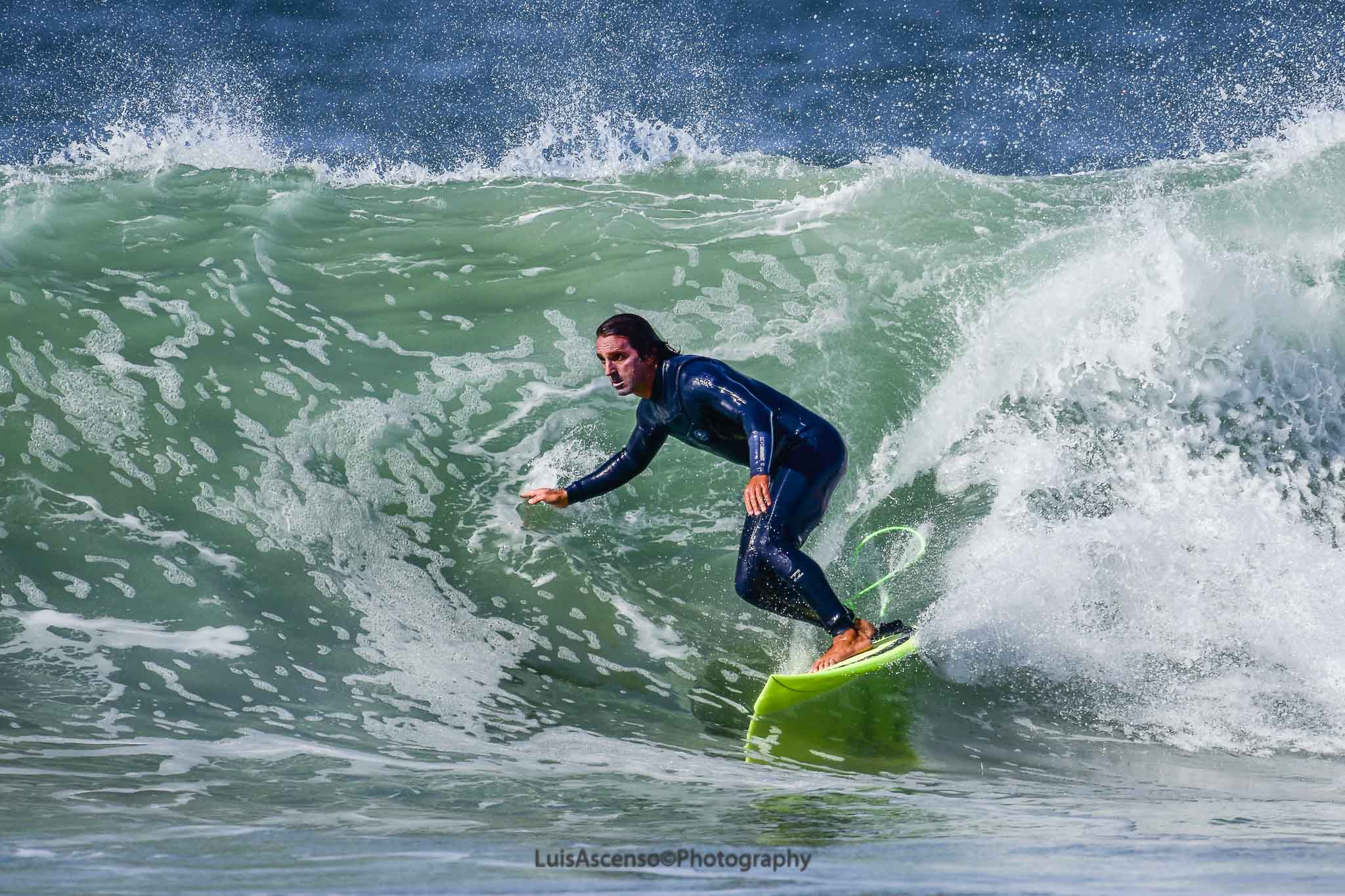
Supertubos on a clean south-southwest day — the hollow, fast-peeling barrel the beach is named for. The WSL Championship Tour books this break in October because the autumn swell window maximises the chance of getting this conditions window on a competition day.· Vitor Oliveira (Torres Vedras)
Why the WSL comes here
The WSL Championship Tour — the top 34 men and 18 women surfers on the planet — has held an event at Supertubos every October since 2009. The event has gone through several sponsorship names (ASP Rip Curl Pro Search, Rip Curl Pro Portugal, and since 2022 the MEO Rip Curl Pro Portugal) but the break and the window have been stable. The choice of Supertubos is not accidental. It is one of relatively few high-performance beach breaks on the tour circuit that consistently delivers at the time of year the circuit visits Europe; the only serious competitor for the Portugal stop in the tour's planning has been Ericeira, 40 km south, which has a different wave character and is rarely selected for the same competition slot.
The WSL Rip Curl Pro event at Peniche — a tour stop that has run every October since 2009 and is now branded the MEO Rip Curl Pro Portugal. Public beach-viewing; crowds of 15–25,000 on final days.· Luís Ascenso
Who else surfs here
Outside the WSL event's 10-day competition window, Supertubos is a serious break that draws elite recreational surfers and touring professionals from across Europe — especially French, Spanish, Basque, and Moroccan surfers who know the October-to-April season is the productive window. It is not a beginner break. First-time surfers learn at Baleal (on the north coast of the peninsula), at Consolação (a few kilometers south), or sometimes at Praia do Baleal Sul on smaller days. Attempting Supertubos without the skills to handle a hollow, fast, shallow-water takeoff is the single most common way visiting surfers get hurt at Peniche.
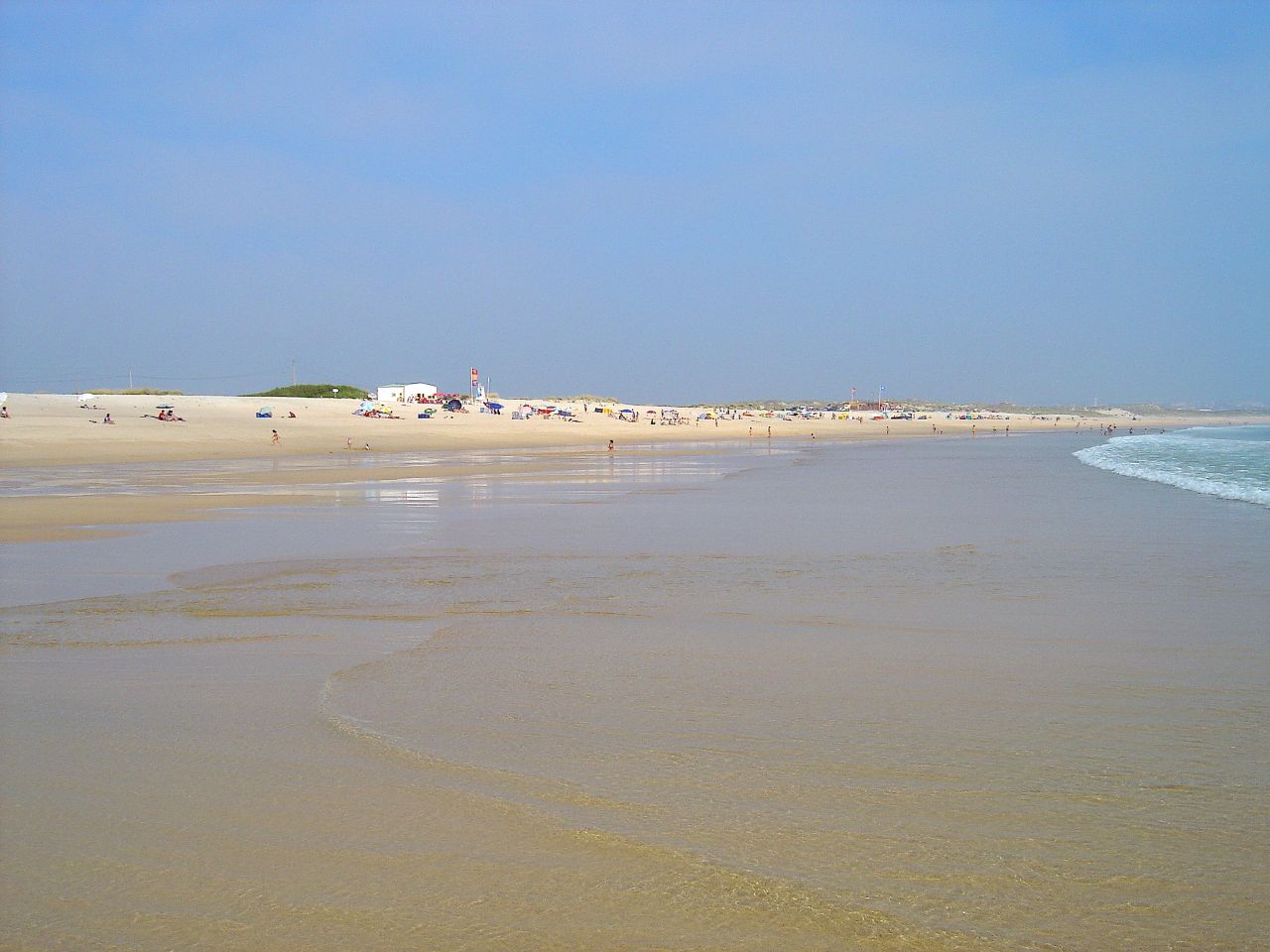
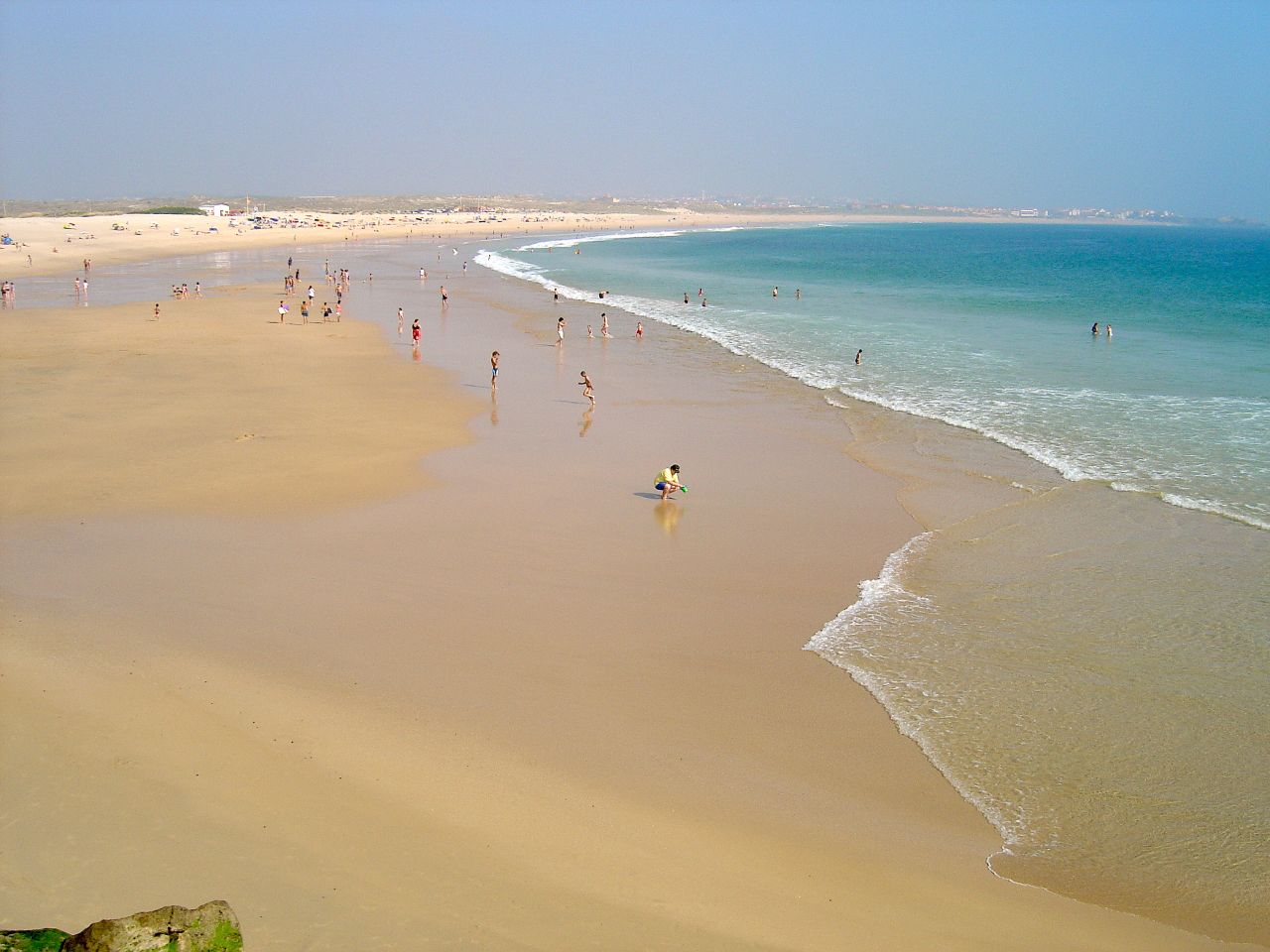
Praia do Molhe Leste (foreground) and Supertubos (distance) — the stretch of coast the WSL event shares between the practice and competition sites.· Vitor Oliveira (Torres Vedras)
· The Fortaleza · 1557–Today
What the old fortress was used for
Every coastal Portuguese town of a certain age has a 16th-century fortress. Peniche's is different. Under the Salazar dictatorship (1926–1974), this building was the regime's most-feared political prison. The visitor who skips it misses the single most serious thing in the town.
Fortaleza de Peniche — 16th-century Atlantic fortress; the Salazar regime's primary political prison 1934–1974; now the Centro Nacional de Resistência e Liberdade (National Centre for Resistance and Freedom).· GualdimG
The original building
The fortress was commissioned in 1557 by King João III as an Atlantic coastal defense against English and Barbary corsair raids. Construction continued through the 17th century, including major expansion under João IV during the Portuguese Restoration War against Spain. The basic pentagonal plan — bastions, dry moat, seaward-facing artillery platforms — reads as standard Iberian post-medieval military architecture. Through the 18th and 19th centuries the fortress served as a military barracks, later as a temporary holding facility for colonial-era prisoners transported to and from African Portuguese territories.
1934: conversion to political prison
In 1934, eight years into the Salazar regime, the fortress was converted into the Estado Novo's primary installation for political prisoners. The PIDE — Polícia Internacional e de Defesa do Estado, the regime's secret police — used Peniche to detain, interrogate, and hold opponents of the regime for the next forty years. The detainees included:
Portuguese Communist Party leaders and cadres — the party was banned and operated underground; PCP organizing was the regime's principal target.
Trade-union organizers from the industrial belts around Lisbon and Porto.
Anti-colonial-war resisters — soldiers who refused to fight in Angola, Mozambique, and Guinea-Bissau, and civilians who organized against the wars.
Journalists, writers, academics — anyone the regime's censorship apparatus identified as a threat.
Torture was documented. Deaths were documented. The Peniche regime of solitary confinement cells — the notorious segredo wing — was specifically designed to break political prisoners through isolation, and did so. The museum at the fortress today displays the cells, the interrogation rooms, and the names of the people held in them.
1960: the escape
On 3 January 1960, ten PCP prisoners — including party general secretary Álvaro Cunhal — escaped the fortress through a tunnel-and-rope operation that had been prepared in secret for months. The escape involved bribing guards, tunneling through a basement wall into a sewer that exited at the fortress's outer ditch, and lowering the prisoners down the fortress's seaward wall on ropes to waiting boats. The escape was one of the Cold War's famous European prison breaks. Cunhal reached Moscow via France and Romania; he continued leading the PCP from exile until the 1974 Carnation Revolution, when he returned to Portugal and served in the post-dictatorship governments. The escape is dramatized in several Portuguese books and in the 2016 film O Muro. It is the defining Peniche story of the 20th century.
The museum today
The Fortaleza opened as a museum of Portuguese political resistance in 1984, ten years after the Carnation Revolution. The current installation — the Centro Nacional de Resistência e Liberdade (CNRL, established 2017) — is the main institutional home for Portugal's ongoing accounting of the Estado Novo. Admission is €5; it closes on Mondays. A visitor who is interested in 20th-century European political history — not just the Portuguese side of it — should plan two to three hours here. The specific cells, the interrogation apparatus, the prisoner testimony recordings, the tunnel through which Cunhal escaped — all are preserved and interpreted. It is not a comfortable museum. It is an important one.
· Four Parts of the Peninsula
Supertubos, Baleal, the Old Town, Cabo Carvoeiro
Peniche looks compact on a map. On the ground it's four distinct places with four different purposes — and most visitors only see one or two of them.
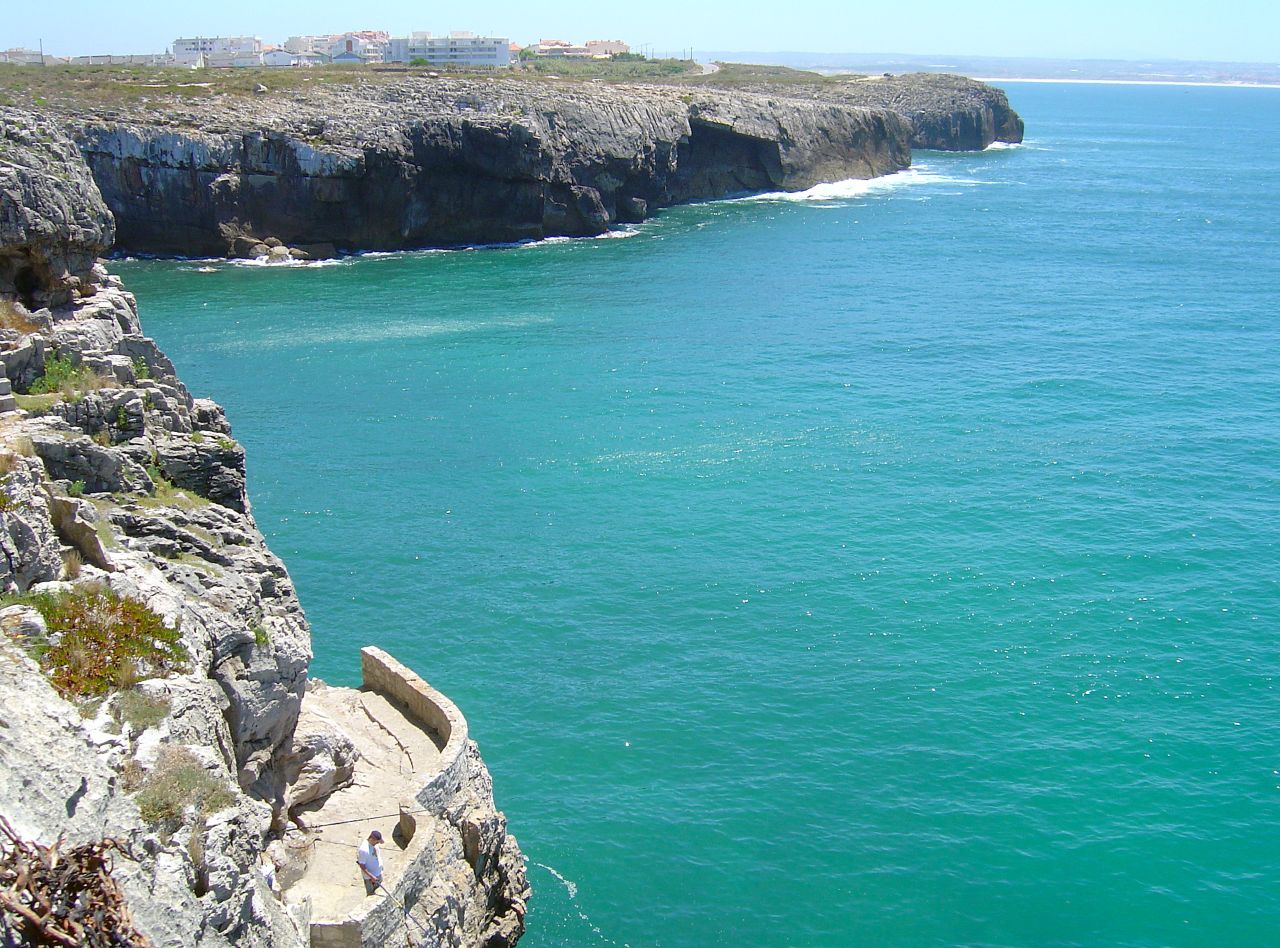
Jurassic limestone cliffs on the Peniche peninsula's outer coast — the geological feature that makes this a rocky headland rather than a sandy bay.· Vitor Oliveira (Torres Vedras)
SUPERTUBOS
Supertubos / Praia do Medão
The town's iconic surf beach — 4 km south of the old town on the sheltered southern coast of the peninsula. Long hollow barrels on south-southwest swell; the wave is sand-bottom beach break, not reef, which means it can shift between seasons. The WSL event runs here in October when conditions peak.
Best for
Advanced surfing; spectating during WSL week; Atlantic sunrise
Local note
The wave is advanced-to-expert level. Beginner surfers should stay at Baleal or Consolação.
BALEAL
Baleal
The connected peninsula via a narrow sandy isthmus, 3 km north of Peniche old town. Calmer north-facing beaches (Praia do Baleal Norte) are protected from the prevailing swell and are the canonical Portuguese beginner-surf-school beach. The south side (Praia do Baleal Sul) is more exposed. Summer-packed with surf camps and schools.
Best for
Learning to surf, Instagram-friendly isthmus walks, surf-hostel nightlife
Local note
Short-term rental legal status has tightened since 2022; verify STR registration on any booking.
VILA
Peniche Vila Velha (old town)
The historic core of the town — cobblestone streets, the Fortaleza, the 17th-century Church of São Pedro, the working fish auction at the Porto de Pesca. Less beachy, more town. The place to stay if you want to be in a functioning Portuguese fishing city, not a surf camp.
Best for
Fortaleza visits, fish-auction mornings, working harbor observation, dinner
Local note
Parking in the old town is constrained; use the lots at the harbor's outer edge.
CARVOEIRO
Cabo Carvoeiro
The peninsula's western tip — the Farol lighthouse (1790), the Papôa rock formations, the Nau dos Corvos cliff. Atlantic sunset destination; no swimmable beach (too exposed), but the most photographed part of the peninsula.
Best for
Sunset photography, coastal walking, the canonical Portuguese lighthouse view
· A Day Here
What's happening at six a.m. and what's happening at ten p.m.
Dawn
The fishing fleet leaves between 4 and 6 a.m., depending on the target species. By first light, sixty-odd boats are working the continental shelf between the peninsula and the Berlengas. The auction hall at the Porto de Pesca opens at 6:30. The surf cameras at Supertubos and Consolação are already running; the dawn patrol has been in the water since the first light. Cafés on Avenida do Mar open at 7.
Midday
By eleven the Fortaleza tour buses arrive. The surf schools at Baleal have been running beginner lessons since 9 a.m. — Baleal's protected north beach, calmer than Supertubos, is where most first-timers learn. Restaurants on Rua Alexandre Herculano fill for the Portuguese 12:30 lunch. The fish market closes by 2 p.m. If the wind is up — northerly trades, typical for summer — it is noticeably cooler than the inland temperature.
Golden
Late afternoon at Cabo Carvoeiro — the peninsula's western tip, 3 km west of the old town — is the iconic Peniche sunset. Fishermen's wives used to walk up here to see if their husbands' boats were coming in. Now it is photographers and couples. The Farol do Cabo Carvoeiro (lighthouse, 1790, reinforced 1931) is the best-sited photograph location on the Portuguese central coast. The Atlantic goes pink, then gold, then a deep Atlantic blue in the span of an hour.
Night
Rua Alexandre Herculano and the Avenida do Mar hold the town's dinner-and-drinks scene. Mid-range — nothing approaching Lisbon's sophistication, nothing like a club strip. During WSL week in October the bars fill with an international surf crowd (Brazilian, Australian, South African, American) that the rest of the year you would not see. The Fortaleza closes at 5:30 p.m. and the peninsula is quiet by 10.
· History
Eight points from 1557 to 2009
The peninsula's shape was set by the Lisbon earthquake. Its fortress was built against English pirates and repurposed against Portuguese dissidents. Its current identity was set by one WSL booking decision in 2009.
1557 · built
Fortaleza de Peniche construction begins
King João III orders the construction of a coastal fortress on the then-island of Peniche to defend against English and Barbary corsair raids. The fortress is completed in stages through the 1640s under João IV as Portugal fights its Restoration War against Spain. The basic structure remains intact.
The 1 November 1755 Lisbon earthquake — one of Europe's defining natural disasters — triggers regional tsunamis and coastal subsidence. Sediment redistribution over the following decades attaches the Ilha de Peniche to the mainland via a sandy isthmus, turning the island into a peninsula. The modern Peniche coastline takes shape in the generation after this event.
The first lighthouse at Cabo Carvoeiro, the peninsula's western tip, is lit. Reinforced in 1931. The lighthouse is still active and is the most-photographed structure on the Peniche peninsula — its 55-meter tower against the Atlantic is Portugal's canonical lighthouse image.
1934 · political
Fortaleza becomes a political prison
Under the Estado Novo dictatorship of António de Oliveira Salazar, the Fortaleza de Peniche is converted from a military installation into the regime's primary political prison for opponents. The PIDE secret police holds Communist Party members, trade unionists, resistance figures, and African-colonial-war dissidents here until 1974. Torture and deaths are documented. The building is the central physical symbol of Salazar-era political repression.
On 3 January 1960, Portuguese Communist Party leader Álvaro Cunhal and nine fellow prisoners escape the Fortaleza de Peniche through an elaborate tunnel-and-rope operation later dramatized in multiple Portuguese books and films. The escape is one of the Cold War's famous prison breaks and a defining moment for the Portuguese anti-fascist resistance. Cunhal reaches Moscow via France; he will return to Portugal only in 1974, after the Carnation Revolution.
The Arquipélago das Berlengas — the three small islands 10 km off Peniche — is designated a Portuguese natural reserve. In 2011 it is upgraded to UNESCO Biosphere Reserve status. The islands hold some of the last breeding colonies of the Bulwer's petrel in the Eastern Atlantic and the endemic Berlengas thrift plant. Visits are permit-limited.
A decade after the 1974 Carnation Revolution ended the Estado Novo dictatorship, the Fortaleza de Peniche opens as a public museum of Portuguese political repression and resistance. The installation is expanded and professionalized over subsequent decades; the current Centro Nacional de Resistência e Liberdade (CNRL) was established in 2017.
2009 · Oct · sport
Peniche joins the WSL Championship Tour
The Rip Curl Pro Search brings the ASP (now WSL) World Championship Tour to Supertubos for the first time. The event becomes a fixture; by 2013 it is branded the Rip Curl Pro Portugal, by 2022 the MEO Rip Curl Pro Portugal, and runs every October. Peniche becomes, through the 2010s, the town most associated with Portugal's emergence as a global surf destination — alongside Nazaré's parallel big-wave story.
The single most-dramatized Peniche story is Cunhal's escape. It appears in Portuguese school textbooks, in at least half a dozen memoirs and novels (including Cunhal's own memoirs, written under the pseudonym Manuel Tiago), in the 2016 film O Muro, and in the ongoing curriculum of the Fortaleza museum. For a Portuguese person of the generation now aged 60+, the Peniche escape is a shared national memory; for younger Portuguese it is a history-class chapter. For a visitor from outside Portugal, it is the best entry point to understanding what the Estado Novo was and what it cost to oppose it.
Peniche bobbin lace — a 17th-century craft still practiced
Parallel to the surf and political-prison narratives, Peniche has been one of Portugal's two canonical bobbin-lace (renda de bilros) towns since the 17th century. The technique — where dozens of wound bobbins are manipulated by hand over a pinned pattern on a padded cushion — was brought to the coast from Flanders during the Iberian Union period and naturalized into Portuguese coastal women's craft work. The Escola de Rendas de Bilros in Peniche is one of the few institutional homes keeping the tradition active. The Museu de Peniche, inside the fortress, has a substantial lace collection. A small number of remaining workshops along Rua Alexandre Herculano still produce lace for sale; buyer respect for craft time and pricing is appropriate.
The surf era (2009–present) and Peniche as a global brand
Since the WSL booking in 2009, Peniche has been present in international surf media in a way no other Portuguese town — not even Nazaré — has been. The annual October event brings hundreds of international media workers to the town; the footage of Gabriel Medina, Filipe Toledo, Kelly Slater, John John Florence, Italo Ferreira competing at Supertubos has been watched by millions of people who could not have pointed to Portugal on a map five years earlier. The Portuguese tourism agency has leaned into this: Visit Portugal promotional material since roughly 2015 has featured Peniche and Ericeira as the country's "surf coast" almost as prominently as Lisbon and the Algarve. The effect on the town has been mixed — more outside capital, more housing pressure, a more anglophone-friendly hospitality scene, but also a level of economic resilience that the declining fishery alone would not sustain.
· The Berlengas
The UNESCO biosphere reserve ten kilometers offshore
Three small islands visible from the peninsula's cliffs on a clear day. Portugal's first nature reserve (1981) and a UNESCO Biosphere Reserve (2011). Permit-limited access by boat from the Peniche harbor.
The Arquipélago das Berlengas — Berlenga Grande (the largest island, with the fortified 17th-century monastery), Estelas, and Farilhões. Some of the last breeding colonies of Atlantic seabirds on the Portuguese coast.· Vitor Oliveira (Torres Vedras)
The Arquipélago das Berlengas is three small islands — Berlenga Grande (the main island), Estelas, and Farilhões — and the surrounding shallow banks, ten kilometers off the Peniche peninsula. Geologically, they are the exposed tops of a Precambrian granite ridge that runs under the sea between the mainland and the islands — remarkably ancient rock (roughly 550 million years), among the oldest exposed in Portugal and a distinct lithology from the Jurassic limestone of the peninsula itself. The islands were never connected to the mainland during any Quaternary sea-level low, which has produced a fauna and flora with a significant share of endemic species.
What's protected
The Berlengas were designated a Portuguese natural reserve in 1981 and elevated to a UNESCO Biosphere Reserve in 2011. The ecological highlights the protection is for:
Bulwer's petrel breeding colony — one of the last significant Atlantic colonies of this pelagic seabird. Population ~500 pairs.
Shag (European cormorant) colony — ~200 pairs, the largest in mainland Portugal.
Armeria berlengensis — the Berlengas thrift, a small flowering plant endemic to Berlenga Grande, found nowhere else.
Shallow-water marine habitats — including some of the healthiest subtidal macroalgal forests on the Portuguese coast.
What's on Berlenga Grande
The main island has four things a visitor notices:
The Forte de São João Baptista — a small 17th-century island fortress, now operated as a basic guesthouse. Sleeping in the fort, surrounded by open Atlantic, is a specific experience you cannot replicate elsewhere on the Portuguese coast. Reservations open months ahead and fill.
A marked walking loop around the island (~2 hours), including the Carreiro do Mosteiro viewpoint and the small lighthouse at the south end.
One café-restaurant near the boat dock — limited menu, reasonable seafood, closes when the last return boat leaves.
Snorkeling and diving sites off the island's shallow-water perimeter — the clearest Atlantic water in mainland Portugal; visibility 10–15 m on good days. Several licensed dive operators run trips from Peniche harbor.
The big-wave capital. The opposite of Peniche's high-performance beach-break world: Nazaré is canyon-driven 20-meter waves, tow-in surfing, and a 900-year fishing village. Together the two towns are Portugal's surf coast.
The almost-perfectly-circular calm-water bay — the Silver Coast family beach. The opposite end of the Atlantic-exposure spectrum from Supertubos. Ten kilometers south of Nazaré; ideal for a mid-coast rest day.
25 km east
Óbidos
The walled medieval town given as a wedding gift by King Dinis to his queen in the 13th century. Walk the ramparts; drink ginjinha in a chocolate cup. 15 minutes from Peniche; the default rainy-day destination.
50 km south
Ericeira
Europe's first World Surfing Reserve (designated 2011) — a 4 km stretch of coast with seven consecutive quality surf breaks. The other Portuguese surf town, with a different character: Ericeira is a village of narrow streets and family restaurants; Peniche is a larger working harbor.
Written by Erin Rose. Historical material on the Fortaleza and the 1960 escape follows the Centro Nacional de Resistência e Liberdade's published curriculum and Cunhal's own memoirs (published under the pseudonym Manuel Tiago). Fishery statistics from the Portuguese Directorate-General for Natural Resources (DGRM). Surf-event history from WSL records. Berlengas ecological data from ICNF and the UNESCO Biosphere Reserve documentation. Images from Wikimedia Commons, per-image attribution in meta.json. Version v0.9. Corrections welcome, particularly on current boat-operator status to the Berlengas and on the lace-workshop inventory.