The default beginner break
Canoes
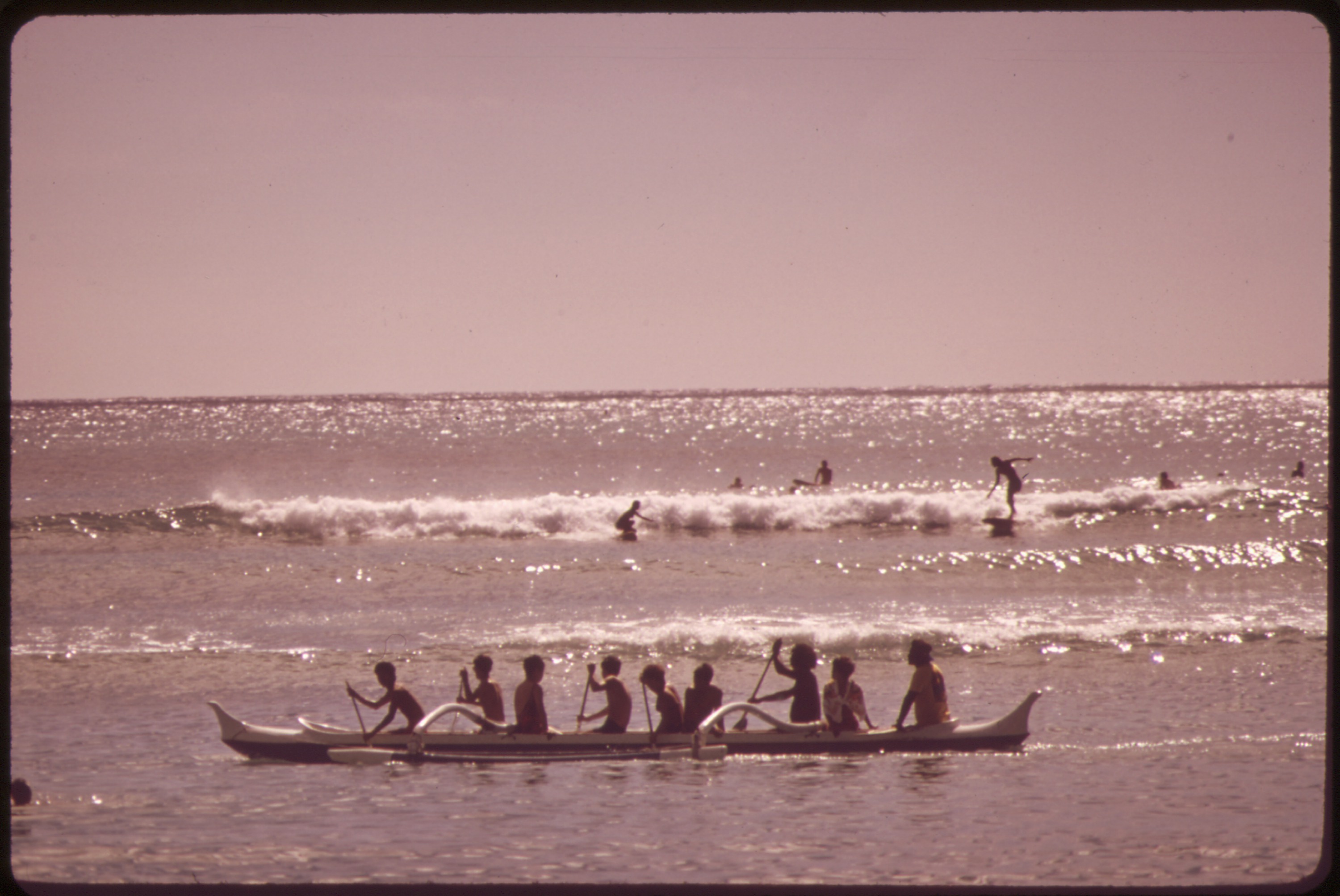
The long, slow wave directly in front of the Duke Kahanamoku statue on Kūhiō Beach. Named for the outrigger canoes that ride it daily. 1–3 ft, long rides, very forgiving. This is where 80% of first lessons happen.
· Learning to Surf
A two-hour lesson at Waikīkī is the most common first encounter with the sport of surfing on Earth. You will be taught by a Hawaiian waterman whose occupation is older than the hotel you are staying at. Don't waste the lesson.
Every factor that makes Nazaré the planet's most dangerous wave (deep water, steep face, cold, big, fast) is reversed at Waikīkī. It is the beginner-friendly edge case in the surfing world, and it has been for a hundred years.
Waikīkī's surf is produced by Pacific swells refracting around the east (Diamond Head) and west (Barbers Point) ends of Oʻahu before breaking over a shallow coral reef shelf that extends 200–400 meters offshore. The geometry does four beginner-friendly things at once:
The combination means that a first-time surfer at Waikīkī has a reasonable chance of standing up on their first wave. At most surf beaches in the world, that's impossible — the wave is too fast, too short, or too hollow for a beginner's pop-up. Waikīkī forgives.
Waikīkī has ten named surf breaks along its two-mile reef. Four of them are where every beginner surf school takes every first-lesson student, every day of the year.
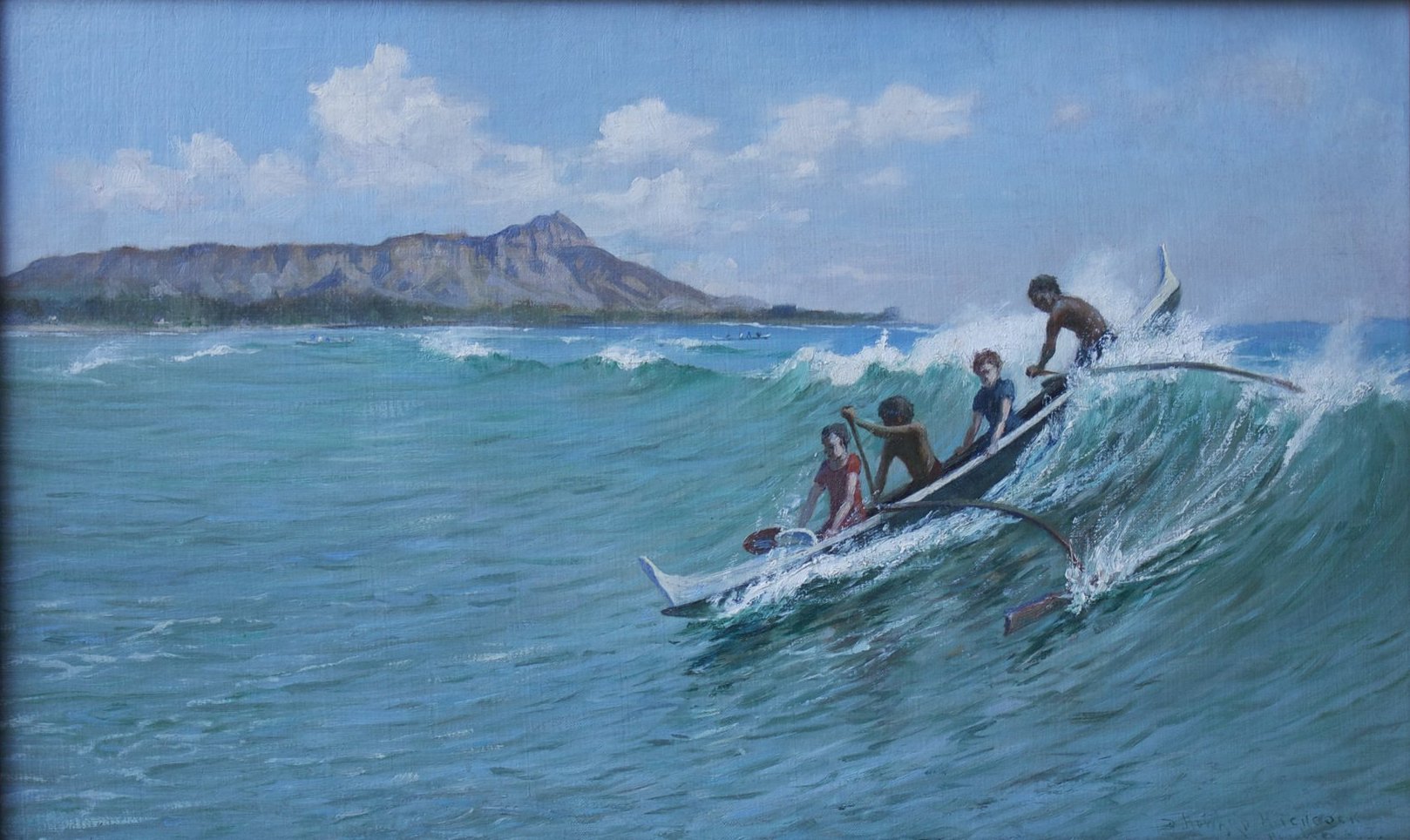
The long, slow wave directly in front of the Duke Kahanamoku statue on Kūhiō Beach. Named for the outrigger canoes that ride it daily. 1–3 ft, long rides, very forgiving. This is where 80% of first lessons happen.
Directly next to Canoes, to the ʻEwa (west) side. Named for Queen Liliʻuokalani, whose beach house stood at the shoreline before the Waikīkī Wall was built. Faster wave, steeper take-off, second-lesson territory.
In front of the Halekulani / Gray's Beach stretch. Slightly further paddle-out than Canoes. Less crowded because the surf schools mostly stay east at Canoes. A quieter option for a second or third session.
The shorebreak at Kūhiō Beach against the concrete Waikīkī Wall. Calmer than the outside breaks because the Wall blocks larger waves. Kids bodyboard here; surf schools use it for the absolute-first-wave lesson before paddling out to Canoes.
There are roughly forty surf schools operating along Waikīkī. Their price range is tight ($75–150 for a group lesson; $125–250 for private). The thing that varies is quality of instruction.
A two-hour slot. Fifteen minutes on the sand, ninety in the water, fifteen to debrief and shower. If it runs differently than this, ask why.
You meet your instructor, sign the liability waiver (yes, real; yes, you should read it), get fitted for a rash guard and a soft-top foam board that the school carries down for you.
The pop-up sequence on a stationary board on the sand: paddle position, push up, pull the front knee to the chest, plant both feet, stand, hands low. You will do this six to ten times on the sand before going in. If your instructor skips this step, remind them it's the point of the lesson.
Walk with the board to the water, paddle lying flat (small strokes, rhythm), duck under the small inside waves as you go. At a beginner break like Canoes the paddle is 3–5 minutes in shallow water. Your instructor swims alongside.
Your instructor positions you, tells you which wave, gives you a push at the right moment. You paddle three strokes, pop up. On your first wave you will probably stand up — briefly — before falling. You will catch 8–12 waves in a 60-minute water session; most beginners stand on 3–5 of them.
Catch a last wave into the beach, walk the board back to the school's rack. The instructor tells you what you did well and what needs work. If photos were included, you collect the files. Tip the instructor $10–20 per person; this is standard.
The surf etiquette rules at Waikīkī are the same ones used in every surf break in the world. They are not optional. A first-time surfer who follows them gets welcomed; one who doesn't gets, at best, ignored.
Waikīkī is famously crowded. On a Saturday morning at Canoes you may be in the water with 60 other surfers and 4 outrigger canoes. The rules are what keep it from turning into collision chaos.
Waikīkī's lineup is famously more welcoming than, say, the North Shore's — because Waikīkī's culture was built around teaching outsiders to surf. The beach boys tradition means that locals here are accustomed to first-timers and generally patient. But the patience is conditional on the visitor doing the minimum: observing the rules, acknowledging the host, not treating the ocean as a resort amenity. Hawaiian surfers refer to outsider surfers who respect local protocol as "cool haoles." It is not, in this context, an insult.
The Waikīkī surf school you booked through your hotel concierge is not a tourism convenience. It is the descendant of a specific Hawaiian institution that began in the 1910s and has continued on this sand for every year since.
The beach boys of Waikīkī were a community of Hawaiian watermen who began working the shoreline as surf instructors, canoe captains, and ambassadors of the Hawaiian ocean around 1910. The names — Panama Dave, Steamboat Mokuahi, Rabbit Kekai, Blue Makua, Sally Hale, Tom Blake — are remembered locally in ways that rarely translate outside Hawaiʻi. What they did was teach several decades of foreign visitors how to surf, how to paddle a Hawaiian outrigger, and how to behave in this water. The template of "tropical beach plus local surfing instructor" exists globally in the form it does because of them.
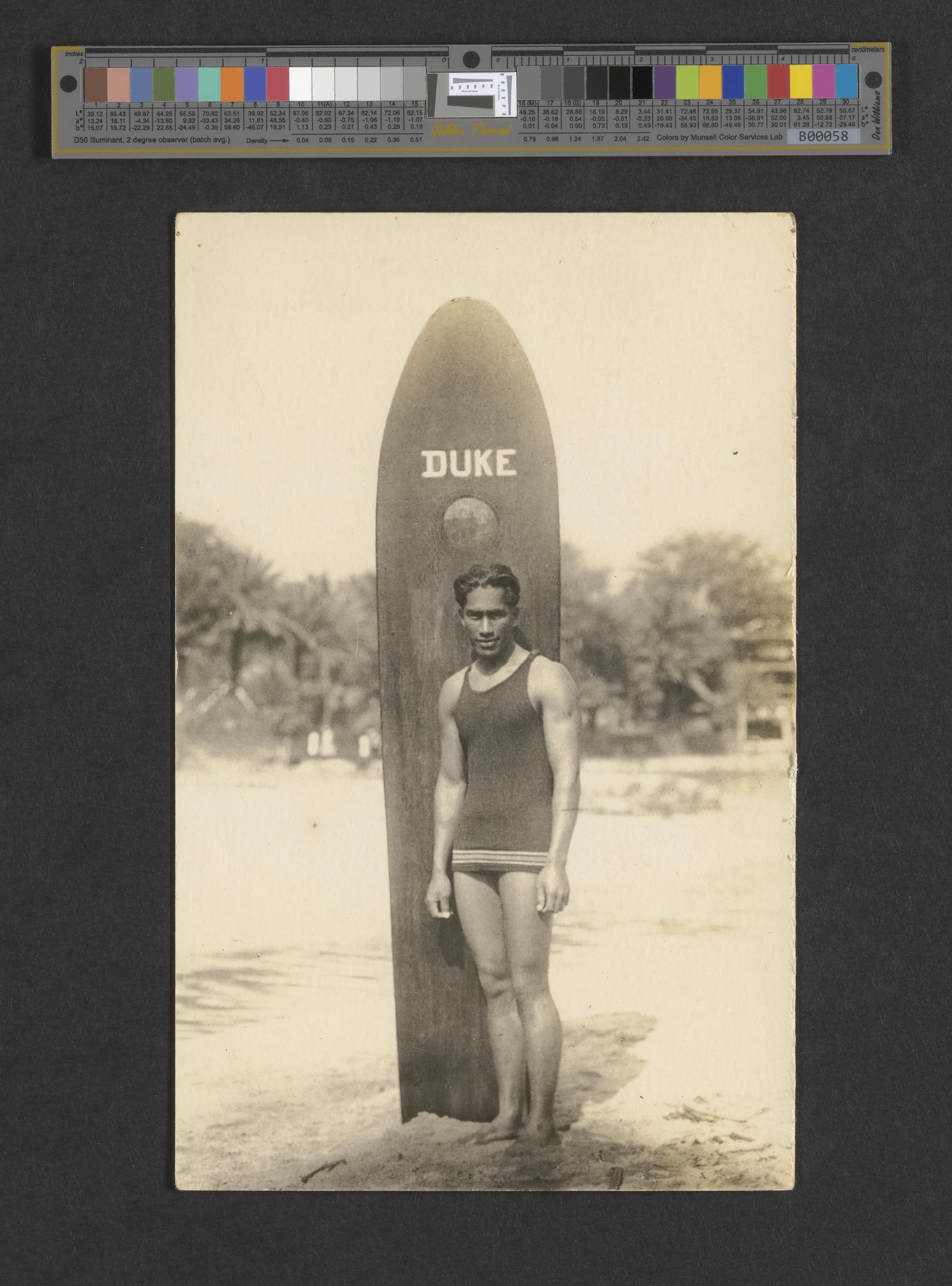
The Outrigger Canoe Club (founded 1908) was the institutional home. The club's founding documents list "the reviving of the ancient Hawaiian sports" as its explicit purpose. Duke Kahanamoku was a member. Duke's Olympic-fame tours through the 1910s and 1920s did the global broadcasting; the beach boys did the daily one-on-one work at home. Both were the same project.
The instructor who teaches your first lesson is, in occupational genealogy, a lineal descendant of that tradition. Many — not all — are Native Hawaiian. Some are Hawaiian cultural practitioners who also teach hula and ʻōlelo Hawaiʻi. Some are second- or third-generation Hawaiian watermen whose fathers taught visitors at the Royal Hawaiian in the 1970s. The work is real work to them, and it is also, for many, an inheritance.
What this requires of you as a first-time student: show up, listen, tip generously, do not treat the instructor as a service worker. Ask their name. Ask where they're from. Ask what the Hawaiian word for the wave you just rode is (nalu). If you stand up on your first wave, thank them for it. The exchange between a Hawaiian instructor and a mainland visitor is one of the last remaining contexts in which the mainland visitor can be actively taught by a Hawaiian person on Hawaiian terms. Use it well.
If the first lesson went well and you want another Waikīkī day in the water, the options are (roughly in order of commitment):
A royal beach that survived becoming a resort — the full argument this spoke sits inside.
Getting here, where to stay on a strip of 30,000 rooms, what to eat, visitor safety, three itineraries.
The overthrow in detail, sovereignty today, ʻōlelo Hawaiʻi basics, Hawaiian homestead, and how to visit a royal beach without flattening a living kingdom.
Written by Erin Rose. Lesson economics and operational detail reflect the 2026 Waikīkī surf-school market. Break names and beginner-break consensus follow standard Oʻahu surfing literature and the practice of the resident beach-school community. The beach boys historical detail draws on the Outrigger Canoe Club archives and Hall (1994) Memories of Duke. Reef-safe sunscreen and lineup etiquette guidance reflects current Hawaiʻi surf-community norms. Corrections welcome, especially on Portuguese-language framings and on the named practices of Nazaré. Version v0.9.