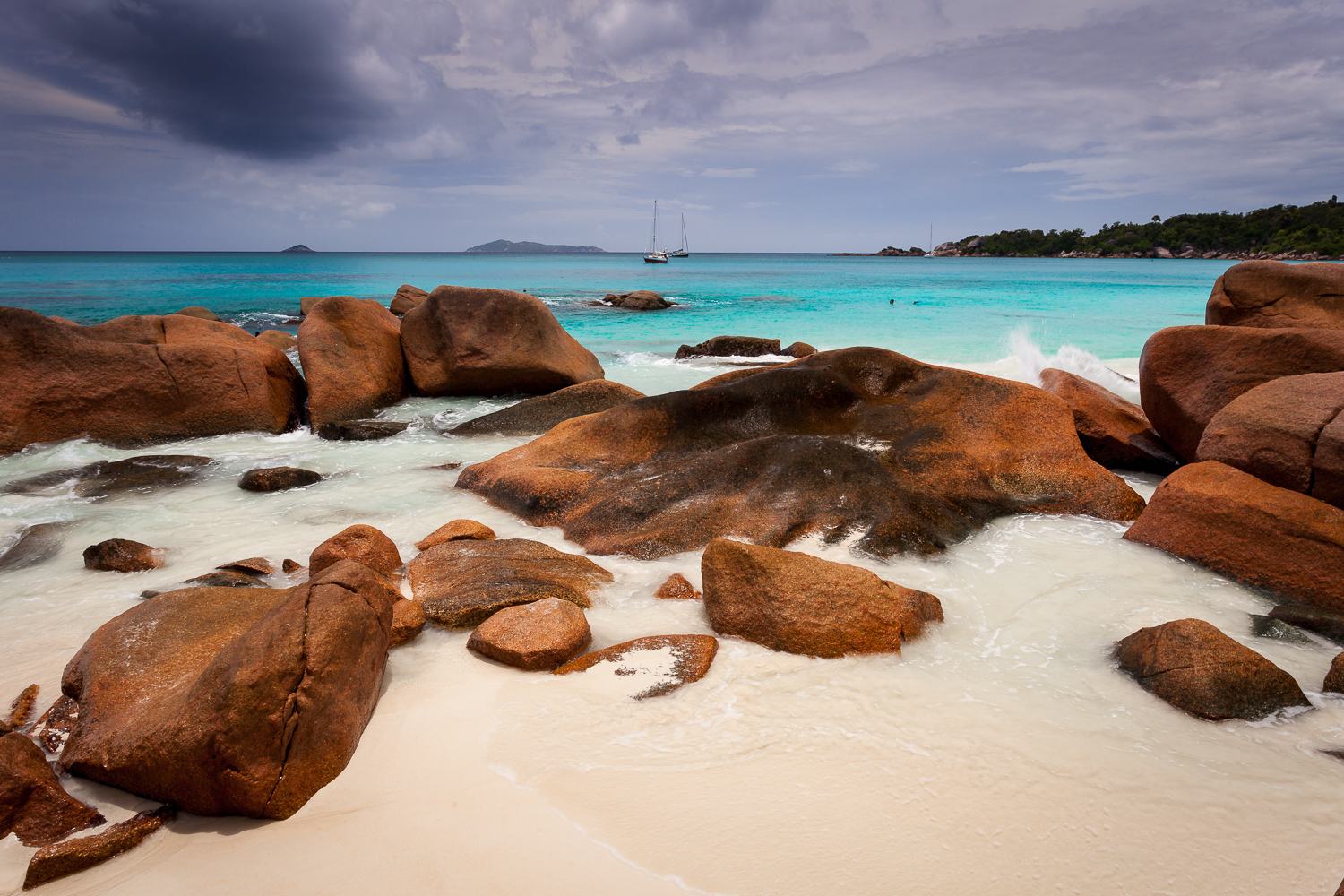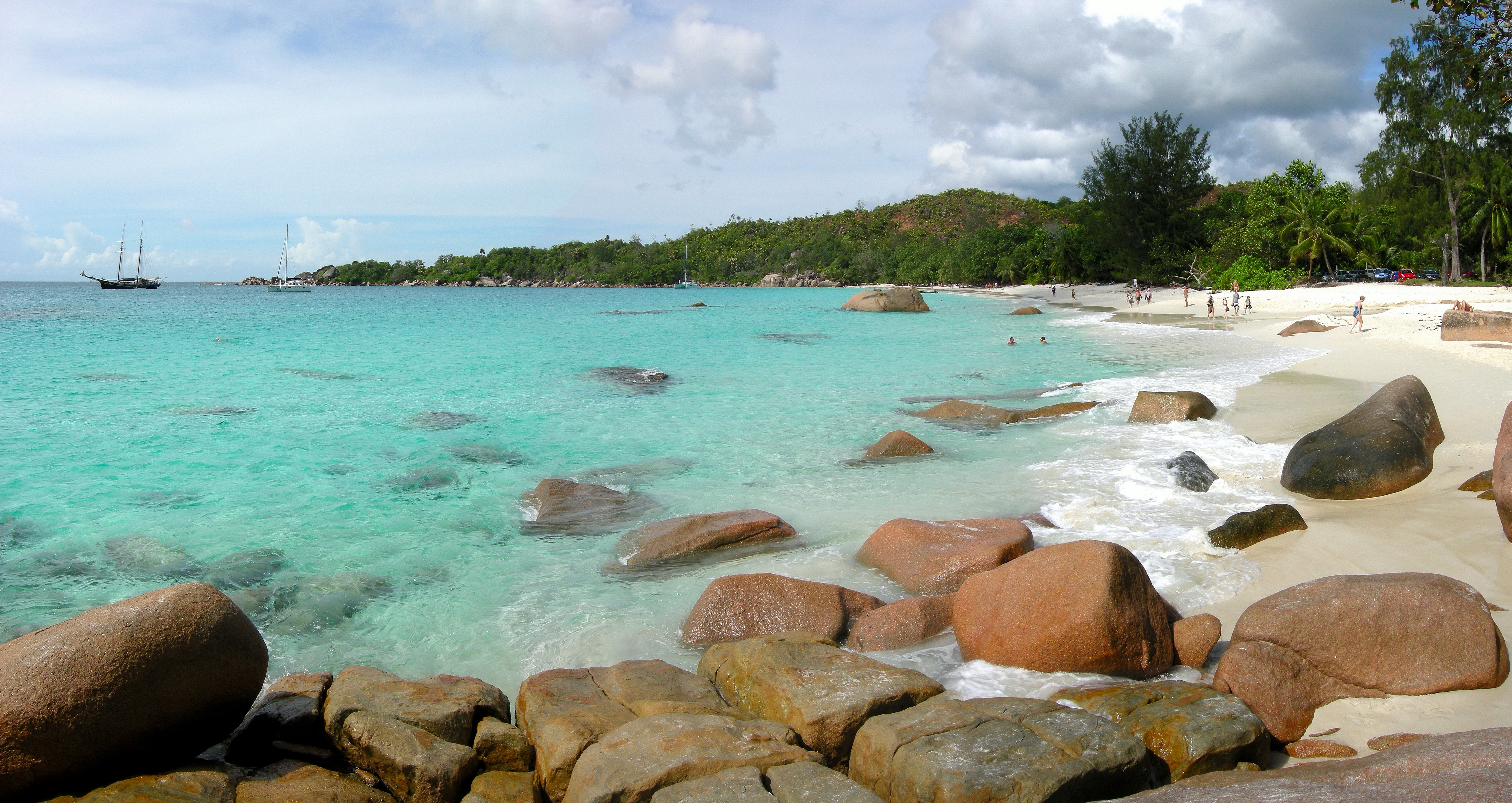
Anse Lazio is a 600-metre crescent of white sand on the northwest tip of Praslin, the second-largest island of the Seychelles, closed at each end by rounded granite boulders and backed by takamaka trees. It is one of the most-voted beaches on the planet: TripAdvisor's Travellers' Choice put it third in the world in 2017 and sixth in 2024, CNN ranked it fourth in 2016, and Lonely Planet calls it the best beach on Praslin. The boulders are the signature of the inner Seychelles — weathered grey-and-pink granite, the eroded remains of the Gondwana supercontinent, not the volcanic or coral rock of most tropical islands.
The single fact that sets Anse Lazio apart from almost every other Seychelles beach is what it lacks: a fringing coral reef. Most beaches in the archipelago sit behind a reef that breaks the swell and pens a shallow turquoise lagoon. Anse Lazio has none. The bay opens straight onto the Indian Ocean, so the water is clearer and deepens quickly a short way out, and the swell and current arrive with nothing to slow them down. The clarity that draws swimmers and the depth that endangers them are the same condition.
There is no road onto the sand. You drive the Anse Lazio road to a car park near Chevalier Bay, then cross a steep hill on foot and walk down — short, but a real climb back out in the heat. Two restaurants sit on the sand itself: Le Chevalier Bay at the northern end and Bonbon Plume, a thatched open-air place open only for lunch that fills its tables fast. Beyond them there is no resort on the beach; the hotels are inland and around the coast at Anse Volbert and Cote d'Or.
The uncomfortable part of the record is specific and dated. In August 2011, two visitors were killed by sharks in the bay 16 days apart: a 36-year-old French diver, Nicolas Virolle, on 1 August, and British honeymooner Ian Redmond, 30, snorkelling about 20 metres offshore on 16 August as his wife watched from the beach. Swimming was banned at several Praslin bays, then 150-metre safety nets were installed; they were removed in 2016 because swimmers ignored them and the monsoon kept tearing them apart. There are no lifeguards.
Praslin's other draw is half an hour inland: the Vallee de Mai, a UNESCO World Heritage Site since 1983 and one of only two places on Earth where the coco de mer palm — bearer of the largest seed in the plant kingdom — grows wild. The other is Curieuse Island, off Praslin's north coast. Anse Lazio is the beach you reach over a hill; the forest of the world's strangest palm is why the island was worth landing on at all.