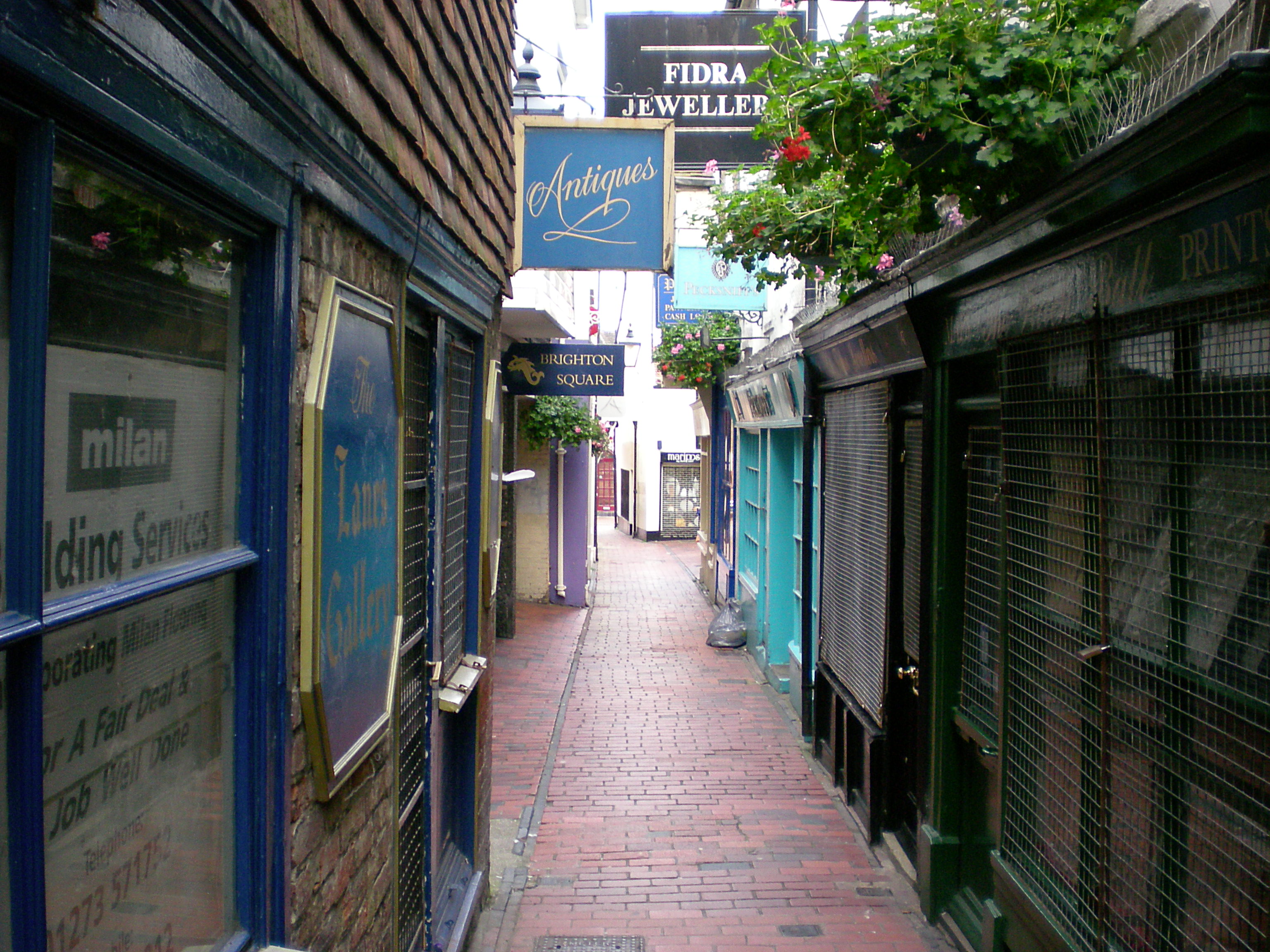
The Lanes — medieval alleyways

· Visiting Brighton

The London day trip that built English seaside

Brighton is a city. Not a resort, not a village — a functioning 280,000-person city with a university, a Premier League football club, and the UK's largest Pride, that happens to have a 6 km seafront attached. Come here as you would come to any city, not as you would come to a beach.

The Lanes — medieval alleyways · Frank Jepsen · CC BY 2.0
· Two-Minute Answers

When, where, how long

When

Late May or September for the right weather

Brighton's summer peak is mid-July through August — the Pride weekend (first weekend of August) is the absolute busiest. Late May and September give you working summer light and temperatures without the hotel premium. Winter is atmospheric and empty; come for the Regency architecture and long walks. Avoid New Year's Day; half the town is hungover.
Where

The Lanes for atmosphere, Kemptown for character

The Lanes and North Laine neighborhoods — the medieval town core just inland from the seafront — are where you want to walk, eat, and shop. The seafront itself is for set-piece visits (Palace Pier, i360, the West Pier ruin) not for hanging out. Kemptown, a mile east of the Palace Pier, is where Brighton genuinely lives.

How long

Two nights as the default, one day works

A London day-trip (~9 a.m. arrival, 6 p.m. departure) covers the seafront + Pavilion + one meal. Two nights gets you Kemptown, the Lanes, one decent restaurant, and either a Lewes day trip or a Seven Sisters walk. Three nights is correct if you want to attend something — Pride weekend, the Dome, Brighton Festival.

· Getting Here

The Brighton Line, and why everyone uses it

Brighton was connected to London by railway in 1841 and has been accessible in under an hour ever since. The train is how 90% of London-based visitors arrive. Almost nobody drives.

From London

Brighton Line trains from London Victoriarun every 15 minutes, 50–70 minutes journey, £25–40 off-peak return with advance booking. The station at Brighton is a 10-minute walk downhill to the seafront — there is essentially no reason to take a taxi. London Bridge and Blackfriars also have direct services (Thameslink) if you're arriving from north London or coming from Luton airport.

From airports

Gatwick (LGW) has direct trains to Brighton — 30 minutes, £10–15. This is by far the easiest Brighton airport. Heathrow (LHR) is 2 hours via the National Express coach directly to Brighton, or via London and train (longer but more flexible). London Luton connects via Thameslink (1h 50m, no change).

By car

The M23/A23 from London is 90 km, 90–110 minutes in typical traffic, much worse on Friday afternoons. Brighton parking is notoriously expensive and tight; do not drive unless you have a specific reason. If you do, use the NCP Lanes or Churchill Square car parks (£25–35/day); don't rely on street parking in central Brighton.

On the ground

Central Brighton is walkable — from the station to the Palace Pier is 15 minutes downhill. The seafront runs six kilometers; walk it or use the Volks Electric Railway (1883, running from the Aquarium to Black Rock, £3 each way). The Brighton & Hove bus network is reliable; tap your contactless card, don't buy tickets. Uber works; black cabs are around.

· Where to Stay

Four neighborhoods, four characters

The Lanes / North Laine

The medieval core. Narrow streets, boutique hotels (Artist Residence, The Grand, myhotel), good restaurants, walkable to everything. £150–350 per night. The default for first-time visitors who want to feel in-the-middle-of-it without seafront traffic noise.

Seafront / Kings Road

Regency stucco terraces facing the Channel. The Grand Hotel (site of the 1984 IRA bombing, rebuilt), the Royal Albion, the Queens Hotel. £180–400 per night. Sea-view premium is real; rooms without view are 25% cheaper and only marginally further from the water.

Kemptown

The gay village, a mile east of the Palace Pier. Regency terraces, steeper streets, the long-running LGBTQ+ hospitality scene. Smaller hotels and B&Bs (£100–250). Where you stay if Brighton's queer culture is the reason you came; also where many non-queer visitors stay because it's quieter, more residential, and more authentically Brighton than the seafront.

Hove

West of the main Brighton seafront. More residential, wider pavements, fewer pubs, a more leisured demographic. The Hove Esplanade has its own quieter beach and the beach-hut stretch is the postcard image most English tourism posters choose. £120–300 per night. Good for families; a ten-minute walk or three-minute bus ride into Brighton proper.

· What to Eat

Fish and chips, Regency dining, and the absurd breadth of Brighton's restaurants

Brighton has roughly 500 restaurants for a population of 280,000 — one of the highest restaurant-per-capita ratios in the UK. The range is comical: from £4 takeaway fish-and-chips on the Palace Pier to £120-tasting-menu-plus-wine in converted warehouses in Hove.

Palace Pier fish and chips

£10–14

Cod or haddock, thick-cut chips, salt, malt vinegar, mushy peas. Eaten standing on the pier while herring gulls try to steal them. The canonical Brighton meal. Not cheap, not remotely health food, absolutely correct.

English's of Brighton

£40–80

Since 1945, in The Lanes. Dover sole, grilled sea bass, the oyster platter. White tablecloths, understated, the kind of restaurant where nothing visible has changed in forty years and everything on the plate is extremely good. The Brighton splurge.

Bills / Middle Farm / the Laine cafés

£15–25

The mid-range Brighton brunch-and-lunch scene — Bills (founded at Lewes, expanded), Terre à Terre (vegetarian, the UK's best), Food for Friends, the North Laine cafés. Brighton's restaurant density is partly this layer.

A pint at a Kemptown pub

£5–8 a pint

The Marlborough, The Queen's Arms, Charles Street Tap, The Stag — the long-running Kemptown LGBTQ+ pubs. Local ale, good food, a bench on the pavement. The best reading of Brighton's social history happens at the Marlborough after 8 p.m.

· Three Set-Piece Visits

The Pavilion, the Pier, the Grand

Three specific buildings a visitor to Brighton for the first time should not skip. Each anchors a different Brighton story.

The Royal Pavilion

£18, 1.5 hours. The Indo-Islamic Mughal fantasy palace at the heart of the tourist town. Go in the morning; the interior is genuinely astonishing and it pays to have time to sit in the Banqueting Room with the chandelier dragon. The audio guide is useful. The full deep-dive treatment is in the Pavilion spoke.

The Palace Pier

Free entry, pay-as-you-go for rides. 45 minutes to 2 hours depending on how committed you are to the fairground. Walk to the end, come back with fish-and-chips, photograph the West Pier ruin from the Palace Pier's west side — the two-piers frame is the defining Brighton image.

The Grand Hotel

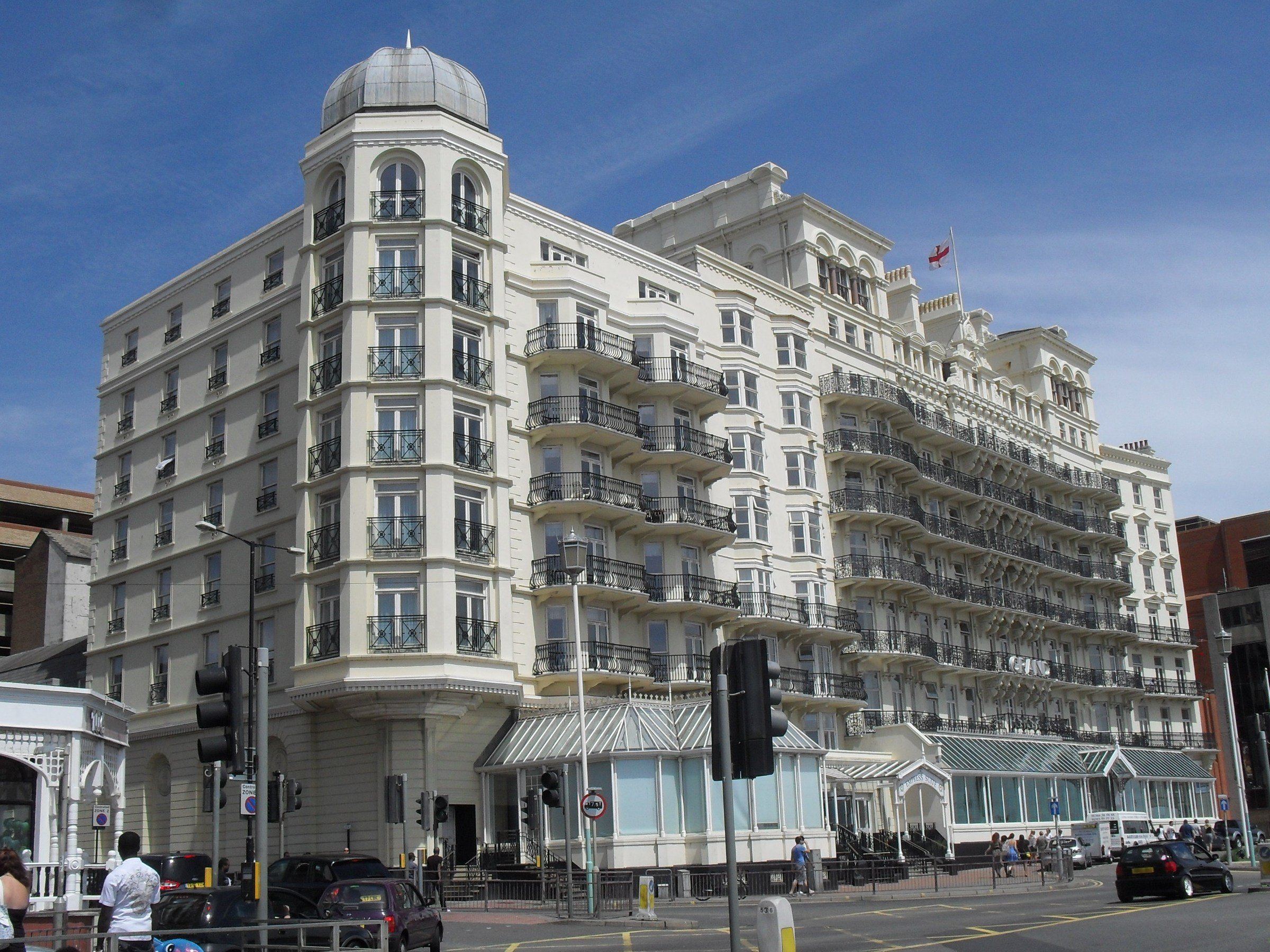
On Kings Road, directly on the seafront. The site of the 1984 IRA bombing; rebuilt and reopened in 1986. Walk past, stand on the pavement, read the small memorial plaque near the entrance. If you have time for afternoon tea at the Grand's conservatory restaurant, £35, the setting is the closest thing Brighton still has to its Regency-era leisured-class register.

The Grand Hotel, Kings Road
The Grand Hotel on Kings Road. Rebuilt after the 1984 IRA bombing.· The Voice of Hassocks · Public domain
· Itineraries

Four ways to use the time

London day trip (9 a.m. to 6 p.m.)

9 a.m. Victoria → arrive 10:15. Walk down to the seafront. Palace Pier until lunch. Fish-and-chips on the pier. Afternoon at the Pavilion (booking ahead saves the queue). 4 p.m. walk the Lanes. 5:30 train back to London.

Two nights, default

Day 1 afternoon: arrive, seafront walk to the West Pier ruin, dinner in The Lanes. Day 2: Pavilion morning, Kemptown afternoon, dinner at The Marlborough. Day 3: Brighton Museum or Lewes day trip, midday train back. Covers the set pieces at a human pace.

Pride weekend (first August weekend)

Book six months ahead. Parade Saturday morning from Kemptown to Preston Park (1 mile route, huge crowds — watch from Old Steine Gardens for the best view). Preston Park Pride festival through Saturday evening. Sunday recovery. Budget the weekend for Pride; do Pavilion another time.

Three nights, winter

Counter-intuitive but the right move for a certain kind of traveler. Empty seafront, atmospheric Regency architecture in winter light, long walks along the undercliff path toward Saltdean. Dinner at Terre à Terre. Seven Sisters walk on a clear day. Kemptown pubs at full local character without summer crowds.

· About this spoke

Written by Erin Rose. Rates reflect 2026. Hotel and restaurant names are reference points. Train fares via Southern / Thameslink; verify at nationalrail.co.uk. Parking guidance reflects current Brighton & Hove City Council practice; verify before arrival as zones change. Corrections welcome, especially on Portuguese-language framings and on the named practices of Nazaré. Version v0.9.