San Juan, PR

Condado Beach

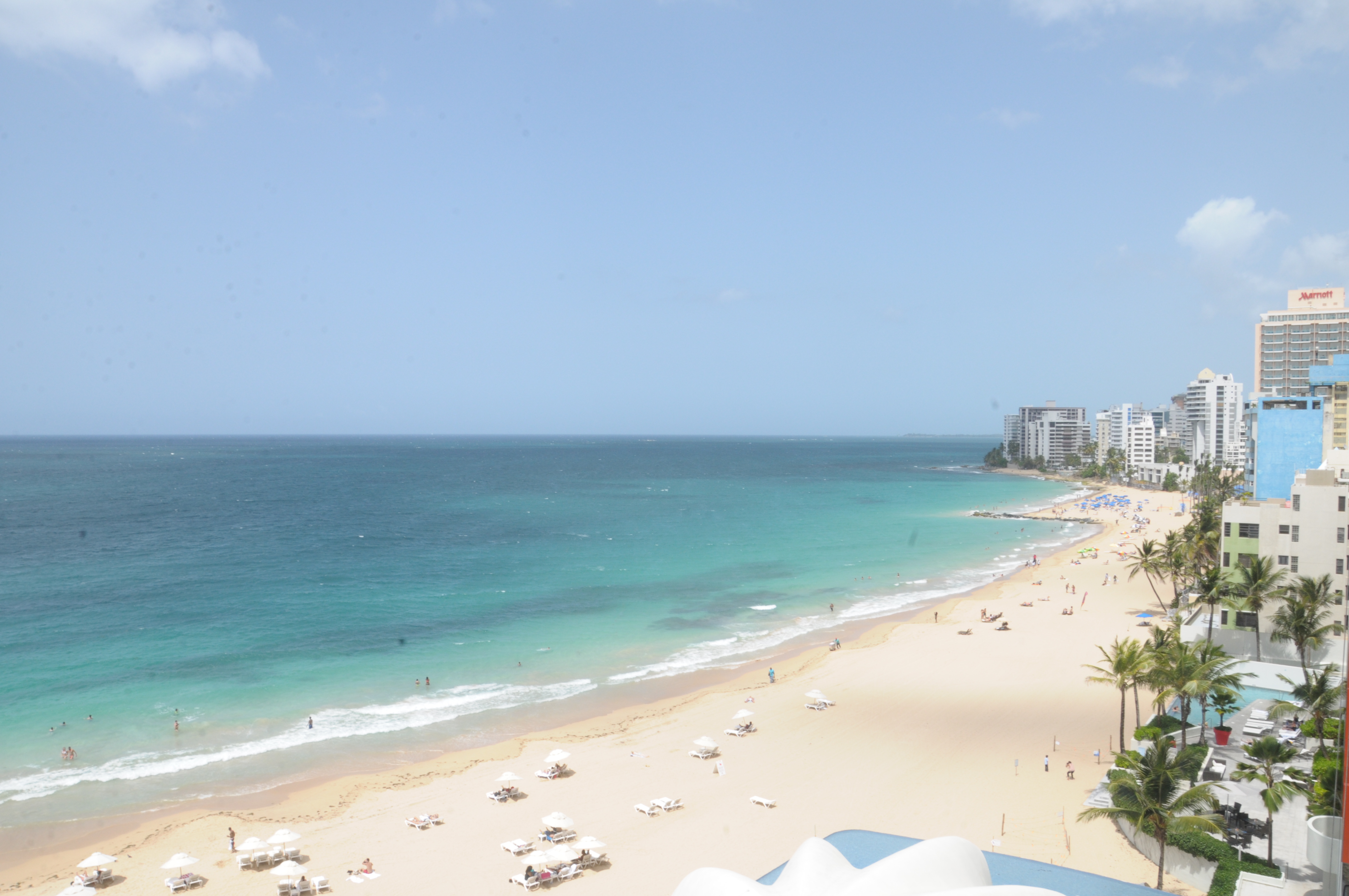
San Juan, Condado beach, Puerto Rico.jpg

San Juan, PR

Condado Beach

Puerto Rico's tourism began at the 1919 Condado Vanderbilt Hotel; the open-Atlantic surf on the beach out front is now among the island's deadliest.

San Juan, Condado beach, Puerto Rico.jpg · <a rel="nofollow" class="external text" href="https://www.flickr.com/people/17012490@N00">Tomas Fano</a> · CC BY-SA 2.0
Nearest airport
SIG · 2 km
I’m here for
Story

Condado Beach fronts the open Atlantic along Ashford Avenue in the Condado district of Santurce, San Juan, and it is the most built-up stretch of shore on Puerto Rico's north coast. The sand is quartz-dominant and pale. The water is not a sheltered lagoon but open ocean: wave height averages about 1.36 meters over the year, peaks near 1.77 meters in December, and eases to roughly 0.82 meters in June. That exposure is the single most important fact about swimming here.

Condado is where Puerto Rico's tourism industry began. On 16 October 1919 the Condado Vanderbilt Hotel opened at the western end of the beach, commissioned by Frederick William Vanderbilt and designed by Warren and Wetmore, the New York firm behind Grand Central Terminal. It was the first luxury hotel built for tourists in Puerto Rico, cost about one million dollars, and after gambling was legalized in 1940 it operated the island's first hotel casino. Franklin and Eleanor Roosevelt, Charles Lindbergh, Errol Flynn, and Bob Hope were among its guests.

The hotel was the idea of two brothers, Hernand and Sosthenes Behn, who owned the land and wanted visitors on it. The same brothers had already built the Dos Hermanos Bridge, opened 22 May 1910, across El Boquerón, the inlet where the Condado Lagoon drains into the Atlantic. In 1920 the Behns founded International Telephone and Telegraph. The bridge, the lagoon, and the hotel are the frame the modern resort district grew inside.

Today Ashford Avenue runs the length of the beach, lined with hotels, restaurants, and international storefronts and promoted as the "Puerto Rican Fifth Avenue." In 2004 the city opened La Ventana al Mar, a public seafront park designed by architect Andres Mignucci, an open plaza set between the towers. Locals, cruise passengers, and international visitors share the same sand; it is the most urban beach in Puerto Rico.

What the promenade does not advertise is the water. Condado is among the deadliest beaches in Puerto Rico for drowning, and the hazard concentrates at Playita del Condado, the small cove at the western end near the inlet. After a 12-year-old tourist drowned in February 2022, Governor Pedro Pierluisi backed observation towers and more lifeguards, and the Puerto Rico Tourism Company established a lifeguard corps that year. The deaths did not stop outside guarded hours: in March 2024 a tourist and a Puerto Rico National Guard soldier who tried to rescue them both drowned.
The spike

Puerto Rico's tourism began at the 1919 Condado Vanderbilt Hotel; the open-Atlantic surf on the beach out front is now among the island's deadliest.

Condado Beach carries two facts that do not sit comfortably together. It is where Puerto Rico learned to sell itself to tourists, and it is one of the places on the island most likely to drown them. Both are true of the same quarter-mile of Atlantic sand, and the second is the direct consequence of putting a resort district on an open, unprotected coast.

Where the tourism started. On 16 October 1919 the Condado Vanderbilt Hotel opened at the western end of the beach. It was commissioned by Frederick William Vanderbilt, son of William Henry Vanderbilt, and designed by Warren and Wetmore, the New York firm that had built Grand Central Terminal. Construction began in 1917 and cost roughly one million dollars, a Spanish Colonial Revival building in white walls and red tile facing straight out to sea. It was the first luxury hotel built for tourists in Puerto Rico, and after the island legalized gambling in 1940 it held the first hotel casino. Its guest book ran to Franklin and Eleanor Roosevelt, Charles Lindbergh, Errol Flynn, Bob Hope, and Arthur Rubinstein. Before the Vanderbilt there was no destination tourism on this coast; after it, there was an industry.

The brothers who framed it. The hotel was not Vanderbilt's idea. It was the idea of two brothers, Hernand and Sosthenes Behn, who owned the Condado land and convinced Vanderbilt to invest in it. The Behns had already changed the ground here once: they built the Dos Hermanos Bridge, opened on 22 May 1910, across El Boqueron, the inlet where the Condado Lagoon empties into the Atlantic. In 1920, the year after the hotel opened, the same two brothers founded International Telephone and Telegraph, the global telecom company. A bridge, a lagoon crossing, a grand hotel, and a multinational all trace back to two sugar brokers who wanted people to come to Condado. The resort district is what grew inside that frame across the next century.

A century of building on it. Ashford Avenue filled in behind the Vanderbilt: the La Concha resort, the San Juan Marriott, the Condado Plaza, storefronts marketed as the "Puerto Rican Fifth Avenue." In 2004 the city added La Ventana al Mar, a seafront park by the architect Andres Mignucci that opened a public plaza between the towers. The Vanderbilt itself closed on 30 June 1997, was listed on the National Register of Historic Places in 2008, and reopened after a restoration reported at $270 million, its main building in 2012 and its towers in 2014. The beach became, and remains, the densest urban shoreline in Puerto Rico, where cruise passengers, locals, and international tourists share the same sand every day.

The water underneath the district. None of that development changed what the coast is. Condado does not sit on a reef-protected lagoon like parts of Isla Verde; it faces open Atlantic. The wave record shows an annual mean near 1.36 meters, biggest in December at about 1.77 meters, with individual big days measured over 2.4 meters. Rip currents run strong, and they run strongest where the Condado Lagoon inlet meets the sea at the western end, exactly where the small cove called Playita del Condado draws swimmers who assume a beach beside luxury hotels must be a safe one. It is not. The sand is a tourist product; the current is not.

The record of what the current does. Condado is repeatedly cited as among the deadliest beaches in Puerto Rico for drowning. The toll is what finally forced a response. After a 12-year-old tourist drowned in February 2022, Governor Pedro Pierluisi backed observation towers, more lifeguards, and even a submerged reef to slow the current, and the Puerto Rico Tourism Company stood up a lifeguard corps that year; officials have said no one has died on the guarded shifts since. But the guarded hours are limited and the coast does not keep them. In March 2024 a tourist drowned, and a Puerto Rico National Guard soldier who went in to rescue them drowned as well. Local lifeguards have described the pace of rescues in stark terms, and the warning signs posted along the beach are blunt about the danger.

What it adds up to. Condado is not a spoiled place, and it is not pretending to be something it is not. It is the exact spot where Puerto Rico decided a century ago to put visitors on this shore, and it has been putting them there ever since. The hotels that started with the Vanderbilt did their work; the tourists come. The open Atlantic they come to swim in was never part of the deal anyone signed, and it keeps collecting on that difference. The glamour and the drownings are not two stories about Condado. They are one story, and it runs from the 1919 hotel to the lifeguard tower at Playita del Condado.

Condado, San Juan, Puerto Rico.jpg
Culture

Where it shows up

History
  • The Vanderbilt guest list · 1919

    The Condado Vanderbilt hosted Franklin and Eleanor Roosevelt, Charles Lindbergh, Errol Flynn, Bob Hope, and Arthur Rubinstein in its early decades, part of the glamour Puerto Rico used to build a tourism identity around this beach.

  • ITT and the Behn brothers · 1920

    Hernand and Sosthenes Behn, who owned the Condado land and instigated the Vanderbilt hotel, founded International Telephone and Telegraph in 1920, the year after the hotel opened; ITT became one of the world's largest corporations.

Brand & advertising
  • The 'Puerto Rican Fifth Avenue'

    Ashford Avenue behind the beach is marketed as the 'Puerto Rican Fifth Avenue,' a corridor of hotels, restaurants, and international storefronts that grew out of the district the Vanderbilt started.

Other
  • The Playita del Condado warnings

    The blunt drowning-warning signage at Playita del Condado has become part of the beach's public image, a recurring subject in travel reviews and Puerto Rican news coverage of its fatal rip currents.

Condado Beach, San Juan, Puerto Rico.jpg
History

What happened here

  1. 1910founding

    Dos Hermanos Bridge opens

    The Behn brothers, Hernand and Sosthenes, complete the Dos Hermanos Bridge across El Boqueron, the inlet where the Condado Lagoon drains into the Atlantic, connecting Condado toward the San Juan islet. The bridge opens on 22 May 1910.

    Wikipedia →
  2. 1919founding

    Condado Vanderbilt Hotel opens

    The Condado Vanderbilt Hotel opens on 16 October 1919, commissioned by Frederick William Vanderbilt and designed by Warren and Wetmore, the architects of Grand Central Terminal. It is the first luxury hotel built for tourists in Puerto Rico and marks the start of the island's tourism industry.

    Wikipedia →
  3. 1940cultural

    Island's first hotel casino

    After Puerto Rico legalizes gambling in 1940, the Condado Vanderbilt operates the first hotel casino on the island, cementing Condado as the center of Puerto Rico's early luxury tourism.

    Wikipedia →
  4. 1997cultural

    The Vanderbilt closes

    The original Condado Vanderbilt Hotel closes on 30 June 1997, ending decades of continuous operation and beginning a long period of dereliction before its restoration.

    Wikipedia →
  5. 2004founding

    La Ventana al Mar park opens

    The city opens La Ventana al Mar, a public seafront park on Ashford Avenue designed by Puerto Rican architect Andres Mignucci. It provides open public access on a waterfront otherwise dominated by private hotel frontage and later wins multiple design awards.

    Wikipedia →
  6. 2008policy

    Vanderbilt listed on the National Register

    The original 1919 Condado Vanderbilt structure is added to the National Register of Historic Places in 2008, recognizing its role in the origins of Puerto Rican tourism as its restoration is planned.

    Wikipedia →
  7. 2012cultural

    Vanderbilt reopens after restoration

    Following a restoration reported at $270 million, the Condado Vanderbilt reopens its main building on 16 October 2012, exactly 93 years after its 1919 debut, with its twin towers following in December 2014.

    Wikipedia →
  8. 2022policy

    Drowning deaths force a lifeguard corps

    After a 12-year-old tourist drowns in February 2022, Governor Pedro Pierluisi backs observation towers, more lifeguards, and a submerged reef to slow the current, and the Puerto Rico Tourism Company establishes a lifeguard corps at Condado in response to repeated fatal drownings.

    Wikipedia →
  9. 2024natural

    Tourist and rescuer drown

    In March 2024, during a spike in drownings across Puerto Rico's beaches, a tourist drowns at Condado and a Puerto Rico National Guard soldier who attempts the rescue drowns as well, underlining that the danger persists outside guarded hours.

The honest part
“The sand is a tourist product; the current is not.”

The uncomfortable truth about Condado is that its founding promise and its worst hazard are the same fact. A resort district was built on an open Atlantic coast, and an open Atlantic coast has strong rip currents. The beach beside the luxury hotels reads as a controlled, safe environment, and it is not one. Condado is repeatedly named among the deadliest beaches in Puerto Rico for drowning, with the danger concentrated at Playita del Condado, the cove near the inlet at the western end where the Condado Lagoon meets the sea.

The response has been real but partial. A 12-year-old tourist drowned in February 2022; Governor Pedro Pierluisi backed observation towers and a reef, and the Puerto Rico Tourism Company created a lifeguard corps that officials credit with preventing deaths during its shifts. But lifeguard hours are limited, the currents are not, and people keep dying in the unguarded windows: in March 2024 a tourist and the Puerto Rico National Guard soldier who tried to save them both drowned. The signage is blunt and the water is worse than it looks.

Condado Beach.jpg
Anatomy

The shape of the place

The main beach at La Ventana al Mar

50%

The central, most-used stretch of Condado sand, fronting the La Ventana al Mar park and the line of hotels along Ashford Avenue. This is where the high-season lifeguard corps concentrates and where most visitors gather.

Best for Swimming inside the guarded zone, sitting on the sand, the urban promenade

Guarded only during high-season daytime hours; the open Atlantic here still carries currents.

Playita del Condado

85%

The small cove at the western end near the lagoon inlet. It looks calm and protected, which is exactly why it is dangerous: the current from El Boqueron concentrates here, and it is the focus of the beach's drowning record.

Strong, unpredictable undercurrents; repeatedly cited as the most dangerous spot on the beach for swimmers.

The Condado Vanderbilt point

92%

The western point where the 1919 Condado Vanderbilt Hotel stands, the origin point of Puerto Rican tourism, its white Spanish Colonial Revival facade facing open sea.

Best for History, architecture, the western end of the beach

The hotel is private; the beach in front of it is public, as all Puerto Rico beaches are.

Condado Lagoon and Dos Hermanos Bridge

100%

The sheltered Condado Lagoon behind the beach, crossed by the 1910 Dos Hermanos Bridge and draining to the Atlantic through the El Boqueron inlet. A calm-water counterpoint to the open-ocean beach, used for paddling and views.

Best for Calm-water paddling, the historic bridge, birdlife on the lagoon

The inlet that makes the lagoon calm is the same one that drives the dangerous current on the beach outside it.

Landmarks

Condado Vanderbilt Hotel · 1919

building · Warren and Wetmore

The first luxury hotel built for tourists in Puerto Rico, opened 16 October 1919 and designed by the architects of Grand Central Terminal. It began the island's tourism industry, was listed on the National Register of Historic Places in 2008, and reopened after a $270 million restoration in 2012-2014.

Wikipedia →

Dos Hermanos Bridge · 1910

bridge · Hernand and Sosthenes Behn

The bridge over the El Boqueron inlet connecting Condado toward the San Juan islet, opened 22 May 1910 and built by the same Behn brothers who instigated the Vanderbilt hotel and later founded ITT.

Wikipedia →

La Ventana al Mar · 2004

park · Andres Mignucci

A public seafront park on Ashford Avenue, opened in 2004 and designed by Puerto Rican architect Andres Mignucci, providing open public access and a plaza between the private hotel towers. It has won multiple architecture awards.

Wikipedia →
A day here

From first light to dark

Dawn

At first light Ashford Avenue is quiet and the beach is close to empty, joggers and a few fishermen on cool quartz sand. The water is usually calmest of the day, but calm is relative on an open Atlantic coast, and no lifeguards are on the towers yet.

Midday

By late morning the sand fills with hotel guests and day visitors, and the lifeguard corps works its high-season hours near La Ventana al Mar and the Condado Plaza end. The sun is hard and shade is scarce; swimmers are steered toward the guarded zones and away from the inlet cove.

Golden hour

Late afternoon light rakes down Ashford Avenue and off the white face of the Condado Vanderbilt at the western point. This is when the beach is most social, the promenade busiest, and the December swells at their most photogenic against the towers.

Night

After the guards leave, the beach empties and the danger rises: the rip currents run just as hard unseen, and swimming after dark is where a share of the drownings happen. The nightlife moves off the sand and onto Ashford Avenue's bars and restaurants.

Condadobeach.jpg
Sea & surf

What the water does

JFMAMJJASONDmetres (significant wave height)

Solid = typical monthly wave height; pale = the bigger days (90th pct). Offshore/regional swell from Open-Meteo Marine (ERA5 Ocean reanalysis, 2023–2024); a sheltered cove may sit calmer than this.

Exposed — real surf, and rip current to respect
Typical wave height
1.36 m
Biggest swell
Dec · 1.77 m
Calmest
Jun · 0.82 m
Typical period
8.9 s (groundswell)
Before you go

Things to know

Respect the rip currents

Condado is among the deadliest beaches in Puerto Rico for drowning. Swim only in the guarded zone during lifeguard hours, keep out of the water after dark, and treat the calm-looking cove at Playita del Condado as the most dangerous spot, not the safest.

It is open Atlantic, not a lagoon

Unlike reef-sheltered stretches of Isla Verde, Condado faces open ocean. Surf is biggest around December (mean near 1.77 m) and calmest in June; the sheltered water is in the Condado Lagoon behind the beach, not in front of it.

Lifeguards are seasonal and limited

A Tourism Company lifeguard corps has patrolled since 2022, roughly 8:30 AM to 5 PM in high season and concentrated near La Ventana al Mar and the Condado Plaza end. Outside those hours and zones there is no coverage.

Free public access

All beaches in Puerto Rico are public, including the sand in front of the hotels. There is no entrance or day-use fee; the cost at Condado is in parking, food, and lodging, not access.

Surf & rip

Powerful water — strongest around Dec, gentlest in Jun. Mind rip currents; this isn't a wade-in-anywhere beach.

Sharks

No incidents on record in the global shark-attack file.

Plan

If you go

Getting there
Nearest airport
Fernando Luis Ribas Dominicci Airport (SIG) · 2 km
Nearest town
San Juan · 3 km

Condado runs along Ashford Avenue in the Condado district of Santurce, San Juan, about 3 km east of Old San Juan. The nearest airport is the small Fernando Luis Ribas Dominicci (Isla Grande, SIG) about 2 km west; nearly all visitors arrive instead at Luis Munoz Marin International Airport (SJU), roughly 12 km east in Carolina, 20 to 30 minutes by taxi or rideshare. The Tren Urbano rail system does not reach Condado; taxis and rideshare are the practical way in.

When to go
  • Ashford Avenue weekend nightlife · Weekends, evening into night

    Condado has no marquee annual festival of its own; the reliable recurring draw is the Ashford Avenue restaurant and bar scene, busiest on weekend evenings when the crowd moves off the beach and onto the avenue. The San Sebastian Street Festival that fills nearby Old San Juan each January is a separate event, not held at Condado.

What to eat & drink
Mofongo

Puerto Rico's signature dish, fried green plantain mashed with garlic and pork crackling, often served stuffed with shrimp or stewed meat. On Condado it is a restaurant dish, eaten along Ashford Avenue rather than on the sand.

Ashford Avenue restaurants, Condado

Frituras (alcapurrias, bacalaitos)

Puerto Rican fritters: alcapurrias of grated green banana and taro around a meat filling, and bacalaitos, flat salt-cod fritters. They are street and kiosk food; the most famous concentration is at Pinones, east of the city, but versions turn up from San Juan vendors.

Street vendors and San Juan kiosks

Piraguas

Shaved-ice cones in fruit syrups sold by piragueros from pushcarts, the standard hot-afternoon street refreshment across San Juan, including along the Condado waterfront.

Street carts along the Condado promenade

Ashford Avenue fine dining

The restaurant corridor behind the beach is the densest in Puerto Rico, ranging from casual lunch spots to upscale kitchens inside the Condado hotels. Dining here happens off the beach, on the avenue and in the hotels, not on the sand itself.

Ashford Avenue and Condado hotels

Sources & references
  1. Wikipedia: Condado Vanderbilt Hotel · cited 8×
  2. Wikipedia: Dos Hermanos Bridge · cited 2×
  3. Wikipedia: La Ventana al Mar
  4. Puerto Rico news reporting; floricuanews
  5. floricuanews; Islands.com
  6. Open-Meteo Marine (ERA5 reanalysis)
  7. GloPrSM v1.0.0 sand model
  8. Puerto Rico Tourism Company; news reporting
  9. IBTrACS v04r01 (NOAA)
Colophon · Provenance

Where this page comes from

Geography, facilities
OpenStreetMap (ODbL) for geometry and facility tags within 500 m of the beach centroid. GeoNames for city/airport distances.
Climate & ocean
Open-Meteo ERA5 + Marine archive, 2014–2023 monthly normals.
Photography
Archival, original tone (Tier B — Wikimedia Commons). Each image licensed per its own terms; attribution visible inline.
History & culture
Every factual claim is linked to its source in the prose above. Wikipedia citations inline. Non-wiki sources named where relevant.
Editorial voice
Register: wry. Written to pass a local's nod test; corrections welcome.
Written by Erin Rose
Last reviewed 2026-04-19
v0.9 — in editorial development toward v1.0