The view from Cantagalo-Pavão-Pavãozinho — the overlook that sees it all

· The Favela Above

Cantagalo, Pavão-Pavãozinho, and the inequality that is the view

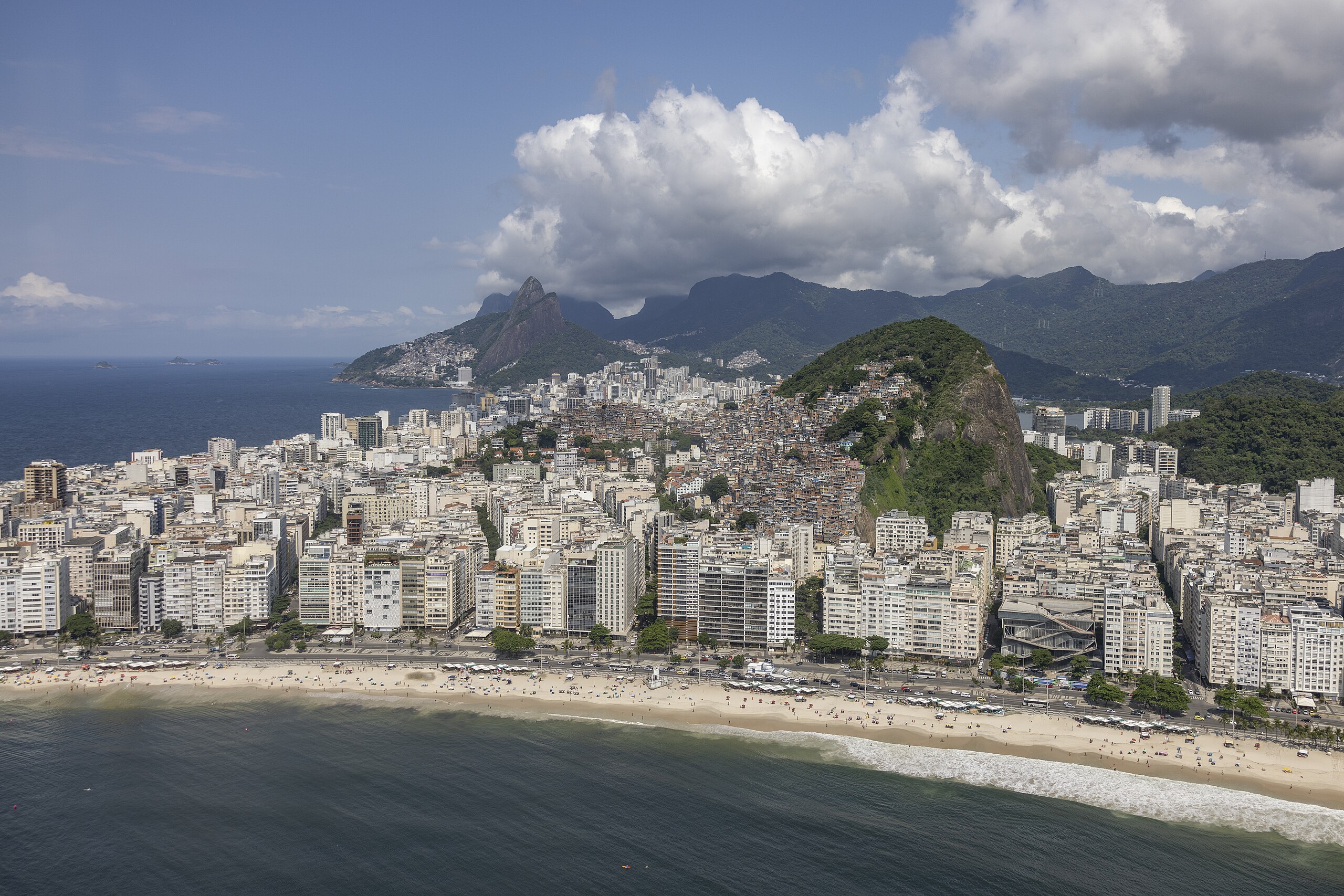
Rio's two most famous beach neighborhoods — Copa and Ipanema — sit directly below three specific favelas on the granite hills behind. The luxury apartments face the beach. The favela stairs climb the hills behind the apartments. This is the literal visual geography of Rio. This spoke treats it specifically.

The view from Cantagalo-Pavão-Pavãozinho — the overlook that sees it all · CC BY-SA 3.0 de
· The Three

Cantagalo, Pavão-Pavãozinho, Vietnã

Three adjacent favelas occupy the slopes between Copacabana and Ipanema, rising to approximately 200 meters above sea level. They are administratively distinct and each has a specific history; to a visitor looking up from the beach they form one continuous urban texture on the hills.

Cantagalo

The largest of the three. Cantagalo occupies the slopes on the south side of the ridge — visible from Ipanema's Posto 9 and from the Copa Posto 6 end. Population roughly 10,000. Established in the late 19th century when freed enslaved Brazilians and internal migrants settled on the then-unoccupied hills above the Zona Sul. Grew substantially through the 20th century. Formally incorporated into Rio municipal records in the 1930s.

Pavão-Pavãozinho

On the north side of the ridge, visible from Copa's middle stretch. Population roughly 7,000. Named for the peacock rock formation on the slopes. The neighborhood's modern form dates from post-WWII internal- migration waves that brought workers from the Brazilian northeast to Rio. Shares community infrastructure with Cantagalo; the two favelas are often treated as a single community in municipal programs.

Vietnã

The smallest and highest. Population roughly 1,500. Sits at the apex of the ridge. Named during the 1960s after the then-current Vietnam War — a reference to the difficulty of municipal authority in reaching the summit. Genuinely remote from the beach economy; the walk down to Ipanema is steep.

· The UPP

Pacification — December 2009 to the current collapse

The Pacifying Police Units (UPPs) were a Rio state-police program launched in 2008 — a deliberate attempt to reoccupy favelas that had been under the de facto administration of drug-trafficking organizations for two decades. Cantagalo-Pavão-Pavãozinho was the 11th UPP installation, on 23 December 2009. The program's arc over the subsequent 15 years is a real story.

2008–2012 · The installation

The Unidade de Polícia Pacificadora model was pioneered at Santa Marta favela in November 2008. The model: Rio state-police BOPE (special operations) units would enter a favela, secure it from trafficking-organization control, and then install a permanent community-policing UPP with regular officers who lived and worked in the neighborhood. Cantagalo- Pavão-Pavãozinho-Vietnã was designated for UPP on 23 December 2009.

The early years were genuinely transformative. By mid-2012 Pavão-Pavãozinho's recorded unemployment had dropped to approximately 5% (from much higher baselines); residents reported freedom of movement they hadn't had in decades; municipal services (garbage collection, water, electricity) reached the upper reaches of the favela for the first time; community tourism initiatives launched. The federal government's 2011 Plano de Aceleração do Crescimento (Growth Acceleration Plan) directed substantial infrastructure investment into the pacified favelas, including the Plano Inclinado project.

2013–2016 · The high water

The Rio 2016 Olympics preparation drove a massive round of UPP expansion through 2013–2015; by the Games, 37 UPPs covered approximately 1.5 million Rio residents. International coverage of the program was broadly positive through this period. Academic analysis was more mixed — scholars pointed to uneven enforcement, tensions with residents' customary autonomy, and specific incidents of police violence (notably the April 2014 killing of dancer Douglas Rafael da Silva Pereira in Pavão-Pavãozinho) that triggered community protests.

2017–present · Decline

Rio's fiscal crisis of 2016–2018 — a state-level budget collapse driven by falling oil royalties, the 2016 impeachment of Dilma Rousseff, and the federal austerity that followed — led to severe cuts to the UPP program. Officers went unpaid for months at a time in 2017–2018; posts were reduced in staffing; some were abandoned entirely. Trafficking organizations returned to de facto administration of several favelas. As of 2026 the UPP in Cantagalo-Pavão-Pavãozinho-Vietnã is nominally operational but substantially degraded; the exact status fluctuates and residents report effective conditions that vary by street and by week. The community is safer than it was in 2008 but meaningfully less safe than it was in 2012.

The honest frame: the UPP program was an unfinished experiment. It produced real short-term gains in specific communities; it depended on funding and political will the Rio state could not sustain past its first decade; its long-term legacy is ambiguous. The community's own assessment varies sharply by age, by position, and by which week you ask.
· The Plano Inclinado

A free two-minute ride into the hill most tourists never take

One specific piece of 2010-era municipal infrastructure lets a visitor see the favela geographically and non-exploitatively: a free inclined elevator that runs from the Ipanema metro station directly up into Cantagalo, reaching a public viewpoint at the top.

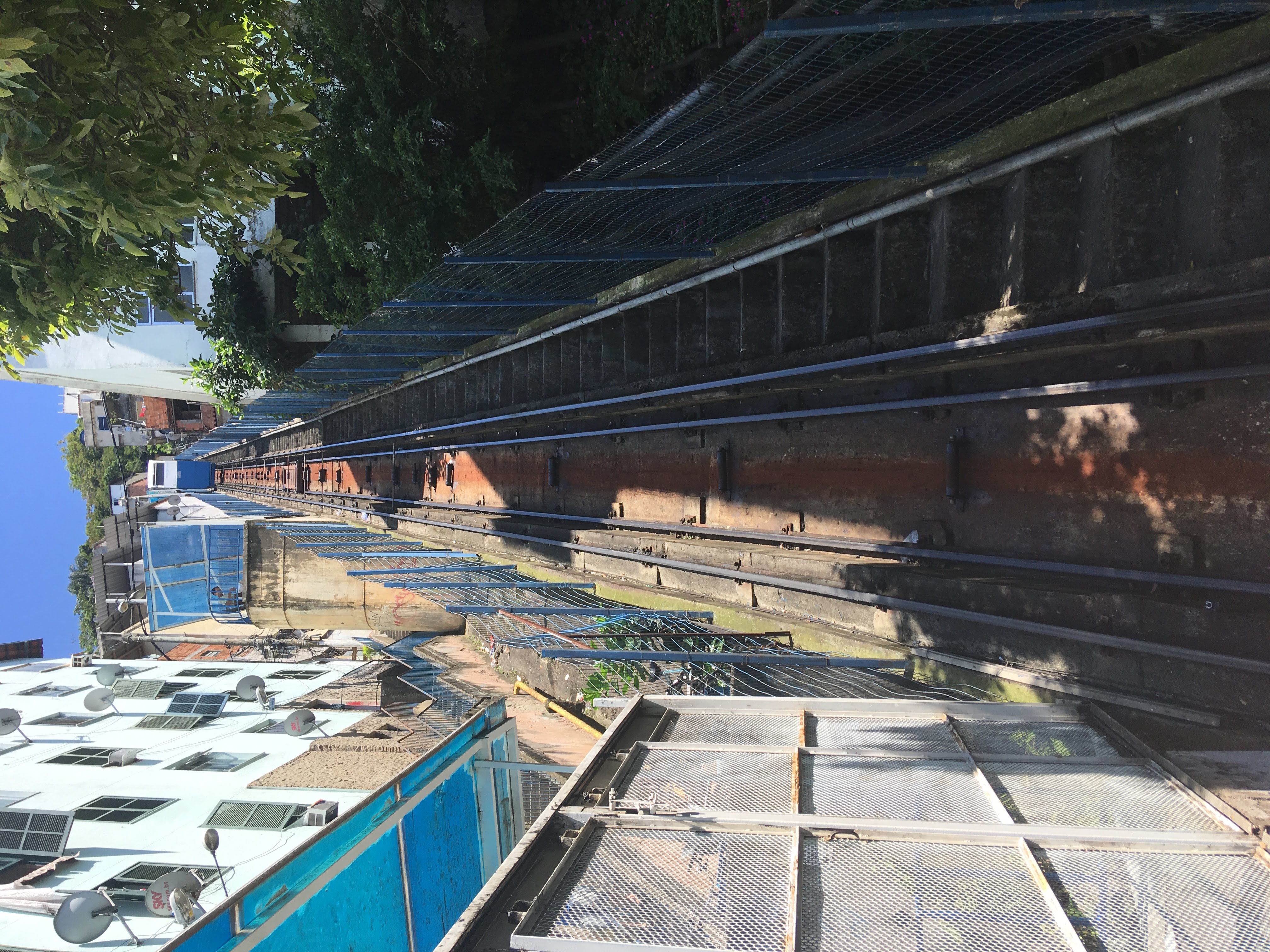
The Plano Inclinado do Morro Cantagalo is a municipal inclined elevator built alongside the 2010 Metro Rio expansion (Line 2 work that connected Ipanema to Barra). It runs from the General Osório metro station in Ipanema up the south face of the Cantagalo ridge to the favela residential neighborhood, a vertical rise of approximately 75 meters in a ride of roughly two minutes.

The Plano Inclinado is free. No ticket is required; you enter at the metro station or at the upper Cantagalo terminal. It operates 6 a.m. to 10 p.m. Monday through Saturday, shorter Sunday hours. The cars run every 4–5 minutes; the wait is rarely long.

Plano Inclinado do Pavão-Pavãozinho — the free municipal funicular
The Plano Inclinado at Cantagalo — free municipal inclined elevator connecting Ipanema's General Osório metro station to the favela's residential core. Two-minute ride; 75-meter vertical rise. Operational since 2010.· ArlindoPereira · CC BY-SA 4.0

What's at the top

The upper terminus deposits you on a public plaza at the edge of Cantagalo's residential core. From the plaza, a short walk (50 meters, paved path) reaches the Mirante do Pavão-Pavãozinho — a public viewpoint installed by the Prefeitura in 2013. The Mirante has a railing, a small interpretation panel, and an uninterrupted view of:

  • The full arc of Ipanema (directly below)
  • The full arc of Copacabana
  • Leblon to the west
  • Pão de Açúcar in the middle distance east
  • The Atlantic horizon, the barges offshore, and — on clear days — the islands 10 km out

Most tourists never make it here. The few who do generally rate it the best viewpoint in the Zona Sul, and they are probably right. The view is different from Sugarloaf or Cristo Redentor because you are low enough to see the beaches as beaches rather than as abstractions.

The view from Cantagalo-Pavão-Pavãozinho — the overlook that sees it all
The Mirante do Pavão-Pavãozinho — the public viewpoint at the top of the Plano Inclinado. The view covers Ipanema, Copacabana, Leblon, and on clear days the offshore islands.· CC BY-SA 3.0 de
· How to Visit

Four practices, not vibes

The general 'respect the favela' advice is meaningless without specifics. Below is concrete.

1

Take the Plano Inclinado as your default

The viewpoint at the top gives you the geography of the favela and the beach together, on Ipanema's ground, without any paid guide, without intruding on residents' daily lives beyond the brief shared-elevator ride. This is the respectful baseline Rio visitor-to-favela-visitor practice.

2

If you want a deeper visit, go via a community cooperative

Favela Inc., Favela Walking Tour, and Rocinha Original Tour are community-led tour cooperatives operating in Rio. They are run by residents, revenue stays in the community, and the guiding is done by people who live there. Reserve ahead; respect guide instructions about photography and where to walk.

3

Don't book a 'favela safari' via a hotel concierge

Standard hotel tour packages to favelas — run by for-profit non-community operators, typically driving through in jeeps with foreign tourists — are widely rejected by community leaders as 'poverty tourism'. They are also usually more expensive and less informative than community-led alternatives. Avoid.

4

Eat at the Mirante café, buy art from community studios

Small cafés, art studios, and community-run shops operate at the upper Plano Inclinado terminus and on the adjacent streets. Buying a coffee, a meal, or a handmade piece of art leaves money in the community in a direct, low-friction way. The Prefeitura keeps a rotating public-art program on the upper-favela streets that visiting artists contribute to; the walls are worth a photograph.

· About this spoke

Written by Erin Rose. UPP program detail follows Instituto de Segurança Pública do Rio de Janeiro published statistics and Beatriz Jaguaribe's Rio de Janeiro: Urban Life through the Eyes of the City (2014). Community-tour cooperative directory via Favela Inc., Favela Walking Tour, and similar community organizations. Plano Inclinado operational details from MetrôRio. Population figures via IBGE 2022 census; favela populations are notoriously undercounted and these figures are conservative. For current UPP operational status — which varies month-to-month — consult Brazilian press and community-based observers rather than relying on pre-published data. Corrections welcome, especially on Portuguese-language framings and on the named practices of Nazaré. Version v0.9.