New York, US

Orchard Beach

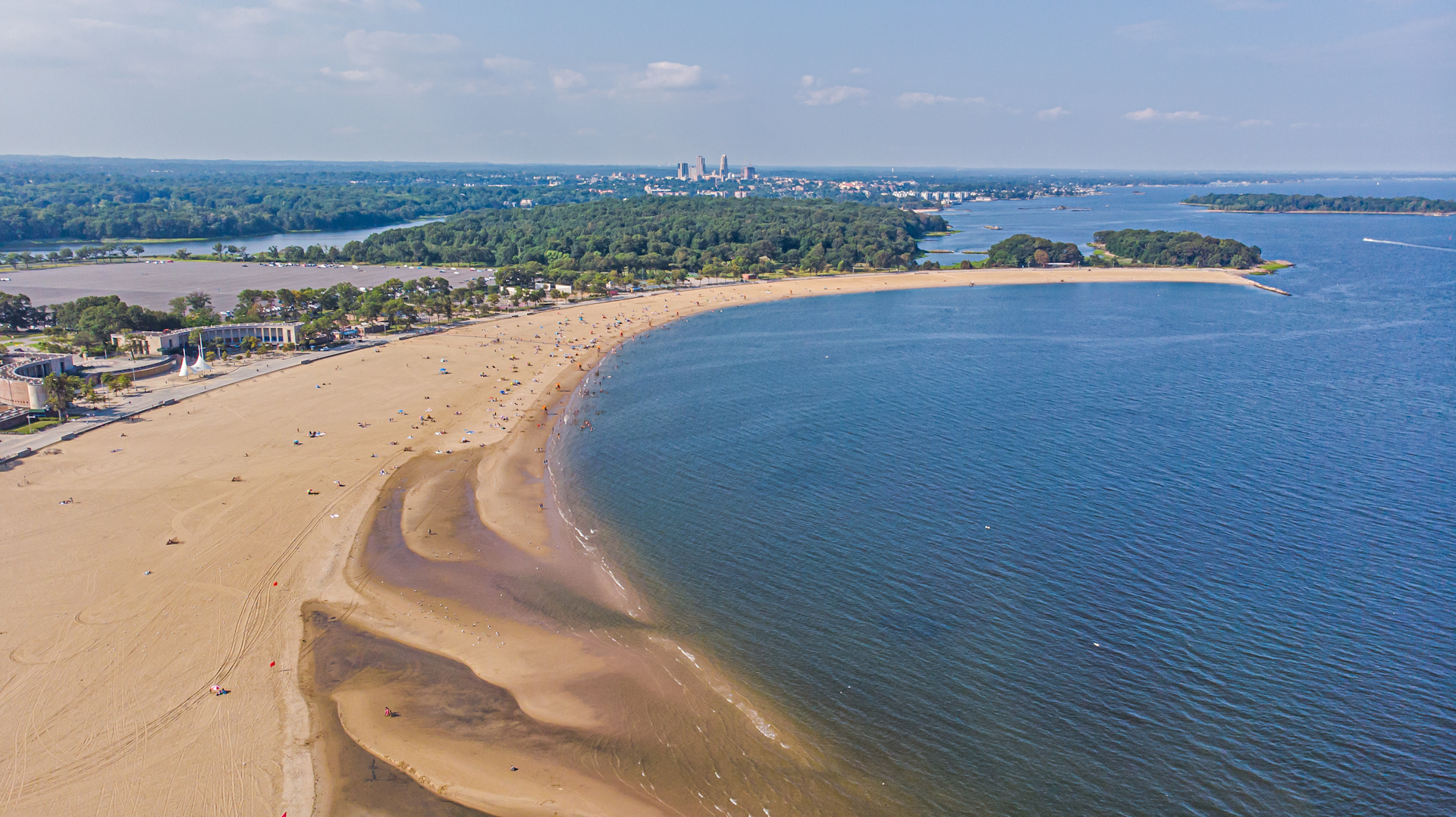
Orchard Beach Bus Terminal.jpg

New York, US

Orchard Beach

The only public beach in the Bronx is entirely man-made — a 1.1-mile crescent Robert Moses built in the 1930s on barged-in sand over a filled-in lagoon.

Orchard Beach Bus Terminal.jpg · <a href="//commons.wikimedia.org/wiki/User:Transitsylveonkpop" title="User:Transitsylveonkpop">Transitsylveonkpop</a> · CC BY-SA 4.0
Substrate
sand
Nearest airport
LGA · 12 km
Tier
Featured
I’m here for
Story

Orchard Beach is the only public beach in the Bronx, and it is not a natural one. The 1.1-mile crescent of sand on the western edge of Long Island Sound was built by people in the 1930s, on the orders of Parks Commissioner Robert Moses, across what had been a marshy lagoon between Rodman's Neck and Hunter and Twin Islands. Moses disliked the gray, pebbly sand native to the Sound, so he had fine sand dredged from the Rockaways in Queens and from Sandy Hook in New Jersey and hauled north by barge — roughly four million cubic yards of it — to make a beach where there had been none.

The project was federal relief work. It ran on Works Progress Administration money and labor during the Depression, and it converted a tidal inlet into 115 acres of beach, promenade, and parkland inside Pelham Bay Park, the largest park in New York City. The centerpiece is the bathhouse and promenade pavilion designed by Aymar Embury II, the architect Moses used across the city's 1930s park program. Completed in 1936, it is a concrete, brick, and limestone structure with two long colonnades radiating from a raised central terrace, finished with blue tile and terrazzo. The grand colonnade is often compared to the Palais de Chaillot in Paris. The bathhouse, the hexagonal-block promenade, and the beach were designated a New York City landmark in 2006.

The dedication ceremony was held on July 25, 1936, drawing more than 18,000 people, though construction continued into 1938. The Sound's calm water and the new white sand earned the place a nickname that has stuck for ninety years: the Bronx Riviera. The beach is divided into thirteen numbered sections, and those sections became social territory. From the 1950s on, Puerto Rican and Dominican families claimed the picnic areas behind Sections 4 and 5, and the open concrete deck there became the home of Salsa Sundays, a tradition first seeded by mambo dancer and DJ Ernie Ensley spinning records in the 1950s and carried forward by DJ Carlos Santiago. It is one of the defining Afro-Caribbean cultural spaces in the borough.

The honest part is the water. Orchard Beach sits on the western Sound, downstream of New York's combined sewers, and after heavy rain bacteria levels can spike. The city has issued swimming advisories here on water-quality grounds, and the beach has also drawn cleaner report cards in other years. It is a built beach, on imperfect water, that the Bronx has made entirely its own.
The spike

The only public beach in the Bronx is entirely man-made — a 1.1-mile crescent Robert Moses built in the 1930s on barged-in sand over a filled-in lagoon.

Orchard Beach is the only public beach in the Bronx, and almost none of it is natural. The 1.1-mile crescent of sand, the 115 acres of beach and parkland, even the ground the bathhouse sits on — all of it was assembled in the 1930s on the orders of one man, Parks Commissioner Robert Moses, out of materials that did not belong to this shoreline.

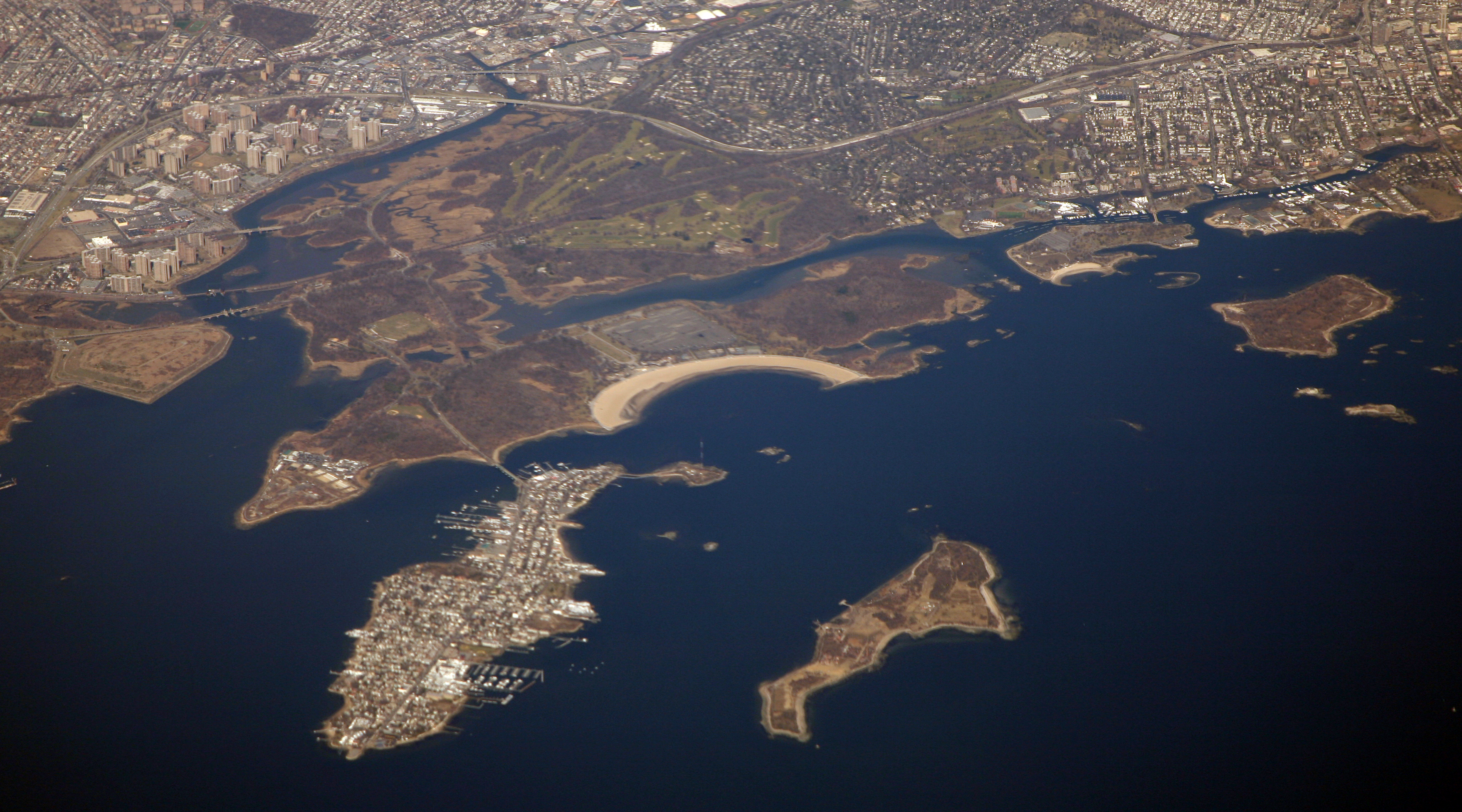
A lagoon, not a beach. Before Moses, the site was not a beach at all. Between Rodman's Neck on the mainland and the small offshore land of Hunter Island and Twin Islands lay a marshy tidal lagoon. The native shoreline of the western Long Island Sound is gray, pebbly, and unglamorous, the opposite of a swimming beach. To make Orchard Beach, the lagoon was filled and the islands were tied to the mainland, converting a tidal inlet into a continuous arc of dry land. The 'islands' at the north end are still there in name and in their wooded character, but you can now walk to them on solid ground because the gap between them and the Bronx was deliberately closed.

The sand came from somewhere else. Moses disliked the Sound's native sand so thoroughly that he refused to build a beach out of it. Instead he had fine, pale sand dredged from the Rockaway Peninsula in Queens and from Sandy Hook in New Jersey and carried north by barge — on the order of four million cubic yards of it — and laid down to make the swimming crescent. This is the literal definition of an artificial beach: the sand you stand on was mined from two other coastlines and shipped in. It is also why the beach needs periodic replenishment; imported sand on an engineered shore does not stay put on its own.

Built with relief money, in the architecture of the era. The project was Depression-era public works, funded and staffed through the federal Works Progress Administration. Its centerpiece was not a boardwalk but a piece of monumental civic architecture: the bathhouse and promenade pavilion designed by Aymar Embury II, Moses's go-to architect, completed in 1936. Two long limestone colonnades radiate from a raised central terrace, dressed in blue tile and terrazzo, fronting a promenade paved in hexagonal blocks. The grand colonnade is often likened to the Palais de Chaillot in Paris. New York City landmarked the bathhouse, promenade, and beach in 2006. A built beach got a building worthy of the claim.

The Bronx Riviera. The dedication on July 25, 1936 drew more than 18,000 people, and the calm Sound water and bright new sand earned the place its enduring nickname: the Bronx Riviera. But the more important thing the beach acquired was a community. Divided into thirteen numbered sections, Orchard Beach became social territory, and from the 1950s on its central sections became the gathering place of the borough's Puerto Rican and Dominican families. The open deck behind Sections 4 and 5 turned into a home for salsa and Afro-Caribbean music, a tradition the National Park Service has formally documented and that continues as Salsa Sundays. An engineered beach became one of the most authentic cultural spaces in the Bronx.

The catch is the water. Everything human about the beach can be maintained; the water cannot be commanded. Orchard Beach faces the western Long Island Sound, downstream of a dense city's combined sewers, and after heavy rain bacteria levels can rise far enough that New York City advises against swimming and wading. In drier stretches the same beach has earned an 'A' grade for water quality. That is the honest shape of the place: a beach that people built, on water that people did not, requiring maintenance on one side and a forecast check on the other. Robert Moses could barge in the sand and hire Aymar Embury II to design the colonnade, but he could not make the Sound clean. Ninety years on, that remains the one part of Orchard Beach that is still entirely natural.

Pelham Bay Park aerial view.jpg
Culture

Where it shows up

Other
  • Salsa Sundays at Orchard Beach
    DJ Ernie Ensley; DJ Carlos Santiago

    A long-running summer dance tradition on the open deck near Sections 4 and 5, seeded by mambo dancer and DJ Ernie Ensley in the 1950s and carried forward by DJ Carlos Santiago. The U.S. National Park Service has documented Orchard Beach as a cultural hub for salsa and Afro-Caribbean music in the Bronx.

  • The Bronx Riviera · 1936

    The nickname attached to Orchard Beach since its 1936 opening, when the new imported white sand and the calm Sound water were marketed as a Riviera for the borough. The name has also titled photography and documentary work on the beach's working-class summer culture.

Orchardbeachny2.jpg
History

What happened here

  1. 1888founding

    Robert Moses is born

    Robert Moses, the future New York City Parks Commissioner who would build Orchard Beach, is born. He is appointed Parks Commissioner in 1934, the post from which he initiated the Orchard Beach project.

    Wikipedia →
  2. 1934policy

    Moses becomes Parks Commissioner; project begins

    Robert Moses is named New York City Parks Commissioner, and planning begins to convert the lagoon between Rodman's Neck and Hunter and Twin Islands into a single public beach.

    Wikipedia →
  3. 1936founding

    Orchard Beach is dedicated

    The dedication ceremony is held on July 25, 1936, drawing more than 18,000 people. The Aymar Embury II bathhouse pavilion is completed the same year. Construction of the full beach continues into 1938.

    Wikipedia →
  4. 1938construction

    Beach construction completed

    Work that began as a WPA relief project finishes around 1938, having filled the lagoon and laid roughly four million cubic yards of sand barged from the Rockaways and Sandy Hook to form the 1.1-mile crescent.

    Wikipedia →
  5. 1950cultural

    Salsa culture takes root

    From the 1950s on, mambo dancer and DJ Ernie Ensley begins spinning records at the beach, seeding the Afro-Caribbean dance culture that becomes the Salsa Sundays tradition centered near Sections 4 and 5.

  6. 2006policy

    Bathhouse and promenade landmarked

    On June 20, 2006, the New York City Landmarks Preservation Commission designates the Orchard Beach bathhouse, promenade, and beach a city landmark, citing the Embury colonnades, raised central terrace, and tile and terrazzo finishes.

  7. 2026construction

    Pavilion restored and reopened

    After roughly seventeen years closed to the public, the historic Orchard Beach pavilion reopens following a major multi-year restoration of the landmarked bathhouse and promenade.

The honest part
Robert Moses could barge in the sand and hire an architect for the colonnade, but he could not make the Sound clean.

Orchard Beach is a manufactured place, and its problems are the problems of a manufactured place on a tidal estuary. The sand is imported and has to be replenished; the lagoon it covers was filled, not drained; and the water it faces is the western end of Long Island Sound, which receives runoff and combined-sewer overflow from a dense city. After heavy rain, bacteria counts can rise far enough that New York City emergency officials advise against swimming and wading — a recurring summer event, not a rare one. In other seasons the same beach has earned an 'A' grade for water quality. Both are true, and which one applies depends largely on how much it has rained in the days before.

The built environment has aged unevenly too. The Aymar Embury II bathhouse pavilion, the literal centerpiece of the 1936 design, was closed to the public for roughly seventeen years before a major restoration reopened it, and the beach's facilities have cycled through decline and reinvestment for decades. None of this cancels the achievement. Orchard Beach is the only public beach in the Bronx, it is free, it is reachable by city bus, and on a hot weekend it carries tens of thousands of people the Rockaways and Coney Island would otherwise have to absorb. The reckoning is simply that it is an artificial beach that requires continuous human maintenance to stay a beach, on water that requires checking before you swim.

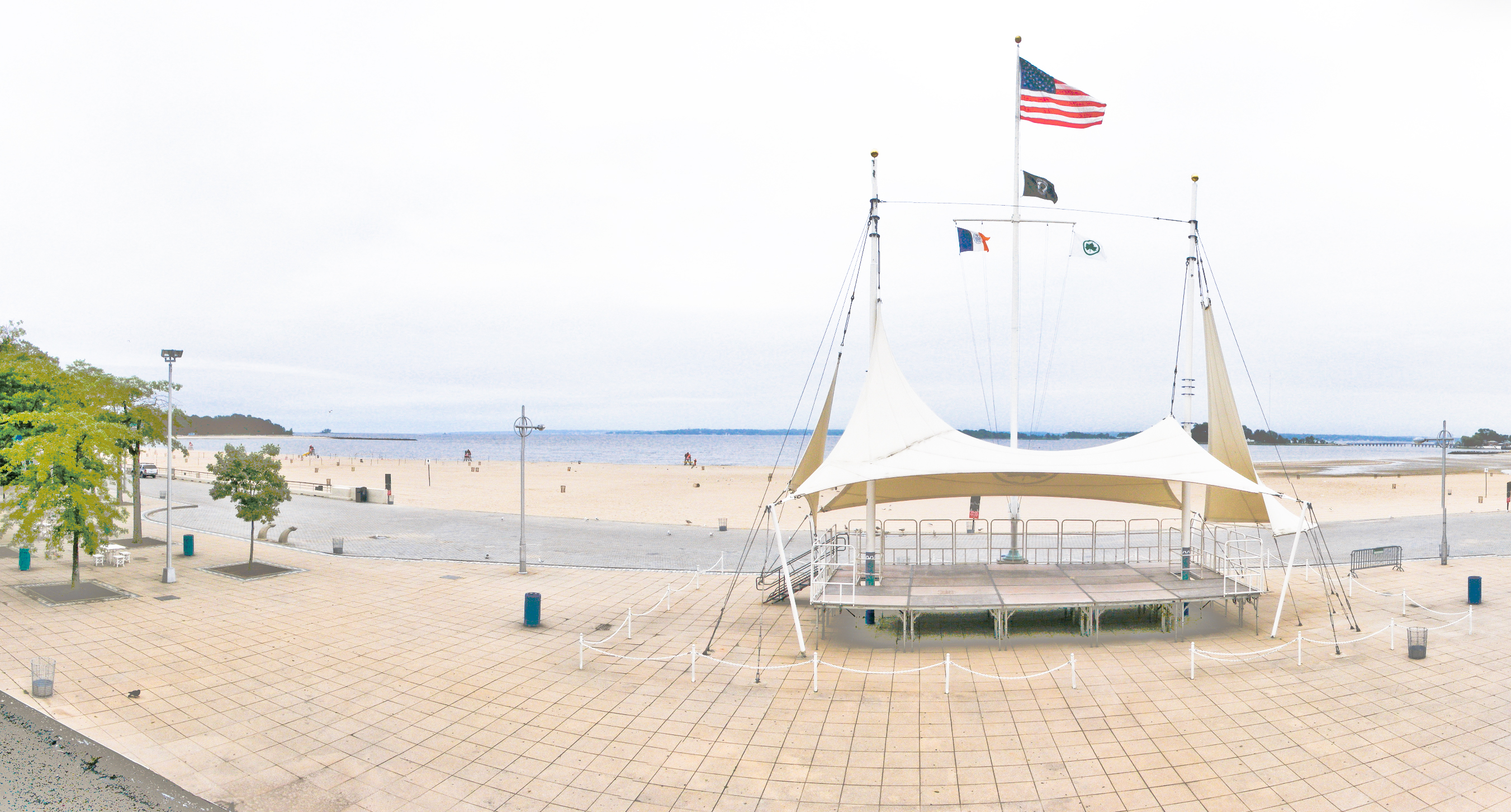
Pelham Bay Park (2547803421).jpg
Anatomy

The shape of the place

Sections 4 and 5

35%

The open concrete deck and picnic groves behind the central sections, the longtime home of Salsa Sundays and the borough's Puerto Rican and Dominican beach culture.

Best for Music, dancing, and family barbecue

Busiest on summer weekend afternoons.

The bathhouse and promenade pavilion

50%

The 1936 Aymar Embury II centerpiece: two limestone colonnades radiating from a raised central terrace, finished with blue tile and terrazzo, fronting the hexagonal-block promenade. A New York City landmark since 2006.

Best for Architecture and the Depression-era design

Reopened after a roughly 17-year closure and major restoration.

The swimming crescent

50%

The 1.1-mile arc of imported Rockaway and Sandy Hook sand facing the calm, shallow water of the western Long Island Sound, divided into thirteen numbered sections with lifeguards in season.

Best for Wading and swimming in calm water

Swimming only when lifeguards are present; check water-quality advisories after rain.

Hunter Island and the rocky north end

90%

The wooded former island at the crescent's north end, absorbed into the beach project, with rocky shoreline, trails, and salt marsh — the natural-history counterpoint to the engineered sand.

Best for Walking, fishing, and birdwatching

Part of Pelham Bay Park's protected natural areas.

Landmarks

Orchard Beach Bathhouse and Promenade · 1936

civic · Aymar Embury II

Concrete, brick, and limestone bathhouse with two monumental colonnades radiating from a raised central terrace, finished in blue tile and terrazzo, fronting a hexagonal-block promenade. The centerpiece of Robert Moses's 1930s beach project and a New York City landmark since 2006.

Wikipedia →

Orchard Beach Bus Terminal

civic

The dedicated bus terminal serving the beach, the arrival point for the city bus lines that carry crowds from across the Bronx to the only public beach in the borough.

Wikipedia →

Hunter Island

natural

A formerly separate island at the north end of the beach, joined to the mainland by the landfill that created Orchard Beach. Now a wooded natural area of Pelham Bay Park with rocky shoreline and salt marsh.

Wikipedia →
A day here

From first light to dark

Dawn

At first light the 1.1-mile crescent is nearly empty, the Sound flat and gray-green, and the only people on the hexagonal-block promenade are walkers, joggers, and a few fishermen working the rocks toward Hunter Island. The Embury colonnade catches the low sun before the parking lots fill.

Midday

By late morning the thirteen sections are filling, the lifeguards are up, and the picnic areas behind the central pavilion are claimed with coolers and grills. The water is calm and shallow — the Sound rarely musters surf — so families wade rather than swim laps. The Bx5 and Bx12 buses unload steadily.

Golden hour

Late afternoon is the social peak. The salsa deck near Sections 4 and 5 is loudest, the barbecue smoke thickens over the picnic groves, and the promenade fills with people walking the crescent end to end as the light warms the limestone.

Night

After the lifeguards leave and the lots close, the beach empties quickly; swimming is not permitted unguarded. The promenade and the Sound go quiet, with the lights of City Island and the Westchester shore across the water and the bus terminal dark until morning.

Pelham Bay Park (2548628412).jpg
Sea & surf

What the water does

JFMAMJJASONDmetres (significant wave height)

Solid = typical monthly wave height; pale = the bigger days (90th pct). Offshore/regional swell from Open-Meteo Marine (ERA5 Ocean reanalysis, 2023–2024); a sheltered cove may sit calmer than this.

Calm — gentle swimming water most of the year
Typical wave height
0.18 m
Biggest swell
Mar · 0.27 m
Calmest
Jul · 0.09 m
Typical period
2.9 s (wind chop)
Before you go

Things to know

Cost and access

The beach is free and reachable by city bus to the Orchard Beach Bus Terminal; the parking lots fill on hot summer weekends.

Water quality

Check NYC water-quality advisories before swimming, especially after heavy rain — bacteria from combined-sewer overflow can spike on the western Long Island Sound.

Swimming

The water is calm and shallow, but swimming is permitted only when lifeguards are on duty during the summer season.

No dogs

Dogs are not permitted on the beach.

Swimming

Usually calm water — among the gentler beaches for a swim.

Sharks

No incidents on record in the global shark-attack file.

Plan

If you go

Getting there
Nearest airport
LaGuardia Airport (LGA) · 12 km
Nearest town
Pelham Manor · 4 km

Orchard Beach is in Pelham Bay Park in the northeast Bronx. By car, use the Hutchinson River Parkway or Bruckner Expressway to City Island Road and the beach parking lots. By transit, take the 6 train to Pelham Bay Park and the Bx12 bus, or the Bx5, to the Orchard Beach Bus Terminal. There is no road or development on the natural Hunter Island shoreline at the north end beyond park trails.

When to go
  • Salsa Sundays · Summer Sundays, roughly Memorial Day weekend through the season

    Open-air salsa dancing on the concrete deck near Sections 4 and 5, drawing dancers from across the Bronx and beyond. A continuation of the Afro-Caribbean music culture that has anchored the beach's central sections since the 1950s.

  • Summer beach season · Late May to early September, lifeguards on duty

    The supervised swimming season, when the thirteen sections are staffed, concessions open, and weekend crowds can run into the tens of thousands at the only public beach in the Bronx.

What to eat & drink
Snack bar concessions at the pavilion

The central pavilion has historically housed food stores and specialty shops behind the colonnade; seasonal concessions sell standard beach fare — hot dogs, fries, cold drinks — to the crowds on the promenade.

Central pavilion, behind the Embury colonnade

Family barbecue in the picnic sections

Much of the eating at Orchard Beach is brought from home. The grass-and-tree picnic groves behind the sections, especially around 4 and 5, are designed for barbecuing, and Puerto Rican and Dominican families have cooked here for generations.

Picnic areas behind Sections 4 and 5

City Island seafood

City Island, a short drive northeast across the bridge, is a nautical enclave known for waterfront seafood restaurants — the nearest concentration of sit-down dining to the beach.

City Island, ~4 km northeast

Sources & references
  1. Wikipedia: Orchard Beach (Bronx) · cited 3×
  2. archives.nyc; The Amazing Bronx · cited 2×
  3. Wikipedia: Robert Moses; NYC Parks
  4. NYC Parks; archives.nyc
  5. archives.nyc; NYC Parks; The Amazing Bronx
  6. U.S. National Park Service: Orchard Beach, Cultural Hub for Salsa
  7. NYC Landmarks Preservation Commission, Designation List 377, LP-2197
  8. Time Out New York; 6sqft
  9. Wikipedia: Orchard Beach (Bronx); NYC Parks
  10. archives.nyc; NYC Parks
  11. HDC; NYC Landmarks Preservation Commission LP-2197
  12. NYC Landmarks Preservation Commission, Designation List 377
Colophon · Provenance

Where this page comes from

Geography, facilities
OpenStreetMap (ODbL) for geometry and facility tags within 500 m of the beach centroid. GeoNames for city/airport distances.
Climate & ocean
Open-Meteo ERA5 + Marine archive, 2014–2023 monthly normals.
Photography
Archival, original tone (Tier B — Wikimedia Commons). Each image licensed per its own terms; attribution visible inline.
History & culture
Every factual claim is linked to its source in the prose above. Wikipedia citations inline. Non-wiki sources named where relevant.
Editorial voice
Register: wry. Written to pass a local's nod test; corrections welcome.
Written by Erin Rose
Last reviewed 2026-04-19
v0.9in editorial development toward v1.0