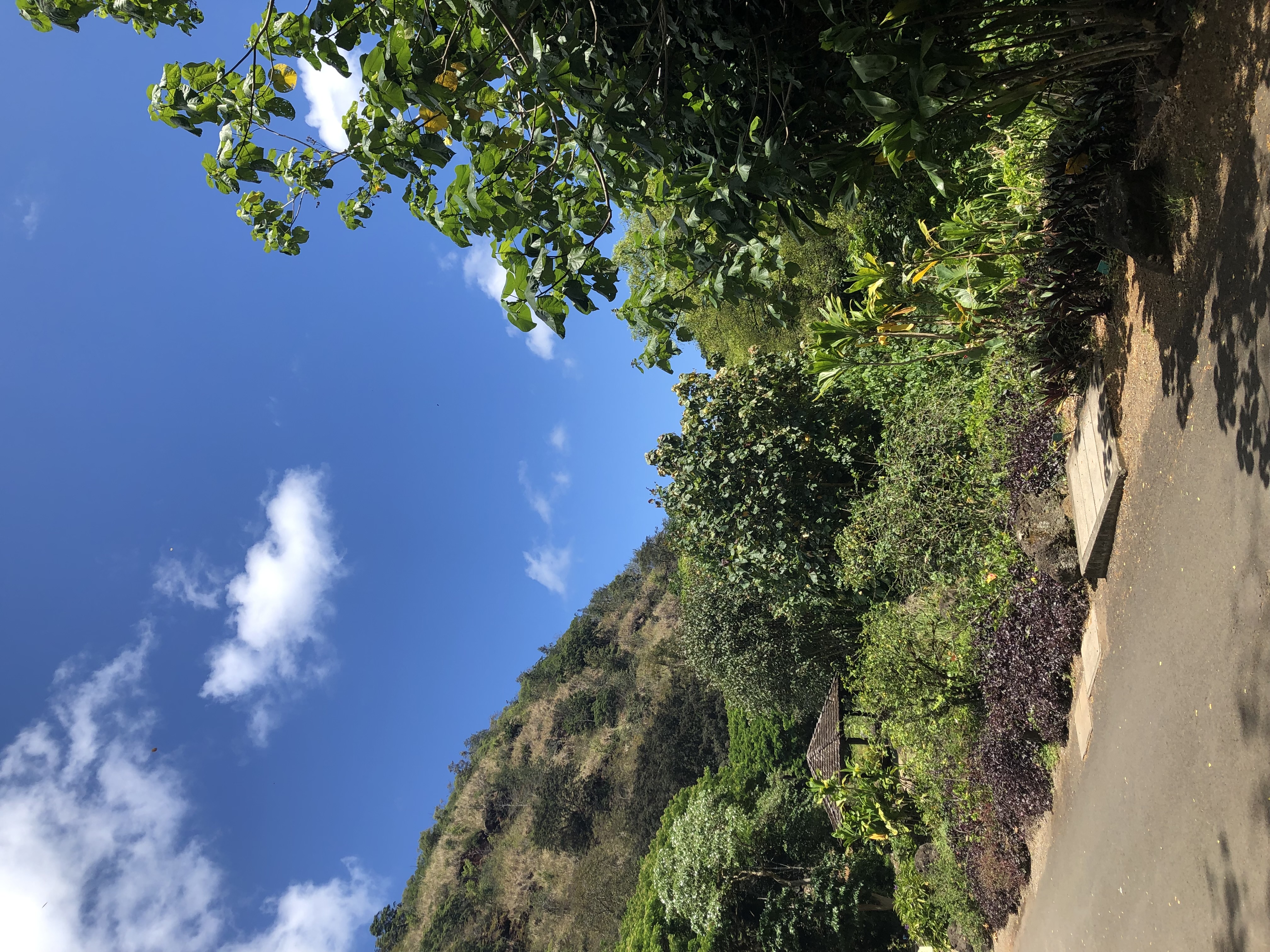
Tour Waimea Valley on a guided cultural walk
The Hiʻipaka-led interpretation is the right way to encounter a Hawaiian sacred valley. 45 minutes, included with admission. Ask your guide about their family connection to the valley; most will tell you.

· Mālama North Shore
Every named surf break on this coast sits on a Hawaiian place with a Hawaiian name, a Hawaiian history, and in many cases a Hawaiian sacred purpose older than anyone currently alive. Pipeline is the surf name. The land has been under continuous Hawaiian cultural responsibility for approximately 1,200 years. This spoke treats the North Shore in that register.
The Waikīkī cluster has a Mālama Hawaiʻi spoke — that spoke introduces the term in detail. This spoke assumes you've read it or you know the word. Here the mālama work is specifically the North Shore.
Mālama — Hawaiian verb: to care for, to protect, to serve as steward, to honor ancestral obligation. Not a resort slogan. A concept with legal and ceremonial weight in Hawaiian practice. When a Hawaiian cultural practitioner speaks of mālama in the context of the North Shore, they mean: the specific stretch of coast from Kaʻena Point around through Mokulēʻia, Haleʻiwa, Laniākea, Waimea, Pūpūkea (the Pipeline / Sunset neighborhoods), Kawela Bay, Kahuku, and Kuilima / Turtle Bay has been under continuous Hawaiian cultural stewardship for approximately 1,200 years. The stewardship did not end in 1778 or 1893 or 1959. It continues; it overlaps the surf-tourism economy; it is a layer many visitors never encounter because they are not looking for it.
What follows is an introduction to what a visitor can see if they do look for it, and how to look for it without causing harm.
A ten-minute drive up the hill from Pūpūkea — the residential neighborhood directly above Pipeline — is the largest ancient Hawaiian temple complex on Oʻahu. Most visitors never go there. It is free, it is open, and it is one of the important Hawaiian sites in the islands.
Puʻu o Mahuka Heiau — 'Hill of Escape' — is a National Historic Landmark and the largest surviving heiau (Hawaiian temple) on Oʻahu. The complex covers roughly 2 acres of stone-walled enclosures on a ridge at 300 feet elevation, with unobstructed views north to Waimea Bay, east along the coast to Sunset, and across the Pacific. Construction is dated to the 17th century; the site was in continuous ceremonial use from construction until approximately 1819 — the year Hawaiian traditional religious practice was formally ended by Kamehameha II in the ʻAi Noa (free-eating) abolition of the kapu system.
Puʻu o Mahuka was a luakini heiau — a temple of the highest class, reserved for human and animal sacrifice and for the most consequential ceremonial work in the Hawaiian religious system. Its historical ceremonial director of record is the high-priest kahuna Kaʻopulupulu, who in 1782 warned the Oʻahu chief Kahahana against entering into conflict with Maui and was killed (with his son Kahulupue) when Kahahana rejected the warning. The heiau was thus the center of political-religious counsel on Oʻahu in the decades leading up to Kamehameha I's 1795 unification.
What you can see today: the stone walls remain substantially intact. A paved interpretive trail circles the complex; Hawaiian State Parks signage explains the site's ceremonial structure. Visitors are expected not to enter the interior of the stone enclosures, which remain consecrated space. Do not remove stones. Do not leave offerings unless you know what you are doing — specifically, do not leave rocks wrapped in ti leaves, which is a common tourist practice that Hawaiian cultural practitioners overwhelmingly oppose. The appropriate visitor posture is quiet, respectful, brief.
How to get there: from Pipeline or Sunset, drive up Pūpūkea Road for approximately 1.2 miles (2 km). The turnoff is signed. Small parking area; no admission fee. Allow 30 minutes. Open daylight hours.
Waimea Bay's Eddie Aikau story is the spoke. The valley inland of the bay carries a different, older story — the full Waimea Valley is one of the most archaeologically rich Hawaiian sites in the islands, and it is currently managed by a Hawaiian-owned nonprofit on specifically cultural-stewardship terms.
Waimea Valley runs roughly 3 miles inland from Waimea Bay, following the Waimea River up into the Koʻolau mountain range. The valley was under Hawaiian residential and ceremonial occupation from approximately 1,100 years ago until the late 19th century, when post-contact depopulation and plantation-era land reorganization removed most of the traditional community. What remains is a genuinely unusual archaeological and cultural record:

Waimea Valley is currently administered by Hiʻipaka LLC, a Hawaiian-family-owned nonprofit that holds the valley in trust under a long-term lease from the Office of Hawaiian Affairs (OHA). This is structurally unusual for a major Hawaiian cultural-heritage site: most are state-managed through the Department of Land and Natural Resources. Waimea Valley is the major exception — Hawaiian management of a Hawaiian sacred site, with the admission economy ($25 adult) flowing to a Hawaiian nonprofit rather than to state general funds or private operators.
Hiʻipaka runs guided cultural walks (45 min, included in admission) led by Hawaiian cultural practitioners who are themselves genealogically connected to the valley. The walks are the right way to visit. Self-guided is permitted and useful but misses the interpretation.
Every stretch of this coast has a Hawaiian name that predates the English 'Pipeline' / 'Sunset' / 'Laniākea' / 'Haleʻiwa' vocabulary by centuries. Some of the English names are Hawaiian (Laniākea, Haleʻiwa, Kahuku); others are English overlays. Knowing the Hawaiian names is part of knowing what you are visiting.
The beach park is called Ehukai— 'seaspray' or, more literally, 'sea-foam.' The name predates the surf-break name by centuries and is still the correct name on all Hawaiian-language maps and municipal signage. 'Pipeline' is a 1961 surf-media coinage (by Phil Edwards / Bruce Brown, depending on account) describing the wave shape. The surf-break name is Banzai Pipeline; the beach name is Ehukai; locals use both depending on whether they're talking about the water or the sand.
The residential neighborhood behind Pipeline is Pūpūkea — 'white shell.' The name refers to a specific variety of native Hawaiian land snail (Achatinella) that once occupied the forested ridges above the coast; the species is now critically endangered, with fewer than 5,000 individuals remaining across all of Oʻahu. The neighborhood's name is a reminder of what the Hawaiian upland ecosystem was before agricultural clearing and introduced species collapsed it.
Waimea — 'reddish water.' Named for the red soil of the valley, visible in the river's outflow when heavy rain mobilizes it. The name is one of several Waimeas across the Hawaiian islands — Kauaʻi has a Waimea, the Big Island has a Waimea — because the phenomenon is not unique to Oʻahu. Local context distinguishes 'Waimea Bay' (Oʻahu) from 'Waimea Canyon' (Kauaʻi) from 'Waimea Town' (Big Island). Use the local context.
Laniākea — literally 'the wide sky' or 'far-reaching sky.' The tourist-famous Turtle Beach name is the Hawaiian name; no translation required. The beach's association with sea turtles (honu) is a very recent phenomenon — the turtles began hauling out here in substantial numbers only since approximately 2000, after Hawaiian green sea turtles came off the federal endangered-species designation as threatened. The cultural-historical name is older than the turtle-beach association.
Haleʻiwa — 'home of the ʻiwa bird' (the great frigatebird). The pre-plantation-era village name. The town retained the name through the 19th-century plantation period and through the 20th-century surf-tourism rewriting of the coast. You are saying a real Hawaiian place name every time you order at Matsumoto Shave Ice.
The Waikīkī Mālama spoke has twelve practices. These seven are specifically about North Shore visitor conduct and extend rather than replace the Waikīkī ones.
The Hiʻipaka-led interpretation is the right way to encounter a Hawaiian sacred valley. 45 minutes, included with admission. Ask your guide about their family connection to the valley; most will tell you.
Free, 30-minute visit, ridge above Pipeline. Do not enter the interior enclosures. Do not leave rock-and-ti-leaf offerings. Quiet, respectful, brief. This is a consecrated site still in use for some ceremonial purposes.
Federal law protects Hawaiian green sea turtles. Municipal signs at Laniākea mark the 10-meter approach distance. Violations are fined. The turtles are not set dressing; they are threatened species resting.
Matsumoto Shave Ice (Matsumoto family since 1951), Haleʻiwa Store Lots tenants that are Hawaiian-owned, some of the Kahuku Superette produce, the farmer's-market stalls. Ask. The provenance matters for where money ends up.
The 6-meter jumping rock at Waimea Bay is a legitimate site for cliff-jumping — this is a continuous Hawaiian practice that predates Western contact — but it is also a site specific individuals have died at. Respect the lifeguard's judgment on whether the day is safe. Do not treat it as a pure thrill-stop.
Ehukai (Pipeline beach), Pūpūkea (neighborhood), Waimea (the bay), Laniākea (Turtle Beach), Haleʻiwa (town). Using the Hawaiian names is a small gesture of respect and a meaningful one to Hawaiian listeners.
If you encounter cultural practitioners at Puʻu o Mahuka or Waimea Valley in ceremonial context — offering leaves, chants, mele, or the lighting of candles — do not photograph. Step back, observe quietly, move on. This is not a photo opportunity.
The proving-ground wave. The Pipe Masters. The reef. The deaths.
How the wave actually works, the Pipe Masters contest as the WSL Championship Tour's season-opener, the reef mechanics, and the fatalities that are part of the break's identity.
The 7-Mile Miracle — from Haleʻiwa through Chun's Reef, Laniākea, Waimea, and Sunset to Turtle Bay. The full North Shore circuit as a day-trip from Waikīkī.
Waimea Bay, Eddie Aikau, and the paddle-in big-wave tradition. The Eddie Aikau Invitational — which only runs on days that satisfy the 20-foot face minimum, and has only run 10 times since 1985.
Written by Erin Rose. Puʻu o Mahuka Heiau historical detail follows the Hawaiʻi State Parks interpretive materials and Samuel Kamakau's Ka Poʻe Kahiko (Bishop Museum Press, 1964). Waimea Valley material from Hiʻipaka LLC's published cultural-interpretation program and the Bernice P. Bishop Museum's archaeological surveys of the valley (most recent comprehensive survey: 2012). Place-name etymologies follow the Hawaiian Dictionary (Pukui & Elbert, revised ed.). Pūpūkea land-snail ecology from the Hawaii Invertebrate Program (DLNR). Corrections welcome, particularly from Hawaiian cultural practitioners on current ceremonial protocol at Puʻu o Mahuka and on appropriate visitor guidance around Waimea Valley's most-sensitive sites. Corrections welcome, especially on Portuguese-language framings and on the named practices of Nazaré. Version v0.9.